


Nutritional Value of Frozen Chestnuts: Process and Buyer Guide
May 16, 2023

Plain frozen chestnuts are mainly a carbohydrate-rich, starchy food with much less fat than almonds, walnuts, or many other familiar nuts. They can also contribute dietary fiber, potassium, vitamin B6, folate, and vitamin C. The important qualification is that there is no single nutrition table for every frozen chestnut. Species, cultivar, maturity, peeling, heat treatment, moisture, freezing method, storage, thawing, and the final recipe can all move the value per 100 g.
USDA FoodData Central reports 213 kcal, 45.5 g carbohydrate, 2.42 g protein, 2.26 g fat, 8.1 g fiber, 518 mg potassium, and 43 mg vitamin C per 100 g of raw European chestnut, unpeeled. That is a useful composition reference, not a finished-product guarantee. A peeled frozen SKU may have a different moisture level or pretreatment, and a roasted chestnut, sweetened purée, soup, stuffing, or caramel sauce is a different food. If you need numbers for a label, menu, formulation, or purchasing decision, start with the actual product identity and serving basis, then use a supplier specification, compliant label calculation, or laboratory result that matches that product.
The short answer: Frozen chestnuts retain the basic character of a starchy, low-fat tree nut, but freezing does not create one universal nutrient profile or preserve every nutrient unchanged. Use food-composition data to understand the ingredient, and use SKU-specific evidence for claims, labels, portions, and contracts.

What "Nutritional Value" Means for Frozen Chestnuts
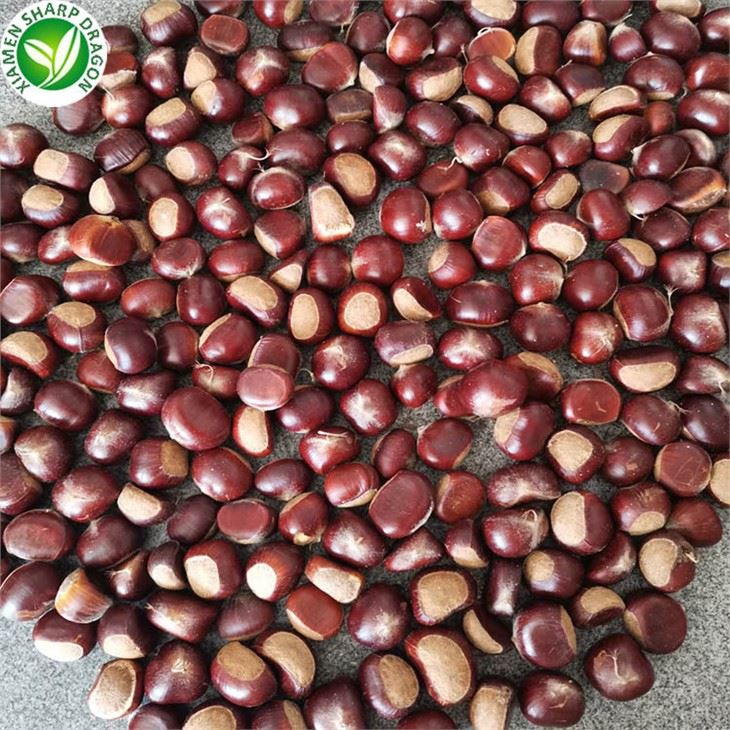
Chestnuts belong to the Castanea genus and are true tree nuts. They are not Chinese water chestnuts, which are aquatic corms with a crisp, watery texture and a very different nutrient profile. This distinction matters in databases, specifications, customs descriptions, allergen review, and ordinary search results. A table for water chestnut cannot be used for a sweet chestnut or Chinese tree chestnut, even when both products are peeled, pale, and frozen.
Chestnuts also differ from most culinary nuts in macronutrient balance. Their edible kernel contains substantial water and starch, while fat is relatively low. That is why a chestnut often behaves more like a starchy ingredient in a soup, stuffing, bakery filling, or purée than like an oily walnut or almond. The result can be useful for formulations that need body, mild sweetness, and a soft floury texture, but it also means that the portion contributes meaningful carbohydrate. "Nutritious" should not be translated into "low carbohydrate" or "suitable for every diet."
| Nutrient | USDA raw European chestnut, 100 g | How to use the figure |
|---|---|---|
| Energy | 213 kcal | Reference energy for the named raw form, not every frozen SKU |
| Carbohydrate | 45.5 g | Shows that chestnut is primarily a starchy carbohydrate food |
| Protein | 2.42 g | Too little to support a "high-protein" description |
| Total fat | 2.26 g | Low relative to many nuts, but the final dish may add fat |
| Dietary fiber | 8.1 g | A useful reference only when the product form and method match |
| Potassium | 518 mg | Contributes to total dietary intake; not a treatment claim |
| Vitamin C | 43 mg | Heat- and process-sensitive; verify the finished product before claiming |
The database entry is described as raw European chestnut, unpeeled, on a 100 g basis. "Unpeeled" is part of the food description, so it is not automatically the right label basis for a commercial bag of peeled IQF kernels. USDA also has a separate raw Chinese chestnut entry reporting 224 kcal, 49.1 g carbohydrate, 4.2 g protein, 1.11 g fat, 447 mg potassium, and 36 mg vitamin C per 100 g. The difference is a warning against copying a convenient table without checking species and form; it is not proof that one origin is nutritionally superior.
Worked example: Suppose you use the USDA raw European reference only to estimate a 75 g ingredient portion. Multiply every 100 g value by 0.75: energy becomes about 160 kcal, carbohydrate 34.1 g, fiber 6.1 g, potassium 389 mg, and vitamin C 32.3 mg. This calculation is transparent and useful for early formulation, but it remains a reference estimate. Before printing a label or menu declaration, replace it with evidence that matches the peeled or unpeeled status, process, recipe, serving size, and target-market rules of your actual product.
Where Nutrient Changes Can Occur in the Frozen-Chestnut Process
Freezing is only one stage in a longer chain. Raw-material condition, postharvest storage, shell and pellicle removal, heating, washing, draining, freezing, frozen storage, and final cooking can all affect the result. A responsible process description therefore states what happens to the specific SKU instead of claiming that every frozen chestnut follows one fixed seven-step route.
- Receive and grade the crop. Check maturity, variety, size, decay, insect damage, mold, shriveling, cracking, and off-odor. A clean-looking kernel cannot recover quality that was lost before processing.
- Store or condition the raw chestnuts when required. Fresh chestnuts have high moisture and remain physiologically active. Time, temperature, humidity, and ventilation affect water loss, sweetness, decay, and peelability before freezing.
- Wash, shell, and remove the pellicle. Mechanical damage and incomplete pellicle removal influence appearance, bitterness, broken rate, and downstream yield.
- Apply the SKU-specific heat treatment. Steam, blanching, roasting, or another controlled treatment may support peeling, enzyme control, texture, or food-safety objectives. The temperature and time must come from a validated process, not a generic article.
- Cool, drain, sort, and inspect. Remove loose skin, damaged kernels, dark pieces, and foreign material. Drain consistently because surface water changes frozen separation and gross-to-net yield.
- Quick-freeze and pack. The process should bring the product through its main ice-crystal formation range efficiently and protect it from dehydration, oxidation, odor transfer, and physical breakage.
- Maintain frozen storage and distribution. Product temperature, package integrity, storage time, and temperature fluctuation influence quality through the rest of the chain.
One published industrial study followed European chestnuts through three months of storage near 0°C, very brief flame peeling, and tunnel freezing with carbon dioxide at -65°C for 15–20 minutes. In those cultivars and harvest years, industrial processing reduced vitamin C and carotenoids, while other components responded differently. The study is valuable because it examines the full process, but its exact temperatures and times are not a universal instruction. A different cultivar, peeling system, blanching treatment, freezer, kernel size, or storage period may produce a different result.
Vitamin C deserves particular caution. NIH describes it as water-soluble and susceptible to heat, so heating and contact with water can reduce the amount available in the final food. Freezing may slow later deterioration, but it cannot reverse losses that happened during storage, peeling, blanching, or cooking. This is why "frozen chestnuts retain all their vitamin C" is not defensible. The useful action is to compare a defined starting material with the finished SKU under a documented process, then base any claim on the resulting evidence.

Why Raw, Roasted, and Frozen Numbers Are Not Interchangeable
A nutrition comparison is only meaningful when the basis is parallel. Raw and roasted values may differ because heating removes water and concentrates nutrients per 100 g. A peeled frozen product may have been blanched, steamed, partially cooked, or left raw before freezing. A commercial pack may also contain only chestnut, while a retail preparation may include syrup, salt, oil, cream, chocolate, or another ingredient. The words "frozen chestnuts" alone do not resolve those differences.
| Food form | Observed public value | Correct interpretation |
|---|---|---|
| Raw European chestnut, unpeeled | 213 kcal and 45.5 g carbohydrate per 100 g | USDA reference for that named raw form |
| Raw Chinese chestnut | 224 kcal and 49.1 g carbohydrate per 100 g | Separate USDA entry; not a frozen-product test |
| Commercial frozen peeled chestnut example | 165 kcal and 35 g carbohydrate per 100 g | One supplier's product value; not universal for all frozen kernels |
The commercial example comes from a frozen peeled chestnut page that lists 165 kcal, 35 g carbohydrate, 3.4 g fiber, 2.9 g protein, and 1.45 g fat per 100 g. Its lower energy and carbohydrate density than the raw USDA entries may reflect product moisture, cultivar, processing, or analytical and labeling methods. Because the products are not the same sample before and after freezing, the table cannot measure nutrient retention. It demonstrates why the actual frozen product needs its own evidence.
Prepared recipes widen the gap. A plain kernel has no added sugar or cream, but a frozen chestnut caramel sauce recipe adds granulated sugar, heavy cream, and butter. Its energy, fat, saturated fat, and added-sugar profile must be calculated from the complete formulation. The chestnut ingredient does not make those additions disappear, and the sauce data should never be presented as the nutrition of plain frozen chestnuts.
Moisture also changes the denominator. If two kernels contain the same absolute amount of starch but one loses more water during roasting, 100 g of the roasted product contains more dry matter. That can raise calories and carbohydrate per 100 g without adding starch. Conversely, a blanched or steamed frozen kernel with more retained water may show a lower value per 100 g. For formulation work, record whether your basis is frozen gross weight, thawed weight, drained weight, cooked yield, or finished-recipe weight.

What the Main Nutrients Can-and Cannot-Tell You
Carbohydrate and Energy
Carbohydrate is the dominant macronutrient in chestnuts, much of it associated with starch. That makes the ingredient useful for body and texture in purées, fillings, soups, and stuffings. It also means that portion and recipe context matter if you monitor carbohydrate intake. A plain 75 g portion calculated from the raw European reference contributes about 34.1 g carbohydrate before any bread, sugar, rice, pastry, or sauce is added. People managing diabetes should use the actual portion and full meal information with advice from their qualified clinician rather than treating chestnut as universally low-glycemic or automatically suitable.
The low fat content is real for the named plain forms, but it does not make every chestnut dish low in fat or calories. Roasting can concentrate nutrients through water loss; frying adds oil; bakery fillings may add sugar and fat; and purée formulations range from plain chestnut to heavily sweetened cream. The decision method is simple: read the ingredient list, compare the serving size, and calculate from the finished formulation instead of borrowing the reputation of the raw kernel.
Dietary Fiber
The USDA raw European reference lists 8.1 g fiber per 100 g, while the commercial frozen peeled example lists 3.4 g. FDA's general Daily Value for dietary fiber is 28 g for adults and children aged four and older on its labeling reference. That context helps you understand scale, but it does not authorize a "high fiber" claim for an untested SKU. Label claims depend on the declared serving, reference amount, target market, analytical or database basis, and applicable rounding rules.
Fiber can contribute to normal bowel function within the whole diet, and NIDDK advises increasing fiber gradually with adequate fluids when addressing constipation. That is not evidence that frozen chestnuts prevent or cure constipation. A large portion may also cause gas or discomfort for some people, particularly when total dietary fiber rises quickly. Use a moderate portion, observe individual tolerance, and consider the full meal rather than using one ingredient as a treatment.
Vitamin C and Potassium
Vitamin C supports collagen synthesis, antioxidant functions, immune function, and absorption of nonheme iron. These are established physiological roles described by NIH; they do not prove that chestnuts prevent infections, heart disease, cancer, or osteoporosis. Chestnut vitamin C also varies with species and processing, and the published industrial study found significant decreases across its storage, peeling, and freezing chain. If vitamin C is central to a label or nutrition program, measure or calculate the finished product on the required legal basis.
Potassium is required for normal cell function and contributes to nerve transmission and muscle contraction. A 100 g raw European reference portion provides 518 mg, but that number is not a medical dose and does not establish a blood-pressure effect from one food. People with kidney disease or medicines that affect potassium handling may need individualized guidance. The practical use of the number is to understand composition and compare products, not to turn a frozen ingredient into a therapy.
Safety note: Chestnut is a tree nut and can cause allergy. If you have a diagnosed chestnut or tree-nut allergy, do not use a nutrition article to test tolerance; follow the plan given by your allergist. Freezing also does not make an unsuitable allergen safe for a sensitive person.

How to Use Frozen Chestnuts Without Losing the Nutrition Context
Start with the product directions. Some frozen peeled chestnuts are raw or only briefly heat-treated; others are steamed, roasted, or otherwise cooked before freezing. Their safe and useful cooking time is therefore not universal. If the specification states ready-to-cook, build the final heat step into your recipe. If it states fully cooked, you may need only reheating or blending, but the exact method still depends on kernel size, starting temperature, batch depth, appliance, and desired texture.
For soups and braises, adding kernels from frozen can reduce handling and retain cooking liquid in the dish. For pastries or dry fillings, controlled thawing and draining may prevent excess water from weakening dough or changing the filling ratio. For purée, the target is not merely tenderness: water addition, blending time, sieving loss, and added sugar or fat determine final yield and nutrition per 100 g. Record those inputs during a pilot run so the commercial recipe can be reproduced.
Portion size should follow the application. A garnish may use 20–30 g, a side dish may use more, and an industrial filling may be defined by percentage of the finished recipe. We would not prescribe one "healthy serving" for every person or product. We would define the intended use, weigh the actual portion after the relevant thawing or cooking step, and calculate the complete dish. That method is more reliable than choosing a convenient raw-food value after the recipe is already fixed.
Practical example: Consider two hypothetical 100 kg frozen-chestnut lots for a purée line. Lot A costs $2.80/kg but leaves 93 kg after loose surface ice, damaged kernels, and process rejects are removed; its usable ingredient cost is $280 ÷ 93 = $3.01/kg. Lot B costs $2.90/kg and leaves 97 kg usable; its usable cost is $290 ÷ 97 = $2.99/kg. The higher invoice price produces the lower usable cost. Run the same thawing, draining, sorting, and weighing method on both samples, then combine yield with flavor, color, texture, and specification compliance before choosing.
This calculation also affects nutrition control. If a formulation is written for 10 kg of usable chestnut but the production team weighs 10 kg of gross frozen product containing removable ice and defects, the finished recipe receives less chestnut than planned. That changes yield, texture, cost, and nutrient contribution. Define the measurement point-gross frozen, thawed, drained, sorted, or cooked-and use the same point in the formula, purchase comparison, and acceptance test.

How We Evaluate Frozen Chestnuts for Commercial Use
1. Lock the Product Identity and Evidence Basis
Write the item name so it answers the questions that change performance: species or agreed raw-material definition, peeled or unpeeled, whole or diced, raw, blanched, steamed, roasted, or fully cooked, plain or formulated, and IQF or block frozen. Then match the nutrition evidence to that identity. A current product specification, ingredient declaration, process flow, serving basis, and target-market label method should agree with one another. If they do not, the label calculation is not ready.
The risk signal is a specification that says only "frozen chestnut" while the sales sheet, sample, and label imply different heat treatments. Ask for the process state in plain language and test whether the sample behaves accordingly. A raw or lightly blanched kernel will not have the same texture or preparation time as a fully cooked kernel. This distinction is more useful than a long list of certifications attached to an ambiguous product.
2. Test the Real Application, Not Only the Frozen Appearance
For a purée, measure cooking time, water addition, sieving loss, smoothness, color, and finished yield. For stuffing, evaluate kernel integrity, dice distribution, moisture release, and hold time. For bakery or confectionery, check sweetness, floury texture, breakage, browning, and how the chestnut performs after the complete bake or freeze-thaw cycle. Our frozen ingredient guidance for food-processing factories is relevant when you need to connect a specification with the actual production line rather than judge a sample in isolation.
Set acceptance around the intended result. Whole kernels for a visible garnish need tighter breakage and appearance control than chestnuts destined for milling. A purée line may accept small broken pieces if flavor, color, cleanliness, cooking behavior, and usable yield meet the target. A retail pack may value separation and visual uniformity more highly. The same lot can be acceptable for one application and inefficient for another, so the application should determine the defect limits and sample test.
3. Define Packaging, Frozen Storage, and Arrival Checks
Packaging must protect against moisture loss, odor transfer, physical breakage, and temperature fluctuation while fitting the quantity opened in one production cycle. One large liner may reduce packaging material, but several smaller inner bags can reduce repeated exposure when the line uses only part of a carton. Review seal integrity, inner-bag strength, carton condition, pallet pattern, coding, and the actual distribution route. Our overview of frozen-food packaging options provides a useful starting point for that discussion.
FAO's chestnut processing guidance describes freezing whole or peeled chestnuts at -18°C to -20°C for six to twelve months, while current commercial specifications may declare a different shelf life after their own process and packaging validation. Do not transfer either duration to another SKU. At arrival, check the recorded temperature history, carton and liner integrity, evidence of thawing and refreezing, excessive clumping, surface dehydration, odor, color, broken rate, and net weight. Separate a quality defect such as freezer burn from a safety decision, then follow the agreed hold, investigation, and release procedure.
4. Verify Documents Against the Actual Product and Destination
A certificate image is not proof that every product, facility, or shipment is covered. Check the certificate holder, issuing body, standard, scope, site address, validity dates, and whether the named product or process falls within scope. Then align the product specification, certificate of analysis or test report, ingredient and allergen declaration, label, health or sanitary documents, origin documents, and destination-market requirements. You can review our current certification information, but the applicable document set still has to be matched to the chestnut SKU and shipment.

XMSD sourcing note: Our current frozen chestnut range provides the starting product forms for a specification discussion. Tell us whether you need whole or peeled kernels, the process state, application, pack format, destination, and label basis so we can evaluate the correct evidence and sample plan.
Frequently Asked Questions
Are frozen chestnuts as nutritious as fresh chestnuts?
They can remain a useful starchy food with fiber, vitamins, and minerals, but "the same" is too absolute. Postharvest storage, peeling, heat treatment, freezing, frozen storage, and cooking can alter individual nutrients. Compare the same cultivar and product before and after the defined process if you need a retention answer; do not compare unrelated database entries and call the difference a freezing effect.
Should frozen chestnuts be thawed before cooking?
Use the product directions and application test. Soup, braise, and some purée processes may accept kernels from frozen. A dry bakery filling may need controlled thawing and draining. The deciding evidence is the SKU's process state, kernel size, recipe water balance, appliance, and desired texture-not a universal thawing rule.
How long can frozen chestnuts be stored?
Use the validated shelf life on the specific unopened pack under its stated frozen condition. FAO's general processing guide describes six to twelve months at -18°C to -20°C for whole or peeled chestnuts, but commercial products can use a different validated period. Package, process, temperature stability, and intended quality at the end of storage all matter.
Can USDA chestnut data be used directly on a frozen-product label?
Only when the data source, food description, calculation method, serving basis, and destination rules genuinely match the finished product. Raw European unpeeled chestnut data are not automatically suitable for peeled, blanched, cooked, sweetened, or mixed frozen products. Document the match or use product-specific analysis before approving a commercial label.
Final Thoughts from XMSD
The most useful answer is not that freezing makes chestnuts "healthy" or "unhealthy." Plain chestnuts remain a distinctive starchy tree nut with relatively little fat and meaningful amounts of several nutrients, but the final numbers depend on product form and processing. Treat USDA values as named-food references, keep physiological roles separate from disease claims, and calculate prepared dishes from the complete recipe.
For commercial work, connect nutrition to product identity, process state, usable yield, application performance, packaging, cold-chain evidence, and destination documentation. When those elements agree, the nutrition table becomes part of a controlled product decision instead of an isolated list copied from a different chestnut.
References
- USDA FoodData Central: Nuts, chestnuts, European, raw, unpeeled (FDC 170574)
- USDA FoodData Central: Nuts, chestnuts, Chinese, raw (FDC 170164)
- Industrial processing effects on chestnut fruits: minerals, sugars, carotenoids, and antioxidant vitamins
- NIH Office of Dietary Supplements: Vitamin C Fact Sheet for Health Professionals
- NIH Office of Dietary Supplements: Potassium Fact Sheet for Health Professionals
- U.S. FDA: Daily Value on Nutrition and Supplement Facts Labels
- NIDDK: Eating, Diet, and Nutrition for Constipation
- UC Davis Postharvest Research and Extension Center: Chestnut
- FAO: Chestnut Storage and Processing
- Scherini Valtellina: Frozen Peeled Chestnut Product and Nutrition Information
- Virginia Tech: Guidelines for Managing Food Allergies-Tree Nut Allergies
- XMSD operational experience in frozen-food sourcing, application testing, packaging, cold-chain review, and B2B export coordination.