


Pineapple Benefits: Nutrition, Bromelain and Buyer Guide | XMSD
Mar 27, 2019

Pineapple adds vitamin C, manganese, carbohydrate, water and some fibre to a meal. A 100 g portion of edible raw fruit provides about 50 kcal, 47.8 mg vitamin C and 1.4 g fibre in the USDA reference. A fresh chunk, sweetened juice and dried pineapple give different portions even when the label uses the same fruit name.
Bromelain is a group of protein-breaking enzymes in pineapple. Its practical effects are easy to see in some food applications, such as gelatin. Studies of a concentrated oral supplement or a topical drug use a different preparation and dose from the fruit eaten with a meal.
If you are selecting a frozen ingredient, connect nutrition to product identity and performance. The XMSD frozen pineapple range includes different cuts and applications, so the correct comparison begins with variety, maturity, Brix, cut, core tolerance, ingredient statement, food state and serving basis.

Pineapple Nutrition per 100 Grams
The table uses the USDA SR28 raw pineapple entry, NDB 09266, on a 100 g edible basis. Weigh peeled and cored pieces if those are what go into your recipe. A whole fruit weight that includes crown, peel and core will overstate the amount of edible flesh used.
| Nutrient | Per 100 g raw fruit | Decision note |
|---|---|---|
| Energy | 50 kcal | Added syrup, sugar or fat changes the finished value |
| Water | 86 g | Thaw drip and concentration alter the as-sold basis |
| Carbohydrate | 13.12 g | Main energy-bearing macronutrient |
| Total sugars | 9.85 g | Natural sugars; added sugars require separate review |
| Dietary fiber | 1.4 g | Whole pieces differ from clarified juice |
| Protein | 0.54 g | Not a high-protein food |
| Vitamin C | 47.8 mg | Sensitive to time, oxygen and heat |
| Manganese | 0.927 mg | Useful reference, not a lot certificate |
| Potassium | 109 mg | A modest contribution |
Use the table to understand the fruit, formulate an early concept or check the plausibility of a supplier sheet. For a regulated label, match the food state and ingredient statement, document the calculation, include all recipe ingredients and apply destination-market rules for serving, Daily Values and rounding.
Keep the declared product form and serving weight next to each nutrient value. When comparing frozen fruit for a label or specification, use the frozen pineapple nutrition guide to check sugars, draining and serving basis.
Brix and total sugar are related but not identical fields. A refractometer estimates soluble solids, which include sugars and other dissolved material. The USDA 9.85 g total-sugar value is a food-composition result. A 15-degree-Brix receiving target is a quality specification. Keep each result with its method, temperature correction and sample identity so the purchasing team does not treat them as interchangeable units.
Before approving a nutrient line, write a traceable chain from source to artwork: product code, food state, source record or laboratory report, serving weight, formulation, yield, unrounded calculation and final rounding rule. This worksheet reveals whether a difference is real or merely caused by using raw fruit for one SKU and drained or prepared fruit for another. It also gives your quality team a clear trigger for recalculation when the recipe, supplier or market changes.
What the Main Nutrients Actually Contribute
Vitamin C has established physiological roles
The NIH Office of Dietary Supplements describes roles for vitamin C in collagen formation, non-heme iron absorption and normal immune function. Pineapple can be one source of that nutrient alongside other fruits and vegetables. In a meal containing plant foods with iron, serving pineapple is one way to add a source of vitamin C.
Vitamin C is also one reason product state matters. Heat, oxygen exposure and storage can reduce it, while water loss can concentrate a per-100-g result. A frozen product may remain a useful source, yet its exact label should come from a matched calculation or analysis rather than a promise that IQF preserves a fixed percentage in every lot.
Manganese is a notable mineral in the reference profile
Manganese is an essential trace mineral used by several enzymes. The USDA reference contains about 0.93 mg per 100 g of raw edible pineapple. Use an item-specific value for a commercial label.
Water and carbohydrate shape serving value
With about 86 g water per 100 g, raw pineapple contributes fluid as part of food intake. It can feel refreshing, but it is not a medical hydration treatment and does not need a claim about increasing urination. Its 13.12 g carbohydrate includes naturally occurring sugars that help drive sweetness, Brix and application fit.
Whole pieces retain structure that juice does not
Raw pineapple contains 1.4 g fiber per 100 g. That is a real contribution, but it does not prove that pineapple prevents constipation. Whole pieces, puree with retained pulp and clarified juice are different forms. Compare the actual serving and total diet rather than borrowing the strongest wording from the whole fruit.

Bromelain: Useful Fact, Commonly Overstated Benefit
Bromelain is a collective name for proteolytic enzymes found in pineapple fruit and stem tissue. These enzymes can break down proteins under suitable conditions, which is why fresh pineapple can affect meat marinades and interfere with some gelatin systems. That food-processing property is not the same as a proven clinical treatment.
The U.S. National Center for Complementary and Integrative Health reviews oral and topical bromelain research and emphasizes the limits of the evidence. A standardized supplement, a topical prescription product and a serving of fruit are not interchangeable exposures. Concentration, source, dose, preparation and study endpoint differ.
Heat can reduce bromelain activity. A frozen product may still have active enzyme, so ask about the actual preparation if it will contact a protein gel or a marinade. The University of Georgia teaching trial uses plain gelatin alongside samples with fresh, frozen and canned pineapple to isolate a visible setting difference.
The safest consumer wording is proportionate: pineapple contains bromelain, and fresh fruit may contribute proteolytic activity. Avoid claims that it detoxifies the body, dissolves fat, cures inflammation or guarantees improved digestion. Those statements go beyond what a food serving and the cited evidence establish.

Practical example: A developer wants intact pineapple pieces in a chilled gelatin dessert. The trial uses equal fruit weights and the same base, then compares a fruit-free control with two supplier preparations permitted for the intended use. The developer checks whether the gel sets and whether the pieces release liquid during the planned hold. If a sample weakens the gel, the team changes the fruit preparation or the formula and reruns the comparison. The result measures the finished dessert under those trial conditions.
Fresh, IQF, Canned, Juice and Dried Pineapple
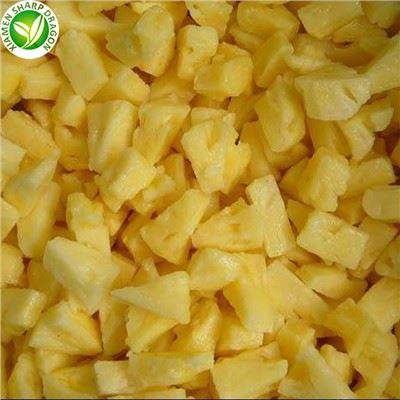
Food form can change the conclusion more than the word pineapple suggests. Fresh-cut fruit has a short refrigerated life and active enzymes. IQF pieces are peeled, cored, cut and frozen for stable storage and portioning. Canned fruit receives heat treatment and may be packed in juice or syrup. Juice has less intact fiber, while dried fruit is more concentrated per 100 g.
Plain IQF pineapple chunks can work in blends, sauces and other recipes when the product preparation directions allow the intended use. The pineapple application guide compares the formats for visible portions and processing.
For an organic order, review the certificate holder, product scope, validity and transaction documents. Compare nutrition from the applicable product information.
For a nutrition comparison, use the same basis on both products: per 100 g as sold, per declared serving or per 100 g drained. Check whether juice, syrup, sugar or another ingredient is included. A can packed in heavy syrup and a plain IQF chunk should not share one sugar statement.
For application performance, consider thaw drip and texture. Ice formation damages some cell structure, so thawed pineapple is usually softer and wetter than fresh-cut fruit. That may be acceptable in blending, sauce or filling, but it can be decisive for visible toppings and fruit salads.

Who Should Use Caution With Pineapple?
Pineapple's acidity and proteolytic enzymes can contribute to a tingling or irritated mouth in some people, especially with a large amount of fresh fruit. That sensation should not be dismissed automatically as harmless. Itching, swelling, hives, wheezing, vomiting, dizziness or breathing difficulty can signal an allergic reaction and require appropriate medical attention.
An occupational report describes allergy after exposure to purified bromelain, and a separate case series describes reactions after eating pineapple. Those reports cannot estimate how common pineapple allergy is. Follow an individual allergy plan and use the facility's ingredient and cross-contact procedures.
People managing blood glucose still need to count the portion and the complete product. Plain fruit contains natural sugar; syrup, sweetened puree, dessert coatings and juice concentrate can add or concentrate carbohydrate. A general glycemic claim is not a substitute for the label and individual advice.
Medication and health-condition questions should be handled by a qualified clinician. Do not use a fruit article to infer the dose or interaction profile of concentrated bromelain supplements. Food, extracts and drugs are different products.
Worked example: A smoothie uses 165 g of plain pineapple, equivalent to the USDA one-cup chunk weight. Energy is 165 g x 50 kcal / 100 g = 82.5 kcal. Carbohydrate is 165 g x 13.12 g / 100 g = 21.65 g, total sugars are 165 g x 9.85 g / 100 g = 16.25 g, fiber is 2.31 g and vitamin C is 78.87 mg before regulatory rounding.
The finished smoothie must include every other ingredient. Yogurt, juice, syrup, sweetener and serving yield can change the result. Use the evidence for the actual frozen pineapple if it differs from the raw USDA record, then apply the destination's label rules.
Frozen Pineapple Buyer Checks That Change the Decision
Nutrition does not rescue a poor specification. Start with variety, origin and harvest maturity, then define cut dimensions, tolerance, core and peel defects, color, Brix, acidity, flavor, texture, broken pieces, clumping and foreign-material control. Tell the supplier how the product will be used and whether it is evaluated frozen, thawed or after processing.
Brix is useful but incomplete. A high reading can indicate soluble solids, yet maturity, acidity and flavor balance still affect eating quality. Use Brix together with sensory review, color and intended application. For a yogurt preparation, small consistent dice and thaw stability may matter more than maximum sweetness.
Cut geometry affects piece count, visual distribution, mixing and thaw rate. A nominal 10 x 10 mm dice needs a measurement method and tolerance. Irregular tidbits may be commercially suitable for puree or blending but unacceptable for a visible topping. Photograph the approved sample and define how off-size pieces are counted.
Set the sampling method before the acceptance limit. A single scoop from the top of one carton may miss clumps, fines or color variation elsewhere in the lot. Define the cartons, inner bags and test portions selected, the thaw condition, the scale or caliper used and the handling of borderline pieces. The method must be repeatable by both parties when a claim or rejection is reviewed.
Color and acidity must fit the application together. A bright yellow piece can look attractive but taste too sharp in a low-sugar dairy base. A sweeter lot may become flat in a sauce that needs acidity. Run the fruit in the actual matrix and hold it for the intended time, then record the sensory target, discoloration, liquid release and piece integrity. That evidence is more useful than approving the fruit on a white plate alone.
| Buyer question | Evidence to request | Failure signal |
|---|---|---|
| Will sweetness fit? | Brix method, range, sample and sensory target | Sweet but flat, sour or fermented flavor |
| Will pieces stay visible? | Cut tolerance, breakage limit and application trial | Excess fines or collapse after thawing |
| Is the label supportable? | Ingredient statement, basis and approved calculation/test | Raw values copied to syrup or prepared product |
| Is the lot shipment-ready? | COA plan, traceability, packing and frozen checks | Clumping, damaged cartons or missing records |
Document controls should match the actual facility and product scope. Review certificate holder, standard, scope and validity; microbiological and pesticide-residue requirements; COA format; traceability; label responsibility; origin documents; packing; and cold-chain records. A website certificate list is only a starting point.
For a product development trial, use the food-processing application guide to record the ingredient form, product preparation and the step at which you measure the finished result.

Practical example: A dairy buyer needs 10 mm pineapple dice for a stirred yogurt. Sample A has 16 degrees Brix but 18% off-size pieces and heavy thaw drip. Sample B has 14.8 degrees Brix, 6% off-size pieces and better piece integrity after a 24-hour refrigerated hold.
If the recipe can adjust sweetness but cannot tolerate fruit breakdown, sample B is the stronger operational choice. The action is to approve the yogurt trial, define the hold method, set cut and breakage limits, and agree how Brix and thaw drip will be checked during production.
Common Pineapple Benefit Claims to Correct
Quenches thirst and helps urination: pineapple contains water and can be refreshing, but the second claim is unnecessary and medically vague. State the measured water content and keep the benefit within normal food use.
Improves digestion: bromelain can digest protein in appropriate systems, but fruit is not a guaranteed treatment for digestive symptoms. Identify the food form and avoid converting an enzyme fact into a clinical outcome.
Prevents constipation: whole pineapple contributes some fiber. Regular bowel function depends on total fiber, fluids, activity, health and individual response, so a prevention promise is too strong.
Good for beauty: vitamin C has a role in collagen formation, but a vague beauty promise is neither measurable nor product-specific. Use an approved nutrient statement if the product and market qualify.
Frozen equals fresh nutrition: frozen fruit can remain nutritious, but cultivar, maturity, pretreatment, storage, thawing and measurement basis affect exact values. Verify the claim you intend to print.

Frequently Asked Questions
1. How many calories are in 100 g of pineapple?
USDA FoodData Central lists about 50 kcal for 100 g of raw pineapple. A frozen, canned, dried or sweetened product may differ, so match the value to the food state and ingredient statement.
2. Does frozen pineapple still contain vitamin C?
It can, but the exact amount depends on raw material, process, storage and analytical basis. Do not copy the raw 47.8 mg value to every frozen product without a matched calculation or test.
3. Is bromelain destroyed by freezing?
Freezing and frozen storage can affect activity, but heat treatment is often more decisive. If enzyme activity matters to your formula, test the actual product and preparation instead of relying on a general answer.
4. Why does pineapple make the mouth tingle?
Acidity and proteolytic enzymes can contribute to irritation, but allergy is also possible. Stop eating and seek appropriate medical help for swelling, hives, wheezing, breathing difficulty, dizziness or a severe reaction.
5. What should a frozen pineapple RFQ include?
Include cut, dimensions and tolerance, Brix, acidity if relevant, maturity, core and defect limits, packing, quantity, application, thaw or cook test, destination, certificate and testing needs, label responsibility and delivery plan.
XMSD sourcing note: Tell us your pineapple cut, Brix target, defect tolerance, packing, application, destination, trial method and document list. We can review a suitable frozen pineapple specification and sample plan for the current project.
References
- USDA FoodData Central: Pineapple, raw, all varieties, food record 169124
- NIH Office of Dietary Supplements: Vitamin C Fact Sheet for Health Professionals
- National Center for Complementary and Integrative Health: Bromelain, Usefulness and Safety
- PubMed: Allergic reactions to bromelain following occupational exposure
- USDA SR28 NDB 09266: raw pineapple, all varieties.
- NIH Office of Dietary Supplements: Manganese.
- University of Georgia Extension: Pineapple and gelatin comparison.
- Published case series of reactions after pineapple ingestion.