


Sea Buckthorn Nutrition, Safety and Frozen Buyer Guide
Apr 08, 2019

Sea buckthorn is often introduced as a "magical" berry, but that label is not useful for a buyer. The orange fruit of Hippophae rhamnoides contains vitamin C, carotenoids, phenolic compounds, organic acids and lipids. Their actual amounts vary with subspecies, growing region, maturity, harvest date, the part of the fruit tested and the processing method. That variation matters: a value from one research sample is not automatically the value of your frozen lot, puree, juice, powder or oil.
For importers, food manufacturers, beverage developers and private-label teams, the practical question is not whether sea buckthorn is a superfruit. It is whether a defined product will deliver the color, acidity, flavor, physical condition, analytical profile, food-safety status and processing performance required by the finished application. A berry for extraction may be accepted with different skin damage or free-flow limits from a whole berry intended for premium retail presentation. A product intended for a cooked sauce also has a different risk and label review from one added directly to a smoothie.
This guide separates established composition evidence from exaggerated health promises and turns the evidence into a frozen-product approval plan. It gives you a realistic way to define raw material, set measurable criteria, review supplier records, compare samples and protect the cold chain. Numeric examples are clearly identified as examples; your signed specification, destination rules, approved laboratory method and representative lot data must control the commercial decision.
The short answer: Sea buckthorn is a nutrient-dense, acidic berry with useful color and flavor for beverages, purees, sauces, dairy alternatives and other formulations. It does not prevent or cure disease. For frozen procurement, approve species and origin, product form, maturity, sensory reference, Brix and titratable-acidity methods where relevant, defect limits, microbiological and residue requirements, intended use, packaging and cold-chain evidence as one connected specification.

Start With the Fruit, Not the Superfruit Story
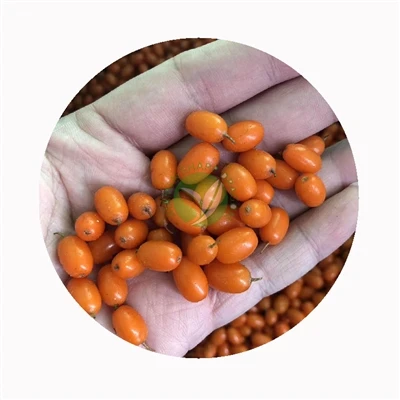
Sea buckthorn is a thorny shrub whose female plants produce yellow, orange or reddish fruit. Reviews describe small berries, commonly only several millimeters across, with a thin waxy skin, juicy pulp and a seed. The fruit is naturally tart and can be astringent. Those characteristics explain why commercial use often involves freezing, juicing, pureeing, sweetening, blending or drying rather than presenting the raw berry as a sweet snack.
The plant's tolerance of cold, drought or poor soil may be relevant to agronomy, but it does not tell you whether a shipment is suitable for food production. A crop can come from a hardy plant and still miss the buyer's requirements for maturity, hygiene, foreign material, pesticide-residue compliance, temperature control or packaging. Treat farm and origin information as traceability inputs, not as a substitute for finished-product evidence.
Species and botanical identity should appear in the technical file when your market, customer or claim requires it. Commercial names such as sea buckthorn, seaberry and sea berry can be used inconsistently. Ask the supplier to confirm the botanical name, growing origin, harvest season and whether the supplied material is whole fruit, seedless pulp, juice, concentrate, pomace, seed, fruit oil or seed oil. These materials have different compositions, allergen and contaminant considerations, analytical methods and legal positions.
A useful starting point is the XMSD frozen sea buckthorn range, but the category name alone is not an approval. Write the requested form and use in the inquiry. For example: "IQF whole sea buckthorn berries for beverage extraction, industrial pack, cooking step after thawing" is much more actionable than "best sea buckthorn, high vitamin C."
What Sea Buckthorn Actually Contains
Scientific reviews consistently identify vitamin C, carotenoids, tocopherols, phenolic compounds, flavonoids, organic acids, sugars, fiber, minerals and lipids in sea buckthorn fruit. That broad composition is real. It is also the reason that single-number marketing can be misleading. Vitamin C is water soluble and sensitive to oxygen, time and processing. Carotenoids and tocopherols are fat-associated compounds. Organic acids drive tartness, while sugars and aromatic compounds shape balance. Seed, skin and pulp do not contain these components in the same proportions.
Published values span wide ranges because researchers examine different subspecies, regions, growing years, maturities and test methods. A paper may report a high vitamin C result for one fresh cultivar, yet your lot can be a different cultivar that was frozen, stored and later processed into puree. Both results can be valid for their samples. Neither supports copying one dramatic number into every sales sheet. For nutrition labeling, use a representative analysis or another method accepted by the destination authority and identify whether the value applies to the product as sold or after preparation.
Color is also evidence, but it is not a direct assay of nutrient content. Orange and red pigments can signal carotenoids, while browning, pale fruit or uneven color may indicate maturity or handling differences. Visual inspection can help you sort lots and protect brand consistency; it cannot prove an exact carotenoid concentration. If your finished product makes a nutrient or antioxidant claim, the claim needs a named analyte, validated method, sampling plan, stability basis and legal review.
Sea buckthorn also contains oil in the seed and fruit tissues. This makes the berry different from many low-lipid fruits and contributes to its processing behavior and flavor. It does not make a whole frozen berry equivalent to a bottle of seed oil or fruit oil. If the commercial objective is a defined fatty-acid or oil profile, purchase and test the correct material. Do not use whole-berry composition to substantiate an oil claim or use an animal study on concentrated oil to promise an effect from a beverage.
Worked example: For nutrition claim control, suppose a pilot puree tests at 160 mg vitamin C per 100 g at production, and a private-label team plans a 50 g serving. The simple starting calculation is 80 mg per serving because 160 multiplied by 0.5 equals 80. That is not yet a compliant label value. The team must still consider representative-lot sampling, processing loss, shelf-life change, the destination's rounding rules and the legal threshold for the intended claim. A conservative declared value may be lower than the first pilot result.

Evidence Limits: Nutrition Is Not a Medical Promise
Laboratory studies and reviews discuss antioxidant, anti-inflammatory and other biological activities associated with sea buckthorn compounds. These findings help researchers identify possible mechanisms and future applications. They do not mean that an ordinary serving of frozen berries prevents cancer, treats cardiovascular disease, repairs the liver, controls blood sugar, stops aging or guarantees stronger immunity. Those are medical or disease-risk claims that require much stronger evidence about a defined product, dose, population and outcome.
Human trials are limited and often examine extracts, oils or formulations rather than the same whole berry a buyer is sourcing. An observed effect from a concentrated standardized extract cannot be transferred automatically to an IQF fruit. Animal and cell studies are valuable research stages, but their doses and conditions may not match normal food use. Responsible copy can say that sea buckthorn contains vitamin C, carotenoids and phenolic compounds when supported by product data; it should not convert those facts into a treatment guarantee.
Safety also depends on form and use. The acidity and astringency may make a high inclusion rate unpleasant or unsuitable for some formulations. Concentrated supplements and oils are not evaluated in the same way as conventional food portions. People who are pregnant, managing a medical condition, taking medication or using concentrated supplements should obtain qualified medical advice. A food article cannot determine an individual dose or replace destination-specific safety and regulatory assessment.
For commercial communication, separate three layers. First is composition: what the representative product contains. Second is normal food use: how it contributes flavor, color and nutrients to a finished recipe. Third is a regulated claim: what you are legally allowed to state on the label or advertising. Moving from one layer to the next requires additional evidence. A supplier's certificate of analysis can support the first layer, but it does not approve the buyer's final health claim.
Why Freezing Helps and What It Does Not Fix
Sea buckthorn has high moisture, thin skin and limited fresh storage life. Research reviews therefore describe freezing as a common preservation step before further processing. Rapid freezing can stabilize the harvested material, extend the processing window and make year-round industrial use possible. It also supports portioning when the product remains sufficiently free flowing. The benefit depends on raw-material condition, time from harvest to freezing, freezing rate, package protection and frozen storage control.
Freezing does not improve poor fruit, remove foreign material, correct pesticide-residue noncompliance or inactivate every pathogen. The U.S. FDA has linked fresh and frozen berries to outbreaks of hepatitis A virus and norovirus and emphasizes farm hygiene, sanitary facilities, worker health, water management and cross-contamination prevention. Sea buckthorn is not identical to the soft berries studied in every investigation, but the central buyer lesson remains valid: a frozen state is a preservation condition, not a universal kill step.
A 2022 study on one sea buckthorn cultivar compared several freezing regimes and followed water content, soluble solids, soluble sugar, titratable acidity, ascorbic acid, flavonoids and phenolics during storage. Many measured quality attributes declined over time, and the results varied with temperature. This is useful evidence that frozen quality is not static. It is not a universal shelf-life specification because the study used one cultivar, defined laboratory conditions and its own methods.
For procurement, translate the science into controls you can verify: maximum time from harvest to freezing, frozen storage target, lot code, production date, loading temperature, data-logger plan, packaging condition and a sensory or analytical release check. If vitamin C retention is commercially important, add a representative test and shelf-life plan rather than assuming that a low freezer set point preserves the original value indefinitely.
Define the Product Form and Intended Use
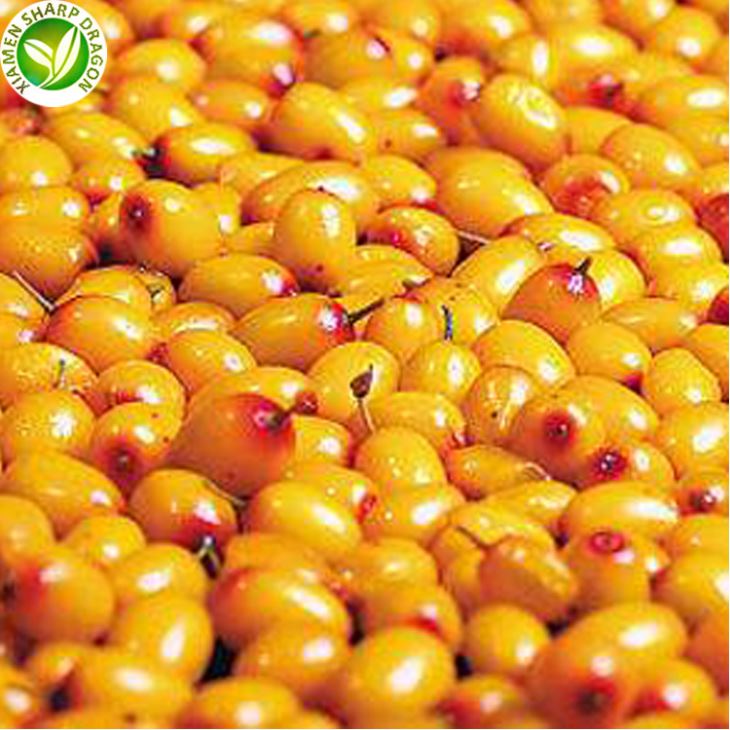
Whole IQF berries suit extraction, puree, beverage, sauce and some visible-fruit applications. They are small, tart and delicate, so natural skin splits can occur; define the acceptable level for your use. A puree program may focus on color, acidity, seed or skin separation and microbial status. Juice or concentrate requires a concentration basis and reconstitution method. Seed oil, fruit oil, dried powder and pomace are separate ingredients and should not be quoted against a whole-berry specification.
State whether the product will receive a validated heat treatment after thawing. If it will be blended into a beverage or dessert without a final kill step, that intended use must be visible to the supplier and QA team. Do not assume that a product is ready to eat because it was washed or frozen. Review the process flow, hazard analysis, environmental and product monitoring, destination rules and label instruction for the actual use.
For a practical view of the physical form, see the IQF sea buckthorn berry product example. Treat any listed values as a starting point for inquiry, not as a promise for every lot. Ask for a current specification, representative sample, facility scope and written confirmation for your order.
Application trials should reflect the finished process. For a beverage, evaluate thawing, crushing, filtration, sweetness-acidity balance, color change, sediment and heat response. For a sauce, check viscosity, seed and skin perception and cooking stability. For retail whole fruit, emphasize intact appearance, free flow, pack seal and preparation instructions. One generic sample score cannot approve all three applications.

Build a Measurable Frozen Sea Buckthorn Specification
Avoid relying on words such as premium, natural, high nutrition or export quality. A specification should tell both parties how to inspect the lot and what happens when a result is outside the limit. The exact limits depend on your product and destination, but the following structure exposes the decisions that must be made before price comparison.
| Attribute | What to define | How to verify |
|---|---|---|
| Identity | Botanical name, origin, crop year, whole berry or other form | Specification, traceability record and label |
| Sensory | Orange or golden color range, tartness, aroma, off-notes, reference sample | Defined thawed or processed sensory method |
| Physical | Size method, intact fruit, splits, stem material, leaves, foreign matter and hard clumps | Named sample mass and weight or count basis |
| Analytical | Brix, pH, titratable acidity, vitamin C or other required analyte | Agreed method, temperature, sample preparation and laboratory |
| Safety | Microbiological criteria, pesticide-residue plan, contaminants and foreign-material controls | Destination rules, COA, monitoring plan and verification |
| Pack and cold chain | Net weight, liner, carton, seal, code, pallet and frozen storage target | Pack check, loading record, logger and arrival inspection |
Brix is useful only when the method is controlled. A reading can change with thawing, sample homogenization, solids separation and temperature. Titratable acidity and pH answer different questions; do not use one as a substitute for the other. If flavor balance is important, evaluate Brix, acidity and sensory response together. A berry with a higher soluble-solids reading can still taste sharply acidic or differ in aroma.
Defect categories need clear photographs or retained samples. Separate normal color variation from discoloration, a light skin split from crushed fruit, loose small clusters from hard frozen blocks and plant material from true foreign material. Define the denominator: defects by weight, pieces per sample or another basis. Otherwise the buyer and supplier can test the same sample and produce different percentages.
Food Safety, Testing and Destination Fit
Begin with the intended use and the destination law. Map the actual farm, processor, cold store and packing facility. Review the certificate holder, address, standard, scope and validity rather than accepting a logo on a sales sheet. Confirm agricultural-water controls, worker hygiene, field sanitation, raw-material reception, washing, sorting, foreign-material controls, environmental hygiene, frozen storage and release responsibility.
Microbiological testing is verification, not a replacement for preventive controls. A negative result represents the tested sample and method; it cannot prove that every berry in a large lot is free from every hazard. Define the target organisms, method, sampling plan, laboratory accreditation, lot relationship and action on a positive or out-of-limit result. Consider enteric-virus risk where relevant to the product, origin and intended use rather than relying only on routine bacterial counts.
Pesticide-residue compliance must match the destination maximum residue limits and the crop-use pattern. Ask how the residue plan is built, how suppliers and farms are approved, which analyte panel is used and how often risk is reassessed. "Meets international standards" is not measurable because limits and permitted uses differ among markets. The current order should identify the destination and any buyer-specific restricted-substance list.
Use the broader XMSD frozen produce safety guide to structure facility, testing and document questions. For sea buckthorn specifically, add the intended thawed or cooked use, the field-hygiene evidence and the exact form being supplied. A juice ingredient, whole retail berry and oil should not share one generic hazard review.
Worked example: For defect acceptance, suppose the agreed plan examines ten 1 kg samples from a lot and allows no more than 2.0% damaged fruit by weight. The combined sample contains 270 g of damaged berries. The observed rate is 2.7% because 270 g divided by 10,000 g equals 0.027. The result is 0.7 percentage point above the limit. Hold the lot, confirm that the sampling and classification were correct, document the affected codes and follow the contractual resampling or claim rule; do not silently average it with a different lot.

Packing, Storage and Arrival Inspection
A bulk pack commonly uses a food-grade inner liner and an outer carton, but the correct structure depends on net weight, handling and shelf life. Approve liner material and closure, carton strength, code position, net weight, pallet configuration and any private-label artwork. The pack must limit dehydration and protect the delicate berries without creating a difficult industrial opening step. If the buyer will remove small amounts repeatedly, define how the opened pack will be protected.
Keep the product at the signed frozen-storage condition through storage, loading, transport and receipt. Confirm pre-cooling, container pre-trip inspection, set point, air circulation, loading pattern and data-logger placement. Avoid declaring a universal shelf life without product and pack evidence. Quality can change even while a product remains frozen, and repeated temperature fluctuation can encourage ice recrystallization, clumping, moisture loss and texture damage.
At arrival, inspect before normal warehouse movement hides the evidence. Record seal and container condition, logger status, representative product temperatures, pallet stability, wet or crushed cartons, liner integrity, code legibility and hard clumping. Photograph the affected positions and link observations to lot codes. If there is a deviation, quarantine the relevant product and assess it under the agreed procedure; one door reading or one perfect carton does not represent the entire load.
For kitchen or pilot use, the practical frozen sea buckthorn handling article can help application teams plan portioning and preparation. The final method must still follow the approved product label and food-safety program. Do not refreeze thawed product unless a validated manufacturing process and specification explicitly allow it.

Buyer Approval Checklist
- Identify the material: botanical name where required, origin, crop year, whole berry or other form, and ingredient statement.
- State the application: beverage, puree, sauce, supplement, retail pack or another use, including the final heat-treatment status.
- Lock sensory expectations: retained sample, color range, tartness, aroma, skin or seed perception and unacceptable off-notes.
- Define physical limits: size method, intact fruit, splits, crushed fruit, plant material, foreign matter, loose clusters and hard blocks.
- Name analytical methods: Brix, pH, titratable acidity, vitamin C or other analytes only where they support the application.
- Confirm safety and legality: facility scope, farm and water controls, microbiological plan, residues, contaminants, label responsibility and destination rules.
- Approve the pack and logistics: liner, carton, net weight, code, pallet, storage condition, loading evidence and logger plan.
- Set the decision rule: sampling plan, calculation basis, COA requirements, retained sample, pre-shipment review and arrival-claim procedure.
Send the checklist with the inquiry and ask the supplier to mark each item as confirmed, alternative proposed or information required. This makes quotations comparable. A lower price may reflect a different crop, defect tolerance, pack, test panel, claim basis or inspection scope. When a requirement is uncertain, run a documented pilot and approve measurable acceptance criteria before committing the commercial order.
XMSD can help connect the commercial request with the appropriate supply, pack and documentation review. Our frozen-food solutions overview shows how retail, foodservice and processing programs require different inputs. We will confirm what is available for the current project rather than treating a historic specification or web page as an automatic order guarantee.
XMSD sourcing note: Tell us your sea buckthorn form, application, destination, intended treatment after thawing, sensory target, analytical requirements, defect limits, pack and document list. We will review the matching frozen-product specification and sampling plan for the current project.
Frequently Asked Questions
Is sea buckthorn really a superfruit?
"Superfruit" is a marketing term, not a uniform scientific or legal grade. Sea buckthorn contains vitamin C, carotenoids, phenolic compounds, organic acids and lipids, but amounts vary. Evaluate the representative product and permitted label claims rather than assuming that the word proves composition, quality or a health outcome.
Does freezing destroy sea buckthorn nutrition?
Freezing helps preserve the harvested fruit, but composition can change with time, temperature, oxygen exposure, thawing and later processing. Research has observed declines in several measured quality attributes during frozen storage. If a nutrient value matters commercially, test the actual product with an agreed method and include shelf-life stability in the label plan.
Can frozen sea buckthorn be eaten without cooking?
Do not assume that freezing makes a berry ready to eat. Follow the approved label and intended-use specification. A smoothie, dessert or other no-cook application requires the supplier and buyer to evaluate the process, preventive controls, microbiological and viral risks, regulatory requirements and any validated treatment for that product.
Which numbers should be in a frozen sea buckthorn specification?
Use only numbers that support the application and can be tested consistently. These may include size, physical-defect limits, Brix, pH, titratable acidity, microbiological criteria, net weight and storage condition. Define the method, sample preparation, denominator and lot decision rule. Vitamin C or other nutrient values need representative evidence when used on a label.
What should a buyer send with a sea buckthorn inquiry?
Send the product form, application, destination, annual and trial volume, intended treatment, sensory reference, analytical targets, defect limits, packaging, label responsibility, required certificates and inspection plan. These details allow the supplier to confirm the correct lot and expose any gap before price and production are finalized.
References
- Tkacz, K. et al. Why is sea buckthorn so exceptional? A review. Food Research International, 2020. Review of composition, sensory properties and evidence boundaries.
- Wang, Z. et al. Phytochemistry, health benefits, and food applications of sea buckthorn. Frontiers in Nutrition, 2022.
- Li, M. et al. Quality attributes of sea buckthorn berries under differing freezing regimes. Foods, 2022. Cultivar-specific frozen-storage research.
- Zhang, Y. et al. Sea buckthorn pretreatment, drying and processing of high-quality products. Foods, 2023. Review of preservation and processing methods.
- U.S. Food and Drug Administration. Strategy to prevent norovirus and hepatitis A outbreaks associated with fresh and frozen berries. Current prevention and supply-chain control guidance.