

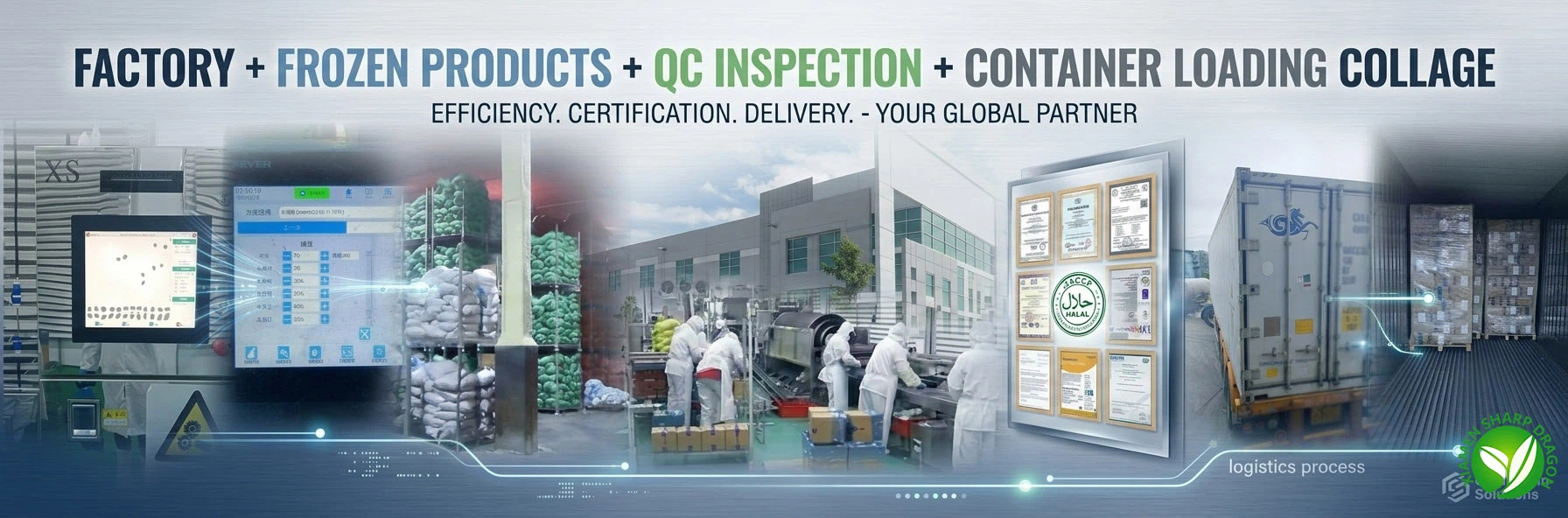
How Frozen Edamame Beans Are Processed: From Harvest to IQF Packing
Apr 28, 2023

Commercial frozen edamame beans are normally processed in one connected sequence: harvest and rapid delivery, raw-material acceptance, sorting, washing, optional shelling, blanching, immediate cooling, draining, individual quick freezing, frozen inspection, packing, storage, and refrigerated distribution. The order matters because each stage prepares the product for the next. Washing removes soil and debris but does not replace a validated food-safety control. Blanching manages enzyme activity and strongly affects color, flavor, texture, and microbial quality. Cooling stops further heating. Draining limits surface water before IQF freezing, and the cold chain protects the condition created by the line.
There is no single time-and-temperature recipe for every edamame product. Whole pods, shelled kernels or mukimame, salted packs, cook-before-eating items, and ready-to-eat products do not share one process specification. We recommend reading a public flow chart as a map, then verifying the quoted item with its current process flow, validated control limits, batch records, label instructions, approved sample, and arrival criteria. That is how you distinguish a plausible diagram from a controlled product.
The short answer: Process frozen edamame quickly after harvest, remove unsuitable material, wash and prepare the correct product form, blanch under validated conditions, cool immediately, drain thoroughly, freeze rapidly, inspect and pack the frozen product, then maintain the agreed cold chain. Approve the result by product performance and records, not by freezer-air temperature or a generic process diagram alone.

The Industrial Flow in Ten Connected Stages
A useful process flow names the product state at each transition. "Edamame" is not precise enough when one line handles pods and another handles exposed kernels. The following sequence is the normal commercial framework, but a factory may combine or separate operations according to equipment, product form, intended use, and its validated food-safety plan.
- Harvest and delivery: move edamame from field to processing with time and temperature managed to limit quality loss.
- Receiving and lot identification: check product identity, maturity, appearance, defects, condition, and the records required by the raw-material programme.
- Sorting and preparation: remove unsuitable pods, plant material, and foreign matter; trim or shell when the quoted product requires it.
- Washing: use controlled water and equipment to remove soil and debris before thermal processing.
- Blanching: expose the defined product load to a validated heat treatment for the stated quality and safety objectives.
- Rapid cooling: stop residual heating promptly and bring the product to the validated post-blanch condition.
- Draining and dewatering: remove surface water that would otherwise create ice, clumps, and inconsistent frozen weight.
- IQF freezing: spread the product evenly, pass it rapidly through the main ice-crystal formation zone, and reach the defined product temperature.
- Frozen inspection and packing: assess separation, defects, foreign-material controls, weight, seals, codes, labels, and pack integrity.
- Frozen storage and distribution: release identified lots, load them under controlled conditions, and maintain the specified cold chain through delivery.
The sequence protects both quality and traceability. If lot identity is lost before blanching, a later deviation cannot be isolated confidently. If cooling is weak, IQF freezing cannot reverse heat-softened texture. If the frozen product warms during packing, a good freezer run may still reach you with frost and clumps. We therefore evaluate the handoffs as carefully as the main machines.

Raw Material Sets the Ceiling for the Finished Product
Frozen edamame quality begins before the freezer. At receiving, keep the crop lot identifiable and apply a written basis for maturity, pod fullness or kernel condition, color range, damage, disease, insect injury, foreign material, and any chemical-residue controls required for the destination. Processing can remove unsuitable pieces and stabilize a good raw material, but it cannot turn over-mature, yellowed, fibrous, or badly damaged edamame into a uniform premium product.
Time after harvest matters more than a universal calendar claim. Virginia Cooperative Extension explains that prompt cooling and blanching after harvest support better edamame quality. A fixed "June to August" season is not reliable across origins, cultivars, spring and autumn crops, or hemispheres. If continuity matters to your programme, ask how each supply window is identified, how incoming maturity is judged, and whether the approved sample represents the same crop and specification as the order.
Measurements only help when the method is defined. Pod count per stated weight, pod length, fullness, kernel size distribution, or defect percentage may all be useful, but an attractive photograph of one pod does not establish a lot limit. Put the sampling plan, measurement method, unit, tolerance, and disposition rule in the specification. Then use the same method for approval and arrival inspection.
Practical example: Suppose your foodservice appetizer requires full pods that look consistent in a serving basket. Do not approve the item from an average length alone. Define the sample size, count empty or poorly filled pods, record the agreed size method, prepare the sample by the intended cooking method, and score fibrousness and bite. A lot with acceptable average length can still fail if the fullness distribution or prepared texture falls outside the approved range.
Sorting and Washing Prepare the Product, but They Do Not Prove Safety
Sorting removes visibly unsuitable pods or kernels, plant fragments, and foreign material before those defects travel further. The work may be manual, mechanical, optical, or a combination. The method should match the defect: a size grader separates by dimension, while visual inspection addresses color, damage, skins, stems, and other visible characteristics. One machine name cannot stand in for a complete defect-control method.
Washing is equally specific. It removes soil and debris and prepares the surface for later operations. Virginia Tech's edamame processing review notes that rinsing does not contribute significantly to microbial reduction. That boundary prevents a common mistake: a clean-looking product is not evidence that the process has controlled every relevant biological hazard. Water quality, flow, change frequency, equipment sanitation, and the product's later heat treatment belong in the actual food-hygiene system.
We also separate rework from routine flow. If inspection removes a small quantity of visible defects, the line may continue within its written controls. If incoming material shows a condition that the validated process was not designed to manage, the correct action may be hold, evaluation, or rejection. The hazard analysis and raw-material programme should decide that path before production pressure appears.

Blanching and Rapid Cooling Must Be Validated as a Pair
Blanching is usually the decisive heat step in frozen edamame processing. It reduces activity of enzymes associated with quality deterioration and changes color, flavor, texture, and microbial condition. Too little heat can leave an unsuitable enzyme, flavor, or texture result. Too much heat can soften the product and increase quality loss. The useful question is not simply "Was it blanched?" It is "Which product form, load, time-temperature relationship, process target, monitoring point, and verification method define an acceptable result on this line?"
Published figures show why the process needs validation. One Virginia Tech pilot example used boiling water at 98°C ± 1°C for one minute, followed immediately by a 4°C ± 1°C cooling bath for two minutes. The same review cites other research using different conditions for whole pods and shelled beans. These are evidence examples, not an XMSD production promise and not a universal purchase limit. Equipment design, product size, pod versus kernel form, starting temperature, bed depth, feed rate, and the intended product status can all change the required operating window.
Cooling completes the control pair because product leaving the heater continues to carry energy. Slow or uneven cooling extends effective heat exposure and may create soft spots or inconsistent color. The flow should show the transfer time, cooling method, capacity at peak throughput, endpoint or monitoring basis, and action after a deviation. It should also show how water is removed before freezing.
Practical example: If a pilot test gives an acceptable pod result at 98°C for one minute and two minutes of cold-water cooling, do not copy those numbers directly into a high-throughput tunnel specification. Load the commercial line at its intended rate, locate the least-heated and slowest-cooled product positions, assess the validated endpoint, and compare texture and color after the intended preparation. Approve the commercial window only when it controls the target across the real load.
Safety note: "Blanched" does not automatically mean ready to eat. The agreed product description, intended use, validated food-safety system, microbiological criteria, label instructions, and destination rules must establish whether the item requires further cooking. Keep "blanched," "pre-cooked," "cook before eating," and "ready to eat" as separate claims.

Draining and IQF Freezing Determine Separation
Surface water links cooling to freezing. Water left on a pod or kernel becomes external ice, adds uncontrolled frozen mass, and can bridge pieces into clumps. Effective draining may use vibration, air, centrifugal equipment, time, or a combination suited to the product. The acceptance result is visible at the freezer exit: the product should match the agreed free-flowing condition, surface-ice limit, piece integrity, and temperature method.
IQF means that units are frozen so they remain reasonably separable, not that every freezer with cold air produces the same outcome. Product size, starting temperature, surface moisture, feed rate, belt loading, airflow, and residence time all affect the freezing load. A tunnel-air reading is therefore incomplete. Check the product at the defined location and time, and relate the result to separation and application performance.
Codex defines quick-frozen vegetables as products that pass rapidly through the main crystallization range and reach −18°C at the thermal centre after thermal stabilization. The standard also calls for −18°C or colder through the cold chain and explains where its permitted tolerances apply. That is an authoritative product and handling reference, not a substitute for a factory's validated freezer settings or for destination-specific requirements. In particular, freezer-air temperature and product-centre temperature are not interchangeable measurements.
When clumping appears, trace the chain before assigning one cause. Excess surface water, overloaded belts, inadequate residence time, warm transfer to packing, slow carton freezing, temperature cycling, or partial thawing can create similar symptoms. Review the freezer-exit result, pack-room exposure, storage and transport records, and the distribution of frost inside the pack. One isolated thermometer reading rarely explains the entire defect.
Worked example: In a hypothetical arrival check, you combine five 200 g subsamples for a 1,000 g frozen test portion. After the agreed gentle separation method, inseparable clumps weigh 68 g. The clump share is 68 g ÷ 1,000 g × 100 = 6.8%. Compare 6.8% with the contract limit and approved sample; do not invent a universal pass number. If it fails, hold the affected lot and review surface-water control, freezer-exit records, pack-room time, and transport history before deciding disposition.

Product Form Changes the Process and the Acceptance Method
Whole pods and shelled edamame come from the same crop, but they expose different surfaces, defects, equipment interactions, and application risks. Shelling may occur before blanching or through a staged frozen route, depending on the validated process. Salted or retail-prepared products add ingredient, label, and pack-function controls. Request the flow for the exact quoted item; a category-level diagram cannot define all three formats.
| Product form | Process question | Acceptance method |
|---|---|---|
| Edamame in pods | How are maturity, fullness, pod size, surface condition, blanching, intact shape, and empty pods controlled? | Prepare by the intended method, then score appearance, fullness, fibrousness, bite, flavor, damaged pods, and service presentation. |
| Shelled kernels / mukimame | Where does shelling occur, and how are skins, broken kernels, size distribution, blanching, water removal, and separation controlled? | Measure free-flowing condition, skins, broken pieces, color, water release, bite, and integrity in the actual bowl, salad, blend, or ready meal. |
| Salted or retail-prepared pack | Where are seasoning, declared ingredients, cooking status, preparation directions, fill weight, and pack function controlled? | Test flavor distribution, label accuracy, seal and pack behaviour, heating result, and intended-use status in the finished retail configuration. |
If your line doses shelled kernels into a ready meal, a pod-count specification adds little value. Focus instead on kernel size distribution, broken pieces, skins, free ice, dose repeatability, water release, and texture after the complete heating cycle. If you sell pods as a snack, visual presentation, fullness, pod defects, and bite become central. We use the application to decide which process evidence and sample tests deserve the most attention.
Our current frozen edamame range shows pod and kernel formats. Use it to choose the form for discussion, then control the order with the item-specific specification, process flow, pack artwork, and approved sample.

Packing, Release, and Cold-Chain Control Finish the Job
Packing is part of the process, not decoration after production. The pack must protect frozen product, close reliably, carry the correct identity, and withstand the distribution route. Retail bags, foodservice liners, and industrial cartons face different fill weights, opening patterns, seal stresses, label needs, and pallet loads. Evaluate the filled pack under frozen conditions; an unfilled film data sheet does not show seal contamination, corner stress, carton fit, or behaviour after handling.
Release connects inspection to shipment. The agreed plan may include appearance and defect review, weight control, pack and code checks, foreign-material controls, temperature checks, and specified analytical results. Do not copy "CCP1" or "CCP2" from another factory's diagram. Codex requires significant hazards, control measures, critical limits, monitoring, corrective action, verification, validation, and records to follow the actual hazard analysis. The same step may carry different control significance in another product or process.
Edamame is soybean, so allergen identity belongs in formulation, change control, cleaning, label review, and release. For products marketed in the United States, FDA identifies soybeans as a major food allergen and describes manufacturing and labeling controls for allergen cross-contact and undeclared allergens. Apply the law and label format of the destination market rather than assuming the U.S. declaration is universal.
Cold storage preserves the frozen result; it cannot repair poor blanching, excess surface water, broken packs, or a weak seal. Codex's −18°C product and cold-chain benchmark gives a useful starting point, while the purchase agreement should define the measurement location, tolerance, recorder expectations, action after an excursion, and arrival method. Separate quality symptoms such as freezer burn or surface frost from a food-safety conclusion. Review the time-temperature history, package condition, intended use, and validated plan before deciding lot disposition.
XMSD's frozen packaging overview provides a practical starting point for pack-structure discussion. The agreed item specification, artwork approval, filled-pack test, pallet configuration, and route requirements remain the controlling evidence.

How to Verify the Process Before You Approve a Supplier
Start with one order-specific document set: item name and form, intended use, current flow diagram, finished-product specification, packing specification, allergen status, label or carton artwork, sampling and test plan, preparation statement, and assigned destination-market responsibilities. Compare names, codes, and revisions. A salted pod flow cannot approve an unsalted kernel item unless the documented differences are clear.
Next, connect decisive flow stages to evidence. For raw-material release, blanching, post-cooling condition, freezer exit, frozen inspection, packing release, and storage, ask five questions: what is measured, where is it measured, how often, against which limit, and what happens after a deviation? A complete answer includes the record and the affected-product disposition. Photographs of stainless equipment show physical context, but they do not prove monitoring, validation, certification, or capacity.
Then test a traceable sample in your real application. Record sample identity, frozen condition, portion, preparation method, equipment, hold time, and scoring criteria before the test. For kernels used in a ready meal, observe dosing, separation, water release, bean skins, breakage, color, texture, and distribution after the full heat-and-hold cycle. For pods, score fullness, defects, bite, fibrousness, flavor, and serving appearance. Keep the approved range, not only a pass/fail email.
Finally, repeat the decisive observations at arrival. Check seal and vehicle condition, carton and inner-pack integrity, codes, lot identity, quantity, agreed transport records, visible thawing or refreezing signals, frost and clumps, and a representative application sample. Hold questionable product while you compare records and samples. Accept, conditionally accept, or reject according to the contract and inspection plan rather than the pressure to unload quickly.
For equipment discussions, our processing and quality-control equipment overview helps you identify the machines involved. For food-safety questions, use the separate frozen edamame quality and safety overview as a prompt for document review. Neither page replaces the current records for the lot and item you are approving.
XMSD sourcing note: Send us your required pod or kernel form, intended use, target specification, pack format, preparation status, and destination market. We can discuss the matching edamame item and the process evidence needed for sample approval.
Final Thoughts from XMSD
Frozen edamame processing is a chain of linked controls. Raw material sets the starting quality; sorting and washing prepare it; validated blanching and cooling shape stability and texture; draining and IQF freezing determine separation; packing and release protect identity; and the cold chain maintains the frozen result. The strongest approval decision combines the exact product flow with validated limits, traceable records, an application-based sample, and arrival criteria written before shipment.
References
- Virginia Cooperative Extension - Edamame Processing: What Do I Need to Know?
- Virginia Cooperative Extension - Edamame in Virginia III: Handling and Processing from Harvest to Package
- Codex Alimentarius - Standard for Quick Frozen Vegetables (CXS 320-2015)
- FAO and WHO - General Principles of Food Hygiene (CXC 1-1969)
- U.S. Food and Drug Administration - Food Allergies
- XMSD operational experience in frozen-food sourcing, IQF processing, quality control, packaging, and B2B export coordination.