


Nutritional Value of Frozen Zucchini: What Processing Changes
Apr 28, 2023

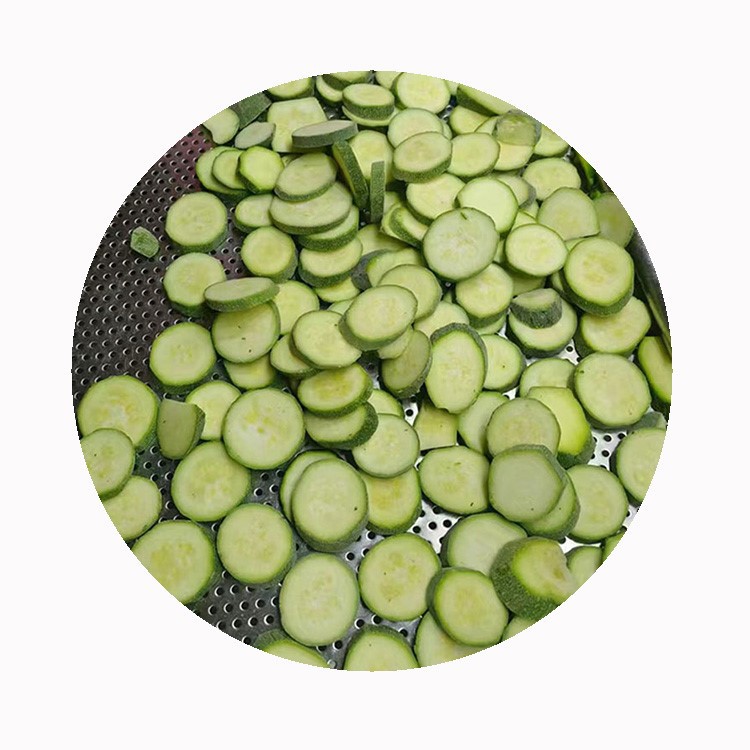
Plain frozen zucchini remains a low-energy vegetable that supplies water, a modest amount of fiber, potassium, vitamin C, folate, and carotenoids. USDA FoodData Central lists 100 g of frozen, unprepared zucchini with skin at 17 kcal, 1.16 g protein, 3.58 g carbohydrate, 1.3 g fiber, 218 mg potassium, and 5.3 mg vitamin C. Those figures describe a specific database food form; they are not a promise for every cultivar, blanching program, cut size, storage period, or prepared dish.
The most useful conclusion is not that frozen zucchini is nutritionally identical to fresh zucchini. It is that properly handled frozen zucchini remains a practical vegetable ingredient, while water-soluble nutrients and texture can change during blanching, draining, frozen storage, thawing, and cooking. If you evaluate a retail pack, foodservice carton, or ready-meal input, compare the same basis: plain product versus plain product, per 100 g as sold or per 100 g prepared. Added oil, breading, cheese, salt, or sauce can change the final nutrition profile far more than freezing alone.
The short answer: Frozen zucchini keeps meaningful nutritional value, but "keeps all nutrients" is too broad. Use the product's actual food form and preparation basis, expect some change in vitamin C and folate, and judge usable quality through cut consistency, cooking performance, drained yield, packaging, and cold-chain history.

What 100 g of Plain Frozen Zucchini Provides
FoodData Central's entry for "squash, summer, zucchini, includes skin, frozen, unprepared" gives a useful reference point for a plain ingredient. It is an SR Legacy composite entry, so we use it to understand the general profile rather than to certify a shipment or create a destination-market label without further review. The figures below are per 100 g edible portion.
| Nutrient | Amount per 100 g | How to interpret it |
|---|---|---|
| Energy | 17 kcal | Low energy before oil, breading, cheese, or sauce is added |
| Protein | 1.16 g | A small contribution, not a protein-focused ingredient |
| Carbohydrate | 3.58 g | Includes 1.71 g total sugars in the database entry |
| Dietary fiber | 1.3 g | Useful, but only about 5% of the U.S. 28 g Daily Value |
| Potassium | 218 mg | A contribution to dietary intake, not a high-potassium claim by itself |
| Vitamin C | 5.3 mg | About 6% of the U.S. 90 mg Daily Value per 100 g |
| Folate | 10 µg DFE | A modest amount on this food-form basis |
| Lutein + zeaxanthin | 2,100 µg | Composition data, not proof of a clinical outcome |
Vitamin C acts as an antioxidant and is needed for collagen formation, immune function, and absorption of iron from plant foods. Potassium participates in normal nerve transmission and muscle contraction. Fiber contributes to the structure of a varied diet and can support bowel regularity when total fiber and fluid intake are adequate. These are established physiological roles of nutrients; they do not mean that a serving of zucchini prevents cancer, treats constipation, controls diabetes, or produces another guaranteed medical effect.
The portion matters. A small garnish and a full vegetable side do not deliver the same amount. The final dish matters too. Plain zucchini is low in fat and sodium, but a breaded fried zucchini product or a creamy casserole must be evaluated from its full ingredient statement and nutrition panel. Do not transfer the plain-ingredient values to a prepared product.
Worked example: For a hypothetical 150 g portion of plain frozen, unprepared zucchini, multiply each 100 g value by 1.5. The reference portion would provide about 25.5 kcal, 1.95 g fiber, 327 mg potassium, and 7.95 mg vitamin C. This calculation is useful for menu planning, but a commercial label still needs the approved data source, recipe basis, rounding rules, and destination-market requirements that apply to the finished product.

Frozen, Raw, and Cooked Numbers Are Not Interchangeable
A comparison can be useful only when the food descriptions and measurement bases are visible. The following FoodData Central entries all refer to zucchini with skin and report values per 100 g edible portion. They still represent separate composite foods, not the same batch measured at three consecutive stages. Variety, maturity, sampling, blanching, drainage, and analytical method may contribute to the differences, so the table should not be used to calculate a precise percentage retention for a specific factory lot.
| Food form per 100 g | Energy and fiber | Potassium, vitamin C, folate, lutein + zeaxanthin |
|---|---|---|
| Raw | 17 kcal; 1.0 g fiber | 261 mg; 17.9 mg; 24 µg DFE; 2,120 µg |
| Frozen, unprepared | 17 kcal; 1.3 g fiber | 218 mg; 5.3 mg; 10 µg DFE; 2,100 µg |
| Frozen, boiled and drained | 17 kcal; 1.3 g fiber | 194 mg; 3.7 mg; 8 µg DFE; 1,880 µg |
The table illustrates two practical points. First, calories and macronutrients remain broadly similar in these reference entries. Second, water-soluble or process-sensitive nutrients can show larger differences. Vitamin C is especially vulnerable to heat, oxygen, prolonged storage, and contact with water. Folate and potassium can also move into blanching or cooking water. The drained cooked value therefore reflects both the food and what has been discarded with the liquid.
Direct zucchini research adds a more useful boundary. A 2020 study reported that freezing raw zucchini did not significantly change the measured basic nutritional compounds in its samples, while phenolic compounds, antioxidant activity, hardness, and adhesiveness did change. Another industrial-process study found that the combined effects of blanching, freezing, storage, and final cooking varied by compound and vegetable. These studies do not support a universal "fresh is always better" or "frozen locks in everything" claim. They support examining the complete process and the form actually eaten.
For a retail comparison, read the ingredient list before the nutrition panel. A bag containing only zucchini is comparable to a plain frozen vegetable. Zucchini fries, seasoned grill mixes, and sauced side dishes are different foods. For a factory comparison, align the sample state: as received, thawed and drained, or cooked to the target process. Mixing those states can make one supplier appear better or worse simply because the water basis changed.

Where Nutritional and Texture Changes Happen in the Process
Freezing is one stage in a chain. When we evaluate frozen zucchini, we look at raw-material maturity, cut geometry, blanching or other pretreatment, cooling, drainage, freezing speed, packaging, storage, and final cooking together. A weak result may originate before the freezer or after the product leaves it.
- Select and sort the raw zucchini. Tender, sound zucchini with a manageable seed core generally gives a more uniform cut and cooking response. Overmature pieces can have a larger seed cavity and a softer or more fibrous eating quality. Raw-material variation also affects nutrient composition, so a database average cannot remove agricultural variation.
- Wash, trim, and cut for the application. Slices, half-moons, dices, and strips do not heat or release water at the same rate. Smaller pieces offer more surface area relative to mass, which can increase contact with blanching water and accelerate softening. The preferred size therefore comes from the final dish and process, not from a nutrition claim alone.
- Apply a controlled pretreatment. Blanching is used to reduce enzyme activity that would otherwise continue to affect color, flavor, and quality during storage. Time and temperature must be sufficient for the selected product geometry without turning the center soft. Under-blanching and over-blanching create different failures, and both can make later freezing look responsible for a problem that began earlier.
- Cool and drain promptly. Cooling stops continued heating; effective drainage limits free surface water before freezing. Excess water can contribute to ice buildup, clumping, glaze-like appearance, and a weaker drained yield. Rough handling after blanching can also damage softened pieces.
- Freeze, pack, and maintain the cold chain. Individual quick freezing aims to freeze separated pieces rapidly enough to support free-flowing handling. Packaging then limits moisture loss and contamination. Storage at 0°F (-18°C) is the FDA reference for a properly operating freezer; freezing stops microbial growth but does not reliably kill all microorganisms, so the package's cooking and handling instructions still matter.
There is no honest universal commercial blanching time for every zucchini cut. As a home-preservation reference, Nebraska Extension relays National Center for Home Food Preservation guidance to water-blanch 1/2-inch zucchini slices for 3 minutes and to steam-blanch grated zucchini for 1 to 2 minutes. That instruction is useful evidence that cut and heating method change the time; it is not an industrial specification. A commercial program must be validated for the actual cut, loading, equipment, enzyme target, cooling capacity, and intended cooking step.
The nutritional trade-off is real but manageable. Blanching can reduce vitamin C and other water-soluble nutrients, while insufficient enzyme control can allow quality deterioration during storage. The correct decision is not "avoid blanching at any cost." It is to use the least severe validated treatment that produces stable product performance for the intended shelf life and application.
How to Keep the Final Dish Useful, Not Just the Label Attractive
For soups, stews, sauces, and many ready meals, adding zucchini from frozen often reduces unnecessary thaw handling. It also keeps released liquid in the recipe when the process can absorb it. Add the pieces late enough to avoid excessive softening, then check the center temperature and texture against the finished product's cooking process. A thin slice in a long retort or simmer will behave differently from a larger dice added near the end of a quick cook.
For baking, fillings, or products where free water would weaken the structure, controlled thawing and drainage may be the better choice. Measure the drained mass instead of guessing. If you discard the thaw liquid, the delivered nutrients and portion yield are based on the retained zucchini, not the original frozen gross weight. If the liquid remains in a soup or sauce, the formula may retain some water-soluble components that would otherwise leave with the drain.
Cooking method changes the result again. Boiling exposes the vegetable to water that may later be discarded. Steaming and short microwave cooking use less contact water, while sautéing can concentrate the apparent nutrients per 100 g by driving off moisture. Sautéing also adds oil, so the finished dish's energy density no longer resembles plain frozen zucchini. Compare the recipe as served, not just the vegetable before cooking.
Practical example: Suppose a hypothetical ready-meal line tests 100 kg of frozen zucchini and obtains 90 kg after controlled thawing, drainage, and removal of unacceptable pieces. At a 150 g retained-zucchini target, the lot yields 90 ÷ 0.15 = 600 portions, not the theoretical 667 portions from the frozen gross weight. The usable-cost multiplier is 100 ÷ 90 = 1.111, so a quoted price of $1.00 per frozen kilogram becomes $1.11 per usable kilogram before cooking loss. Repeat the test on representative cartons and define the drainage method, time, temperature, and defect rules so suppliers are compared on the same basis.
That example is not an expected yield for every order. It shows why nutrition, texture, and cost meet at the same operational point: retained edible mass. A lower drained yield changes portion count and can concentrate or dilute values expressed per 100 g. Your sample protocol should therefore record frozen mass, separated ice, thawed mass, drained mass, cooking loss, and rejected defects separately.

What Nutrition Claims Can and Cannot Establish
Frozen zucchini can contribute vegetables, fiber, potassium, vitamin C, folate, and carotenoids to a varied diet. That is a proportionate statement. Calling it "rich" in every listed nutrient is not supported by the reference amounts. Under the FDA's general label guide, 5% Daily Value or less is considered low and 20% or more is considered high. On a 100 g basis, the FoodData Central frozen entry supplies about 5% DV for fiber, 5% DV for potassium, and 6% DV for vitamin C. A larger portion changes the percentages, but it does not turn a composition table into clinical evidence.
Lutein, zeaxanthin, and beta-carotene are present in the database entry, and these compounds have recognized biological interest. Their presence does not prove that a particular serving prevents eye disease, cancer, cardiovascular disease, or diabetes. Evidence about a nutrient's normal role, observational associations with dietary patterns, and trials of isolated compounds are different levels of evidence. We keep those boundaries visible so the page remains useful without making a treatment claim.
The same discipline applies to digestion. One hundred grams provides 1.3 g fiber, which can contribute to total intake but is not a high-fiber dose. A varied pattern of vegetables, fruits, legumes, and whole grains contributes far more to the daily target than one small zucchini portion. If an individual has a diagnosed digestive condition, a restricted diet, kidney disease, or another medical concern that changes potassium or fiber advice, generalized food copy should not replace professional guidance.
Safety note: Frozen does not mean sterile or ready to eat. Follow the product label and the validated cooking process. Reject or investigate packages with broken seals, obvious thaw-and-refreeze evidence, abnormal odor after opening, or a cold-chain record outside the agreed limit. Freezer burn is primarily a quality defect, while temperature abuse and contamination require a separate safety decision.
For consumer communication, name the food form. "Plain frozen zucchini" is clear. "Zucchini fries" may describe a breaded or fried prepared product with a substantially different fat, sodium, carbohydrate, and calorie profile. "Mixed vegetables with zucchini" requires the blend ratio and full formula. For private-label work, base claims on the finished item and serving size, not on a favorable raw-zucchini value found online.

How We Would Evaluate Frozen Zucchini for a Commercial Application
Start with the Product Identity and Intended Use
We first separate the product question from the nutrition question. The product may be green or golden zucchini; sliced, diced, cubed, or cut into strips; blanched or prepared under another validated process; plain or formulated. The intended use then controls the sample test. A soup line can accept softer texture and use released liquid, while a visible vegetable component in a frozen ready meal needs stronger shape retention. A retail side dish may prioritize intact rounds and even color. The XMSD IQF frozen zucchini range shows the product forms that can be discussed before a sample is matched to the application.
Write the specification around observable performance. Record variety, cut name, target dimensions and measurement method, permitted size distribution, color, seed-core condition, skin damage, broken pieces, clumps, free ice, foreign material, odor, and cooking texture. Avoid using "high nutritional value" as a substitute for these controls. If a nutrient claim is commercially important, state the target nutrient, product state, analytical basis, sampling plan, and label jurisdiction separately.
Test the Cut in the Real Process
A cut-size table cannot predict the full result. We would run the sample through the actual heating sequence and measure what matters at the point of eating or filling: retained shape, center tenderness, water release, sauce dilution, color, and portion distribution. Keep time, temperature, batch size, equipment, and whether the product entered frozen or thawed constant. If one sample is cooked longer because it reaches the line later, the comparison is not valid.
Processing evidence should also match the claim. Equipment supports control only when it is connected to a defined process, monitoring record, maintenance program, and acceptance decision. Our overview of frozen food processing and inspection equipment shows how cleaning, preparation, freezing, weighing, packaging, and inspection fit into the wider system. For an order, the useful evidence is the agreed flow, sample result, and batch documentation rather than a machine photograph alone.
Define Packing, Cold Chain, and Arrival Acceptance Together
Packaging must protect the product through filling, freezing, storage, transport, and handling. Choose the inner-pack size from the quantity your line opens before warming or moisture exposure becomes a problem. Then evaluate seal integrity, film suitability, carton strength, net-weight control, label information, pallet stability, and container loading. The XMSD guide to professional frozen packaging technology provides a useful starting point for aligning retail, foodservice, and bulk formats with the route.
At arrival, inspect temperature records and representative cartons before drawing a conclusion from one bag. Look for seal failure, wet or weakened cartons, excessive free ice, fused blocks, dehydration, discoloration, odor, and a shift in drained yield or cooking texture. A few loose ice crystals do not automatically prove unsafe food, while extensive clumping can indicate moisture migration or temperature fluctuation and deserves investigation. Define how many cartons are sampled, where they are taken from, how the product is tempered, and which result triggers acceptance, segregation, or a claim.
For nutrition documentation, agree whether values will come from an accepted database, a recipe calculation, supplier data, or laboratory analysis. The choice depends on the market and claim. Keep the product description, serving basis, rounding method, ingredient statement, and preparation instructions consistent. If the formula changes from plain zucchini to a seasoned or coated product, update the calculation rather than carrying forward the old panel.

XMSD sourcing note: Tell us the zucchini variety, cut, pack format, destination, and final cooking application. We can use those inputs to discuss a relevant specification and sample plan without treating a generic nutrition database as an order guarantee.
Final Thoughts from XMSD
Frozen zucchini retains a useful vegetable profile: low energy, high water content, modest fiber and potassium, some vitamin C and folate, and measurable carotenoids. Processing does not erase its nutritional value, but blanching, drainage, storage, thawing, and cooking can change water-soluble nutrients and eating quality. The strongest comparison uses the same product form, portion basis, and preparation method.
For everyday use, choose plain product when you want the plain-vegetable profile and account for sauces, oil, coatings, and discarded liquid in the final dish. For commercial use, connect nutrition to the operational evidence: identity, cut, process, sample performance, drained yield, packing, cold chain, and arrival acceptance. That approach gives you a result that is useful in the factory, defensible on the label, and realistic on the plate.
References
- USDA FoodData Central: Squash, summer, zucchini, includes skin, frozen, unprepared
- USDA FoodData Central: Squash, summer, zucchini, includes skin, raw
- USDA FoodData Central: Squash, summer, zucchini, includes skin, frozen, cooked, boiled, drained, without salt
- Tejada et al.: Nutritional and sensorial characteristics of zucchini as affected by freezing and culinary treatment
- Impact of the industrial freezing process on selected vegetables, Part II: Colour and bioactive compounds
- University of Nebraska-Lincoln Extension: Freezing Zucchini
- U.S. FDA: Are You Storing Food Safely?
- U.S. FDA: Daily Value on the Nutrition and Supplement Facts Labels
- NIH Office of Dietary Supplements: Vitamin C Fact Sheet for Consumers
- NIDDK: Eating, Diet, and Nutrition for Constipation
- XMSD operational experience in frozen-food sourcing, IQF processing, quality control, packaging, and B2B export coordination.