


Soybean vs Mung Bean Sprouts: Frozen Buyer Guide
Aug 21, 2026

Soybean sprouts and mung bean sprouts are not interchangeable purchasing names. Soybean sprouts come from Glycine max, normally retain a conspicuous yellow cotyledon and have a stronger bean character. Mung bean sprouts come from Vigna radiata, usually have a smaller seed head, a cleaner pale stem and a lighter, crisper bite. Those differences affect recipe identity, visual acceptance, cooking yield, nutrition declarations and allergen controls.
The most important commercial distinction is not calorie count. In the United States, soybean is a major food allergen; mung bean is not on the federal major-allergen list, although any food can cause an individual reaction and destination-market rules must still be checked. A carton described only as "bean sprouts" can therefore create a formula, label and line-clearance problem. Your order should state the seed species, accepted product form, intended cooking process, cotyledon and root expectations, length and breakage limits, microbiological criteria, pack format and cold-chain conditions.
The short answer: choose soybean sprouts when the finished food needs a visible seed head, firmer body and pronounced bean flavor; choose mung bean sprouts when it needs a slender, mild, crisp sprout. Never approve the substitution from a product name alone. Compare a labeled sample in your actual cook process and treat soybean identity as an allergen-control decision.

Start with Seed Identity, Not the Generic Name
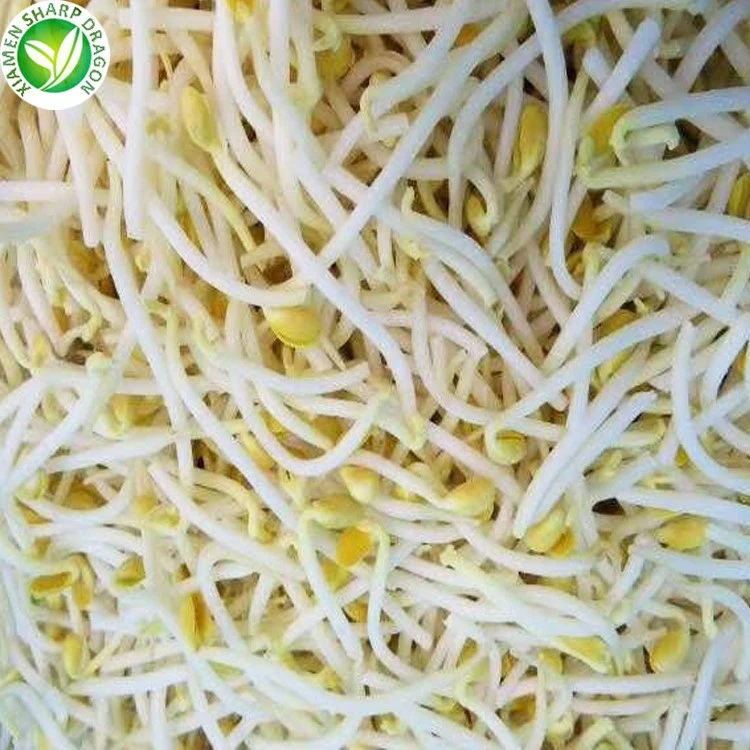
"Bean sprouts" is a market category, not a complete ingredient identity. Soybean sprouts originate from soybeans, Glycine max. Mung bean sprouts originate from mung beans, Vigna radiata. The two legumes produce shoots with visibly different proportions. A typical soybean sprout has a relatively large yellow cotyledon, a pale hypocotyl and a fine root. A typical mung bean sprout has a much smaller head and a greater share of pale stem. Growing time, seed lot, light, water, harvest maturity and trimming can shift appearance, so shape is a useful receiving clue but not proof of species.
Ask the supplier to declare the botanical identity in the specification and supporting product description. "Soybean sprouts," "soy sprouts" and "mung bean sprouts" should not be collapsed into one stock code if your customers, labels or recipes distinguish them. When local trade vocabulary is ambiguous, add the scientific name and an approved color photograph. This is especially useful for a multilingual purchase contract in which one common term may be translated as "soy sprouts" even when the physical product is mung bean sprouts.
The current XMSD frozen bean sprout range is a sourcing map for available project discussions. It does not replace a signed species and lot specification. We confirm the raw material, facility option, processing route, pack and destination requirements for an individual order.
Practical example: your Korean soup formula requires the visible yellow head and stronger cooked character associated with soybean sprouts. A pale, head-light mung bean sprout sample may look clean and pass general microbiological criteria, yet it is still the wrong ingredient. Conversely, a spring-roll line designed around mild mung bean sprouts may find the larger soybean cotyledons too prominent and the flavor too assertive. Correct identity comes before price comparison.
Build an identity record that survives repeat orders
Keep the accepted product name, species, seed-head appearance, stem diameter, normal length range, root policy, color reference and intended use on one approval sheet. Attach photographs of the frozen sample and of the cooked result. A written phrase such as "natural length" is not enough: one supplier may interpret it as an untrimmed sprout, while another may remove roots or screen out short pieces. A repeat-order file should let a new quality inspector understand what was approved without relying on memory.
Compare Structure, Flavor and Application Performance
Soybean sprouts usually bring more cotyledon mass, a firmer bite and a clear bean or nutty note. Mung bean sprouts are generally slimmer, milder and perceived as crisp when the process and cook are controlled. These are directional descriptions, not universal grades. Harvest stage, blanching, freezing rate, glazing or surface ice, storage history and final heating can matter as much as species. A product-development decision therefore needs both an identity check and an application trial.
For soup or seasoned side dishes where the seed head is part of the expected appearance, soybean sprouts can provide the stronger visual identity. For spring rolls, noodle kits and mixed vegetables where the sprout should distribute as slender pieces, mung bean sprouts often fit more naturally. In a chopped filling, long stems may bridge a feeder or create uneven portions. In a visible garnish, excessive breakage may make an otherwise edible lot commercially unacceptable.
| Decision variable | Soybean sprouts | Mung bean sprouts |
|---|---|---|
| Seed identity | Glycine max | Vigna radiata |
| Visible clue | Larger yellow cotyledon | Smaller head, more slender stem |
| Typical sensory direction | More bean-forward and substantial | Milder and crisper |
| Formula control | Soy allergen declaration and cross-contact plan | Not a U.S. major allergen, but destination and customer rules still apply |
| Approval test | Cotyledon integrity, cooked flavor and texture | Length, breakage, crispness and distribution |
Decision example: a ready-meal developer tests 500 grams of each sprout in the same sauce, pan geometry, heating curve and hold time. The soybean sample retains its visible heads but contributes a stronger flavor. The mung sample distributes more evenly but softens during a long hot hold. The choice depends on the product brief: neither result establishes a universal winner.

Use Nutrition Data with the Correct Food Identity
A nutrition table for raw soybean sprouts cannot be copied onto a mung bean sprout pack, and a raw generic database value cannot automatically represent a blanched frozen product. USDA FoodData Central legacy entries illustrate the scale of the identity difference. Per 100 grams, its raw soybean-sprout entry reports about 122 kilocalories, 13.1 grams protein, 6.7 grams fat and 9.57 grams carbohydrate. Its raw mung-bean-sprout entry reports about 30 kilocalories, 3.04 grams protein, 0.18 gram fat and 5.94 grams carbohydrate.
Those figures are reference data for the named raw foods, not guaranteed frozen-lot values. Water uptake during sprouting, seed-to-stem ratio, harvest maturity, washing, blanching, draining and analytical method can shift the result. A supplier specification should not promise a nutrition number simply because it appears in a database. For a retail label, use the destination market's permitted data route and confirm whether laboratory analysis, a recognized database calculation or another method is required.
Nutrition also does not prove disease prevention, weight loss or a therapeutic effect. Protein, fat, carbohydrate, fiber, vitamins and minerals are compositional facts when properly measured or calculated. They are not evidence that one lot will treat a condition. For purchasing, the more immediate questions are whether the identity is correct, the label basis is defensible, the ingredient works in the formula and the finished product meets its legal requirements.
The separate mung bean sprout nutrition and safety guide covers that species in depth. Keeping soybean and mung data under distinct identities prevents a generic "bean sprout nutrition" claim from confusing two materially different foods.

Treat Soy Identity as an Allergen-Control Decision
FDA identifies soybeans as one of the nine major food allergens in the United States. That makes soybean sprouts different from mung bean sprouts in label review, changeover planning, warehouse identification and cross-contact control. A customer who changes from mung to soybean sprouts has not merely changed color or texture; the formula now includes a regulated major-allergen source in the U.S. market. Other destinations use their own laws and terminology, so the final label must be reviewed for the actual market.
Your supplier-approval file should state whether the facility handles soybeans or other allergens, how raw materials and labels are identified, how rework is controlled, and how cleaning is validated where cross-contact matters. A precautionary "may contain" statement is not a substitute for good manufacturing practices or an effective control program. Obtain the facility and product evidence appropriate to your customer and destination rather than assuming one certificate answers every allergen question.
Mung bean is not a U.S. major allergen, but that does not mean "allergen free." People can react to foods outside the statutory list, and your customer policy may include a broader sensitive-ingredient list. The correct commercial claim is specific: declare the seed identity, check the destination rules, review the facility's cross-contact map, and approve the finished label. Do not convert "not on the U.S. major-allergen list" into a medical guarantee.
Safety boundary: freezing preserves a product; it is not automatically a validated pathogen-kill step. Sprouts require seed, water, environmental, sanitation, monitoring, traceability and intended-use controls. Define whether the frozen ingredient is ready to eat or must be cooked, and support that status with the process and destination requirements.

Connect Sprout Controls to the Frozen Process
FDA's sprout guidance focuses on the growing, harvesting, packing and holding stages because warm, moist sprouting conditions require specific preventive attention. Seed sourcing, agricultural water, cleaning and sanitizing, environmental monitoring, recordkeeping and testing strategy are part of that evidence chain. A clean photograph or a frozen certificate of analysis cannot by itself replace upstream sprout-operation controls.
A frozen route may include sorting, washing, trimming, a heat treatment or blanch, cooling, draining, quick freezing, screening and packing. Obtain the selected facility's signed process flow and identify whether any step is a validated lethality control; that evidence determines ready-to-eat versus must-cook status. If a heat step is intended as a safety control, review its validated parameters and monitoring records rather than inferring lethality from the word "blanched." Align any cooking instruction with the customer's process and legal review.
Codex CXS 320 describes quick-frozen vegetables as products passed rapidly through maximum ice-crystal formation and maintained at minus 18 degrees Celsius or colder through the cold chain, subject to its scope and permitted tolerances. That is a useful general reference, but bean-sprout acceptance still needs a project specification. Receiving temperature, free-flow condition, surface ice, clumping, pack integrity and traceability are practical indicators of handling; none alone proves microbiological compliance.
For the broader process and pack context, the IQF mung bean sprout product reference shows one product direction. Copy only the selected facility's current dimensions, storage statement and pack into the purchase specification; a product-page example does not bind the shipment.

Write a Specification That Can Be Inspected
Begin with identity and intended use: soybean or mung bean; scientific name; whole, trimmed or cut; blanched or otherwise processed; ready-to-eat or to-be-cooked status; and the application. Then define measurable or photographically anchored attributes. Useful headings include length distribution, stem diameter where relevant, cotyledon presence and condition, root length, broken-piece share, detached heads, color, odor, texture after the agreed cook, foreign material, blemished pieces, free-flow condition and excessive surface ice.
Do not copy a percentage from another vegetable. Build tolerances from the application, supplier capability and a representative trial. A soup may tolerate more short pieces than a visible side dish. A spring-roll filler may prefer shorter material that portions evenly. A retail clear bag may need a tighter appearance standard than an industrial filling. Make a limit such as "maximum 5% broken" repeatable by stating what counts as broken, the composite-sample weight and whether the percentage is calculated by mass or count.
Add microbiological criteria, analytical methods, sampling plan and release responsibility according to the destination, customer and intended use. Include pesticide-residue and contaminant requirements where applicable, plus allergen declarations, label text, net weight, inner-bag material, carton strength, lot code, shelf-life basis and storage temperature. Ask which records travel with each lot: certificate of analysis, production date, process statement, temperature record, packing list, loading evidence and any customer-specific documents.
Bean sprouts can lose commercial value through breakage and water release even when delivered weight is correct. Approve a frozen visual sample, then run a controlled thaw or cook test. Record the starting mass, drained or cooked mass, hold time, temperature, breakage, texture, flavor, color and portioning behavior. Use the same method for pre-shipment or periodic verification so results remain comparable.
A compact lot-approval sequence
- Confirm seed species, common name, allergen status and intended-use statement.
- Measure the agreed composite sample for length, breakage, detached heads, roots and visible defects.
- Check pack integrity, lot coding, frozen condition, free flow, surface ice and receiving temperature.
- Run the recipe cook and hold under the buyer's actual time, temperature and formulation.
- Review lot documents against the specification before release.
If you are building a mixed-vegetable or ready-meal range, compare the sprout control plan with the wider XMSD frozen vegetable sourcing range. A common carton size may simplify logistics, but it should not erase product-specific identity, allergen or application requirements.

Compare Usable Cost, Not Only Carton Price
Delivered price is only one input. Species fit, breakage, water release, cook yield, line waste, portion accuracy, allergen changeover, label inventory and customer acceptance can reverse a small price advantage. The meaningful denominator is the mass or number of accepted portions that survives your process.
Worked example: a mung bean sprout lot costs USD 1.32 per delivered kilogram. A 100-kilogram trial retains 86 kilograms after the agreed cook and drain, but 3% of the delivered mass is rejected as short or broken material for the visible application. Usable mass is 86 minus 3, or 83 kilograms. Ingredient cost is USD 132 divided by 83, or about USD 1.59 per usable kilogram. A soybean sprout lot costs USD 1.28 per delivered kilogram, retains 82 kilograms and loses 1.5 kilograms to defects. Its usable mass is 80.5 kilograms, so USD 128 divided by 80.5 is also about USD 1.59 per usable kilogram. The nominally lower-priced carton has no usable-cost advantage, and the soybean option still needs the formula's allergen and sensory fit.
The example figures are not industry limits. Replace them with your quoted price, actual cook yield and approved defect method. If allergen segregation creates a dedicated production day, additional sanitation validation or separate label stock, record that project cost instead of hiding it inside a general overhead assumption. For high-volume programs, even a one-percentage-point yield difference can matter more than a small price-per-kilogram change.
Soybean sprouts also should not be confused with green soybeans or edamame. They share the soybean source but have different maturity, structure and applications. The frozen edamame range belongs to a separate product and specification family.
Frequently Asked Questions
Can mung bean sprouts replace soybean sprouts?
Only after a formula and label review. They differ in seed identity, head size, flavor, texture, nutrition basis and soy-allergen status. Run the actual cook and hold, then approve or reject the substitution for that specific finished product.
Are frozen soybean sprouts ready to eat?
Do not infer ready-to-eat status from freezing. Confirm the supplier's process, validated controls, label, microbiological criteria and destination requirements. If the specification says the product must be cooked, design and verify the customer's heating process accordingly.
Does freezing remove the soy allergen?
No. Freezing does not change soybean sprouts into a non-soy ingredient. Review allergen labeling, cross-contact controls and destination-market obligations for the actual product and facility.
What should be checked in a pre-shipment sample?
Check declared species, cotyledon and stem appearance, length distribution, roots, breakage, detached heads, color, odor, foreign material, free flow, surface ice, pack integrity and lot coding. Then run the agreed cook and compare yield, texture, flavor and application performance with the approved reference.
XMSD sourcing note: Send us your required sprout species, intended use, cut or natural length, root and cotyledon policy, cook test, allergen requirements, pack, annual volume and destination. We will review the suitable partner-facility option and the evidence needed for sample approval.
Final Thoughts from XMSD
The safest buying shortcut is to remove the shortcut: write soybean or mung bean, add the species, define the visible and cooked result, and approve the ingredient in its real application. Soybean sprouts bring a larger cotyledon, firmer bean character and a soy-allergen obligation. Mung bean sprouts bring a smaller head and typically milder, slender performance. A defensible decision combines identity, supplier controls, intended use, label review, cold-chain evidence, sample testing and usable-cost math.
References
- FDA: Standards for Growing, Harvesting, Packing, and Holding Sprouts for Human Consumption
- FDA: Food Allergies and Major-Allergen Labeling
- USDA FoodData Central: SR Legacy Food IDs 169284 and 169957
- USDA FoodData Central: SR Legacy Data Documentation
- Codex CXS 320-2015: Standard for Quick Frozen Vegetables
- XMSD operational experience in frozen-food sourcing, IQF processing, quality control, packaging, and B2B export coordination.