


Frozen Vegetable Color Control: XMSD Buyer Guide
Aug 15, 2026

Color is one of the first things a buyer sees in frozen vegetables, but it is easy to misuse. Dark green does not automatically mean higher nutrition. Bright orange does not prove ideal maturity. Uniform red does not prove freedom from core or seed defects. Clean white does not confirm safety. Color is a useful quality signal only when the product, sample condition, lighting, measurement method, defect definitions, and cooked application are controlled.
This guide replaces an old consumer article that ranked vegetable colors by nutrition and attached unsupported disease claims to particular pigments. For procurement, the more useful questions are practical: what color belongs to the agreed variety and maturity, which deviations are natural, which indicate a defect or process problem, how should color be measured, and which result must remain after cooking, holding, and delivery?
The short answer: Approve color for one named product, variety, cut, maturity, and process. Evaluate the frozen ingredient and the buyer's cooked endpoint under fixed lighting. Use retained visual references plus instrument data where it improves repeatability. Measure discolored pieces separately because an average color can hide local defects. Never use color alone to release food-safety, residue, composition, or label claims.

Color Must Be Tied to Product Identity and Intended Use
Start with the exact vegetable, botanical identity when substitution is possible, variety or type, origin, crop or processing period, maturity, cut, peel or trim, blanching status, frozen format, and intended application. Color words without that context are weak. "Green" spinach, broccoli, beans, celery, and spring onion represent different pigments, structures, natural ranges, and acceptable defects.
Codex's quick-frozen-vegetable framework expects a reasonably uniform color characteristic of the variety. The phrase matters: characteristic of the variety is not one universal green, yellow, orange, red, or white. USDA frozen-broccoli grades also use overall brightness alongside varietal similarity, flavor, odor, grit, silt, and defined defects. A useful commercial specification therefore connects color with identity and defect limits rather than turning color into the entire grade.
State the decision that color supports. For a retail pack, surface appearance in the frozen display may be critical. For foodservice broccoli, color after steam-table holding may matter more. For spinach filling, even distribution and cooked color may outrank frozen brightness. For a puree, overall color may matter while small harmless variations disappear during blending. Your limit should protect the actual selling and processing requirement.
| Color family | Examples | Common buyer questions |
|---|---|---|
| Green | Broccoli, spinach, beans, celery | Variety, maturity, blanching, yellow or brown areas, cooked hold |
| Yellow and orange | Corn, carrot, pumpkin | Maturity, pale pieces, core contrast, oxidation, cooked uniformity |
| Red | Red bell pepper | Ripeness, green areas, wall thickness, dark spots, seed and core defects |
| White or cream | Cauliflower, onion, mushroom | Yellowing, browning, gray cast, bruising, surface oxidation |
The table is a diagnostic map, not a promise that one color mechanism explains every material. Separate the product specification from a blend specification. In a blend, each component needs its own acceptable color and defect range, then the finished mix needs a component ratio and visual result.
Build a Visual Standard Before Adding Instrument Numbers
A retained visual reference is often the fastest way to align commercial teams, factories, and inspectors. It must be controlled. Record the product and lot, sample condition, temperature, thaw or cook method, tray depth, background, lighting, camera settings where photographs are used, assessment time, and date. Keep acceptable center, lower, and upper references when natural variation is expected.
Evaluate frozen and cooked states separately. Surface frost, ice crystals, dehydration, and reflected light can make frozen pieces look pale. Thawing changes surface water and gloss. Cooking can brighten, darken, yellow, bleach, or brown a product depending on material and process. A specification that says "matches approved color" must identify which state and method creates the approved comparison.
Use neutral and consistent illumination. Colored walls, warm shop lights, sunlight, camera auto-white-balance, and phone-screen settings can change the judgment. Spread the defined sample weight in a standard layer and mix it before viewing. If pieces have several surfaces, inspect enough units to see stems, cores, undersides, and cut faces rather than photographing only the most attractive side.
Practical example: A broccoli sample looks dull in a deep frozen pile but acceptable after being spread in a single layer. The buyer and supplier repeat the comparison with the same 500 g sample weight, tray, light and viewing time, then cook an agreed portion. They approve a reference based on the repeatable setup and add a separate weighed limit for yellow and dark florets.

Use L*a*b* Data to Improve Repeatability, Not to Replace Inspection
Instrument color can make two samples easier to compare. In the CIELAB system, L* describes lightness, a* runs broadly from green to red, and b* runs broadly from blue to yellow. A color-difference value can summarize distance between readings. These values are useful only when the instrument, illuminant, observer setting, aperture, calibration, sample preparation, temperature, number of readings, and sampling positions are fixed.
Irregular frozen vegetables are difficult measurement targets. A small aperture may read one carrot core, broccoli bud, pepper skin, ice patch, or cauliflower shadow rather than the lot. Decide whether to measure whole pieces, a ground or pureed sample, a packed cup, or several defined surfaces. Record the average and variability. A mean based on three convenient readings is not equivalent to a representative lot result.
Do not copy a color-difference tolerance from another vegetable or instrument. First measure approved and rejected lots under one method, then identify the data range that separates them and verify it against human and application judgments. Instrument numbers can support a visual reference; they cannot decide whether a dark spot is decay, soil, harmless variety color, peel, or processing damage.
Our frozen broccoli range and frozen spinach range show two green products with different surfaces and structures. Use product-specific sampling and measurement rather than one "green vegetable" tolerance.

Average Color and Discolored-Piece Limits Solve Different Problems
An average can look acceptable while a small number of pieces have severe black, brown, yellow, white, or translucent defects. Define discolored areas separately. State whether the defect is judged by weight, count, or surface area; identify minor and major classes where useful; set the sample size; and show photographs. A foodservice puree may accept a few mild spots that a visible retail pack cannot.
Codex commodity annexes distinguish visual defects and, for some vegetables, whether discoloration disappears during cooking or remains. The principle is valuable even when the contract uses a different method: determine whether the mark is superficial, localized, persistent, and application-relevant. A frozen-only photo may overstate a harmless surface difference or hide a defect that becomes obvious after cooking.
Separate natural component contrast from damage. Carrot cores can differ from outer tissue; cauliflower stems differ from curd; pepper skin and internal wall differ; broccoli buds and stems differ; corn tips and sides differ. The frozen carrot range illustrates why color must be read alongside cut, core ratio, maturity, and cooked texture.

Practical example: Two carrot lots have similar average L*a*b* readings. Lot A contains a small, evenly distributed natural core contrast. Lot B contains fewer but much darker damaged pieces. The average alone ranks them closely, while a weighed severe-discoloration fraction clearly separates them. The buyer keeps both the average color range and the piece-defect limit.
Trace Color Variation Back Through Raw Material and Processing
Color can change before freezing because of variety, maturity, field exposure, weather, damage, disease, harvest timing, transport, holding, and trimming. It can change during washing, cutting, blanching, cooling, draining, freezing, sorting, and packing. It can change after packing through oxygen exposure, dehydration, temperature fluctuation, storage time, light exposure, and repeated handling.
Published industrial research on asparagus, green beans, and zucchini found that blanching, freezing, frozen storage, and final cooking did not move color in one identical direction across all vegetables. Spinach pigment research also found processing-dependent changes during blanching and frozen storage. The purchasing lesson is narrow but important: do not use one generic rule such as "darker is better" or "blanching always preserves green." Test the selected material and process.
When a lot drifts, compare evidence in sequence: raw-material and maturity records, incoming photos, trim and defect data, blanching and cooling controls, freeze and pack records, retained samples, storage temperature, shipment logger, and arrival condition. A corrective action aimed at the wrong stage wastes time. The color pattern can guide the investigation, but records and repeat tests determine the cause.

The frozen corn range gives a useful yellow-color example. Pale, deep-yellow, brown, damaged, and immature kernels need definitions tied to variety, maturity, defect type, and cooked bite. Color cannot stand in for kernel fill, tenderness, flavor, cob fragments, or broken-kernel limits.
Red, Orange, and White Products Need Different Defect Logic
Red bell pepper color is linked to type and ripeness, but the buyer also needs wall thickness, cut distribution, green or pale areas, dark spots, scald, seed, core, stem, and broken-piece limits. A vivid red average can hide white core or black damage. Our frozen pepper range can start the format discussion; final acceptance belongs in the order specification.

Pumpkin and carrot may both appear orange, but their structures and maturity cues differ. Pumpkin color should be read with variety, flesh thickness, peel and cavity preparation, solids, cut, and cooked edge retention. Carrot color should be read with core contrast, size, maturity, crown or peel defects, and tenderness. A shared orange reference would weaken both specifications.
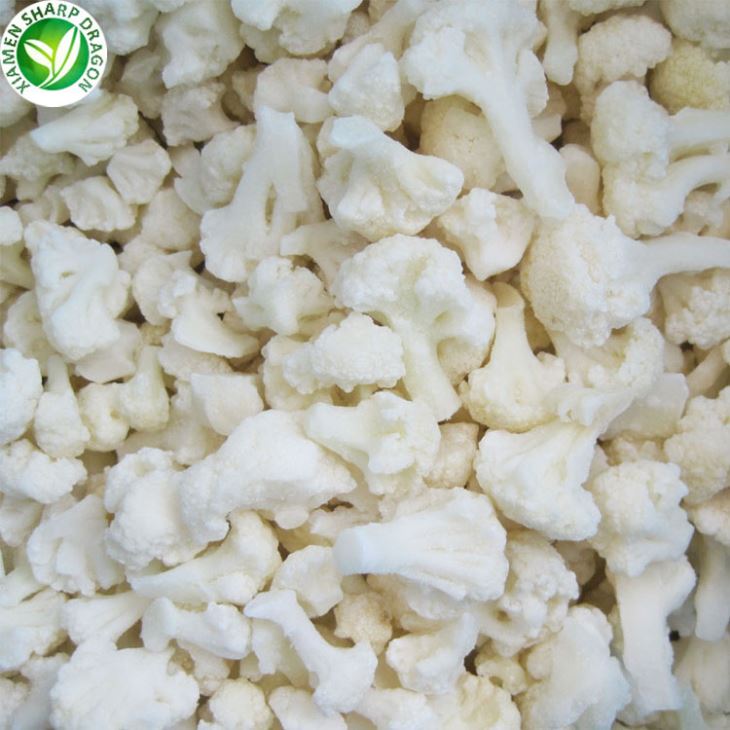
White or cream vegetables need defect-specific language for yellowing, browning, gray areas, bruising, soil, decay, oxidation, stem contrast, and processing marks. A brighter white sample is not automatically better if texture, flavor, trimming, or cooked yield is worse. Cauliflower also needs compactness, rice or crumbs, leaf material, stem proportion, floret size, and cooked character.
For Blends, Control Color and Component Ratio Separately
A mixed-vegetable pack can look "more colorful" simply because the recipe ratio changed. Write each component percentage by weight with tolerances, then define color and defects within each component. Inspect bags from the beginning, middle, and end of the filling run because size and density differences can cause segregation. A correct batch average does not guarantee every retail unit looks the same.
Do not use a photograph to estimate ratio when exact composition matters. Thaw or separate the sample by the agreed method, weigh each component, and record fragments that cannot be assigned. Then assess component color. If broccoli is dull because the bag contains fewer florets and more stem, that is partly a composition and cut issue, not only a pigment issue.
Worked example: Treat these figures as a buyer model, not a universal color tolerance. A 1,000 kg frozen blend contains broccoli, carrot, corn, red pepper, and cauliflower. The agreed lot test identifies 14 kg of severe dark or brown pieces, 9 kg of yellowed green pieces, 7 kg of pale or immature pieces, and 20 kg of color-acceptable pieces that fail separate cut or texture limits.
Total rejected quantity: 14 + 9 + 7 + 20 = 50 kg.
Accepted quantity: 1,000 − 50 = 950 kg.
Accepted yield: 950 ÷ 1,000 × 100 = 95.0%.
Diagnostic result: color defects account for 30 kg, while non-color defects account for 20 kg; corrective action should not treat the full 50 kg as one "color problem."
If the visual impact of one red-pepper defect is greater than its weight, add a count or unit rule. If fragments change the perceived color ratio, control fines separately. Keep the math transparent so a supplier can reproduce the decision and target the actual cause.
Color Does Not Release Safety, Nutrition, or Compliance
A visually attractive frozen vegetable can still fail microbiological, residue, foreign-material, composition, label, net-weight, or temperature requirements. A natural dull appearance can still meet safety and specification. Release each risk with the appropriate evidence: hazard controls and microbiological plan, pesticide-residue and contaminant checks based on destination and risk, foreign-material controls, ingredient declaration, traceability, certificate scope, pack records, and cold-chain evidence.
Likewise, color is not a reliable ranking of total nutrition across different vegetables. Pigments and nutrients vary by species, variety, maturity, growing conditions, processing, storage, cooking, and portion. A buyer article should not turn one visible attribute into an unsupported health hierarchy. When nutrition labeling matters, use applicable composition data and verified analysis rather than a color chart.
Practical example: A private-label customer asks for a "darkest green" claim on spinach artwork. The available product specification controls identity, color and defects but does not prove a comparative nutrient claim. The commercial team removes the claim, approves a representative green reference, and keeps nutrition labeling tied to the applicable data and regulatory review.
Sample Approval, Arrival Check, and RFQ Information
Record product, lot, variety or type, origin, maturity, cut, blanching status, pack, frozen temperature, sample weight, tray, lighting, visual reference, instrument settings where used, reading positions, average and variability, discolored fractions, and photographs. Then cook and hold the ingredient under the buyer's actual conditions and repeat the color and defect assessment.
At arrival, inspect container, seal, cartons, codes, product temperature, surface ice, dehydration, clumps, breakage, and odor before evaluating color. Follow the agreed sampling plan. If a shipment differs from the reference, compare retained samples and production, storage, and logger records. Do not change the lighting or sample state halfway through a dispute.
Use several bags and mix each test portion before taking readings. Record the position of every sampled case in the container or pallet because door-side, wall-side, top, and center cartons may have different temperature histories. If only one area shows color drift, keep that distribution evidence; a composite average could hide the pattern needed to identify handling or storage exposure.
For an RFQ, send product identity, variety or type, origin preference, maturity, cut, blanching and use status, color state to be approved, visual or instrument method, discoloration limits, cooked application, defect and safety requirements, pack, quantity, destination, Incoterm, port, shipment period, and evidence list. Separate mandatory limits from preferences so quotations remain comparable.
Frequently Asked Questions
1. Does darker vegetable color mean better frozen quality?
Not by itself. The correct color depends on product, variety, maturity, process and application. Compare a controlled visual or instrument range together with defects, texture, flavor, yield, safety evidence and cooked performance.
2. Should color be checked frozen or cooked?
Usually both, with separate methods. Frozen appearance supports receiving and retail decisions; cooked color supports the final application. State sample temperature, preparation, lighting and assessment time for each.
3. Is one L*a*b* tolerance suitable for every frozen vegetable?
No. Product surface, variety, cut, sample preparation, instrument and application change the result. Build a range from approved and rejected material using one documented method, then verify it against visual and cooked judgments.
4. Why is average color not enough for lot acceptance?
Averages can hide a small number of severe dark, brown, yellow, pale, or damaged pieces. Add a separate weighed, counted, or area-based defect limit with visual definitions and a stated sample size.
5. Can color confirm nutrition or food safety?
No. Use appropriate composition data for nutrition and order-specific hazard controls, tests, documents, traceability and regulatory review for safety and compliance. Color remains one quality attribute.
Send us the product, cut, color reference, cooked application, pack, destination, and volume.
We will review the available product and partner-factory route, clarify the color and defect method, and prepare an order-specific response. Use the XMSD inquiry form to share your RFQ.
References
- USDA Agricultural Marketing Service. Frozen Broccoli Grades and Standards.
- Codex Alimentarius. Standard for Quick Frozen Vegetables, CXS 320-2015.
- Mazzeo T. et al. Impact of the industrial freezing process on selected vegetables: colour and bioactive compounds. Food Research International.
- Kidmose U. et al. Chromatographic determination of changes in pigments in spinach during processing. Journal of Chromatographic Science.