


McCain Frozen French Fries Cooking Instructions
Apr 23, 2025

Use the cooking instructions on your exact McCain pack, including its country of sale, product name and appliance method. There is no single McCain fries temperature or cooking time. For example, the Canadian Straight Cut product page specifies an oven at 425°F (218°C) for 20–24 minutes, while the US foodservice MCX20 product specifies a convection oven at 425°F for 8–12 minutes. These are different products and preparation instructions, even though the oven temperatures look similar.
Start with frozen fries when the pack directs it, preheat as instructed, use the stated tray arrangement or basket load, and turn or shake at the specified point. Cook fully and aim for a light golden finish; a darker exterior is not a useful substitute for correct preparation. If you have discarded the bag, identify the exact product through the case, receipt or supplier before choosing a method.
This is an independent XMSD guide to reading cooking directions and applying them in a kitchen. McCain's own product instructions are the authority for its branded fries. The XMSD photographs and videos below illustrate frozen-fries handling and product review; they do not identify a McCain SKU or establish its cooking time.
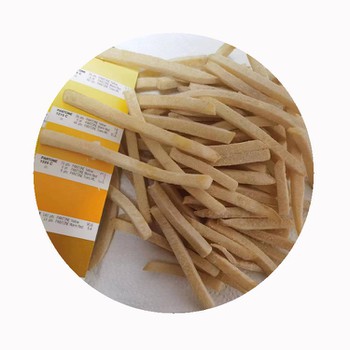
Identify the product before choosing the setting
Read the complete front-of-pack name and then the preparation panel. Straight cut, crinkle cut, coated, uncoated and quick-cook products can belong to different ranges. A picture of fries on a search result is a weak match: similar-looking strips may have different ingredients, dimensions or intended cooking methods. On a foodservice case, record the product code as well as the descriptive name. That code is more useful than a handwritten freezer label saying only "fries."
Market also matters. A Canadian retail bag, an Australian retail bag and a US foodservice case may carry different directions. Find the manufacturer's website for the market printed on the pack and match the range, size and code where available. A local pack with updated instructions should prompt a check of an older saved recipe card. If the pack and online page disagree, retain both records and ask the manufacturer or supplying distributor which revision applies to that product.
Read the preparation method as a complete set of conditions. "Convection oven" is not just another word for every oven, and an air fryer setting is not automatically a deep-fryer setting. Likewise, the weight of a whole retail bag is not necessarily the permitted weight for one cooking batch. Separate the quantity you bought from the quantity the instructions allow you to cook at once. That distinction prevents many apparently unexplained differences between the label and the plate.
Check exclusions before improvising a quicker method. The Canadian Straight Cut and US MCX20 pages do not recommend microwave cooking. A microwave's speed therefore provides no reason to substitute it for their listed methods. Both also specify cooking from frozen, so thawing first would change the starting condition. Keep the relevant instructions available before taking the product out of frozen storage, rather than searching for a method while the portion sits beside the appliance.
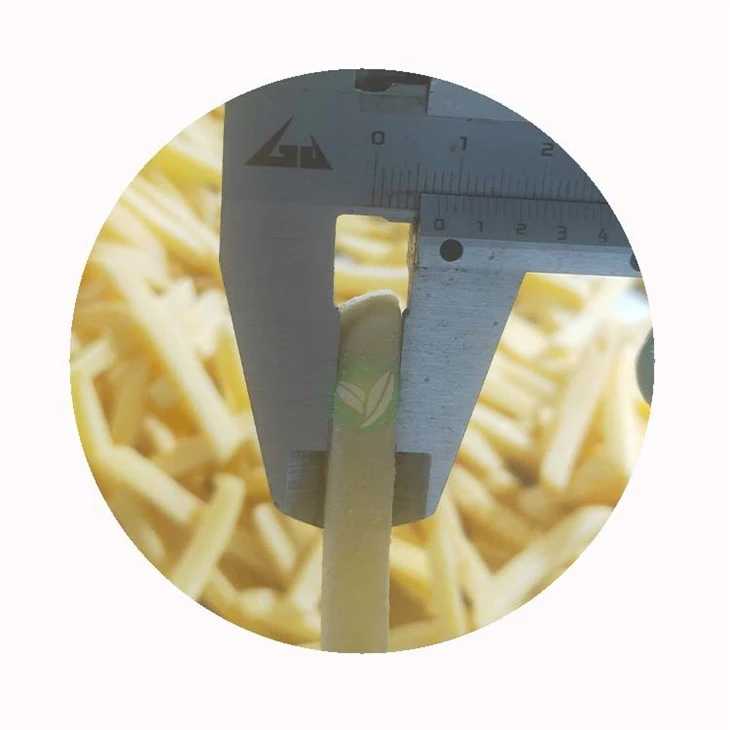
Official examples show why one time does not fit every bag
The examples below were checked against the linked manufacturer pages. They show how narrowly a cooking instruction needs to be read. Use a row only if the product and method match your pack, then read the full current preparation panel. The table is a comparison of distinct instructions, not a menu of interchangeable settings for whichever fries are in the freezer.
| Exact product example | Method and setting | Load and movement |
|---|---|---|
| Canada: Straight Cut French Fries | Preheated oven, 425°F (218°C), 20–24 minutes | Single layer on dark non-stick sheet or shallow pan; turn halfway |
| Canada: same Straight Cut product | Preheated air fryer, 360°F (182°C), 12–13 minutes | Basket half full; shake halfway |
| US foodservice: MCX20, 5/16-inch XL | Deep fryer, 350°F, 2½–3 minutes | Half basket: 1.5 lb frozen fries |
| US foodservice: same MCX20 product | Preheated convection oven, 425°F, 8–12 minutes | Even spread on shallow pan; turn once |
| Australia: Pub Style Straight Fries, 750 g | Air fryer, 200°C, 11–13 minutes | Jostle basket halfway; consult current pack for quantity guidance |
Do not average these numbers into a general recommendation. The useful lesson is the difference between instructions. A shorter convection interval on a foodservice product does not show that a retail product's longer oven interval is wrong. It shows that the product, appliance and preparation conditions must stay together. Keep temperature units visible when copying directions; rounding a Celsius value and then pairing it with an unrelated Fahrenheit value creates a new instruction that neither label supplied.
For oven cooking, preserve the tray conditions
An oven method includes the tray as well as the dial setting. Check whether the label calls for a dark sheet, a shallow pan, a preheated tray or a particular shelf position. Start timing from the point intended by the directions. Putting frozen fries into an oven that is still heating makes the temperature history different from a preheated-oven instruction, even if the display eventually reaches the same number.
Spread fries as directed rather than piling a full bag into the center. A crowded pile gives different pieces different exposure to the hot cooking environment. Turning is an opportunity to redistribute the load and look for obvious unevenness, not simply to move the top few strips. Keep the appliance manufacturer's ventilation and tray-placement requirements in view when deciding whether another tray can be added.
If the edges brown while the center remains soft, review the arrangement and product match before raising the temperature. Photograph the tray and note the actual load, shelf and mode so the next attempt changes one identifiable variable. Extra oil, a coating added in the kitchen or a different cooking surface can change the result. Follow the pack first; additions from an unrelated recipe should not become part of the product's instructions by accident.

For air frying, control the load before changing the timer
McCain USA's general air-fryer guidance advises against overfilling, recommends cooking in batches when necessary, and points out that appliance and basket fullness affect cooking time. The product's own method still supplies the applicable setting. A basket described as half full is a loading instruction for that preparation, not a fixed weight that can be transferred to every air-fryer model.
Measure a repeatable load when a kitchen needs consistent portions, while keeping within the product and appliance limits. Record which basket and program were used. A twin-basket appliance may have different operating instructions when both compartments run, so preserve that condition in the local recipe too. Shake at the specified point and return the basket promptly. Changing the load, program and shaking pattern together leaves little useful information when the result changes.
Worked example: Suppose a small café plans to cook 600 g of frozen fries, and its approved procedure for the exact product and appliance uses 300 g per basket cycle. The planning calculation is 600 g ÷ 300 g = 2 batches. Doubling the timer for a 600 g load would not preserve the approved cooking conditions. Schedule two cycles and account for loading, unloading and appliance recovery. The 300 g value here is an illustrative local procedure, not a McCain recommendation for every basket.
That choice also changes service planning. Two batches finish at different times, so decide whether orders can be staggered or whether equipment capacity needs review. Holding the first batch while the second cooks may alter eating quality. Evaluate the actual service route before promising a large simultaneous order; a timer alone cannot describe the kitchen's useful capacity.

Deep-fryer directions belong to the specified product
Use a deep-fryer method only where the product instructions support it. Keep the stated frozen load, oil setting and cooking interval together. The MCX20 example above gives both a half-basket description and a weight; that combination is more informative than "fry until golden." Follow the fryer manufacturer's operating, oil-level and loading requirements as well. A commercial basket instruction is not a procedure for an improvised saucepan of oil.
When a later batch performs differently, note what happened between batches. The setpoint on a control panel is not a record of every moment of cooking. Load changes, interruptions and equipment recovery belong in a troubleshooting record. Keep different cuts and products separate unless a validated kitchen procedure explicitly covers the mixture; otherwise the operator is trying to satisfy two preparation instructions in one basket.
Do not add a routine second fry simply because a previous batch softened. First locate the problem: the cooking stage, draining, waiting or final packaging. Additional frying changes total heat exposure and color, and it does not correct an incorrect product identity or a poorly matched service arrangement. For a product that is already fully prepared according to its label, troubleshoot the route to the customer as carefully as the cooking equipment.
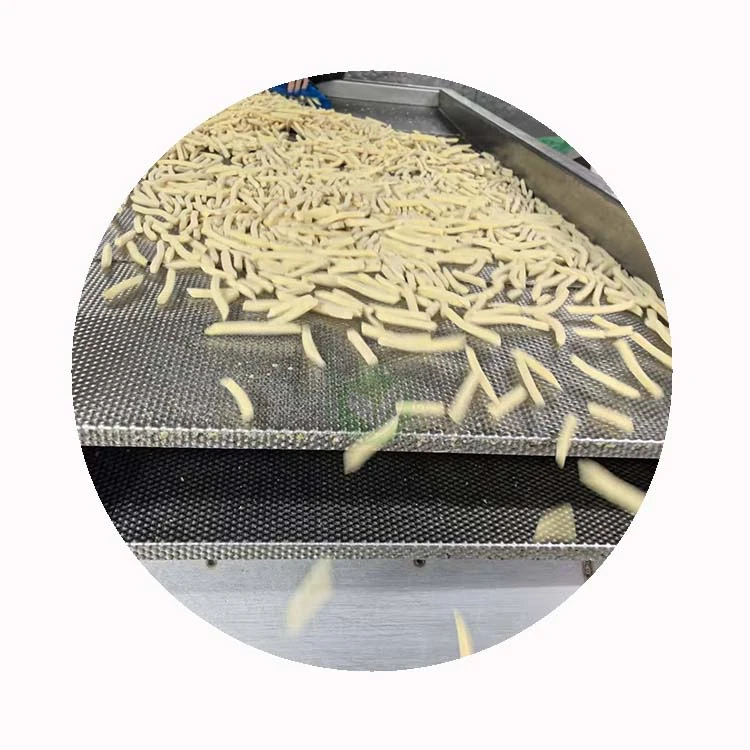
Read browning and softness as different signals
The McCain examples require full cooking and a light golden finish. FDA guidance also recommends a golden-yellow rather than brown color for cut potato products to help reduce acrylamide formation. This makes deep browning a poor target for solving every texture problem. Follow all product cooking instructions; color is one observation alongside correct preparation, not a stand-alone food-safety test.
Describe where and when the problem appears. Fries that are uneven directly out of the appliance call for a review of load, movement and equipment settings. Fries that leave the appliance acceptably but soften after waiting call for a review of holding and service. Take comparison samples at the same elapsed time after cooking. Otherwise one person may be evaluating a fresh batch while another evaluates a delayed portion, and they will disagree about the product for understandable reasons.
Separate a cooking problem from questionable frozen storage. A missing label, compromised package or uncertain handling history cannot be resolved by selecting a hotter program. Keep the lot identity and investigate the condition before use. Our related guide to frozen-fries storage and spoilage questions covers that separate decision. Here, the working assumption is a correctly identified product suitable for cooking under its stated instructions.
Product form explains why substitutions need a fresh review
A supplier description such as "frozen French fries" leaves out details that matter at the fryer. Cut dimensions, surface coating, ingredients and intended preparation all belong with the sample. We would compare those features before treating two fries as substitutes, because an approved cooking method attaches to a defined product. A photo helps discuss appearance and shape; it does not replace the label or preparation specification.
Coating also makes ingredient review necessary. The Australian Pub Style example lists a wheat-containing batter, whereas another product may have a different recipe. Preserve the exact ingredient and allergen information when transferring a product into a kitchen system. Do not copy a dietary claim from the plain potato ingredient onto a finished coated fry. Product substitution can therefore require both cooking review and an update to ingredient information.
The XMSD cooking video provides a general handling illustration. Its images and any demonstration settings do not override the current McCain pack. For purchasing comparisons, the XMSD IQF French fries product page is a separate sourcing reference. Match a proposed product to its own documented method before judging it against a branded benchmark.
For a visual introduction to processing, the XMSD sequence covers washing and cutting, blanching, and pre-frying and IQF. Processing footage explains the type of product being discussed; it does not establish the manufacturing process of a McCain SKU or show that frozen fries are ready to eat.

Turn the pack directions into a usable kitchen record
Keep a legible image of the original label alongside the local recipe card. The card should identify the product, applicable market, equipment, mode, frozen load, preparation sequence and required observations. Record who approved it and which label revision it follows. This creates a traceable handover when a new cook joins the shift or a delivery arrives in revised packaging. Staff can then distinguish a deliberate approved change from an old habit.
Make the record readable at the point of use. Put the temperature unit beside the number, identify the appliance program by its displayed name, and write the turning or shaking point next to the cooking interval. If a translated instruction is needed, compare it against the original panel before releasing it. Preserve words that change the action, including "preheat," "from frozen," and any load restriction. A tidy recipe card is useful only when it retains those details accurately.
Practical example: Suppose a kitchen normally buys a 9 mm uncoated fry and considers a coated substitute in the same nominal cut. The buyer obtains the substitute's ingredients and preparation instructions, then the kitchen evaluates it on the intended appliance using those instructions. Compare finished color, center texture, portion appearance and eating quality at the actual service point. If the substitute requires a different program, approve a separate recipe and update ingredient information before it enters routine use. Similar width alone is not the acceptance decision.
For us, a useful sample review connects the frozen product to the served portion. We would keep the sample code, preparation record and serving observations together, because a favorable tasting without those details is difficult to reproduce. A foodservice purchase can succeed in a short tasting and still fit the daily operation poorly if the batch rhythm is wrong. Discuss that rhythm through the foodservice and catering supply brief as well as the product specification.
Keep portion calculations on a stated basis. An illustrative 12 kg of frozen product divided by a 0.15 kg frozen allocation gives 80 allocations before cooking. It does not automatically give 80 portions weighing 150 g after cooking. We would measure the usable cooked output under the agreed preparation and serving conditions before comparing portion cost. Otherwise a purchasing spreadsheet can appear precise while combining frozen input weight with a cooked serving promise.

Keep product identity attached to the next order
A repeat order needs enough detail to reproduce the approved product and method. Retain the cut, coating, intended cooking equipment, pack format and agreed sample reference in the purchasing record. When the product code or label changes, make that visible to the kitchen before the old recipe is reused. This is especially useful when outer cases are removed quickly and only plain inner bags remain in working freezer storage.
Packing discussions should include how identity survives opening and portioning. A large bag may suit a busy service period, but the remaining product still needs an identifiable container and its handling directions. The frozen-food packaging discussion is useful here because label space, pack size and the kitchen's use pattern work together. A pack-size choice should improve operation without separating the food from essential information.
For a branded McCain question, finish with the exact pack or the relevant McCain product contact. For a proposed alternative, start a separate specification and sample review. Keeping those two decisions clear lets the cook prepare the current product correctly and lets the buyer compare the next product fairly. The most useful instruction is the one that remains attached to the right fries, appliance and batch every time it is used.
Planning a separate XMSD frozen-fries sourcing review? Send the desired cut, coating, cooking equipment, serving route and packing format so the product comparison starts with useful inputs.
References
- McCain Canada: Straight Cut French Fries
- McCain USA Foodservice: Fries 5/16-inch XL, MCX20
- McCain Australia: Pub Style Straight Fries 750 g
- McCain USA: Air Fryer Tips
- FDA: Acrylamide and Diet, Food Storage, and Food Preparation
- XMSD operational perspective: product identification, sample comparison, packing and foodservice portion planning. Illustrative scenarios are not customer case histories.