


Can Frozen French Fries Go Bad?
Apr 24, 2025

Commercially frozen French fries are commonly kept for about 12 months at 0°F (-18°C) as a general best-quality guide. That is not a universal expiry rule. The printed date and storage instruction on the approved pack take priority because cut size, par-frying oil, coating, packaging barrier, and the producer's shelf-life work can support a different period. The USDA FoodKeeper reference lists 12 months for frozen potato products, while an industry cold-storage manual lists 12 months for small-cut fries and 18–24 months for larger cuts at 0°F. Those ranges describe expected quality under stated conditions, not permission to ignore the product specification.
If fries remain continuously frozen at 0°F (-18°C) or below, official U.S. guidance treats freezer time as a quality issue rather than a safety deadline. Quality can still fall: exposed surfaces dry, ice grows, strips clump or break, starch texture changes, and par-fry oil can develop a stale or rancid note. After thawing, temperature abuse, contamination, or a damaged pack, safety becomes a separate decision. A date code or good appearance cannot repair a missing time-and-temperature history.
Direct answer: Use 12 months at -18°C as a practical starting point for unopened commercial fries, then follow the pack's validated shelf life. Decide safety from cold-chain control and package integrity; decide saleability from aroma, frost, clumping, breakage, color, crispness, oil pickup, and usable yield after a standardized cook test.
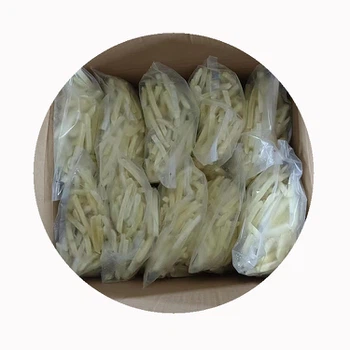
Start with the Product Form, Not One Number
The phrase "frozen fries" can describe several foods with different histories. Most foodservice and retail fries are cut, blanched, dried, par-fried or oil-treated, rapidly frozen, and packed for final cooking from frozen. Some products are ovenable coated fries; others are uncoated potato strips. Homemade raw strips, homemade par-fried strips, seasoned wedges, sweet-potato fries, and cooked leftovers are not interchangeable with a sealed commercial bag. Read the ingredient statement and preparation instruction to identify potato and oil alone or a composite product containing starches, dextrins, salt, seasonings, allergens, or processing aids.
For an unopened commercial pack, use the producer's best-before date together with the stated frozen temperature. For an opened foodservice liner, there is no credible universal rule that automatically subtracts four months or any other fixed period. Opening mainly increases oxygen entry, moisture exchange, handling, and the chance of poor resealing. Record the opening date, expel excess air without crushing the strips, close the liner promptly, keep it away from the freezer door, and set an internal use window based on measured performance and your normal consumption rate.
Homemade fries need a process-specific method. Blanching and partial frying change enzymes, moisture, surface starch, and oil content; freezing a tray of raw potato strips does not reproduce a commercial product. Cooked leftovers also belong to another handling category. Once fries have been cooked, served, cooled, handled, and frozen again, their safety depends on cooling and sanitation controls, while their texture normally declines quickly. Do not transfer a commercial 12-month quality guide to leftovers.
| Product condition | Useful time reference | What owns the decision |
|---|---|---|
| Sealed commercial fries | 12 months at 0°F (-18°C) is a general quality starting point | Approved label, product specification, pack condition, and continuous frozen storage |
| Opened commercial liner | No single official reduced period fits every pack | Opening date, resealing, exposure frequency, frost, aroma, and cooking result |
| Homemade prepared fries | Use a validated recipe or extension method | Preparation, cooling, packaging, freezer performance, and intended cook method |
| Cooked leftovers | Do not apply the sealed-pack period | Cooling, handling, storage history, reheating, and local food-safety rules |
When you source a commercial item, connect the date to the exact format. A 7 mm shoestring and a 12 mm straight cut have different surface-to-volume ratios and cooking behavior. A clear 500 g retail pouch and a 10 kg foodservice liner have different oxygen exposure after opening. The XMSD frozen French fries specification overview shows why cut, pack, cooking method, and cold-chain stability should be confirmed together.
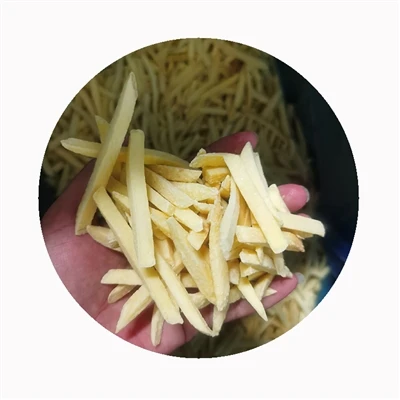
What Changes During Frozen Storage
A frozen strip is not static. Water can move from the potato to the surface and package headspace, especially when temperature oscillates. Small ice crystals can grow into larger crystals, damaging structure and encouraging clumping. Dry exposed areas become pale and porous. During finishing, those strips may brown unevenly, absorb more oil, develop a tough edge, or lose the fluffy interior expected from the approved reference. Freezer burn alone is a quality defect, not proof that the fries are unsafe.
Temperature cycling often creates a recognizable pattern: heavy loose frost, a hard cluster, a water line inside the liner, collapsed strips, or an ice sheet at the bottom. These signs justify a closer record review, but they cannot reveal how warm the product became or for how long. A bag can frost because of slow moisture migration without crossing a safety limit. Another bag can look acceptable after a short warm exposure. We use appearance to choose what to investigate, then use the logger, receiving measurements, handling times, and lot sampling to make the decision.
Breakage also grows as brittle frozen strips are compressed or dropped. A high proportion of short pieces changes portion appearance and increases the surface area exposed to finishing oil. Fine fragments can overbrown before full-length strips are ready. In a restaurant basket, fines may pass through the mesh and become waste. In retail, a bag that meets net weight can still disappoint if too much of that weight is unusable crumbs. This is why a shelf-life review must include usable yield, not only smell and color.
The package controls much of this movement. A suitable frozen-food film limits water-vapor and oxygen transfer, survives low-temperature flexing, and maintains its seal through carton pressure and distribution. A pinhole or channel leak can create localized dehydration long before the outer carton looks damaged. Check the seal band, gussets, abrasion points, folds, carton fit, and liner closure. Our frozen-food packaging overview helps connect pouch material, inner-pack size, carton, label, and transport handling.

Oil Quality Is Part of Fry Shelf Life
Many commercial fries have already contacted oil during par-frying, so their storage quality includes more than potato texture. Oxygen, time, oil composition, antioxidants, surface area, and packaging can influence oxidation. A stale, paint-like, cardboard-like, bitter, or distinctly rancid note after standardized cooking is a rejection signal for sensory quality. Do not try to hide it with seasoning or add fresh oil to "restore" the lot. Odor language should be defined against an approved sample because normal potato, coating, and oil aromas vary across formulas.
Evidence does not support one simple claim that every par-fried product becomes rancid after a set month. A peer-reviewed storage study followed prefried fries for 21 months and found no appreciable oxidation change under the oils and conditions tested. That is useful evidence of formulation dependence, not a guarantee for every fry. Other work shows that oil type and thermal history change oxidation behavior. The defensible approach is to verify the oil declaration, package barrier, frozen shelf-life support, and sensory performance of the exact product.
Keep the oil on the frozen product separate from the oil in your finishing fryer. Repeated high-temperature use changes fryer oil even when the frozen stock is new. A 2025 study of four oils recycled through as many as ten frying cycles found rising lipid-peroxidation measures across reuse cycles, with stronger effects at 190°C than at 150°C. That experiment does not define a universal commercial discard point, but it confirms why fryer temperature, oil turnover, filtration, food load, top-up practice, and the applicable polar-compound or quality limit need their own controls.
Two-oil check: If fries taste stale, cook the same lot in fresh, controlled finishing oil and cook an approved reference beside it. A defect that follows the lot points toward the product or storage history. A defect that affects both samples points toward the fryer oil, appliance, or cooking method. Record the finding instead of assigning blame from one basket.
For a long program, add an oil-quality clause only if it can be tested. The ingredient statement should name the par-fry oil or oil blend as required by the destination market. Sensory acceptance can define absence of rancid or abnormal odor and flavor after a stated cook procedure. Where commercial risk justifies laboratory work, agree the method, limit, frequency, and responsible party before production. A vague demand for "fresh oil" cannot be audited across lots.

Read the Date and Temperature Record Together
A best-before date estimates quality when the stated storage conditions have been met. It does not certify the route between the factory, port, vessel, warehouse, distributor, and kitchen. Check the production date, lot code, stated shelf life, storage requirement, delivery date, remaining life requirement, and temperature record as one chain. If a customer requires six months of remaining life on receipt, that commercial condition must be calculated before shipment, not negotiated after arrival.
Time-and-temperature example: A lot has an 18-month labeled life and arrives 7.5 months after production. The arithmetic remaining life is 18 - 7.5 = 10.5 months. If your contract requires at least six months on receipt, the lot passes that date condition with a 4.5-month margin. It does not pass cold-chain acceptance automatically. You still need the reefer set point, logger record, carton condition, product temperature, and a representative cook test. Conversely, a brief door-opening spike on an air sensor does not prove that the solid fries warmed to the same temperature; investigate the duration, sensor position, and product measurements.
Official guidance says foods kept continuously at 0°F (-18°C) or below can remain safe indefinitely, while freezer storage times are quality guidance. Freezing does not sterilize food. If fries have thawed, become contaminated, or spent an unknown period outside frozen control, stop using the long frozen-life statement as reassurance. Hold the lot, preserve the record, and apply the manufacturer's instruction, your food-safety plan, and the authority relevant to the destination. Sensory testing cannot prove a temperature-abused food safe.
Refreezing also has two gates. U.S. emergency guidance says food may be refrozen when it still contains ice crystals or measures 40°F (4°C) or below, although quality may suffer. That household threshold is not automatic commercial acceptance: first determine whether the product remained within the safety limits in your destination plan, then determine whether extra ice-crystal growth still meets the quality and application specification. A commercial lot can become clumped, mealy, greasy, or uneven after cooking even when the safety gate is satisfied.

Use a Standardized Cook Test Before Acceptance
Frozen appearance alone cannot tell you whether fries will perform. Select samples from several cartons and load positions, then cook them with a written method that matches the real application. Record sample weight, frozen condition, appliance, oil or oven condition, batch load, time, temperature, drain time, seasoning, and evaluation time. Follow the manufacturer's directions unless a jointly agreed application test states something else. Thin, thick, coated, and uncoated fries do not share one reliable air-fryer, oven, or deep-fryer schedule.
Compare the lot with an approved reference. Measure fry color against an agreed chart or photograph under consistent lighting. Check exterior crispness at serving and after the required hold time, interior texture, potato flavor, abnormal oil note, length distribution, dark ends, hollow heart, broken pieces, fines, oil pickup when material, and portion yield. In foodservice, you may accept modest visual variation if crispness holds for ten minutes; for a retail program, you may prioritize a clean bag and reliable household cooking. The foodservice and catering supply overview explains why portioning, kitchen throughput, and repeatability deserve their own test conditions.
Do not thaw commercial fries before cooking unless the label explicitly instructs it. Thawing promotes surface moisture, sticking, breakage, and uneven browning, and it changes the safety-management task. Our related guide to cooking frozen fries straight from the freezer explains the method distinction; the approved pack instruction still owns the final appliance-specific setting. Load from frozen at a consistent batch weight. For deep frying, a large frozen load can depress oil temperature and lengthen recovery; for an oven or air fryer, crowding reduces airflow. If one trial uses a half basket and another uses a full basket, the comparison is not valid even when the timer is identical.
Hold-time testing matters because the best fry at the fryer may not be the product served. Evaluate at zero, five, ten, or the agreed number of minutes under the actual packaging or service condition. Record crispness loss, condensation, color, and breakage. Delivery and buffet programs may need a coated fry or thicker cut, while immediate counter service can prioritize fast cooking. Shelf life is commercially meaningful only when the aged product still performs at the point of consumption.

Calculate Usable Cost, Not Carton Price Alone
A low price per kilogram can hide costly loss. Ice, severe freezer burn, fines, short pieces, oil defects, and failed cook performance reduce the weight that reaches a sellable portion. Define which material is unusable for your application and weigh it in a representative sample. Keep the calculation separate from safety: safe but broken fries can still be a commercial failure, while an attractive lot with an unresolved temperature history still requires a safety hold.
Worked example: A 10,000 kg shipment costs $1.15 per kg delivered, so the invoice value is $11,500. Lot A has 3% unusable fines and severely damaged strips, leaving 9,700 kg. Its ingredient cost is $11,500 ÷ 9,700 = $1.186 per usable kg. Lot B has 11% unusable material, leaving 8,900 kg. Its cost is $11,500 ÷ 8,900 = $1.292 per usable kg. The identical invoice price hides an extra $0.106 per usable kg in lot B. Add extra sorting, frying loss, oil use, complaints, and disposal separately before deciding whether to accept, claim, regrade, or reject.
Pack-size example: A kitchen uses 1,000 kg per month. Repeated exposure from a 10 kg liner produces 6% measured frost and waste, while two sealed 5 kg inner bags reduce loss to 2%. At $1.30 per kg, the reduction is 40 kg × $1.30 = $52 per month. If smaller inner packing adds $0.04 per kg, the added pack cost is $40, leaving a $12 net material benefit before labor and complaint effects. Smaller packs are not automatically better; the measured loss must exceed the added packaging and handling cost.
For foodservice, calculate cooked serving yield as well. Weigh the frozen input, cooked output after a fixed drain, rejected dark or short pieces, and the number of standard portions. If one 10 kg carton produces 105 acceptable 90 g portions and another produces 96, their commercial value differs even when both look normal in the freezer. Standardize the basket load and oil condition before attributing the gap to the fries.

Build the Acceptance Plan Before the Shipment
A repeatable specification should name the cut, dimensions and tolerance, potato and coating description, oil declaration, ingredient and allergen requirements, fry color, defect limits, length or breakage distribution, sensory standard, cook method, hold-time requirement, net weight, pack format, shelf life, storage temperature, labeling, traceability, and destination documents. "Good quality" and "crispy" are not test methods. State how many cartons and samples are checked, which instrument or reference is used, and what happens when a result falls near the limit.
At receiving, inspect the reefer or vehicle before unloading. Verify seal and shipment identity where applicable, set point, logger file, door and floor condition, carton temperature, inner-pack integrity, wet or collapsed cartons, frost, clumping, and evidence of compression. Sample across door, center, wall, top, and lower positions rather than selecting the most convenient carton. Preserve lot codes, photographs, instrument IDs, calibration status, sample positions, cooking records, and retained samples if a claim may follow.
Rotation should follow the labeled date and customer commitment. First-expired, first-out is more useful than purchase order alone when lots have different production dates. Protect opened liners from warm humid air, close the freezer door promptly, and avoid placing frequently used stock in the most variable location. Review complaints by lot and defect type. A rising pattern of frost, seal failures, rancid aroma, or short pieces can expose a packing, handling, or oil-quality weakness before a full rejection occurs.
Responsibility should be explicit at each handoff. The producing facility controls formula, process, release tests, date coding, and pack condition. The carrier controls agreed transport conditions. Your warehouse controls receipt, frozen storage, rotation, and opened-pack handling. Your kitchen controls finishing oil, appliance, batch load, hold time, and service. When a defect appears, this division helps you test the right cause instead of blaming frozen age alone. Import programs can align these records with the importer and global supply workflow.
Frequently Asked Questions
Are frozen French fries unsafe after 12 months?
Not merely because 12 months have passed. That period is a general best-quality reference for frozen potato products at 0°F (-18°C). Continuously frozen food can remain safe beyond a quality date, but flavor, crispness, color, breakage, and oil aroma may decline. Follow the labeled shelf life and reject or hold the lot when package damage, contamination, thawing, or an unresolved temperature history creates a separate concern.
Can freezer-burned fries still be cooked?
Freezer burn alone is moisture loss and a quality defect. Mild damage may remain usable, but severe dry areas can cook hard, brown unevenly, and taste stale. Measure the affected share and run the agreed cook test. Do not use freezer-burn guidance to excuse a damaged seal, contamination, or unknown thawing history.
Why do frozen fries smell rancid after cooking?
The odor may come from oxidation of oil on a par-fried product, degraded finishing oil, long oxygen exposure after opening, or another formulation or cooking issue. Cook the questioned lot and an approved reference in fresh controlled oil. If the odor follows only the questioned lot, hold it and investigate product and storage records. If both samples show the defect, examine the fryer oil and process.
Should frozen French fries be thawed before frying or baking?
Commercial fries are normally designed to cook from frozen, but the label owns the instruction. Thawing can increase surface moisture, sticking, breakage, and uneven browning. Use the specified batch load, temperature, time, and appliance because shoestring, thick-cut, coated, and uncoated products cook differently.
What should I request when comparing two frozen fry offers?
Request the product and ingredient specification, cut tolerance, oil declaration, defect limits, cook instruction, fry-color and hold-time method, pack options, shelf life and storage statement, certificate or compliance documents required for your market, sample plan, and quotation basis. Compare usable portion cost and performance, not only carton price.
XMSD sourcing note: For a frozen-fries project, you can send the cut style, thickness, cooking method, target hold time, bulk or retail pack, order quantity, destination, and required documents. We can then review the specification and sample priorities with you.
Final Decision
Twelve months at -18°C is a useful quality benchmark, not a substitute for the pack's declared life. Keep safety, sensory quality, and commercial yield as three separate decisions. The temperature record and package integrity support the safety review. Frost, clumping, breakage, aroma, fry color, crispness, and hold time show quality. Usable yield and portion performance reveal cost. When those checks are written into the specification and repeated under controlled cooking conditions, you can make a defensible accept, claim, regrade, or reject decision.
References
- U.S. Department of Agriculture, FoodKeeper: frozen potato products (French fries, hash browns, and tater tots), 12-month freezer quality reference. FoodKeeper resource.
- FoodSafety.gov. "Cold Food Storage Chart." Freezer storage times are for quality; foods kept continuously at 0°F (-18°C) or below can be kept indefinitely. Cold storage guidance.
- Global Cold Chain Alliance / WFLO. "Commodity Storage Manual: Potatoes - French Fries" (2018). Storage references for small and larger cuts at 0°F (-17.8°C). Commodity manual PDF.
- Jorge, N., and colleagues. "Evolution of oxidation during storage of crisps and french fries prepared with sunflower oil and high oleic sunflower oil." Grasas y Aceites. Study record.
- "Reheating Oils During Deep Frying Alters Fatty Acid Profiles, Lipid Peroxidation Level, and Nutritional Indices of French Fries." PubMed record, 2025. PubMed abstract.
- StillTasty. "How Long Do Frozen French Fries Last?" Commercial frozen fries, 10–12 months for best quality under continuous frozen storage. Storage summary.
- FoodSafety.gov. "Food Safety During Power Outage." Food may be refrozen when it still contains ice crystals or is at 40°F (4°C) or below, though quality may suffer. Refreezing guidance.