


Is Frozen Corn Already Cooked? | XMSD
Dec 31, 2020

A bag of frozen corn may look ready to use, but "frozen" describes its storage condition rather than its cooking status. The important words are usually found elsewhere on the package: raw, blanched, fully cooked, ready to cook, or ready to eat.
The short answer: Commercial quick-frozen sweet corn is commonly blanched before freezing. Blanching briefly heats and partially cooks the corn, but it does not automatically mean the product is fully cooked or ready to eat. Follow the label: cook a ready-to-cook product as directed, and treat it as ready to eat only when the package or specification clearly says so.

Frozen and Cooked Are Not Opposites
Corn can be frozen at several different preparation stages. Freezing preserves the product at that stage; it does not tell the consumer what heat treatment occurred before freezing or what must happen before serving.
| Product status | What it means | Before eating |
|---|---|---|
| Raw frozen | Frozen without a complete cooking step | Cook according to a tested method or package direction |
| Blanched and frozen | Briefly heated for processing and quality stability | Usually still treated as ready to cook unless labeled otherwise |
| Fully cooked or ready to eat | A distinct product status supported by the label and process | Use or reheat exactly as the package directs |
What Does Blanching Mean?
Blanching exposes vegetables to hot water or steam for a controlled, relatively short period and is normally followed by rapid cooling. It is a processing step rather than a synonym for complete cooking.
The Codex standard for quick-frozen vegetables describes both corn-on-the-cob and whole-kernel sweet corn as being sufficiently blanched to maintain color and flavor stability during normal marketing cycles. That wording explains the purpose of the treatment; it does not classify every package as ready to eat.

Why is corn blanched before freezing?
Blanching helps control enzyme activity that would otherwise reduce quality during frozen storage. It can support more stable color, flavor, and texture, but the result still depends on the corn variety, product size, heating method, cooling, freezing rate, storage, packaging, and final cooking.
It is therefore misleading to say that quick freezing "locks in all nutrition" or guarantees freshness indefinitely. Processing and storage affect different quality and nutrient measures in different ways.
Is there one universal blanching time?
No. Whole kernels, small ears, large ears, and cut cob segments do not heat at the same rate. As an example of product-specific guidance, the National Center for Home Food Preservation lists a four-minute water-blanch for corn that will be cut into whole kernels, but seven, nine, or eleven minutes for small, medium, or large ears. Those are home-freezing directions, not universal commercial process specifications.

Does Blanching Make Frozen Corn Ready to Eat?
Not by itself. The FDA explains that partial factory cooking does not necessarily mean all ingredients were heated long enough or hot enough to destroy harmful bacteria. The agency also notes that many bacteria can survive freezing. A blanched product should therefore not be assumed ready to eat solely because heat was used during processing.
Food-safety note: If the package says "cook before eating" or gives cooking instructions, follow them completely and make sure the corn is heated through. Use uncooked frozen corn in a cold dish only when its labeling or specification clearly identifies it as ready to eat.
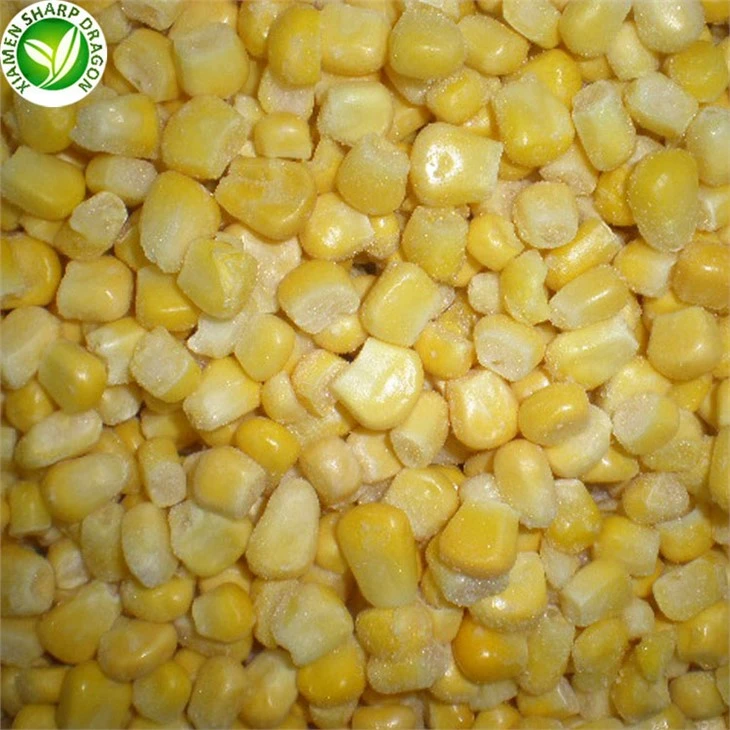
How to Read the Package
Appearance is not a reliable test. Frost, bright yellow kernels, soft texture, or a previous blanching step cannot establish ready-to-eat status. Use the product name, preparation statement, ingredient panel, storage instructions, and cooking directions together.
"Raw" or "cook before eating"
The product needs a cooking step. Do not substitute a quick thaw or light warming for the stated method.
"Blanched," "IQF," or "quick-frozen"
These words describe processing, but they do not independently confirm that the corn is ready to eat. Check the preparation directions and intended use.
"Fully cooked," "heat and serve," or "ready to eat"
These terms identify a different level of preparation. A fully cooked frozen product may require reheating for quality, while a ready-to-eat product may be usable without a consumer cooking step when handled according to its label.

What About Corn Frozen at Home?
Home-preservation guidance normally recommends blanching corn before freezing, followed by prompt cooling, draining, packing, and freezing. The blanching time changes with whether the corn remains on the cob and with ear diameter.
That treatment is performed to prepare the corn for frozen storage; it is not a reason to skip later cooking. Label home-frozen packages with the date, product form, and whether the batch was raw, blanched, or fully cooked so its status is not forgotten.

How Cooking Status Changes the Way You Use Corn
Ready-to-cook frozen kernels can often go directly into soups, stews, stir-fries, casseroles, or ready meals when the dish provides the complete cooking step. Add them at a point that allows the corn to heat through without becoming unnecessarily soft.
For a cold salad, salsa, or chilled filling, cook ready-to-cook corn according to its directions first, then cool it using appropriate food-handling practices. A labeled ready-to-eat product can follow its own serving directions. Microwave preparation should match the stated power, time, covering, stirring, and standing instructions rather than a generic estimate.
What Buyers Should Confirm in a Frozen Corn Specification
For foodservice, retail, or industrial use, cooking status should be written into the specification rather than inferred from the word "IQF." Confirm whether the product is raw, blanched, fully cooked, ready to cook, or ready to eat; also confirm the validated preparation instruction and destination-market labeling requirement.
Product form matters as well. The current XMSD frozen corn range covers kernels, whole cobs, and cob segments. Buyers should define variety, kernel or cob dimensions, heat-treatment status, intended application, pack format, storage condition, and representative preparation testing in the agreed specification.

A supplier may offer different corn products for different preparation routes. For example, a raw frozen corn kernel specification should not be interpreted like a separately identified ready-to-eat corn format. Packaging and label instructions should keep that distinction clear through distribution and use.
XMSD sourcing note: Tell us the corn form, cooking status, target application, pack size, destination market, and required preparation statement. We can discuss a suitable specification and a representative sample for application testing, subject to the agreed product requirements.
Frequently Asked Questions
1. Is frozen corn already cooked?
Commercial quick-frozen corn is commonly blanched, so it has received some heat. That does not automatically make it fully cooked or ready to eat.
2. Is blanched corn the same as fully cooked corn?
No. Blanching is a short heat treatment used during processing. Fully cooked is a separate product status that should be confirmed by the label or specification.
3. Can I eat frozen corn directly from the bag?
Only when the product is clearly labeled ready to eat and has been handled as directed. Otherwise, follow the cooking instructions before eating it.
4. Why is corn blanched before freezing?
Blanching helps control enzyme activity and supports color, flavor, and texture stability during frozen storage.
5. Can frozen corn be completely raw?
Yes. Raw frozen corn products and home-frozen raw corn can exist. The process description and package instructions should identify the required preparation.
6. Can frozen corn be fully cooked before freezing?
Yes. Fully cooked and ready-to-eat corn products also exist, but that status must not be assumed for ordinary IQF kernels or cobs.
7. How can I tell whether frozen corn needs cooking?
Read the preparation statement and directions. Terms such as "cook before eating," "ready to cook," "fully cooked," and "ready to eat" are more useful than appearance.
8. Does frozen corn need to be thawed before cooking?
Many products are designed to cook from frozen, but the package direction takes priority. Thaw only when the specified method requires it.
9. Can I add frozen corn directly to soup?
Usually, when the soup provides a complete cooking step and the product directions allow cooking from frozen. Give the kernels enough time to heat through.
10. Can frozen corn be used in a cold salad?
Cook a ready-to-cook product as directed and cool it appropriately before adding it. Use without cooking only if the product is clearly ready to eat.
11. Does freezing itself cook corn?
No. Freezing lowers the temperature and preserves the corn at its current processing stage; it is not a cooking method.
12. Does blanching sterilize frozen corn?
Do not assume so. FDA guidance states that partial factory cooking does not necessarily destroy all harmful bacteria, and freezing does not kill most bacteria.
13. Is home-frozen corn different from commercial IQF corn?
It can be. Equipment, freezing speed, product preparation, package information, and process control differ. Record whether a home-frozen batch was raw, blanched, or fully cooked.
14. Why do blanching times differ for kernels and cobs?
Heat moves differently through loose kernels, small cob sections, and large whole ears. Product dimensions, load size, water or steam conditions, and equipment all affect the required process.
15. What cooking-status details should a frozen corn buyer request?
Request the raw, blanched, fully cooked, ready-to-cook, or ready-to-eat designation; the intended preparation method; product dimensions; pack format; storage direction; and applicable label requirements.
Final Thoughts from XMSD
Frozen corn is not defined by one cooking state. Commercial sweet corn is commonly blanched before freezing, but blanching is partial processing rather than proof of a fully cooked or ready-to-eat product. Check the label or specification, then use the cooking or reheating method written for that exact corn format.
References
- Codex Alimentarius: Standard for Quick Frozen Vegetables, including corn-on-the-cob and whole-kernel corn
- U.S. Food and Drug Administration: Safety Knowledge About Ready-to-Cook Foods
- U.S. Food and Drug Administration: Are You Storing Food Safely?
- National Center for Home Food Preservation: Blanching Vegetables
- National Center for Home Food Preservation: Corn-On or Off the Cob
- XMSD: IQF Frozen Corn Product Forms