


Is Pumpkin a Good Carb? Plain, Puréed and Prepared Forms
Jul 31, 2019

Plain pumpkin can be a useful carbohydrate-containing vegetable, but "good carb" is not a promise that applies to every food with pumpkin in its name. Pumpkin cubes, unsweetened purée, sweetened pie filling, breaded pieces and fried chips differ in water content, ingredient additions and serving density. A pumpkin latte or pastry is an even more complete formula. Start with the exact product, not the orange color or the word pumpkin on the front of a pack.
Plain flesh supplies carbohydrate and fiber in a high-moisture vegetable matrix. That does not mean it supplies unlimited energy without consequence, prevents obesity or guarantees weight loss. Those claims are too absolute. To decide whether a particular pumpkin food is a sensible carbohydrate choice, identify the form, weigh the edible serving, read total carbohydrate and fiber, and then count any sugar, flour, starch, oil or other ingredients in the finished recipe.
The short answer: Plain pumpkin is generally a reasonable carbohydrate-containing vegetable for many meals because its edible flesh is mostly water and provides some fiber. It is not carbohydrate-free, and the judgment changes when pumpkin is concentrated into purée or combined with sugar, coating, oil or pastry. Compare products on the same gram and serving basis before calling one "good."
Start with Plain Pumpkin Flesh, Not a Health Label
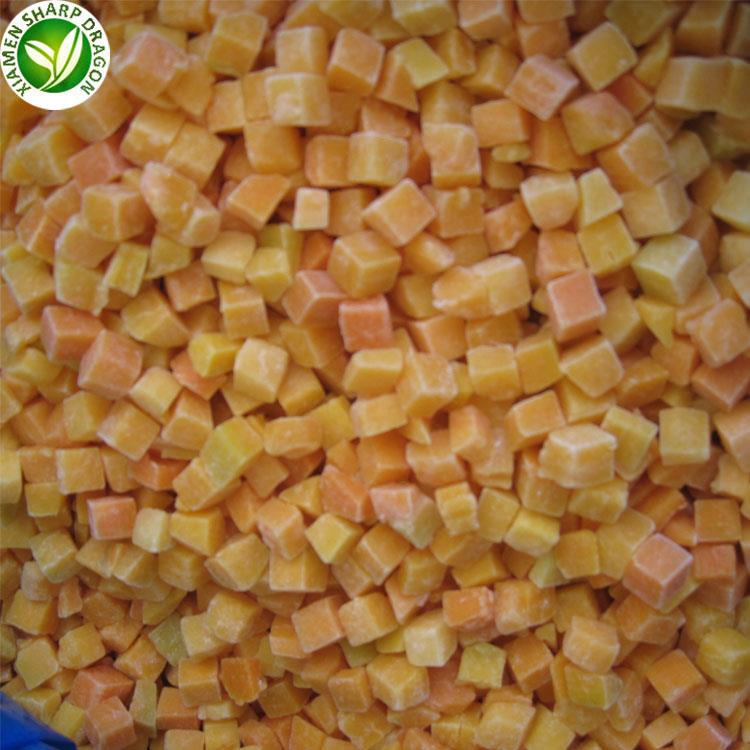
USDA SNAP-Ed lists a one-cup, 116 g cubed-pumpkin entry with 30 calories, 8 g total carbohydrate, 1 g dietary fiber, 3 g total sugars, 0 g added sugars and 1 g protein. That is a useful reference because the food name, household measure and gram weight are all stated. It also shows why pumpkin cannot be reduced to either "carb-free" or "mostly starch." The listed serving contains carbohydrate, yet much of its weight is water.
Use those values only for the named USDA entry. A different cultivar, maturity, laboratory method, cooking treatment or drained state can produce different results. The data are not an automatic specification for every frozen pumpkin lot, and they are not a legal label for a product sold in another market. Keep the measurement method: name the food precisely, state the weight and hold the serving state constant.
USDA MyPlate places pumpkin and calabaza in the red-and-orange vegetable subgroup. That food-group classification does not erase their carbohydrate. It simply answers a different question from carbohydrate counting. A buyer or meal planner can correctly describe plain pumpkin as a vegetable and still include its carbohydrate in the meal total. Our separate guide on whether pumpkin is a carbohydrate or protein food covers the classification issue; the decision here is whether a specific form and portion make sense as a carbohydrate choice.
For a plain product, check whether pumpkin is the only listed food ingredient. A commercially frozen item may also have a declared processing aid or treatment according to local rules. "Frozen" describes temperature and preservation, not a nutritional formula. A frozen cube can remain a plain ingredient; a frozen battered pumpkin bite is a formulated food. The XMSD frozen pumpkin range shows why you need the product identity, cut and intended use before comparing carbohydrate.

Water and Serving State Change Carbohydrate Density
Carbohydrate density means grams of carbohydrate in a stated weight or volume of food. Pumpkin flesh has a high water content, so a loose cup of raw cubes is not interchangeable with a compact cup of cooked mash. Cubes leave air spaces in the cup. Cooking can add water, remove water or do both at different stages. Purée eliminates much of the space between pieces, and further heating can concentrate the solids. A cup-to-cup comparison can therefore make two single-ingredient pumpkin products look more different than a weight-based comparison.
For a clear comparison, put both products on the same edible gram basis and specify whether the weight is frozen, thawed, drained, cooked or ready to eat. A restaurant may portion pumpkin after roasting, while a frozen-food specification may control net frozen weight. Neither basis is inherently wrong, but mixing them produces false precision. The same rule applies to nutrient panels: use the gram serving printed on the label, not only a phrase such as "one bowl" or "one cup."
Worked example: scaling a transparent reference. The USDA cubed-pumpkin entry has 8 g total carbohydrate in 116 g. On that same reference basis, carbohydrate density is 8 ÷ 116 × 100 = 6.9 g per 100 g.
A 75 g portion would provide approximately 8 × 75 ÷ 116 = 5.2 g carbohydrate. A 150 g portion would provide approximately 8 × 150 ÷ 116 = 10.3 g carbohydrate. Using the listed 1 g fiber, the same portions scale to about 0.6 g and 1.3 g fiber.
This is an illustrative proportional calculation, not a substitute for the actual composition or regulated label of a cooked, puréed or branded product. Once the product state changes, use matching data.
FDA serving-size guidance reinforces the same discipline. Nutrition information is normally displayed per labeled serving, and eating two servings generally means doubling the listed nutrients. The labeled serving is not a recommendation of how much a person should eat. It is the declared basis that lets you perform the calculation. For unpackaged food, a scale and an appropriate composition source provide the closest equivalent.
Visible cut size matters operationally even when it does not directly change carbohydrate in the flesh. Smaller dice pack more tightly into a volume measure and may cook or lose moisture faster. If a recipe is dosed by scoop rather than weight, a change from 20 mm chunks to 10 mm dice can alter the amount delivered. When you source IQF pumpkin cubes, lock both cut tolerance and the portioning method.
Plain Cubes, Purée, Pie Filling and Fried Forms Need Separate Judgments
Separate pumpkin foods before comparing them. The ingredient list and the final serving state matter more than the product's color, marketing name or seasonal flavor. Unsweetened purée may still be a single-ingredient pumpkin food, but its compact texture changes the cup weight. Pie filling or pie mix generally includes sweetener and spices and may include other functional ingredients. Fried or vacuum-fried slices contain oil, and breaded products add flour or starch. A dessert or drink can contain only a modest amount of actual pumpkin.
| Pumpkin form | What changes the carbohydrate decision | Best check |
|---|---|---|
| Plain raw or frozen cubes | Cultivar, maturity, water content, edible weight and any declared treatment | Ingredient statement plus matching composition per 100 g and per intended portion |
| Plain cooked pieces or mash | Water uptake or loss, drained state and compactness | Weigh the ready-to-eat portion and use cooked-form data |
| Unsweetened pumpkin purée | Solids concentration and higher gram weight per cup | Confirm single-ingredient status, serving grams and total carbohydrate |
| Pumpkin pie filling or mix | Added sugar and possible thickeners or other recipe ingredients | Read total carbohydrate, added sugars and the complete ingredient list |
| Breaded or battered pumpkin | Flour or starch in the coating, coating pickup, oil and serving size | Use final-product nutrition, not plain-pumpkin data |
| Fried chips, pastry, soup or beverage | Water removal and the whole formula, including sweetener, flour, dairy or oil | Calculate or test the complete finished food per sale serving |
Practical example: compare 100 g of plain cooked pumpkin with 100 g of breaded fried pumpkin. The plain portion's carbohydrate comes primarily from the flesh. The breaded portion includes carbohydrate from both pumpkin and coating; frying also adds oil and may remove water, changing the energy and nutrient concentration of the final 100 g. It would be misleading to apply a plain-pumpkin database value to both. Obtain the final product's label or calculate the verified recipe and yield.
Oil does not add carbohydrate, but that does not make frying irrelevant. Water loss can concentrate the carbohydrate already present, oil changes the total energy of the food, and coatings or sweet seasonings can add carbohydrate directly. Compare the visible vacuum-fried pumpkin chip form as a distinct finished product, not as plain pumpkin in a different shape.

Read Total Carbohydrate Before Focusing on Sugar
Total carbohydrate is the starting label number because it includes sugars, starch and fiber under the applicable labeling system. Total sugars and added sugars answer narrower questions. FDA explains that total sugars include sugars naturally present in foods plus any added sugars, while the added-sugars line identifies sugars added during processing. "No added sugar" does not mean "no carbohydrate," because pumpkin still contains natural sugar, starch and fiber.
Use a simple order. First, confirm the serving weight. Second, read total carbohydrate and dietary fiber. Third, read total and added sugars. Fourth, scan the ingredient list for sugar, syrups, flour, starch, maltodextrin or sweetened dairy ingredients. Finally, multiply the numbers if the amount eaten differs from the labeled serving. A 200 g bowl cannot be evaluated from a 100 g value without doing the scaling.
Front-of-pack phrases cannot replace that sequence. "Made with real pumpkin" does not state the percentage of pumpkin. "Pumpkin flavored" may describe flavor rather than the amount of flesh. "Unsweetened" and "no added sugar" have specific market-dependent meanings and do not guarantee low total carbohydrate. In an export project, the destination-market definition, recipe, nutrition calculation and artwork must agree.
Fiber should be kept visible rather than erased through a casual "net carb" shortcut. Different jurisdictions and commercial programs use different definitions or claim rules. If you need a nutrition declaration, work from the destination regulation and verified product data. If you need personal carbohydrate planning for diabetes or another medical condition, use the individual target set with a qualified health professional; a general food page cannot set it.

Glycemic Index Does Not Override the Product or Portion
Search results often attach one glycemic-index number to "pumpkin." That is too broad for a reliable decision. The 2021 international GI and GL systematic review lists thousands of specific foods and records details such as preparation and composition where available. Pumpkin species, cooking method, physical structure and recipe can differ. A value measured for a named boiled pumpkin should not be assigned to frozen dice, concentrated purée, pie filling or fried chips without evidence that the products match.
GI describes the relative blood-glucose response to the available carbohydrate in a tested food under a standardized method. It does not tell you how much of that food is in your bowl. Glycemic load adds the available carbohydrate in a specified serving: GL = GI ÷ 100 × grams of available carbohydrate in that serving. The equation makes the missing variable obvious. Even a relevant GI value cannot replace portion weight.
For illustration only, if a tested product had a GI of 50 and a real serving provided 8 g available carbohydrate, the calculated GL would be 50 ÷ 100 × 8 = 4. If a reformulated serving provided 20 g available carbohydrate, the result would be 10 even with the same assumed GI. These hypothetical numbers are not pumpkin claims; they show why a portion-free GI label is incomplete.
The complete meal also matters. Pumpkin served beside rice, noodles or bread does not cancel those carbohydrate sources. A sweetened sauce adds its own amount. Protein, fat, fiber, food structure and meal sequence may affect the real response, but no simple combination turns a serving into a guaranteed outcome. For everyday comparison, the exact product label, weighed portion and complete meal are more actionable than an isolated internet GI number.

B2B Pumpkin Carb Control Starts with the Formula Basis
For retail, foodservice or prepared-meal programs, the phrase "plain pumpkin" should be converted into measurable specifications. Confirm the botanical or commercial type, maturity range, peel requirement, cut size and tolerance, blanching status, individual quick-freezing condition, defects and net weight. Those controls do not create a nutrition value by themselves, but they make the product identity stable enough for sampling, recipe trials and label work.
Then lock the nutrient calculation basis. Decide whether the data represent frozen-as-sold, thawed and drained, cooked, or ready-to-eat material. Record the cooking method, time, yield and any discarded liquid. Purée programs may also need solids or moisture targets because a thicker purée can deliver more pumpkin solids per spoonful. Brix can help monitor soluble solids in a defined process, but it is not interchangeable with total carbohydrate and cannot by itself support a nutrition panel.
Prepared-meal example: suppose a 400 g retail pack contains 35% plain pumpkin and the consumer serving is 200 g. One serving contains 200 × 35% = 70 g pumpkin. Using the USDA 116 g cubed-pumpkin reference only as an early estimate, pumpkin contributes 8 × 70 ÷ 116 = 4.8 g total carbohydrate. Rice, sauce, sugar, starch and every other carbohydrate-bearing ingredient must be added separately. The final declaration should use the approved formula, verified yield and destination-market method rather than this preliminary reference.
A percentage on paper is not enough if the blend is uneven. Check whether a representative serving actually receives the intended pumpkin ratio. Dice size, bulk density, vibration and filling method can cause segregation in mixed products. Sampling from the top, middle and bottom of a production run can reveal whether pumpkin distribution and net weight remain within tolerance. Formula control and physical uniformity belong in the same verification plan.
Packaging should also match the measurement basis. A foodservice bag may be portioned after cooking, while a retail pouch may declare several frozen servings. State net weight, serving count, storage temperature, cooking instructions and any drained or prepared yield assumption clearly. Our frozen-food packaging overview explains the pack formats that can be reviewed after product and portion requirements are fixed.
A buyer-ready pumpkin specification should state:
- plain ingredient or complete formulated product;
- pumpkin type, maturity, peel and color expectations;
- dice or chunk size, tolerance and defect limits;
- frozen, thawed, drained, cooked or ready-to-eat measurement basis;
- pumpkin percentage, coating pickup and every added carbohydrate source;
- nutrition source, sampling plan, destination rules and rounding method; and
- pack weight, serving grams, cooking yield and label-artwork version.
We review frozen pumpkin projects from the intended finished use backward. A soup producer may need pieces that hold shape; a purée program may prioritize smooth texture and controlled solids; a mixed-vegetable pack needs cut compatibility and blend uniformity. We can match the raw form and packing discussion to those inputs. For a complete recipe, keep our raw-material data separate from your finished-formula calculation, regulatory review and final nutrition claim.

A Better Decision Than "Good" or "Bad" Carb
Plain pumpkin can fit as a carbohydrate-containing vegetable in many meals. It is a red-and-orange vegetable that contains a modest amount of carbohydrate on the USDA cubed reference basis and supplies some fiber. The serving still counts. Purée needs its own weight and concentration check. Pie filling, breaded pieces, chips, pastries, soups and beverages need complete-product data because additions and water loss can change the result substantially.
Use four questions whenever a pumpkin food is compared: What exact form is it? How many grams are actually eaten? What does the label or matching composition source report? What else is in the recipe? If all four answers are available, "good carb" becomes a transparent product-and-portion decision. If they are missing, the label is only a slogan.
For a frozen pumpkin project, send XMSD your cut, peel, serving-state, formula, pack and destination-label requirements through our inquiry form. We will review which product data and samples are needed before a commercial calculation.
References
- USDA SNAP-Ed. Pumpkin: seasonal produce guide and 116 g cubed nutrition entry. Accessed August 26, 2026.
- USDA MyPlate. Vegetable Group. Accessed August 26, 2026.
- U.S. Food and Drug Administration. Serving Size on the Nutrition Facts Label. Accessed August 26, 2026.
- U.S. Food and Drug Administration. Added Sugars on the Nutrition Facts Label. Accessed August 26, 2026.
- Centers for Disease Control and Prevention. Choosing Healthy Carbs. Accessed August 26, 2026.
- Centers for Disease Control and Prevention. Carb Counting. Accessed August 26, 2026.
- Atkinson FS, Brand-Miller JC, Foster-Powell K, Buyken AE, Goletzke J. International tables of glycemic index and glycemic load values 2021: a systematic review. American Journal of Clinical Nutrition. 2021;114(5):1625–1632.