


Is It OK to Eat a Lot of Strawberries? Portion, Symptoms and Form
May 20, 2025
There is no single number that is "right" for every person. A useful daily amount depends on the total eating pattern, the form of the strawberry, the rest of the meal, individual tolerance, activity, medical advice, and whether the fruit is plain or part of a sweetened recipe. A weighed serving is more reliable than a vague handful, especially for smoothies, dried fruit, or commercial portions.
Separate the planning question from an emergency question. Mild fullness after a large bowl is mainly a portion-and-tolerance issue. Hives, facial swelling, throat tightness or breathing difficulty after a small amount may be an allergic emergency. Vomiting, diarrhea or fever affecting several people after one lot raises a food-safety question. These patterns require different evidence and different next steps.
When the Question Becomes an Emergency
A serious allergic reaction can occur after a small exposure and is not measured by the number of strawberries eaten. Hives, swelling of the lips or face, wheezing, trouble breathing, throat tightness, faintness or rapidly worsening symptoms require urgent action under the person's emergency plan and local medical guidance. A general article cannot replace prescribed rescue treatment or emergency assessment.
Foodborne illness is another pathway. If multiple people report vomiting, diarrhea, fever or other illness after sharing one frozen or prepared product, keep the original pack, lot code and purchase information. Do not keep tasting the product to prove a cause. The supplier, public-health authority or food-safety team needs the traceable evidence.
Practical example: one person feels bloated after a 500 g smoothie, while another develops swelling and wheezing after a small strawberry dessert. The first event calls for portion and recipe review; the second is an urgent medical event. Treating both as "too many strawberries" would be unsafe.
What Makes Strawberries Feel Bad for Some People?
Strawberries bring water, fibre and natural acids to a meal, and a large serving can feel different from a small serving. The recipe may also contain juice, yoghurt, cream, sweeteners or sugar alcohols. Review the whole exposure before blaming the berry alone. If the same symptom occurs with a controlled smaller portion, record that pattern and discuss it with a qualified professional.
Practical example: one person reports discomfort after 450 g of strawberries blended with apple juice, but not after 150 g of plain fruit. The better next step is to reduce volume and compare the complete recipe rather than label strawberries as universally bad. If symptoms persist or red flags appear, stop the trial and seek appropriate care.
A Simple Way to Judge Whether Your Amount Is Reasonable
Use the smallest useful set of facts rather than a dramatic online number. Weigh the serving if the amount is uncertain, include strawberries in a smoothie or dessert calculation, and note whether the fruit was fresh, frozen, drained, dried or freeze-dried. Then consider how quickly it was eaten and whether the person normally tolerates that form.
If the person feels well and the portion fits the meal, there may be no problem to solve. If there is mild fullness, reduce the next serving and review the recipe. If there are hives, swelling, breathing difficulty, repeated vomiting or severe symptoms, stop treating the situation as simple overeating and follow appropriate medical advice.
Practical example: a person eats 250 g of fresh strawberries comfortably but feels bloated after a 600 g smoothie containing strawberries, juice and yoghurt. The useful next step is to compare the complete recipes and portion speed, not to declare that all strawberries are unsuitable. A smaller smoothie, slower intake and professional advice if the pattern repeats provide better evidence.

There Is No Universal Strawberry Limit
A serving recommendation is a planning tool, not a toxicological threshold. One person may eat a portion with lunch, another portion in a smoothie and a strawberry dessert later without the same effect as someone eating a large bowl in a few minutes. Age, activity, total energy needs, digestive tolerance, medicines and medical advice all change the appropriate amount.
USDA MyPlate fruit guidance can help frame variety across the whole diet, but it does not turn strawberries into a stand-alone prescription. If a consumer asks whether two cups are "too much," ask what else was eaten, whether the fruit replaced another food, and whether symptoms or a clinician-directed restriction are involved.
Worked portion example: a 150 g portion is used in each of three products during one day. Total strawberry exposure is 150 g × 3 = 450 g. That may be tolerated by one adult and uncomfortable for another, especially when servings are eaten quickly or combined with a high-volume drink. The calculation clarifies exposure; it does not declare a universal safe maximum.
For commercial recipes, write the portion in grams rather than "a handful." A weighed portion improves nutrition calculations, ingredient ordering, sensory consistency and complaint investigation. Keep raw fruit mass, thawed fruit mass, drained liquid and added ingredients separate in the batch record.
What Can Happen When the Portion Is Too Large?
The most ordinary issue is digestive discomfort. A large volume of fruit adds water and dietary fiber, and eating it quickly may lead to fullness, bloating, loose stools or abdominal discomfort in a sensitive person. These symptoms do not prove that strawberries are poisonous. They indicate that the amount, speed, combination or individual tolerance may not be suitable.
Some people react to the natural acidity or to the complete recipe rather than the fruit alone. A strawberry dessert can include cream, sweeteners, sugar alcohols, chocolate or a large amount of fat. When reviewing a symptom, record the complete food, portion, timing and preparation. Removing strawberries while leaving the rest of the recipe unchanged may not identify the real trigger.
Persistent or severe symptoms, dehydration, blood in stool, repeated vomiting, difficulty swallowing, breathing difficulty or swelling require appropriate medical attention. This article is a food and product guide, not a diagnosis or an individualized treatment plan.

Natural Sugar Is Different from a Sweetened Product
Plain strawberries contain naturally occurring sugars with water and fiber. Eating more fruit increases total carbohydrate and energy intake, but the finished product matters. Strawberry jam, syrup fruit, sweetened yogurt, bakery filling and dessert drinks can contain added sugar that is not present in plain fruit. Use the complete formula for nutrition and label decisions.
Freezing does not add sugar. It can make fruit available in larger portions and may change how quickly it is eaten. A smoothie can contain several hundred grams of fruit plus juice, syrup, yogurt or ice cream without looking like a large fruit portion. Use a recipe sheet and a scale when the product is sold as a controlled serving.
Drying removes water and concentrates mass per gram. A 30 g dried-fruit serving is not comparable with 30 g of fresh strawberries. Freeze-dried pieces may be coated, sweetened or used as inclusions in a higher-calorie product. Check ingredient statement, moisture basis, serving mass and added ingredients before making a portion or health statement.
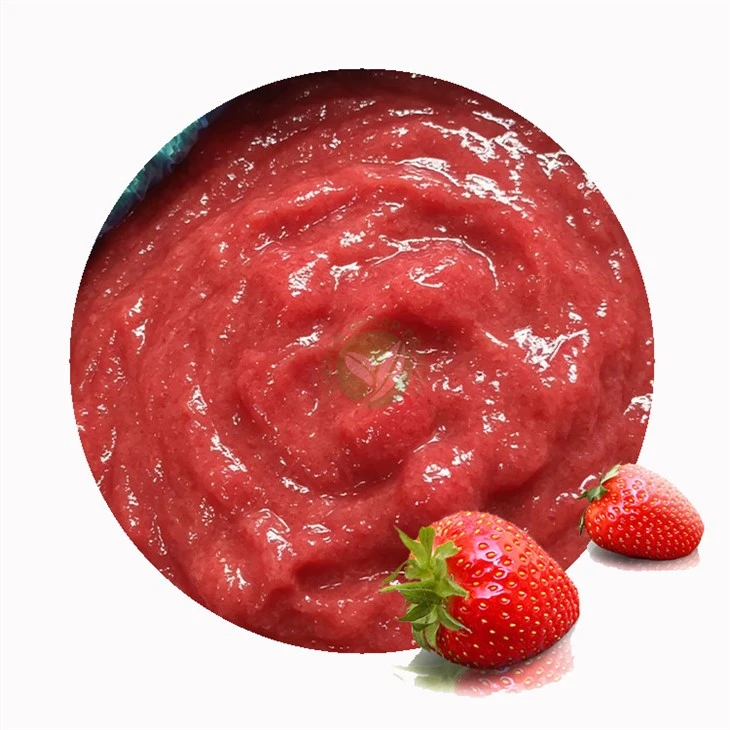
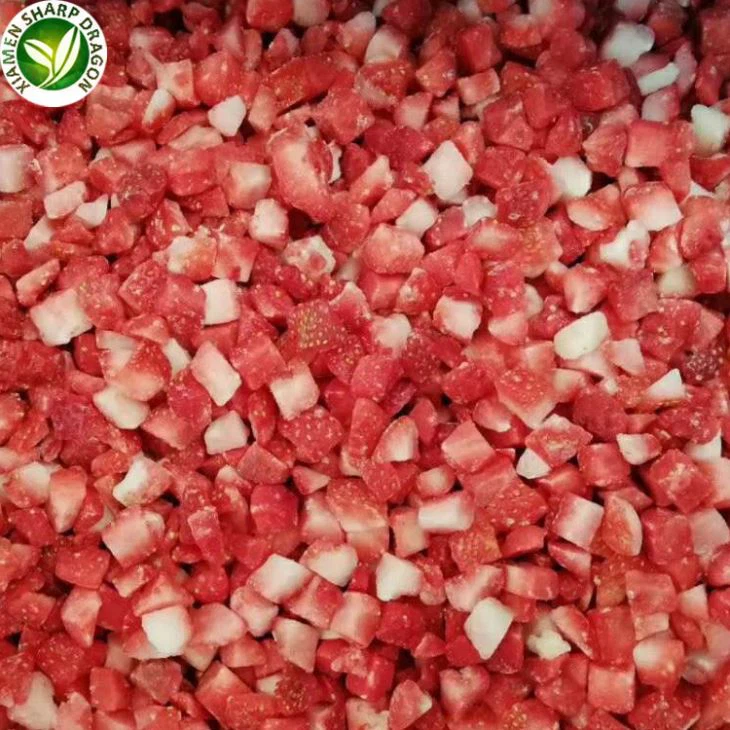
Our XMSD frozen strawberry range shows how whole, sliced, diced and puree forms serve different applications. Form is a procurement decision as well as a nutrition decision because it controls concentration, thaw loss, portioning and exposed product.
Allergy and Individual Tolerance Are Separate Decisions
A food allergy is different from eating too much. It can involve itching, hives, swelling, vomiting, wheezing or a more serious reaction after a small amount. Oral allergy syndrome can cause mouth or throat symptoms in people who react to certain pollens. Anyone with suspected allergy should follow a qualified clinician's evaluation and emergency plan rather than testing a larger portion.
For a food business, identify strawberry as an ingredient even when the finished product is a mixed dessert or beverage. Prevent cross-contact under the facility hazard plan, keep lot identity and do not promise "allergy safe" based only on a supplier photograph or a general certificate. We need the product specification, facility controls and applicable labeling review before release.
Medical diets may also change the answer. A person managing diabetes, kidney disease, gastrointestinal disease or a prescribed elimination diet may need a different portion or product choice. The correct commercial response is to provide composition, serving and lot information and direct the individual to personal medical advice, not to publish a blanket claim that strawberries are always unrestricted.
How to Separate a Large Portion from a Food Reaction
"Too many" is often used to describe three different problems: a portion that exceeds someone's digestive tolerance, a reaction that can occur after a small exposure, or fruit that was contaminated or mishandled. The first is usually a dose-and-tolerance question. The second needs an allergy or intolerance pathway. The third needs a food-safety response. Treating all three as simple overeating can delay the right action.
Start with timing and repeatability. If discomfort follows a very large serving but not a small serving, volume, fibre, acidity, meal composition or eating speed may be relevant. If hives, facial swelling, wheezing, throat tightness or vomiting follows a small amount, do not increase the portion to test the idea. If several people become ill after the same lot, preserve the package and lot code and move the question to the supplier and food-safety team.
The finished recipe also matters. A plain frozen strawberry, a smoothie with juice, and a dessert with cream and sugar create different exposures even when the menu name is similar. Record the complete ingredient list, serving mass, preparation route and time of onset before drawing a conclusion. That record is more useful than a general statement that strawberries are "hot," "cold," "detoxing," or universally safe.
Practical example: a consumer reports bloating after a 500 g smoothie but feels comfortable after 150 g of plain strawberries with a meal. We would not call the fruit poisonous or assume the person can never eat strawberries. The next action is to review the smoothie ingredients, reduce the fruit volume, slow consumption and seek clinical advice if symptoms persist or become severe.
Portion Math Changes with Product Form
Fresh and frozen fruit are usually measured by the portion placed into the recipe. Dried and freeze-dried fruit needs a separate basis because water has been removed. Syrup-packed fruit needs drained weight and added-sugar information. Puree needs solids, viscosity, and any carrier or sweetener recorded. A label that says "strawberry" is not enough to compare these forms by weight.
For a product developer, calculate both input mass and usable mass. If a formulation calls for 120 kg of drained strawberry pieces and a thaw-and-drain trial returns 93% usable fruit, the input basis is 120 ÷ 0.93 = 129.03 kg before an agreed operating reserve. If the same recipe uses puree, the drain calculation may be irrelevant, but soluble solids, acidity and pumpable viscosity become more important.
The same discipline helps a consumer avoid accidentally turning a small-looking dry snack into a much larger fruit intake. A 25 g pack of freeze-dried pieces is light and compact, while a fresh serving contains far more water. The correct comparison is the product label and serving basis, not the number of pieces in a bowl.
Worked example: a yoghurt line adds 35 g of frozen strawberry dice to each of 8,000 cups. The planned fruit input is 35 g × 8,000 = 280 kg. A trial shows 4% trimming and handling loss, so the purchasing basis is 280 ÷ 0.96 = 291.67 kg before reserve. This connects the serving question to a real lot, pack and yield decision.
What a Responsible Answer Should Not Claim
A general article cannot assign a universal maximum, diagnose an allergy, approve a prescribed diet or certify that a frozen lot is ready to eat. It can explain the variables that change the answer and identify the evidence needed for the next decision. That boundary is especially important when a reader asks about children, pregnancy, diabetes, kidney disease, medication interactions or repeated gastrointestinal symptoms.
For a commercial lot, the evidence should match the use. A product for cooking may have one process and label review; a product for direct consumption may require a more demanding risk assessment. Ask for the ingredient statement, specification, lot traceability, storage record, applicable certificate and destination-market requirements. Do not replace those documents with a generic web article or a photograph of attractive fruit.
For an individual, the next action depends on the symptom. Mild fullness after a large serving calls for pausing, hydrating and reviewing portion and meal context. A suspected allergic response calls for the person's medical plan and urgent care when red-flag symptoms occur. Suspected contamination calls for keeping the package, noting the lot and contacting the appropriate food-safety channel. Different evidence leads to different action.
That is why we keep health wording modest and product wording precise. Strawberries can be a useful fruit ingredient, but neither a nutrition benefit nor a pleasant sensory result proves suitability for every person or every application. The decision should remain tied to portion, form, handling, composition and the intended use.
Frozen Strawberries Are Not Automatically Safer
Freezing preserves a product but is not a universal kill step. FDA food-safety guidance has linked frozen berries with outbreaks and emphasizes that viruses may survive freezing. A frozen product intended to be eaten without cooking needs an appropriate supplier program, hygiene controls, traceability, recall readiness and destination-market review.
At home or in foodservice, keep frozen fruit at the specified temperature, prevent thaw-refreeze cycles, wash fresh produce as directed and discard visibly rotten fruit. In a factory, check lot, pack integrity, temperature record, abnormal clustering, surface ice and approved sensory condition. Do not use pleasant smell or bright color as proof of microbiological safety.
Thawing changes portion control. A pack may release juice and soften. Record frozen input, thawed solids, recovered liquid and waste. If a recipe uses both fruit and liquid, include both in usable yield; if an application drains liquid, calculate cost and serving on drained output.
Use Form, Portion and Application Together
Whole fruit works when visual identity matters. Slices and dice distribute more evenly through yogurt, bakery, cereal or dessert. Puree supports beverages and fillings where piece identity is less important. None of these forms is automatically "better"; the right choice is the one that passes the intended recipe, serving, hold time and quality test.
For example, a beverage program uses 80 g strawberry per cup and produces 2,400 cups. Theoretical fruit demand is 80 g × 2,400 = 192 kg. If a thaw trial shows 94% usable yield, planned purchase quantity is 192 ÷ 0.94 = 204.26 kg before an approved contingency. This prevents a vague "large amount" from becoming an uncontrolled order.
A consumer portion should use the same discipline. Put the planned fruit on a scale, note whether it is fresh, frozen, drained or dried, and record the other ingredients. If the person feels unwell, reduce the portion or stop the suspected food and seek advice when symptoms warrant it. If a factory sees inconsistent servings, correct the scoop, recipe, pack or thaw procedure instead of changing a product claim.
Use the XMSD puree format page and the food-processing supply framework to compare application routes. Confirm exact product, ingredient status, packing, origin, specification, annual volume and destination before approving a sample.

A Practical Check before Eating or Releasing a Lot
- Identify the form: fresh, IQF, puree, syrup-packed, dried or freeze-dried.
- Weigh the actual portion and the total amount consumed in the day.
- List added sugar, dairy, sweeteners, oil and other ingredients in the full recipe.
- Watch for digestive or allergy symptoms and follow a clinician-directed restriction.
- Keep fresh and frozen products handled according to the relevant food-safety plan.
- For business use, record lot, thaw yield, serving mass, application result and disposition.
The goal is not to label strawberries as universally good or bad. Match amount, person, product and process. A moderate portion of sound plain fruit may be appropriate, while an oversized serving, concentrated snack, contaminated lot or allergenic reaction requires a different response.
A sound decision therefore has two outputs: a clear answer for the person eating the fruit and a traceable specification for the team supplying it. Keeping those outputs separate prevents a consumer-health question from being answered with a sales slogan or a procurement question from being answered with an unsupported medical promise.
Send XMSD your target form, serving or batch formula, cut, pack size, annual volume, destination market and application. We can align the sample, specification, yield test and cold-chain evidence with the product you actually need.
Frequently Asked Questions
Can eating too many strawberries make you sick?
A very large portion can cause fullness or digestive discomfort in a sensitive person, but symptoms may also come from the complete meal, an intolerance, allergy or poor handling. Consider the form, portion, timing and symptoms together.
How many strawberries are too many?
There is no universal number. Use an amount that fits the person's total diet and tolerance, weigh the serving when accuracy matters and follow medical advice for a prescribed diet.
Are frozen strawberries safe to eat?
Freezing is not automatically a kill step. Check intended use, supplier controls, market instructions, lot history and handling condition before treating a product as ready to eat.
What should a food buyer check?
Check form, ingredient statement, serving or batch mass, thaw yield, defects, applicable safety program, pack, traceability, intended use and application performance.
References
- USDA MyPlate - Fruits: fruit-group and variety context.
- FDA - Selecting and Serving Produce Safely: produce handling guidance.
- FDA - What You Need to Know About Food Allergies: allergy context.
- FDA - Enhancing the Safety of Berries: berry food-safety context.
- XMSD - Frozen Strawberry Health Overview: product-form context.


For a broader comparison of plain, frozen, dried and sweetened forms, see the XMSD strawberry calorie and product-form guide. Read it with the actual label and serving size for the product being consumed or purchased.