


Broccoli Seedling Blight: Damping-off and Wirestem
Sep 15, 2023

Broccoli seedling blight is best managed by removing affected seedlings, protecting the remaining plants from contaminated growing media and water splash, and correcting the conditions that allowed disease to develop. A dark, narrowed stem at the soil surface suggests damping-off or wirestem, often associated with Rhizoctonia, but similar losses can involve other organisms. Identify the problem before choosing a treatment. A collapsed or badly girdled seedling is not a useful candidate for rescue.
Start by holding affected trays back from transplanting. Check the roots and lower stem, record which trays are involved, and ask a plant diagnostic service to examine representative material when the cause is uncertain. Use clean propagation materials, appropriate drainage and irrigation, and adequate air movement to protect the next sowing. A pesticide decision belongs to the diagnosed organism, crop, production setting and current local label; an old dilution recipe is not a reliable treatment plan.
Leaf spots on mature plants and decay inside harvested broccoli heads are different problems. They call for a different inspection and may involve Alternaria, bacterial disease or postharvest deterioration. The useful first question is therefore where the damage began: a young seedling's collar, an older leaf, or the edible head.

Recognize damping-off and wirestem before treating them
Damping-off describes the failure of seeds or very young plants from disease around emergence. Some seeds decay before a shoot appears. Other seedlings emerge and then develop a sunken lesion close to the soil line, lose support and collapse. The Pacific Northwest Plant Disease Management Handbook lists several possible fungal or fungus-like causes in broccoli, including Rhizoctonia, Pythium, Globisporangium and Fusarium. The name describes a disease outcome, not a single organism or a single treatment target.
Wirestem is especially relevant when a broccoli transplant stays upright but develops a thin, brown, toughened section at its base. UC IPM explains that Rhizoctonia can destroy the outer stem tissues while leaving the more fibrous inner tissues. Such a plant may look less dramatic than a fallen seedling but still be stunted and unsuitable for transplanting. Inspect the collar itself instead of judging vigor only by green leaves at the top.
Pull a few suspect plants carefully with their roots and growing medium intact. Compare them with apparently healthy plants from the same sowing. In your notes, describe whether lesions sit precisely at the medium surface, whether roots are discolored, and whether losses follow a wet bench area or appear across several seed lots. Photograph the constricted stems and send those observations with the samples for diagnostic examination.
Poor emergence also has noninfectious explanations. Seed quality, excessive fertilizer salts, heat, inadequate moisture and chemical injury can produce weak or dying seedlings. UConn's damping-off guidance discusses these alternatives. If an entire tray changes shortly after one irrigation or fertilizer event, include that event in the investigation rather than automatically adding another disease treatment.
Keep leaf blight and head decay on separate diagnostic paths
Alternaria leaf spot usually directs attention to rounded brown lesions, often with concentric rings, on leaves. Spots may merge, and infection can extend to broccoli heads. Black rot is bacterial: a useful warning sign is yellowing that advances inward from the leaf edge in a wedge, sometimes with darkened veins. University extension descriptions help narrow the possibilities, but atypical symptoms and mixed infections make a definitive diagnosis from one visual sign unreliable.
This distinction changes the action. A nursery investigation examines propagation medium, trays and young collars. A mature-crop investigation examines leaf distribution, field history, rainfall or irrigation, and affected heads. A receiving inspection asks whether harvested material meets food-safety and quality requirements. Calling all three conditions "broccoli blight" hides the stage where control failed and encourages the wrong response.
Brown areas on a harvested head need examination in their own right. UC Davis describes both bacterial soft rots and fungal decays of broccoli. Slime, wet breakdown and an unpleasant odor are rejection signals, not an invitation to identify a species by smell. General yellowing alone is a different observation from localized rot. Record the appearance accurately so that a quality complaint does not turn into an unsupported field-disease diagnosis.
If you receive a report saying "blight found," ask what was inspected, at which stage, and how the finding was established. A nursery diagnosis may explain a shortfall in planting material. Inspection of mature raw material answers the separate question of what entered food production. Keep the crop event and the food lot connected by traceability, with a dated assessment for each stage.
Contain a nursery outbreak before moving more plants
The first operational decision is whether suspect trays can continue through the transplant workflow. Put them on hold while they are assessed. Give the hold a physical location and a visible identity that keeps it separate from a field delivery. Save representative diagnostic material according to the receiving laboratory's instructions before disposing of affected plants; sending only completely decomposed remains may leave little useful tissue to examine.
UConn recommends discarding infected flats because apparently healthy seedlings in an affected flat may carry contaminated media. That is more protective than removing only the obvious collapsed plants and immediately releasing their neighbors. Apply the local adviser's recommendation to the actual propagation system, including shared irrigation, bench layout and the extent of symptoms. Do not treat the tray boundary as proof that everything beside it is unaffected.
Record the seed lot, sowing date, substrate lot, tray location, irrigation method and first observed symptoms. Then map the shared exposures. If two affected groups used one medium batch but different seed lots, that pattern is worth investigating; it is not proof that the medium was responsible. Recording the alternatives before cleanup makes the eventual diagnosis more useful and avoids rebuilding the history from memory.
Practical example: Suppose a transplant nursery finds collapsed broccoli seedlings in three of twenty trays from one sowing. The remaining seventeen trays look normal, but all received overhead watering on the same bench. The nursery holds the whole sowing group, separates the visibly affected trays, retains samples and obtains diagnostic advice before releasing any plants. The immediate result is a controlled planting decision and a known quantity for replacement planning, rather than an undocumented transfer of suspect seedlings to the field. These numbers illustrate the workflow, not an acceptable disease percentage.
Build prevention around the next sowing
A prevention plan should identify how clean materials stay clean after they enter the nursery. Commercial propagation medium can be contaminated by a dirty scoop, a hose end resting on the floor or contact with used trays. Store unopened medium away from used material, separate clean and dirty handling areas, and assign responsibility for tray preparation. A cleaning record is useful only if the cleaned tray is protected until it is filled.
UMass recommends new or properly cleaned and sanitized trays, avoiding reused potting mix or field soil for transplant production, vigorous seed and suitable spacing. Choose sanitation products and methods appropriate to the equipment and follow their instructions. Do not improvise a stronger disinfectant mixture to compensate for visible debris. The practical acceptance check is whether organic material has been removed and the prescribed treatment has been completed before the tray returns to service.
Irrigation requires observation at root level. A dry-looking surface can sit over wet compacted medium, while one edge of a bench may dry faster than its center. Check representative cells before watering and correct blocked drainage or uneven application. The PNW handbook advises allowing excessive wetness to ease during an outbreak and improving air and light. This means correcting saturation, not deliberately drought-stressing young broccoli or applying a fixed watering interval regardless of conditions.
Temperature advice also needs the right context. Cool conditions that slow emergence can increase damping-off risk, while UC IPM describes warm, wet conditions favoring Rhizoctonia wirestem. Those statements concern different organisms and stages. Faster, even establishment under the crop's suitable conditions is the aim; neither "keep it cold" nor "heat the bench more" is a universal disease-control rule. Record the actual medium condition and plant response when adjusting the nursery environment.
Match any treatment to the diagnosis and location
Chemical and biological options should be evaluated as part of prevention and protection of viable plants. They do not rebuild a stem whose supporting tissue has already been destroyed. Inspect seedlings again before transplanting, including plants that appear to have recovered after a management change. A green top over a damaged collar is a poor basis for releasing a transplant batch.
The PNW handbook's March 2026 broccoli entry distinguishes treatments aimed at different pathogen groups and application settings. That distinction matters more than choosing a product described broadly as a fungicide. A seed treatment, a propagation-medium application and a field application are not interchangeable. Different formulations of a similarly named active ingredient may also have different instructions. Have the local crop adviser establish the permitted option for the identified problem.
Before application, the operator needs the current label, crop and site authorization, target organism, application method, rate basis, protective requirements and any harvest or reentry restrictions that apply. An international article cannot convert a recommendation from one jurisdiction into permission elsewhere. For export production, keep the treatment record linked to the crop block so that the destination's residue requirements can be reviewed separately from whether the treatment was locally permitted.
A treatment record is more informative when it includes the reason for the decision and the follow-up observation. Write down what new growth or symptom progression will be checked, when that review is due and who will decide the next step. If losses continue, revisit the diagnosis, application and growing conditions together. Repeating the same application without reviewing those three factors can prolong a failed response and obscure which change eventually helped.

Connect field findings with raw-broccoli acceptance
From a frozen-food sourcing perspective, we would separate a crop-health event from the release decision for edible raw material. A record of seedling disease may affect planting quantity or harvest scheduling. It is not automatically a defect classification for every head harvested later. The processor needs evidence that identifies the supplying block, harvest date, receiving lot and inspection result, rather than a blanket statement that the crop once had or never had blight.
At receiving, examine heads and stems before cutting makes the original distribution of damage harder to reconstruct. Define how inspectors describe discoloration, soft tissue, decay and foreign material. Compare observations under consistent lighting and handling conditions. The same dark area can look different under surface water, frost or shadow; a clear description and retained reference are more useful than a disagreement over the word "bad."
Our first question for an IQF broccoli specification would be whether the sample represents the intended floret form and its inspection condition. Large florets expose different stem areas from small cuts, and broken pieces complicate counting. The broccoli floret product range provides a starting point for discussing form. Acceptance still needs a defined sampling basis, defect descriptions and a disposition rule tied to the proposed product.
Do not use a cosmetic tolerance as permission to accept decay. Keep suspected unsafe or decomposed material on hold for the responsible quality decision, and reject rotten produce in line with FDA produce guidance. The FDA also distinguishes trimming damaged areas from throwing away rotten produce. For a commercial lot, the relevant assessment extends beyond an individual visible piece to the affected quantity, source and handling history.

Explain what sorting and freezing can actually achieve
Sorting can remove defined visible defects when the inspection system is capable of recognizing them. Assign lesion diagnosis, pesticide-record review and raw-material acceptance to their own checks. Place sorting after a clear intake decision and before the relevant downstream checks. Otherwise an attractive finished sample can conceal an unresolved question about the material that entered the line.
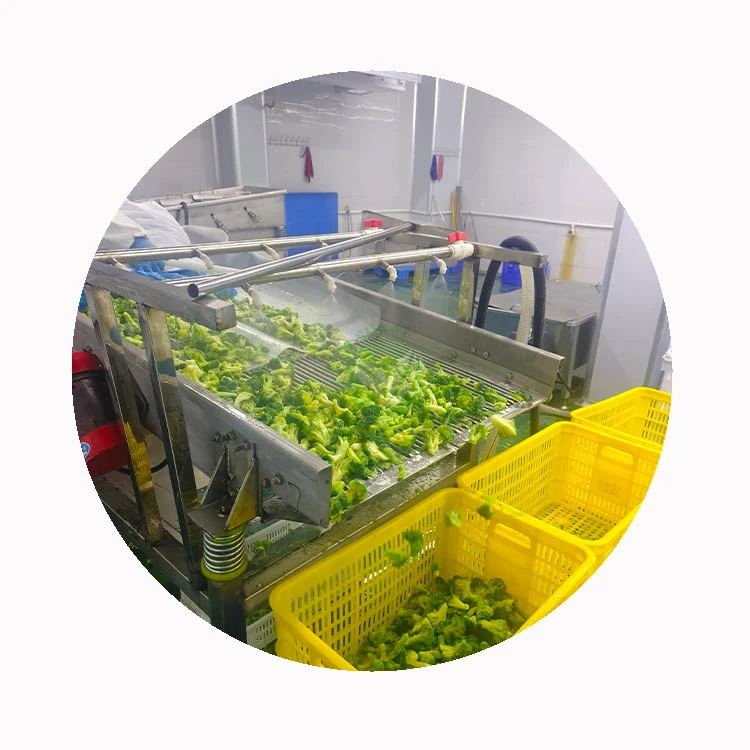
The processing-equipment overview shows the different roles of selection and other equipment. When reviewing a proposed process, ask where a suspect floret is detected, where it goes and how rejected material remains separate. Observe a run using defined product references, then reconcile the reject stream with the inspection findings. This connects the equipment review with a measurable operating result.
We would keep two discussions separate during a broccoli sample review: the removal of unacceptable material and the preservation of usable product. Excessively broad rejection of every darker surface can discard normal variation, while an overly permissive setting can miss defects. The article on optical sorter defect-library validation explains how written classes and controlled challenges support that decision. It is a process check, not a substitute for finished-lot acceptance.
Freezing also has a defined job. USDA explains that freezing inactivates microbes rather than reliably destroying them, and that surviving organisms can become active after thawing. Freezing is therefore not a recovery treatment for rotten broccoli. Assess raw material, process controls and subsequent handling as separate parts of the food-safety system. Keep any required cooking instructions with the finished product instead of inferring ready-to-eat status from its frozen appearance.
Use inspection numbers without hiding a defect
A defect percentage has meaning only when its denominator and observation method are clear. Counting affected florets answers a different question from weighing rejected material. A large damaged floret can contribute one unit to a count but much more mass than a small fragment. Establish which basis the commercial specification uses before comparing results from different inspectors or processing stages.
Worked example: Suppose a processor inspects an illustrative 20 kg raw-floret sample and separates 0.6 kg for a defined visual defect class. The observed defect mass share is 0.6 kg divided by 20 kg, multiplied by 100, or 3%. This is a description of that sample, not a universal acceptance limit or a food-safety clearance. The processor records the category, photographs representative findings and holds the associated lot for the agreed disposition. Keep the original result intact throughout that review.
After an authorized sorting step, a fresh, representative check of the output has a different purpose: evaluating the sorted product against its release criteria. Preserve both results. Replacing the intake result with the output result would erase evidence of the incoming condition. Similarly, a higher reject quantity may reflect a raw-material change, a changed setting or a different cut mix. Review these possibilities before attributing the trend to a worsening field disease.
For your food-manufacturing application, product performance is an additional question after acceptance. A soup blend and a visible vegetable side dish may require different size uniformity or broken-piece criteria. Neither application makes decay acceptable. Agree the application-specific quality measurements separately and carry the same raw-material rejection rule into both products.

Preserve lot identity through packing and delivery
A raw-material investigation is only useful downstream if the records follow the material. Keep the receiving identity connected to production runs, packing runs and finished cartons. Where several supplying blocks feed one run, document the relationship before a complaint occurs. The question is whether a specific concern can be traced to an affected quantity without relying on someone remembering which pallet was used that morning.
Packing should protect that identity as well as the product. The frozen-food packaging options are relevant when agreeing bag, carton and pallet information. Place the necessary lot codes where they remain readable during normal handling, and check that inner and outer packs can be reconciled. A readable carton label is of limited help after the carton has been discarded if the inner bags carry no usable link.
At arrival, document damaged packs, unexpected ice or clumping, and the available temperature history without claiming that any one observation diagnoses a crop disease. Separate the receiving photographs from field photographs in the investigation file. Product that is held for review should stay under its required storage conditions and retain its identity. Opening more bags without recording their lot numbers can make an otherwise straightforward complaint harder to resolve.

Choose the next action from the stage of the problem
For a nursery, the useful outcome is a defensible decision on which seedlings can be planted and a corrected setup for the next sowing. For a processor, it is a raw-material decision supported by observable condition, traceability and an appropriate control plan. For an importer, it is confidence that the finished-lot evidence describes the actual shipment and that unresolved findings have an assigned disposition.
These responsibilities meet at the handoff. A grower reports the affected block and corrective action; the receiving record identifies the delivered material; the processing record identifies what happened next. Each record should answer its own question clearly. A generic disease-free declaration gives less usable information than a specific, dated inspection and a documented response to exceptions.
When uncertainty remains, state it precisely. "Cause of collar lesions awaiting diagnosis" is different from "finished lot on hold for visible decay." Each statement points to a responsible person and the evidence needed to close the issue. That clarity is how a broad question about broccoli blight becomes a practical plan for protecting plants, selecting sound raw material and supplying a traceable frozen ingredient.

For a frozen-broccoli sourcing review, send the intended application, floret form, destination and proposed defect specification. We can review the product and evidence requirements with those inputs.
References
- Pacific Northwest Plant Disease Management Handbook: Broccoli damping-off (March 2026)
- UC IPM: Rhizoctonia diseases of cole crops
- UConn IPM: Damping-off of ornamental and vegetable seedlings
- UMass Extension: Damping Off
- University of Minnesota Extension: Alternaria leaf spot and head rot
- UC IPM: Black rot of cole crops
- UC Davis Postharvest Research and Extension Center: Broccoli
- FDA: Selecting and Serving Produce Safely
- USDA freezing guidance: Focus on Freezing, hosted by NCDA&CS