


How to make strawberry smoothie with frozen strawberries
Aug 21, 2026

For a repeatable frozen strawberry smoothie, start by weight with 44% IQF strawberries, 28% chilled liquid, 20% yogurt, 6% banana, and 2% sweetener. A 700 g trial uses 308 g berries, 196 g milk or plant beverage, 140 g yogurt, 42 g banana, and 14 g syrup. Load the liquid and yogurt before the frozen fruit, start at low speed, move quickly to high speed, and stop as soon as the drink is uniformly smooth.
That formula is a controlled starting point, not a universal recipe. Strawberry format, fruit temperature, blender jar, fill level, yogurt solids, banana ripeness, serving size, straw diameter, and hold time all change the result. Test the actual ingredient lots and equipment, then lock a weight-based formula, loading sequence, program, finished yield, service temperature, and correction rule.

Lock the Product Before Adjusting the Recipe
A smoothie formula cannot correct every raw-material difference. Whole IQF strawberries, halves, slices, dice, crushed fruit, puree, sweetened fruit, and fruit packed with syrup have different water, solids, sweetness, surface area, thaw behavior, and blender load. Confirm that the ingredient is unsweetened IQF strawberry when the formula assumes fruit alone. If sugar, juice, syrup, stabilizer, or another fruit is present, treat it as a different ingredient.
Write the fruit standard around what changes the drink: form and size, cultivar policy where relevant, external and internal color, maturity, flavor, soluble-solids method, acidity method, calyx or stem material, foreign matter, decay, undeveloped fruit, damaged fruit, clumps, excess surface ice, thaw drip, pack size, ingredient statement, intended use, lot code, and storage condition. Do not set a Brix number because it appears in a different recipe. First measure how the offered lot performs in the approved formula.
Example: equal kilograms, unequal flavor. Lot A gives strong red color and balanced acidity at 44% fruit. Lot B is paler and sharper, so the operator adds more syrup. That correction increases sweetness but still does not restore color or strawberry aroma. The purchasing decision changes from lowest fruit price to accepted drink yield, flavor target, color target, and correction cost.
Use the XMSD frozen strawberry range to shortlist whole, cut, puree, organic, and packing directions. When individual whole fruit is the required starting material, compare the offered lot with the IQF frozen strawberry product route, then approve the real smoothie trial and specification rather than relying on the product name.

Use a Weighed Starting Formula
Cups hide differences in berry size, void space, yogurt density, and operator technique. Weighing makes a trial reproducible and lets you scale it. The 700 g formula below yields two nominal 350 g portions before jar hold-up. Confirm the real filled weight because blender walls, lid, foam, transfer, and overfill can reduce saleable yield.
308 g IQF strawberries (44%) + 196 g chilled milk or plant beverage (28%) + 140 g plain or vanilla yogurt (20%) + 42 g ripe banana (6%) + 14 g syrup or honey (2%) = 700 g input.
For a more strawberry-forward drink without banana, start with 350 g IQF strawberries (50%) + 224 g chilled liquid (32%) + 112 g yogurt (16%) + 14 g sweetener (2%). Compare both formulas after the same blend, serving temperature, straw, and two-minute rest.
Published recipes show why one ratio does not dominate the search results. The U.S. Dairy strawberry yogurt smoothie combines milk, yogurt, and frozen strawberries and loads liquid before yogurt and frozen fruit. A Nebraska Extension single-serving formula uses frozen strawberries, banana, yogurt, and milk in another proportion. These are useful benchmarks; your menu portion, equipment, ingredient specification, and target texture still control the commercial formula.

Load the Blender for Flow, Not Habit
Place the free-flowing liquid in the jar first, followed by yogurt and other soft ingredients, then smaller frozen pieces, and whole frozen fruit last. That order gives the blade a mobile zone before it meets the hardest load. Secure the lid, start low enough to establish circulation, then move quickly to the validated high-speed program. Stop when the drink is homogeneous; extra time can warm the drink and draw in more air.
The Vitamix frozen-smoothie guidance gives an equipment-specific example: listed-order loading, low-to-high speed, and a 40–50 second blend for its triple-berry formula. General Mills Foodservice uses a large-capacity blender or smaller batches and a one-minute high-speed blend in its 25-serving berry smoothie formula. Treat those times as equipment examples, not automatic settings for another jar, blade, motor, load, or recipe.
Do not fill a commercial jar by volume alone. Set the maximum input weight and frozen-fruit load that the equipment manufacturer permits. Record blender model, jar type, blade, input weight, ingredient temperature, order, program, cycle time, number of cycles, tamper use where approved, and finished temperature. If the motor stalls, an operator should stop and correct the load under the equipment procedure rather than forcing tools into a running jar.
Example: one large batch is slower than two controlled loads. A café pushes 2.4 kg into a jar validated for a 1.4 kg frozen-fruit recipe. The center forms an air pocket, the operator adds unmeasured milk, and four portions become thin. Two weighed 1.2 kg blends finish faster, protect the motor, and give a known portion yield. Throughput improves because rework disappears.
Choose Whole, Sliced, or Diced IQF Fruit by Equipment
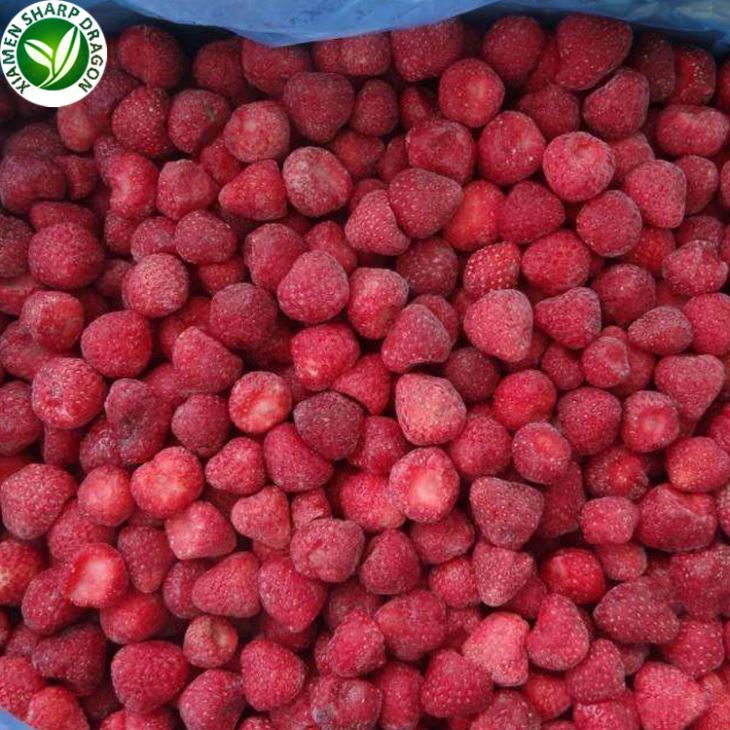
Whole IQF strawberries make raw-material identity easy to see and can fit high-powered equipment, but large pieces create a higher starting load and more variation per scoop. Slices or dice meter more evenly, enter the blade zone faster, and can shorten the first circulation stage. They also expose more cut surface, so inspect surface ice, color, fines, clumping, and thaw drip.
Run a matched trial: same lot, fruit mass, liquid, yogurt, banana, blender, jar, program, and serving method. Compare start-up time, total cycle, motor protection events, unblended pieces, seed perception, foam, finished temperature, color, flavor, jar hold-up, and accepted portions. A smaller fruit cut is valuable only if it improves the operating result without creating an unacceptable quality or price trade-off.

Correct Texture with Measured Changes
If the smoothie is too thick or the blade loses circulation
Check loading order, fruit temperature, berry size, jar fill, and the real liquid weight before changing the recipe. Add liquid in a weighed 1% increment: 7 g in a 700 g trial or 100 g in a 10 kg formula. Blend only the validated correction cycle, then record the new finished mass and sensory result. A freehand splash makes the next batch impossible to reproduce.
If the smoothie is too thin or separates quickly
Check whether the operator added ice or water, the berries partly thawed, the yogurt changed, the banana was omitted, or the drink sat longer than the approved interval. For the next trial, reduce liquid or replace a measured portion with frozen strawberries or yogurt. Ice can make a drink cold at the blender yet watery after melting. A stable commercial formula uses the frozen fruit and ingredient solids to build body.
If the drink is gritty, foamy, pale, or inconsistent
Strawberry seeds create natural texture, but unblended pieces can signal an overloaded jar, short cycle, dull blade, or poor circulation. Excess foam can result from overblending, high fill, warm ingredients, or a formula that traps air. Pale color or weak aroma may come from the fruit lot rather than the blender. Separate equipment, recipe, and raw-material causes before approving a correction.
Balance Flavor Without Hiding the Strawberry Lot
Banana adds body and sweetness but can dominate strawberry flavor. Yogurt adds solids and acidity; vanilla yogurt also adds sugar and flavor. Milk, oat beverage, almond beverage, juice, and water change sweetness, protein, fat, acidity, color, allergens, label, and separation. Approve each as a distinct formula rather than swapping bases during service.
Measure sweetness only after blending the base fruit. Record the sweetener type and mass, not "to taste." If one lot needs a large correction, decide whether to set a permitted adjustment band or reject it for the menu. Lemon or juice can sharpen flavor, but it also changes acidity, liquid ratio, declaration, and potentially the drink's color. A small trial costs less than a full service batch that tastes different.
Example: a banana-free menu needs a new body system. Removing 42 g banana from the 700 g formula and replacing it with 42 g milk preserves input weight but makes the drink thinner. The banana-free starting formula raises fruit to 50% and uses 16% yogurt instead. The operator evaluates flow through the real straw, not only appearance in the jar.
Control Frozen-Berry Safety by Intended Use
A smoothie normally has no kill step, so supplier approval must match ready-to-eat use and the destination market. The U.S. FDA berry-safety update notes a history of hepatitis A and norovirus outbreaks linked to fresh and frozen berries and states that freezing generally does not inactivate viruses introduced in the supply chain. Do not treat the frozen state as a safety treatment.
Confirm ingredient intended use, source and processor identity, preventive controls, water and worker-hygiene programs, environmental or product testing plan where applicable, destination compliance, lot traceability, recall status, and release records with a qualified food-safety reviewer. The XMSD strawberry raw-material safety guide provides a deeper evidence boundary for lot linkage and ready-to-eat risk.
Jurisdictional advice is not uniform. The Food Safety Authority of Ireland recommends boiling imported frozen berries for one minute before consumption. If that advice or another heat requirement applies, define a validated heating, rapid-cooling, storage, labeling, and smoothie-quality process. Never ignore a required control because heating changes texture.
Keep dairy or other time/temperature controlled ingredients within the rule adopted in the service location. The 2022 FDA Food Code is a model for retail and foodservice controls, not a worldwide statute. Verify the local rule, allergen declarations, utensil cleaning, blender sanitation, cross-contact controls, employee hygiene, time marking, and disposal method. Make-to-order service is the simplest quality and time-control route.

Scale to 10 kg and Measure Saleable Yield
Scale percentages, not cups. The 44/28/20/6/2 formula becomes 4.4 kg IQF strawberries, 2.8 kg chilled liquid, 2.0 kg yogurt, 0.6 kg banana, and 0.2 kg sweetener for 10.0 kg input. Divide that input into loads that stay within the validated blender capacity. Combine only if the process permits and portion by finished weight.
Assume trial prices of USD 2.20/kg for 4.4 kg strawberries, USD 1.15/kg for 2.8 kg liquid, USD 2.50/kg for 2.0 kg yogurt, USD 1.30/kg for 0.6 kg banana, and USD 1.80/kg for 0.2 kg syrup. Ingredient input cost is USD 9.68 + 3.22 + 5.00 + 0.78 + 0.36 = USD 19.04.
If jar hold-up, foam, transfer, and overfill reduce saleable yield by 3%, finished saleable mass is 10.0 kg × 0.97 = 9.7 kg. Ingredient cost is USD 19.04 ÷ 9.7 = USD 1.96/kg, or about USD 0.69 for a 350 g portion before cup, lid, straw, labor, energy, overhead, delivery, and waste.
These prices and losses are illustrative, not an offer or standard yield. Replace them with delivered ingredient cost and measured saleable output. Track each blender load: planned input, actual input, finished jar weight, filled portions, underweight or overweight loss, residue, spill, rejected drink, and service return. A lower-priced strawberry lot can cost more per accepted portion when it needs extra sweetener, more liquid correction, longer blending, or produces higher loss.
Build a One-Batch Control Record
Record date, location, operator, recipe revision, strawberry supplier and lot, form and size, ingredient lots, frozen-fruit temperature, liquid and yogurt temperature, actual weights, blender and jar ID, loading order, program, cycle time, correction, finished temperature, finished mass, portion count, average portion weight, hold time, waste, and disposition. Add an exception field so the operator records what changed rather than silently adjusting.
Choose a simple texture method that the site can repeat. Options include a timed flow through a defined funnel, mass delivered through a standard dispenser in a fixed time, draw through the actual straw, or an approved instrument method. Define sample temperature and rest time because a result taken immediately from the jar will not equal a drink held for ten minutes.
Example: a tolerance protects both speed and flavor. A 10 kg formula permits one liquid correction up to 1% after a documented flow check. If 100 g does not restore circulation, the load is held for review rather than repeatedly diluted. The rule gives the operator a fast action while protecting the strawberry ratio and saleable portion standard.
Approve Service Life, Not Just Blender Appearance
Evaluate the drink at the moments that matter: immediately after blending, after filling, at handoff, and at the maximum intended display or delivery time. Measure temperature, flow, separation, foam, color, flavor, aroma, and portion mass. If delivery is planned, include the real cup, lid, seal, transport time, vibration, and receiving temperature in the trial.
Vitamix Commercial describes a grab-and-go strawberry-banana formula and notes that water or ice can worsen separation during holding in its grab-and-go smoothie guidance. That is useful process evidence, but do not adopt a four-hour quality statement without validating your formula and legal time control. Make-to-order remains the reference; every extended hold needs an approved safety and quality limit.

Qualify the Supplier Around the Drink
Send the target formula and operation with the inquiry: strawberry form, fruit percentage, serving size, dairy or plant base, blender model, jar load, market, ready-to-eat use, annual volume, delivery schedule, pack size, certification scope, residue and microbiological plan, allergen needs, label needs, and sample protocol. Ask the supplier to identify any source, cultivar, process, pack, or specification change before shipment.
Review the actual processing and lot controls behind the offer. The frozen strawberry process overview can frame receiving, washing, preparation, freezing, sorting, metal detection, packing, and storage questions. The commercial specification, certificate scope, test plan, sample, and shipped lot remain the approval evidence.
Use the food-processing supply framework to align raw material, process, packing, lot evidence, and production schedule. Send your formula, serving target, intended use, market, fruit form, pack, volume, and sample test so we can review a suitable frozen-strawberry route.
Frequently Asked Questions
Do frozen strawberries need to be thawed before blending?
Not for a formula and blender validated for frozen fruit. Use the declared frozen state because thawing changes liquid release, temperature, body, and safety handling. If the equipment cannot circulate the load, reduce piece size or frozen load, or increase liquid through a weighed trial.
Can yogurt be omitted?
Yes, but yogurt contributes liquid, solids, acidity, flavor, and body. Do not replace its weight with milk automatically. Start a separate no-yogurt formula, raise fruit or use another declared body ingredient as needed, then revalidate flow, separation, flavor, label, allergens, and hold time.
Are whole IQF strawberries better than dice?
Neither format wins automatically. Whole fruit makes identity visible; dice can meter and circulate more easily. Compare the actual formats at equal strawberry mass for blend time, motor load, fines, color, flavor, drip, finished temperature, jar hold-up, and accepted portion yield.
How can sweetness stay consistent between lots?
Approve a fruit and finished-drink target, use one weighed base formula, and define a measured sweetener adjustment band. Record strawberry lot, soluble-solids and acidity methods where useful, sensory decision, sweetener mass, and final result. Reject lots that need correction beyond the approved band.
Can a smoothie be prepared ahead?
Make-to-order gives the clearest texture and time control. If preparation ahead is required, validate the exact formula, cup, sealed hold, temperature, time, separation, flavor, service rule, and local food-code requirements. Set a documented discard limit; do not rely on appearance alone.
References
- U.S. Dairy - Strawberry Yogurt Smoothie: frozen-strawberry formula, liquid-first loading, and texture adjustments.
- Nebraska Extension - Simple Strawberry Smoothie: frozen-strawberry, banana, yogurt, and milk benchmark.
- General Mills Foodservice - Make-Ahead Berry Smoothie Jar: 25-serving formula and large-capacity or split-batch blending.
- Vitamix - Five-Minute Recipes: equipment-specific frozen-berry ratio, loading and cycle example.
- Vitamix Commercial - Grab-and-Go Smoothies: frozen-fruit, ice, separation, loading, portion and hold-quality context.
- U.S. FDA - FDA Works to Enhance the Safety of Berries: outbreak history and the limit of freezing as a virus control.
- U.S. FDA - Berry HAV and Norovirus Prevention Strategy: farm, worker-hygiene, cross-contamination and supply-chain controls.
- Food Safety Authority of Ireland - Advice to Boil Imported Frozen Berries: jurisdiction-specific one-minute boiling advice.
- U.S. FDA - Food Code 2022: model retail and foodservice safety controls.