


Banana Pie Skills: Texture, Browning and Frozen Fruit
Jan 15, 2019

A reliable banana pie is made by controlling three separate systems: a fully baked and cooled crust, a custard thick enough to hold a clean slice, and banana prepared for the texture you want. Use just-ripe fresh banana when distinct slices must remain visible. Use thawed frozen banana as a measured puree or soft fruit component when repeatable dosing, mixing and baked flavor matter more than a firm fresh bite. Do not expect thawed banana pieces to behave like newly cut fruit; freezing softens their structure and may release liquid.
The safest working sequence is crust first, custard second, banana preparation third, and assembly only after the crust has cooled. Cover banana slices with custard rather than leaving them exposed, cool the pie promptly, keep egg-and-dairy filling at 40°F (4°C) or below, and add exposed garnish close to service. For production, measure thaw yield and drain loss before scaling the formula. That one test prevents watery filling, weak set and an inaccurate fruit cost.
The short answer: Blind-bake the shell, cook the custard until the starch is fully activated, use fresh banana for visible layers or controlled thawed banana for mixed filling, protect cut surfaces from oxygen, and refrigerate the finished pie without delay.
Choose the Banana Pie Style Before the Banana
"Banana pie" can describe several products that need different fruit behavior. A classic banana cream pie uses a pre-baked shell, fresh banana layers, cooked pastry cream or pudding, and a chilled topping. A baked banana custard pie exposes the fruit to oven heat. A banoffee-style pie combines banana with a dense caramel layer. A frozen dessert pie needs a formula that remains spoonable or sliceable at low temperature. If you choose fruit before defining the finished format, the same banana can look excellent in one pie and fail in another.
For classic cream pie, we normally choose firm, just-ripe fresh slices because a recognizable banana layer is part of the expected bite. For a baked filling, puree, swirl or soft fruit pocket, frozen banana can be more practical because the thawed texture will be integrated into the matrix. The useful question is not whether frozen banana is "as good as" fresh. Ask whether the finished bite requires a firm slice, a soft fruit identity, a smooth puree, or a repeatable fruit dose.
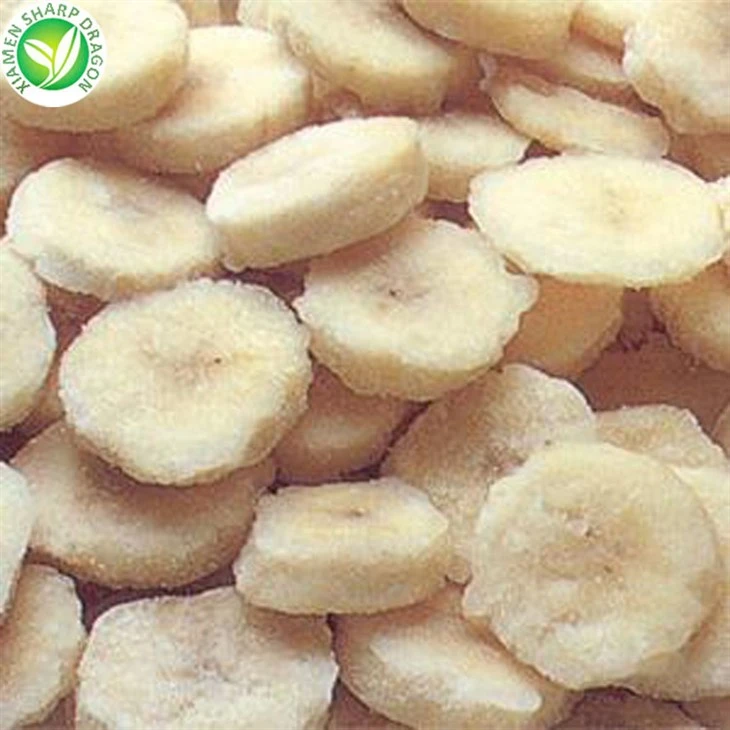
This distinction is also the first sourcing decision. The current XMSD IQF frozen banana page shows slices, chunks and custom cuts intended for bakery, dessert and food-processing applications. Those forms do not remove the need for a kitchen or line trial. They give you controlled starting units so you can compare ripeness, color, thaw behavior and dosing against the actual pie formula.
Fresh slices and frozen fruit solve different problems
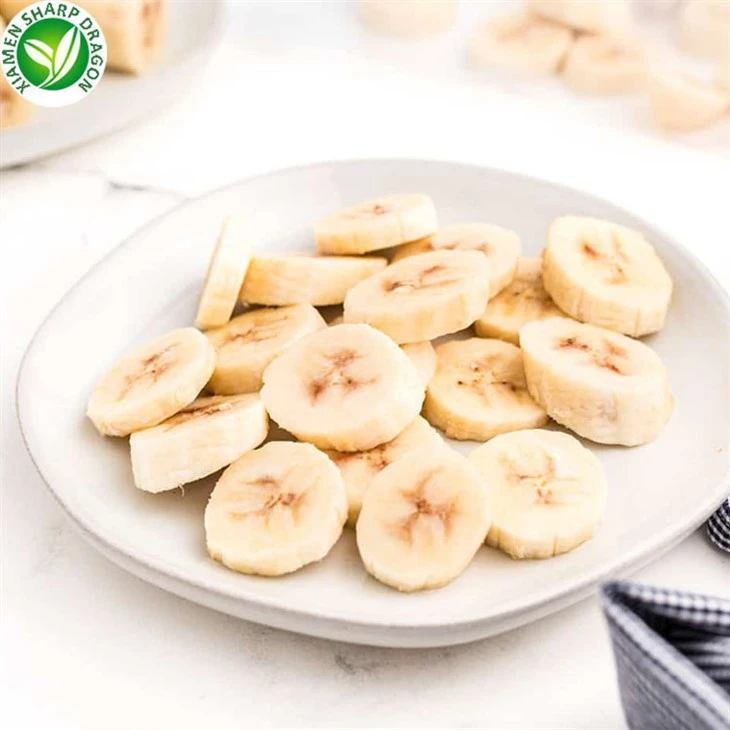
Fresh fruit gives the cleanest visible slice when it is ripe enough to taste sweet but still firm enough to cut without smearing. Very green fruit can taste starchy and weak; heavily spotted fruit may be sweeter but can collapse, release liquid and darken the filling. Frozen banana has already passed through a freeze-thaw change. Once thawed, it is usually better in puree, blended custard, baked filling, sauce or another application where softness is useful rather than hidden.
Practical example: Suppose your café pie is sold in open slices and the banana layer is part of the visual promise. Choose fresh, firm slices and place them below the custard. If the same kitchen makes a baked banana tart whose fruit is mashed into the filling, trial frozen pieces after controlled thawing. The second use converts softness into easy mixing and can reduce daily peeling and ripeness sorting.
Build a Crust That Stays Crisp Under Custard
The crust must be fully baked before a chilled banana cream filling goes in. A pale, under-baked shell contains more moisture and has less structural strength, so it softens quickly under custard. Blind baking means lining the shaped dough with parchment or foil, adding pie weights, baking until the sides are set, then removing the weights so the base can dry and color. Cool the shell completely; warm crust creates condensation and begins melting the filling before it has a chance to set.
Crust choice changes the service window. A flaky pastry shell gives the strongest contrast with smooth custard, but it is sensitive to migration of water from the filling. A baked crumb crust is simpler and often more forgiving for portion production, although its fat and sugar change the flavor balance. A thin food-safe barrier, such as a light chocolate coating where it fits the recipe, can slow moisture migration, but it also changes sweetness, allergen declarations and cutting behavior. Treat it as a formulation choice, not a universal repair.
Judge the shell after the intended holding time, not only when it leaves the oven. Cut test slices after four hours, the next service period and the maximum intended display interval under refrigeration. Record base crispness, side-wall breakage and whether the filling pulls away from the crust. If the base becomes leathery while the rim remains crisp, the first suspect is moisture migration through the bottom, not inadequate baking at the rim.
Cook Custard for Set, Not Merely Thickness in the Pan
Banana cream pie custard must hold fruit and produce a clean slice after chilling. Cornstarch thickens as its granules hydrate and swell under heat. Egg yolk contributes richness, emulsification and additional structure. The mixture may appear thick before the starch is fully cooked, so stop judging only by the first visual change. Follow a tested formula, keep the mixture moving to prevent scorching, and complete the specified heating step after thickening. Food Network's published banana cream pie method, for example, continues cooking the thickened filling and describes a very thick, set-custard endpoint.
Three common defects point to different causes. A loose slice can come from too little starch, insufficient cooking, too much unmeasured banana liquid or cutting before the pie is fully chilled. A grainy filling can result from abrupt heating or poor tempering of egg yolks. A pasty or chalky taste suggests the starch was not cooked long enough. Fix the process that produced the defect; simply adding more starch may create a rubbery filling while leaving the real temperature or water-control problem unresolved.
Cover the surface of cooling custard directly if your tested process calls for a delay before assembly. Direct contact limits skin formation. When assembling a cream pie, spread a thin base layer of custard, arrange the banana evenly, and cover the fruit completely with the remaining filling. This reduces exposed cut surface and distributes fruit more consistently from slice to slice. Avoid leaving pockets where banana can oxidize against trapped air.

Use Frozen Banana Without Making the Filling Watery
Frozen banana can work well in a pie when its thawed condition matches the recipe. It does not perform like a fresh decorative slice. Freezing disrupts delicate fruit structure, so thawed pieces are softer and may release brownish liquid. That liquid contains banana solids and flavor, but it also contributes water to the filling. Decide whether to retain it, reduce it, or drain a measured portion based on the formula rather than discarding it automatically.
For puree or baked filling, retaining the thaw liquid may preserve flavor and total fruit yield, provided the formula is designed for that water. For a stiff chilled custard, uncontrolled liquid can weaken the set. The practical method is a thaw-yield test: weigh frozen fruit, thaw it under refrigeration in a covered food-safe container, separate free liquid for measurement, and record the net fruit mass. Then run the filling both with and without a defined portion of that liquid. Compare slice set, flavor, color and syneresis after the intended hold.
Do not thaw frozen banana at room temperature simply to speed production. The FDA advises keeping perishable food at 40°F (4°C) or below and limits unrefrigerated time for foods requiring refrigeration. A controlled refrigerated thaw also produces a more reproducible measurement because the fruit and liquid remain within the same defined handling window. If the frozen ingredient will be cooked immediately into a validated hot filling, document the time-temperature sequence for the complete process.
| Banana form | Best starting use | Main control |
|---|---|---|
| Fresh, just-ripe slices | Visible chilled layers | Ripeness, slice thickness, oxygen exposure |
| Thawed IQF pieces | Baked filling, soft fruit pockets | Thaw loss, color, piece survival |
| Banana puree | Uniform flavor in custard or sauce | Solids, water contribution, batch color |

Control Browning Without Hiding the Flavor
Cut banana browns when damaged tissue is exposed to oxygen and enzymatic reactions proceed. The most useful control in cream pie is physical: cut the fruit close to assembly, reduce unnecessary handling, and cover it completely with custard. Published cream-pie methods repeatedly use coverage by custard because it reduces the exposed surface while preserving the expected banana flavor.
Acid can delay browning, but more is not always better. Peer-reviewed work on fresh-cut banana has found anti-browning effects from lemon juice and other treatments, and broader food-science reviews identify citric and ascorbic acids as common anti-browning tools. In pie, however, an aggressive lemon treatment can make the fruit taste sour, weaken the intended vanilla profile and introduce extra surface moisture. Run a small sensory trial rather than copying a dip concentration from a different banana product.
Top garnish is the hardest part to protect because it is intentionally exposed. Add it near service, or place it under a topping where the design permits. A light acid application may extend acceptable appearance for a short interval, but it does not make the fruit permanently color-stable. Define a visual limit using actual display lighting and refrigeration conditions. A photograph at assembly, another at the intended selling time and a third at the end of the approved window give more useful evidence than the word "fresh."
Example: A dessert counter needs a pie to look clean for an eight-hour chilled service day. Test one pie with exposed garnish added at opening and another with garnish added to individual slices as sold. If the first darkens by midday while the covered fruit inside remains acceptable, change the garnish procedure rather than reformulating the whole filling. The result is a narrower, evidence-based correction.
Follow a Sequence That Protects Both Texture and Safety
- Define the finished pie. Choose chilled cream pie, baked custard, caramel-style or frozen dessert, and write the target slice texture.
- Bake and cool the shell. Finish the base before introducing a wet filling.
- Prepare the fruit lot. Record ripeness, cut, frozen condition, thaw method and drain loss as applicable.
- Cook the custard from a tested formula. Temper eggs correctly, complete the heating step and prevent scorching.
- Assemble with limited air exposure. Distribute fruit evenly and cover cut surfaces with filling.
- Cool, cover and refrigerate. Apply your validated cooling procedure and hold at 40°F (4°C) or below.
- Judge at the real service time. Check crust, set, color, flavor and slice integrity after the intended hold, not only immediately after assembly.
Sequence matters because each stage protects the next. Filling a warm shell creates condensation. Cutting banana too early increases oxygen exposure. Adding unmeasured thaw liquid shifts the starch-to-water balance. Cutting before the custard is cold can make a sound formula look under-set. A written sequence turns these interactions into controllable checkpoints and makes training easier across shifts.
The order can change only when the product changes. A baked banana custard may place fruit and liquid into an unbaked or partially baked shell according to a tested formula, while a chilled cream pie requires a finished shell before filling. Do not combine instructions from those two styles. Identify which heating step controls the egg mixture, which step sets the crust, and when the banana is exposed to heat. If a new pie cannot answer those three questions, the process is not ready for scale-up.
For line trials, assign one observable result to each checkpoint: shell color after baking, custard flow at deposit, fruit mass per pie, center temperature under the approved food-safety procedure, cooling record, and slice score after the defined hold. When a defect appears, this record narrows the cause to a stage. Without it, operators may change fruit, starch and baking time together and lose the ability to tell which correction worked.

Scale the Formula by Usable Banana, Not Bag Weight
The most common scaling error with frozen fruit is treating the full frozen weight as usable solids. Your true yield depends on the approved thaw method and whether the separated liquid stays in the formula. Measure at least three representative packages from the lot. Record frozen gross weight, packaging tare, drained fruit, separated liquid and any unusable pieces. Use the average result for planning, then keep the individual results to see whether the lot is consistent.
Worked example: This is a hypothetical planning calculation, not an XMSD specification. A bakery plans 100 pies with 225 g of usable banana in each pie, so it needs 22.5 kg of usable fruit. Its refrigerated thaw test returns an average usable yield of 88% after the chosen drain step. Required frozen fruit is 22.5 kg ÷ 0.88 = 25.57 kg. If the bakery adds a 3% process allowance for portioning variation, the planning quantity becomes 25.57 kg × 1.03 = 26.34 kg. The correct purchasing action is to round according to the actual pack size, then verify that the next lot remains near the tested 88% yield.
That calculation also separates cost from price. If one frozen format costs less per kilogram but produces more drain loss or requires extra labor to correct color and texture, the apparent saving can disappear. Compare usable fruit cost per pie, not only carton price. This is where the broader frozen fruit category matters: cut form and processing condition should be matched to the application rather than treated as interchangeable commodities.
Keep Egg-and-Dairy Filling Cold and Fully Cooked
Banana cream pie is a perishable egg-and-dairy dessert. The FDA advises cooking foods containing eggs thoroughly, refrigerating cooked egg dishes, and keeping milk products at 40°F (4°C) or below. It also advises not leaving foods requiring refrigeration at room temperature for more than two hours, or more than one hour when ambient temperature is above 90°F (32°C). These are safety boundaries, not texture recommendations.
For a commercial operation, a tested recipe and local food-code procedure take priority over an internet recipe. Use pasteurized dairy and, where your formula or risk assessment calls for it, pasteurized egg products. Clean equipment that contacts ready-to-eat filling, prevent cross-contamination from raw egg, and cool the finished product under the time-temperature controls required by your jurisdiction. Do not use appearance or smell as proof of safety.
Food-safety note: Keep the finished pie covered and refrigerated at 40°F (4°C) or below. If your production, cooling or display process falls outside that control, stop and evaluate the actual time-temperature history under the applicable local food-safety plan.

Turn a Good Recipe Into a Repeatable Production Specification
A home recipe may say "six ripe bananas," but production needs mass, ripeness criteria and a defined cut. Fruit count varies too much for cost or consistency control. Write banana input as grams of usable fruit per pie or percentage of finished filling. Define whether the mass is frozen, thawed with liquid, or drained. Record slice thickness or target puree consistency, because a 3 mm slice and a 10 mm piece distribute and soften differently.
Set color acceptance with reference photographs under consistent lighting. A phrase such as "natural banana color" is too broad when one lot becomes visibly gray after thawing and another remains cream colored. Your sample review should include frozen appearance, thawed appearance at a stated time, aroma, off-flavor, free liquid, clumping and piece integrity. If the banana will be baked, include a finished-pie trial; raw or thawed appearance alone cannot predict the complete application.
For factory use, link the fruit specification to the line process. The food-processing application page is relevant when you need to discuss dosing, repeatability and downstream performance rather than retail appearance. Your approval sample should be tested with the same thaw method, mixer shear, heat treatment, deposit weight and hold time planned for routine production.
Use three acceptance layers
Start with incoming acceptance: package integrity, frozen condition, lot identity, visible clumping and temperature evidence. Continue with preparation acceptance: thaw yield, drain loss, color and aroma after the defined thaw. Finish with application acceptance: filling viscosity, deposit accuracy, baking or chilling performance, slice integrity and flavor at the intended service time. A lot passes only when it works through the whole chain. Passing the carton check does not prove pie performance.
Keep the supplier's certificate and product records connected to the internal test result. If a future lot produces higher purge, you can compare harvest or production information, package condition, cold-chain records and application data instead of arguing from memory. The related XMSD guide on choosing frozen banana forms explains why pieces, dices, chunks and puree should be evaluated by use rather than product name alone.
Plan Packaging Around the Quantity Opened Per Batch
Choose an inner pack that matches the fruit used before the remaining product is exposed to moisture and temperature fluctuation. A large liner may reduce packaging cost per kilogram, but it can create partial-bag handling if one batch uses only a small portion. Several smaller inner packs can improve portion control and protect unopened fruit, although they add packaging material and handling steps. Calculate the kilograms consumed per shift and number of openings before deciding.
Also test whether the pack protects the cut form. Compression, thaw-refreeze exposure and damaged liners can turn free-flowing pieces into a block. The consequence is not only appearance: operators may over-thaw the fruit to separate it, increasing liquid release and time outside controlled temperatures. Review inner-bag seal, carton strength, pallet pattern and frozen-route handling together. XMSD's frozen packaging options provide useful starting formats, but the final pack still needs a batch-use and route test.

Common Banana Pie Failures and the First Correction
Watery filling: Check unmeasured thaw liquid, banana ripeness, starch cooking and chill time in that order. Measure the liquid before changing starch. If extra water entered the formula, solve that input first.
Gray or brown fruit: Check how long banana remained cut and uncovered, whether the custard fully covered the layer, and whether garnish was added too early. Trial a light anti-browning step only after air exposure is controlled.
Soggy base: Confirm the shell was fully baked and cooled, then compare hold times. A barrier may help, but reducing free water and shortening the assembled hold can be more direct.
Rubbery custard: Review the formula and heating process before adding liquid. Excess starch or over-concentrated solids may give a clean cut but an unpleasant bite.
Uneven fruit per slice: Change deposit order or use a measured banana layer. Random folding may create pockets, especially when pieces are large or custard is already very thick.
Frequently Asked Questions
Can frozen bananas replace fresh slices in banana cream pie?
Not when the pie depends on firm, visible slices. Thawed frozen banana is softer and may release liquid. It is usually a better starting point for puree, blended custard, baked filling or another application where soft texture is acceptable. Run a side-by-side trial if the layer will be partly visible.
Should thaw liquid be drained?
Measure it before deciding. Retaining the liquid may preserve flavor and yield in a formula designed for it. Draining can protect a stiff chilled set, but it lowers usable yield. Record the chosen method and use the same basis in both formulation and purchasing calculations.
How can banana slices be kept from browning?
Cut close to assembly, minimize handling, cover slices fully with custard and add exposed garnish near service. A light citric- or ascorbic-acid treatment can delay browning, but it can also change flavor and moisture, so test the smallest effective treatment in the finished pie.
What evidence should be approved before buying a larger frozen banana lot?
Approve the specification and representative sample, then document frozen condition, cut, ripeness, color, thaw yield, drain loss, flavor and finished-pie performance. Review package integrity, storage and shipment controls, traceability and the documents required for your destination and food-safety plan.
Final Decision
A good banana pie is not rescued by one secret ingredient. It comes from matching fruit form to the intended bite, baking the shell completely, cooking custard to a tested endpoint, controlling oxygen and free water, and judging the pie after its real hold time. Fresh banana remains the normal choice for recognizable cream-pie layers. Frozen banana earns its place when controlled softness, puree performance, portioning and batch planning solve the actual production problem.
For a new project, begin with two small trials: fresh slices in the visible layer and frozen banana in a measured mixed or baked filling. Keep crust, custard and holding conditions identical. Record thaw yield, slice appearance, filling set and flavor. That evidence will tell you which format belongs in the product more reliably than a generic claim that fresh or frozen is always better.
XMSD sourcing note: Share your pie style, fruit form, cut preference, batch quantity, packing format, destination and sample-test method. We can review a frozen banana direction for your bakery or dessert trial.
References
- U.S. FDA: What You Need to Know About Egg Safety
- U.S. FDA: Are You Storing Food Safely?
- Preventing enzymatic browning of freshly cut green bananas through immersion treatments
- Food Network: Banana Cream Pie Recipe
- Sally's Baking Recipes: Homemade Banana Cream Pie
- XMSD operational experience in frozen-fruit sourcing, IQF handling, packaging review and B2B application testing.