


How Much Broccoli Should I Eat per Day? Serving Choice Guide
Jul 03, 2019

There is no official broccoli-only amount that every person should eat each day. A useful starting point is one measured vegetable serving of plain broccoli on a day when you choose it, while leaving room for other vegetables. In the current U.S. Dietary Guidelines serving system, one serving of vegetables is 1 cup raw or cooked, and a 2,000-calorie pattern contains 3 vegetable servings across the day. In the Australian system, a standard vegetable serve is about 75 g, with 1/2 cup cooked broccoli given as an example. Those are two separate frameworks, not interchangeable definitions of one ideal dose.
Choose one framework, name the measurement state-raw, frozen input, cooked or cooked-and-drained-and record the amount you actually eat. Adjust the plan for your overall energy needs, vegetable variety, appetite and digestive tolerance. If you take warfarin or have a diagnosed condition that changes food choices, use the amount set with your clinician and keep relevant day-to-day intake consistent.
The practical answer is therefore a method, not a universal ceiling: start with one defined broccoli serving, count it inside your total vegetable pattern, and change it only for a clear reason. A package serving tells you how to read that label; it does not tell you how much your body needs.
Practical starting point: Use either 1 cup under the current U.S. vegetable-serving definition or about 75 g under the Australian standard-serve system. Do not combine the number from one system with the daily total from another. Treat broccoli as one part of a varied vegetable intake, not a compulsory daily food or a medical dose.

Start with Your Total Vegetable Pattern, Not a Broccoli Quota
Broccoli sits inside a vegetable pattern. It does not have a separate government daily requirement. The 2025–2030 Dietary Guidelines for Americans tell you to eat a variety of colorful vegetables and fruits. Their supporting daily-servings table sets vegetable totals from 1 1/4 servings at a 1,000-calorie pattern to 4 3/4 servings at a 3,200-calorie pattern. The 2,000-calorie example contains 3 vegetable servings. These figures are pattern examples tied to energy level, not instructions to fill every serving with broccoli.
The same table explains why one online number cannot fit everyone. Calorie needs change with age, sex, height, weight and physical activity. A clinician may also choose a different eating plan for pregnancy, a medical condition, recovery or another defined need. You do not need to calculate calories merely to eat a side of broccoli, but you should avoid turning the 2,000-calorie example into a universal rule.
Variety changes the recommendation in a useful way. Broccoli is a dark-green vegetable, but your daily and weekly choices can also include red and orange vegetables, beans, peas, lentils, starchy vegetables and other vegetables. Repeating one food is not required to obtain a vegetable serving. If broccoli is the only vegetable you enjoy today, it can be a practical bridge; over time, widen the mix rather than increasing broccoli simply because a headline calls it especially healthy.
Practical example: Suppose you use the 2,000-calorie U.S. example with 3 vegetable servings. You choose 1 cup of broccoli at lunch, 1 cup of roasted peppers and carrots at dinner, and 1 cup of another vegetable in a soup. The result is 3 vegetable servings with broccoli contributing one-third of the displayed total. Eating 3 cups of broccoli instead would also fill the numerical total, but it would remove the variety the guidance explicitly recommends.

Choose One Serving Definition Before You Measure
The word serving can describe a dietary-framework unit, a standard serve in a national guide, a Nutrition Facts reference or the portion you place on your plate. Those quantities can differ without one being wrong. Trouble begins when the label is removed and the numbers are compared as though they describe the same purpose.
Current U.S. guidance uses 1 cup of raw or cooked vegetables as its general vegetable serving and includes fresh, frozen and canned vegetables. Australia defines a standard vegetable serve as about 75 g and lists 1/2 cup of cooked green or orange vegetables, including broccoli, as an example. A 75 g Australian serve is not a conversion of the current U.S. 1-cup serving. Use the system that applies to your location, program or professional advice, then keep its definition attached to your records.
| Measurement label | Displayed amount | How to use it |
|---|---|---|
| Current U.S. vegetable serving | 1 cup raw or cooked vegetables | Count it within the chosen calorie-level vegetable pattern |
| Australian standard vegetable serve | About 75 g; 1/2 cup cooked broccoli is one example | Use the Australian framework consistently |
| Nutrition Facts serving | Household measure plus grams stated on that package | Scale the label values; do not treat it as intake advice |
The FDA draws a firm boundary around package serving sizes: they are based on amounts people typically consume, not on how much they should consume. If a frozen broccoli bag lists nutrition per 85 g, that tells you the basis for the nutrient panel. It does not overrule a 75 g standard serve, create an 85 g personal requirement or establish a safe upper limit.
Worked example: You plan five lunches using the Australian 75 g cooked-vegetable serve. Your planned cooked broccoli is 75 g × 5 = 375 g. If the package panel uses an 85 g serving, the plan contains 375 ÷ 85 = 4.41 label servings. Use 4.41 only to scale that package's nutrition values; keep 5 as the number of planned Australian serves. The two results coexist because they answer different questions.

Raw, Frozen and Cooked Broccoli Are Different Measurement States
A cup is a volume, so the broccoli inside it changes with cut size and packing. Large florets leave more air gaps than small pieces. Long stems change the edible mix. Chopped raw broccoli can settle more tightly than intact crowns, and cooking softens the structure. Frozen pieces can carry surface frost, while cooked broccoli can hold or release water according to the method and draining time. A visually full cup is not a guaranteed weight.
USDA SNAP-Ed displays 1 cup chopped broccoli as 91 g and gives its nutrient values on that stated basis. That is a useful raw chopped reference, not a universal conversion for every broccoli product. The food description must travel with the number. The XMSD broccoli nutrition-state guide shows why frozen, cooked, drained and salted descriptions cannot be collapsed into one database line.
Choose the measurement state that matches the decision. Weigh raw edible broccoli if you eat it raw. Record frozen input if you are planning inventory. Measure cooked-and-drained output if the promise is a plated portion. For a soup or sauced dish, decide whether your portion target refers to broccoli solids or the complete dish; otherwise water, sauce, cheese or oil can make a larger weight look like more broccoli.
At home, a scale makes the comparison repeatable. Tare the empty bowl, add the broccoli in the state you will count, and write the food state beside the weight. In foodservice, use the same cooking method, equipment load and drain time during a yield test. The result is not just a number: it tells you whether the purchased quantity can deliver the planned cooked portions.

Preparation Changes the Meal, Not the Serving Definition
Plain steamed broccoli, broccoli cheese soup and deep-fried battered broccoli are not interchangeable meal choices. The broccoli may still contribute to the vegetable total, but oil, cheese, cream, batter, salt and portion size change the complete dish. Read the full ingredient list and Nutrition Facts panel for a prepared product. Do not transfer the calories or sodium of plain broccoli to a recipe with added ingredients.
Frozen broccoli can fit the same vegetable pattern. The current U.S. guidance explicitly includes frozen vegetables among the options and its daily-servings document covers fresh, frozen, canned, cooked and raw forms. That statement supports frozen broccoli as a valid form; it does not prove that every frozen item has the same ingredient list, nutrient values, cut ratio or eating quality. Plain florets and a frozen broccoli side in sauce require separate label review.
Cooking method matters mainly because it changes the product you actually serve. Boiling may leave more free water and a softer floret; roasting can dry the surface; steaming can retain a cleaner piece shape. Choose a method you can repeat and will eat consistently. The frozen broccoli cooking-method comparison explains how water, load size and timing change texture without pretending one method creates a medical advantage.
Daily broccoli also needs a boredom check. A serving that is nutritionally reasonable but repeatedly left on the plate is not a working plan. Rotate the cut, cooking method and neighboring vegetables, or use broccoli fewer days and replace it with another vegetable. The broader XMSD discussion of broccoli frequency, variety and everyday tolerance handles the frequency question separately from portion arithmetic.

Adjust the Starting Portion for Tolerance and Medical Context
A general serving cannot predict digestive comfort. NIDDK explains that some carbohydrates are not fully digested in the stomach and small intestine; bacteria in the large intestine break them down and create gas. It lists cruciferous vegetables, including broccoli, among foods that may increase gas for some people. The appropriate response is observation and proportion, not a claim that broccoli always causes indigestion.
If a large raw portion causes bloating, test a smaller amount in a cooked form and keep the rest of the meal similar. Record the weight, preparation and symptoms rather than changing several foods at once. NIDDK notes that a food-and-symptom diary can help identify a pattern. Persistent pain, severe symptoms or symptoms that continue despite simple adjustments require qualified medical advice rather than progressively eliminating foods on your own.
Vitamin K is another decision-changing variable. NIH lists broccoli among vitamin K food sources and explains that the nutrient is involved in normal blood clotting. If you take warfarin, NIH advises keeping vitamin K intake from food and supplements about the same each day because a sudden increase or decrease can change the medicine's effect. Consistency under clinical guidance is the goal; an unsupervised ban on broccoli is not.
Thyroid claims need similar restraint. A 2024 systematic review covering 123 laboratory, animal and human studies found that most results cast doubt on an antithyroid effect from reasonable Brassica consumption in humans, particularly with adequate iodine intake. The authors also identified limited human data, variable plant forms and possible concern around high raw intakes. That evidence does not create a broccoli cup ceiling. If you have a diagnosed thyroid condition, keep the food form and amount visible to the clinician who manages it.
Safety note: Use individualized professional advice when you take warfarin, have a diagnosed condition that changes food choices, or develop persistent digestive symptoms. Bring the actual daily amount, preparation state and pattern of change; "I eat broccoli" is not enough information for a medication or symptom decision.
Practical example: You normally eat little broccoli and want to add it at lunch. Begin with one clearly measured cooked portion under the framework you use, keep the recipe plain, and record comfort for several comparable days. If discomfort appears, reduce the portion and repeat the same cooked method rather than jumping from a small cooked portion to a large raw bowl. The action produces a usable tolerance record without declaring a food allergy or medical diagnosis.
Turn the Portion into a Repeatable Home Plan
A repeatable plan separates the dietary target from the kitchen yield. First choose the vegetable framework and amount. Next define the state you will eat. Then cook a known input, drain it consistently and weigh the output. Divide that output into the planned portions. Finally, rotate other vegetables through the remaining serving opportunities and review tolerance. The order matters because purchasing before defining the final state produces false precision.
Use a result from your own kitchen rather than borrowing a yield percentage from an unrelated product. Cut size, stem ratio, frost, cooking method, appliance load and drain time can all move the output. Write those conditions beside the result. When the product or method changes, run the check again instead of assuming that last month's factor still applies.
Worked home example: Your target is five cooked portions of 75 g, so you need 5 × 75 g = 375 g cooked output. In a clearly labeled trial, 500 g frozen input produces 430 g after cooking and a fixed drain. The observed yield is 430 ÷ 500 × 100 = 86%. Five portions use 375 g and leave 55 g. The next time, 375 ÷ 0.86 = 436 g frozen input is the mathematical starting quantity for that same product and method-not a universal frozen-broccoli conversion.
A household bag count follows the same logic. If you plan 436 g frozen input per five-lunch cycle and buy a 1 kg bag, the theoretical number of cycles is 1,000 ÷ 436 = 2.29. In practice, measure portions and protect the frozen product from warming while the bag is open. A convenient package is one that supports your actual use rate without repeated thawing exposure or long periods of poor closure.
Scale Daily Broccoli Portions for Foodservice or Meal Production
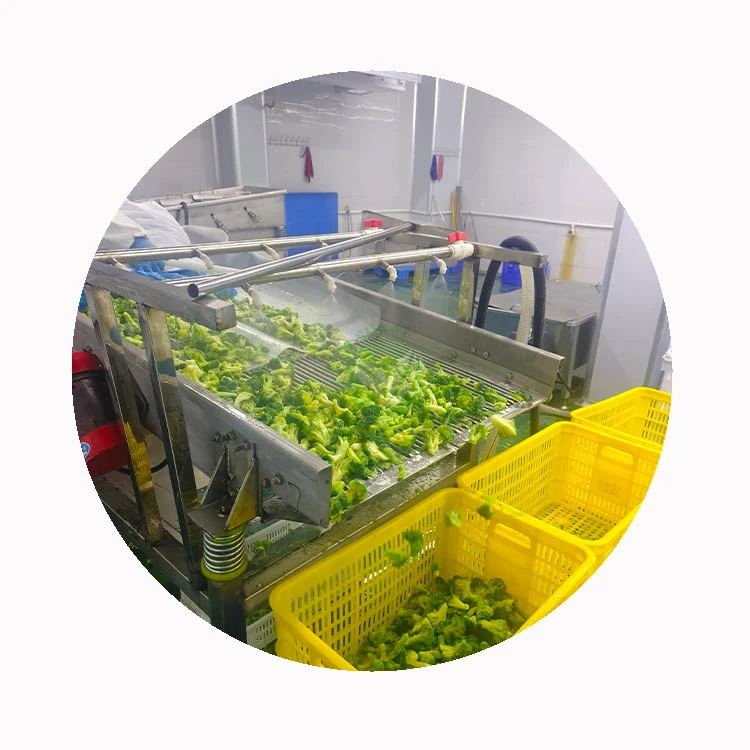
Commercial portion planning starts with the served state and meal promise, not the carton weight. Define whether the menu declares a 75 g cooked vegetable serve, a 1-cup vegetable serving, or a different locally approved portion. Then identify how much of the plated vegetable will be broccoli. A mixed vegetable side cannot be costed as 100% broccoli unless the formula says so.
Cut distribution changes both visual fill and yield. Small pieces pack more tightly into a scoop, while a wide mix of crown sizes can produce uneven plates. In our frozen-food work, we would weigh the served portion rather than relying on scoop volume alone when a declared gram target matters. Review a representative cooked sample for piece condition, stem-to-floret balance, free water and plate coverage, then define the acceptable result for the actual menu.
Worked production example: A menu needs 800 cooked broccoli portions at 75 g each. Required cooked output is 800 × 75 g = 60,000 g, or 60 kg. A product-and-method trial shows 88% cooked-and-drained yield. The theoretical frozen input is 60 ÷ 0.88 = 68.18 kg. Round purchasing only after checking pack size and the operation's documented process allowance; do not silently turn the illustrative 88% into a supplier guarantee.
When you compare product options, use the current XMSD frozen broccoli form page to identify the offered form, then put your exact cut distribution, stem tolerance, ingredients, net weight, pack, cooking method and served-state test into the request. A sample is useful only when the evaluation method and acceptance record follow the sample into the order.
Packaging belongs in the calculation because it controls how much product is opened at once. Compare inner-bag size with the quantity used per shift, examine seal and carton condition, and keep lot identity visible through storage and preparation. The XMSD overview of inner bags, cartons and frozen-product packing checks provides the surrounding inspection logic. The acceptance record should separate pack damage, temperature exposure, excess free ice and product-form variation rather than calling every loss a portion problem.

Final Answer
For a general starting point, let broccoli supply one defined vegetable serving on a day when you choose it. That can mean 1 cup under the current U.S. serving framework or about 75 g under the Australian standard-serve framework. Keep the systems separate, include the amount inside your total vegetable pattern and leave space for variety. Neither figure is a broccoli requirement, a medical dose or a proven maximum.
Write down raw, frozen, cooked or cooked-and-drained state; use package serving sizes only to scale the label; and adjust for the complete recipe, digestive tolerance and medical guidance. If you need repeated household or commercial portions, test the actual cooked yield and calculate backward from the served weight. A defensible answer is not simply "one cup" or "500 grams." It is a quantity with a named framework, food state, purpose and next action.
XMSD sourcing note: For a frozen broccoli portion program, send the served gram target, cut preference, cooking method, expected yield-test method, daily quantity and pack requirement. We can review the requested product form against the application.
References
- Dietary Guidelines for Americans, 2025–2030
- Dietary Guidelines for Americans, 2025–2030 - Daily Servings by Calorie Level
- Australian Government Eat for Health - Serve sizes
- USDA SNAP-Ed - Broccoli serving and nutrition reference
- U.S. Food and Drug Administration - Serving Size on the Nutrition Facts Label
- National Institute of Diabetes and Digestive and Kidney Diseases - Eating, Diet, and Nutrition for Gas
- NIH Office of Dietary Supplements - Vitamin K Fact Sheet for Consumers
- Galanty et al. - Do Brassica Vegetables Affect Thyroid Function? A Comprehensive Systematic Review
- XMSD operational experience in frozen-broccoli form review, cooked-yield testing, packaging checks and B2B portion planning.