


How Best to Cook Baby Corn?
Apr 23, 2025

You can cook frozen baby corn cobs without thawing when you boil, steam, microwave, or add them to a soup. Start with about 4 to 6 minutes for small whole cobs in simmering water or steam, then test the thickest cob: it should be hot through and tender enough to pierce while still offering a light bite. Use the package directions when they specify a longer cooking process, because frozen vegetables may be sold as ready-to-cook rather than ready-to-eat.
Thawing is useful for a different reason. If you want browning, a dry coating, or a sauce that clings instead of becoming watery, thaw the cobs safely in the refrigerator and dry their surfaces before they enter the pan. For the related question of when frozen corn needs thawing, see our frozen-corn thawing guide. Cooking time is not one fixed number: cob length and diameter, blanching level, batch size, appliance power, and the amount of ice on the product all move the finish point. The practical rule is to begin with a bounded time, check one of the largest pieces, and stop while the corn is tender-crisp rather than waiting for it to become completely soft.
The short answer: Cook from frozen for wet-heat methods. Thaw and dry for browning or coating. Treat 4 to 6 minutes as a first check for small whole cobs, not as a safety guarantee, and give the package instructions priority.

Should You Thaw Frozen Baby Corn Before Cooking?
For boiling, steaming, microwaving, soup, curry, and other moist dishes, we normally start from frozen. The heat thaws the small cobs as it cooks them, so a separate thawing stage adds handling time without improving the result. University of Minnesota Extension notes that some foods can be cooked directly from frozen; this approach moves the food through the warming range as part of cooking rather than holding it partially thawed. The exact package remains the authority for whether the product is ready-to-cook, how it should be heated, and whether a specific standing time is required.
For stir-frying, roasting, grilling, battering, or breading, surface water becomes the deciding variable. Ice melts as soon as the cobs meet the pan. In a crowded wok, that water drops the surface temperature and turns a fast stir-fry into a steam bath. In the oven, it delays browning. Under a coating, it can thin the batter or create weak patches. You can still cook directly from frozen, but you need space and a two-stage method: release and evaporate the water first, then add the final oil, aromatics, seasoning, or glaze.
If crisp edges or a stable coating matter more than speed, thaw the cobs in the refrigerator in a covered container, drain them, and pat the surface dry. Do not leave a bulk bag on the worktop for several hours. If you use cold water to speed thawing, keep the product in a leak-proof bag and cook it immediately after thawing. Microwave thawing also needs immediate cooking because the outer pieces may begin to warm while the centers remain frozen.
Practical example: Suppose you are making a 300 g vegetable stir-fry with whole frozen baby corn cobs and sliced peppers. Put the corn into a wide hot wok first, without sauce, and toss until the visible meltwater has evaporated. Then add a small amount of oil, the peppers, and aromatics. Add the sauce only after the corn is hot and nearly tender. This sequence protects the pan temperature and keeps the sauce concentrated. If you thawed and dried the corn in advance, you could add the oil first and shorten the water-release stage.
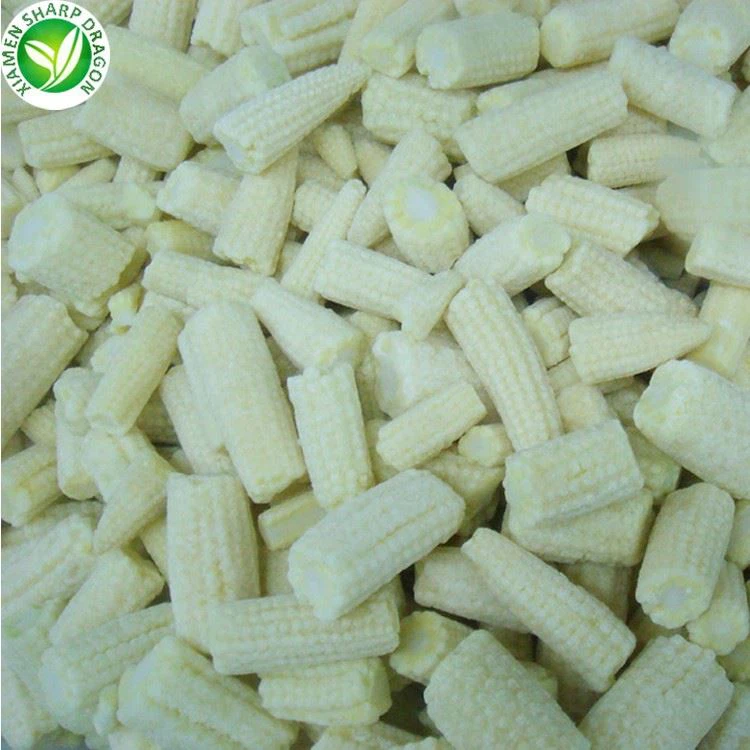
Frozen Baby Corn Cooking Times by Method
The ranges below are first-check points for plain, small whole cobs in a modest batch. Published guidance for baby corn commonly places simmering near 4 to 5 minutes and steaming near 5 to 6 minutes, while a current frozen-specific microwave guide starts a single layer at about 4 to 5 minutes. Frozen cobs that are larger, tightly packed, heavily iced, or less blanched need more time. Cut pieces usually need less. Never use a short quality target to override a longer package cooking instruction.
| Method | Practical starting point | What decides the finish |
|---|---|---|
| Simmer | 4–6 minutes from frozen | Water returns to a simmer; thickest cob is hot and tender-crisp |
| Steam | 5–7 minutes from frozen | Steam flow, basket load, cob diameter, and lid seal |
| Microwave | 4–5 minutes for about 225 g in one covered layer | Oven power, batch depth, turning, and standing time |
| Stir-fry | 5–7 minutes from frozen in a small, hot batch | Pan recovery, crowding, released water, and sauce timing |
| Roast | About 20 minutes at 200°C after thawing and drying | Cob size, tray spacing, surface dryness, and browning target |
A time range is useful only when you also define doneness. Look for even heat through the thickest piece, a fork that enters with light resistance, and a surface that still holds its ridges. A hard or glassy center needs more cooking. A wrinkled surface, splitting cob, or fork that slides through without resistance usually means the batch has moved beyond tender-crisp. Check in 30- to 60-second increments near the end rather than adding several minutes at once.

Boiling and Steaming
For boiling, use enough water that the temperature recovers quickly after the frozen corn goes in. Bring the water to a boil, add the cobs, reduce to a steady simmer, and begin timing when the water has recovered. A violent boil does not cook the center more intelligently; it only knocks the pieces together and increases breakage. Drain immediately when the largest cob reaches the required bite. If the corn will cook again in a sauce or ready meal, stop slightly earlier so the second heat treatment does not make it soft.
Steaming gives you less direct water contact and can preserve a clean surface for butter, glaze, or seasoning. Arrange the cobs loosely enough for steam to circulate. A deep, tightly packed basket develops a large difference between the pieces near the steam inlet and those at the top. For a heavy batch, turn or redistribute once, then test a large cob from the coolest part of the basket. After steaming, let excess surface moisture escape before adding oil-based seasoning.
Blanching and cooking are not interchangeable terms. Commercial blanching is a controlled pretreatment before freezing. It deactivates enzymes that would otherwise damage color, flavor, and texture during storage, but it does not automatically make every frozen vegetable ready to eat. At home, putting an already frozen, blanched product into boiling water is the final cooking or reheating process specified for that product; it is not a second preservation blanch.

Stir-Frying Without a Watery Sauce
A wok needs both heat and open surface area. If the corn forms a deep frozen layer, the pan cannot recover quickly enough to sear. Work in smaller batches or pre-steam the cobs until nearly tender, drain them, and finish them in the stir-fry. For direct-from-frozen cooking, begin with the firmer, slower ingredients. Add delicate leafy vegetables later. Keep soy sauce, stock, and other liquid seasonings out of the pan until the meltwater has mostly evaporated.
Whole cobs make a strong visual ingredient but need more time than lengthwise halves or thick rounds. Halving increases the hot surface area and gives sauce a flat face to coat. Rounds distribute baby corn through noodles, fried rice, and filled products more evenly. Make the cut while the corn is safely thawed enough to control with a knife; do not force a knife through a rock-hard frozen cob. If you receive a ready-cut IQF format, cook a representative mix of large and small pieces before setting the production time.
Oil does not keep baby corn crisp by itself. A large amount of oil on a wet product can spit, cool the pan, and leave a greasy film once the water escapes. Use just enough oil for heat transfer and flavor after you have controlled the water. Sesame oil is better treated as a finishing flavor in many applications because prolonged high heat can mute its aroma. A neutral cooking oil can handle the main stir-fry, followed by a small amount of sesame oil when the pan comes off the heat.
Example: For a hypothetical 12-inch wok, compare 250 g and 750 g of frozen whole baby corn. The 250 g batch can spread in one layer, so released water evaporates and the pan recovers. The 750 g batch piles up, traps steam, and softens before the surface can brown. Cook the larger quantity in three 250 g batches, or steam it as one batch and use the wok only for the final sauce. The action changes, but the goal stays the same: tender heat at the center and a dry enough surface for flavor to cling.

Microwaving, Roasting, and Adding to Soups
For a microwave, place about 225 g in a shallow microwave-safe dish with a small splash of water. Cover with a vented lid, heat on high for roughly 4 to 5 minutes, and turn or shake the pieces halfway through. Let the dish stand as directed before opening, because steam continues to distribute heat. Microwave power and load depth create large differences, so check the center of a thick cob and add 30-second bursts when necessary. Do not copy a time developed for a 225 g single layer onto a deep 1 kg container.
For roasting, the cleanest route is to thaw safely, drain, dry, toss lightly with oil, and spread the cobs in one layer. Around 200°C for about 20 minutes is a useful first plan for small cobs, with turning at the halfway point. Begin checking earlier if the product is cut or already heavily blanched. Extend in short increments if the center remains firm. Roasting directly from frozen is possible, but the first stage releases water; use a preheated tray, generous spacing, and expect browning to begin later.
For soup, hot pot, curry, and braised dishes, add the frozen corn late enough to protect its bite but early enough to heat it through. A rapidly boiling soup can break small cobs and overcook other vegetables. Use a steady simmer and judge the total exposure, including any hot holding after cooking. If a central kitchen cooks the soup, chills it, transports it, and reheats it, the corn experiences several heat cycles. In that system, a slightly firmer initial cook usually performs better than a fully soft finish at the first kettle.
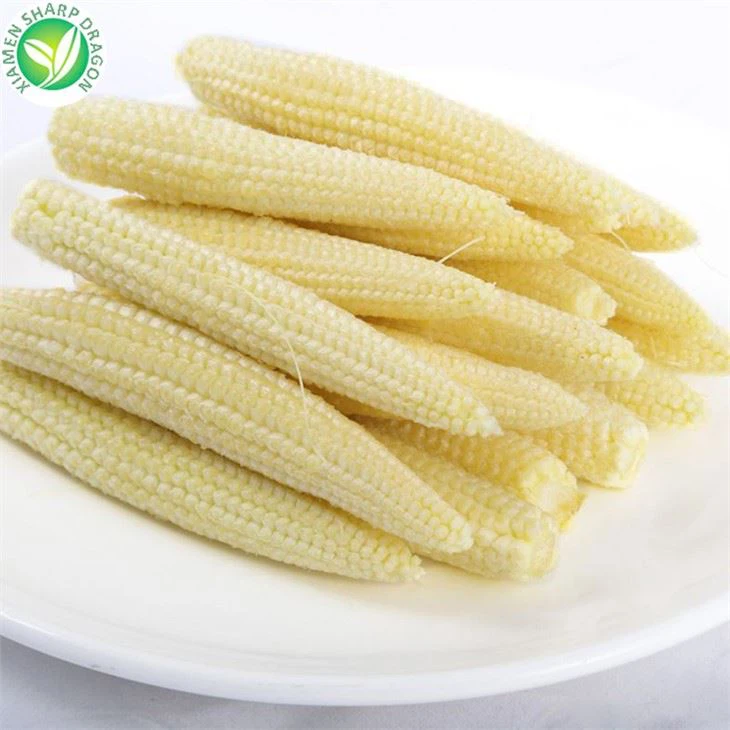
How to Keep Baby Corn Crisp Instead of Watery or Mushy
Texture starts before the heat is switched on. Loose, individually frozen cobs are easier to portion and cook evenly than one solid block. Heavy frost inside an intact bag may reflect moisture migration or temperature fluctuation, while a few surface crystals can occur during normal frozen handling. Separate obvious clumps without crushing the cobs. If the pieces are frozen into a hard mass or the packaging is damaged, inspect the product history and label before deciding whether it remains suitable.
Uniform size matters because the narrow tips and thick bases do not heat at the same rate. A mixed batch can contain short trimmed cobs, long whole cobs, and broken pieces. If you cook until every thick base is completely soft, the smaller pieces may already be mushy. Sort a sample by length and diameter, identify the largest normal piece rather than an extreme outlier, and use that piece for the doneness check. For plated food, define both the acceptable bite and the acceptable breakage instead of using color alone.
Drainage is the next control. After boiling or steaming, leave the corn in a colander just long enough for free water to escape; do not let it continue cooking in a covered hot bowl. For a dry stir-fry, pat the surface. For soup, some surface water does not matter because it joins the broth. For batter, even a small wet film changes coating viscosity. The right drainage step follows the final dish rather than one universal instruction.
Sauce timing can rescue or ruin the texture. Salt, sugar, starch, and liquid seasonings all change the pan environment. A starch-thickened sauce added too early can insulate cold cobs, scorch at the pan surface, and become thin as ice melts. Heat the corn first, remove excess water, then add a pre-mixed sauce and cook only long enough to coat. For a ready meal that will be reheated, test the sauce after the full freeze–reheat cycle because starch behavior and water release may differ from a freshly served stir-fry.
Which Dishes Work Best With Frozen Baby Corn?
Frozen baby corn works best where its shape, mild flavor, and light bite remain visible. Stir-fries, noodle dishes, hot pots, soups, curries, mixed vegetables, and ready meals all suit whole or cut cobs. Whole pieces give strong plate identity; halves expose more surface to sauce; rounds spread the ingredient through a mixture. Choose the form from the eating experience you want, not from the product name alone.
For clear soups and hot pots, whole small cobs hold their identity and can be added directly from frozen. For thick curry or a glossy wok sauce, halves often carry flavor more evenly. For fried rice, dumpling filling, or a formed ready meal, rounds or short segments give better portion distribution and reduce the chance that one serving receives several whole cobs while another receives none. If the dish is held hot for service, choose a firmer initial cook and check the texture at the end of holding, not only when the pan leaves the stove.
Deep-frying needs a defined product state. A dry, thawed cob can be coated and fried, but frozen surface ice creates spattering and weak adhesion. Blanch or cook only if the recipe and product state require it, cool safely, dry thoroughly, then apply a batter with a measured consistency. A non-stick baking mat has no role in a deep fryer; use equipment designed for hot oil, control the load, and follow the fryer's operating procedure.
For salads, distinguish fresh or ready-to-eat baby corn from frozen ready-to-cook product. Fresh baby corn may be used raw in some recipes, but that does not mean a frozen pack can be thawed and eaten without cooking. Read the label. If it instructs you to cook, cook the corn thoroughly, cool it promptly under a controlled process, and then add it to the salad. This preserves the safety boundary while still giving you a chilled, crisp component.
Food Safety, Storage, and Refreezing
Freezing pauses microbial growth; it does not reliably kill every organism that may be present. FDA guidance for ready-to-cook frozen foods therefore tells you to follow the package cooking instructions and heat the food all the way through, including the center. Partial processing at the factory, including blanching, does not by itself prove that the product is ready to eat. Keep the label or technical specification connected to the product so kitchen staff know which treatment applies.
Safety note: Give a verified package instruction priority over the quality-oriented time ranges in this guide. If a pack is marked ready-to-cook, do not taste the corn while it is still frozen or merely warm. Cook it through by the stated method and observe any microwave standing time.
Keep frozen baby corn at 0°F (-18°C) or below. At that continuous temperature, official U.S. guidance separates safety from quality: frozen food can remain safe indefinitely, while flavor, color, aroma, and texture decline with time. University of Minnesota Extension gives 8 to 12 months as a general best-quality period for frozen fruit and vegetables, but the marked date and storage instruction on the actual commercial pack remain more specific. Freezer burn is a dry quality defect; it is not, by itself, proof of a food-safety failure.
If the corn thaws in the refrigerator, cook it within the period set by your food-safety plan and the product instructions. If you thaw it under cold water or in a microwave, cook it immediately. Refreezing can be safe under controlled cold conditions, but texture and flavor usually deteriorate because thawing releases moisture. For a product valued for a clean bite, repeated thawing and refreezing is a poor quality practice even when the temperature history stays within an allowable safety decision.
Do not rely on smell or appearance alone to clear a temperature-abused pack. Check the time-and-temperature history, the seal, and the instructions governing the operation. During a power interruption, official guidance allows some frozen food to be refrozen when it still contains ice crystals or remains at 40°F (4°C) or below, although quality may fall. If you operate a commercial kitchen or import frozen product, apply your documented local rule and lot-disposition procedure rather than making an informal visual decision.
How to Specify Frozen Baby Corn for Reliable Cooking
If you source frozen baby corn for foodservice or manufacturing, cooking performance begins with the item specification. "Whole baby corn" is not enough. Record the accepted length and diameter band, whether tips are trimmed, the share of broken or misshapen pieces, the expected blanching state, and whether the product is ready-to-cook. Then connect those attributes to the application. A long whole cob may look better in a plated stir-fry, while a shorter piece may portion more evenly in a frozen meal tray.
We recommend evaluating a representative sample in the complete process rather than approving it after one simple boil. If your line doses frozen ingredients, test from frozen. If it thaws before coating, reproduce the controlled thaw and drainage. Include sauce addition, cooking, hot holding, chilling, freezing, and reheating whenever those stages exist. Record core doneness, bite, water release, breakage, color, and portion distribution. The approved result becomes more useful when it is translated into measurable acceptance language instead of "good quality."
Worked example: In a hypothetical application test, batch A starts with 1,000 g of frozen baby corn and yields 950 g after cooking and draining. Its cooked yield is 950 ÷ 1,000 × 100 = 95%. Batch B yields 880 g, or 88%, under the same method. The difference is 70 g per input kilogram. Across 500 kg of input, that becomes 35 kg less cooked component. Before choosing batch A, also compare bite, breakage, and sauce pickup; a high mass yield does not compensate for a woody center. The action is to approve the combination of usable yield and finished-dish performance, then set the same test for incoming lots.
Packing affects performance after approval. Inner-pack size should match the quantity your operation can use while the product remains controlled. A line that opens only part of a large liner repeatedly exposes the remainder to moisture and handling. Seal integrity, legible lot coding, carton strength, pallet stability, and frozen temperature evidence all reduce uncertainty before the product reaches the cooking station. XMSD's overview of frozen-food packaging considerations provides a useful next step when you are matching an inner pack and carton to a channel.
Arrival inspection should connect visible evidence to the intended use. Check whether the bags remain sealed and free from abnormal clumping, whether the lot identity matches the documents, and whether the cobs remain within the agreed size and defect limits. Then cook the arrival sample with the approved method. If it releases substantially more water, breaks more easily, or needs longer to reach the approved bite, hold the lot while you compare the result with the retained sample and temperature record. This gives you an evidence-based decision instead of accepting or rejecting a shipment from appearance alone.

When you select the product form, start with the job it must perform. The broader XMSD frozen corn range separates baby corn from mature corn kernels and full-size corn on the cob because they answer different application questions. Baby corn is an immature whole cob valued for shape and bite; it is not a miniature substitute for every mature-corn recipe. Approve the form that fits the dish, dosing system, heat treatment, and visual standard.
XMSD sourcing note: For a frozen baby corn project, you can send us the intended dish, whole or cut format, target size, cooking process, pack format, and destination. We can use those inputs to discuss a suitable sample and quotation without treating a generic cooking time as the final product specification.
A Practical Final Decision
Start frozen baby corn directly in simmering water, steam, a covered microwave dish, soup, or curry. Thaw and dry it when browning, batter adhesion, or a concentrated stir-fry sauce is the priority. Use 4 to 6 minutes as the first check for small whole cobs under wet heat, then adjust for the largest normal piece, batch load, blanching state, and the actual appliance. Stop at tender-crisp for immediate service, or slightly earlier when another heat cycle follows. Above all, separate a quality target from a safety instruction: the package tells you how the product must be cooked, while your application test tells you when its texture and yield are right.
For repeated production, write down the winning combination of product form, frozen or thawed state, batch weight, equipment setting, cooking time, doneness check, drainage, and sauce sequence. Recheck it when the cob-size distribution or supplier lot changes. This turns a flexible ingredient into a controlled process and gives you a clear response when a batch becomes watery, uneven, or too soft.
References
- U.S. Food and Drug Administration: Test Your Safety Knowledge About Ready-to-Cook Foods
- U.S. Food and Drug Administration: Are You Storing Food Safely?
- University of Minnesota Extension: Preserving Food at Home-Freezing
- Good Food: How to Cook Baby Corn
- Let's Foodie: How to Microwave Baby Corn
- Grain of Love Co.: Cooking With Corn 101-Baby Corn Methods
- XMSD operational experience in frozen-food sourcing, application testing, packaging, quality control, and B2B export coordination.