


Can You Cook Baby Corn from Frozen?
Apr 23, 2025

Yes, you can cook baby corn from frozen when the pack provides a cook-from-frozen method. Plain, loose frozen cobs work particularly well in boiling water, steam, and simmering dishes; a separate thawing stage is often unnecessary. Read the instructions before choosing the pan, because a bag of whole baby corn, a mixed-vegetable blend, and a microwave steam pack can require different treatment. If the pack requires thawing, follow that instruction.
Blanched baby corn is not automatically ready to eat. Partial cooking before freezing can change texture without completing the cooking needed before serving. Heat it thoroughly using the stated method, including any stirring and standing time. A quick rinse, a soft surface, or a lightly browned edge does not show that the center has completed that process.
For a crisp stir-fry, the main practical challenge is released water. Use a manageable batch and let excess moisture leave before adding the final sauce. If browning or a dry coating is essential, a controlled thaw-and-dry method may suit the recipe better, provided it agrees with the product instructions. The decision is about both the required cooking process and the texture you want on the plate.
Check the product before choosing the method
Baby corn is the small, immature ear eaten whole, including its tender center. It is different from a short section cut from a mature sweetcorn cob. That distinction matters when reading cooking advice: a product described as mini corn on the cob can still contain a thick, inedible core and is not a substitute for baby corn in a recipe. Match the food shown on the label to the ingredient in your freezer before borrowing its preparation instructions.
Whole cobs, lengthwise halves, short cuts, and slices also behave differently in a dish. Whole pieces make a visible vegetable component, while cuts are easier to distribute through noodles, rice, or a mixed filling. We would choose the format around the finished bite and portion distribution first. Reducing a long cob into many short pieces may help portioning, but it changes the appearance that a menu photograph promises.
Check whether the pack contains only baby corn or also oil, sauce, seasoning, and other vegetables. Sauce affects drainage and the point at which browning becomes possible. A mix may contain components with different sizes and cooking behavior, so instructions for that mix apply to the combined product. Picking the baby corn out and assigning it the mix's cooking time is not a sound shortcut.
The different frozen corn formats illustrate why the product name needs to be specific. For a kitchen trial, record the actual form, whether it is plain or seasoned, the instructions, and the amount used. Keep that record with the recipe so a later substitution does not quietly change the cooking process.
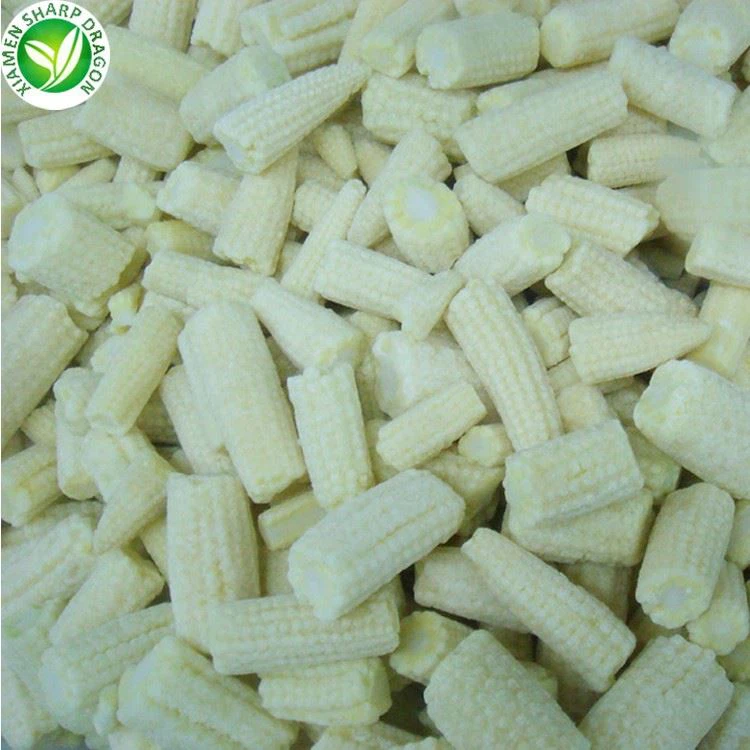
Choose a route from freezer to finished dish
For a plain side dish or an ingredient going into broth, wet heat is a straightforward route. Water or steam can reach the surfaces as the pieces warm, and surface moisture is easy to drain or incorporate into the dish. Keep the unused portion frozen and remove only what the recipe needs. Do not thaw an entire bag simply to take out a few cobs if the remaining pieces are already separate.
| Finished dish | Useful route | Main control |
|---|---|---|
| Broth, soup, or a plain side | Cook from frozen if instructed | Heat through; drain for a side dish |
| Sauced stir-fry | Use the pack's pan method or a permitted precook | Batch size and water before sauce |
| Roasted or coated corn | Use a product-specific recipe compatible with its label | Surface dryness and center cooking |
For boiling, bring the water to the required state before adding the measured frozen portion. Add the cobs carefully, keep them moving freely, and follow the pack's timing basis. Some instructions begin timing after the water returns to the boil; others describe a complete cooking interval. Note that difference. A large cold load can delay recovery, so a timer started at the wrong point can make an otherwise familiar method unreliable.
Drain promptly when cooking is complete. Water carried into a butter dressing or thick sauce can loosen it and dilute the seasoning. A colander gives free water somewhere to go; a covered serving bowl holds both that water and residual heat around the corn. For immediate service, finish the seasoning after drainage so it is adjusted to the food you will actually serve.

Steaming needs space, not a tightly packed basket
Steaming can be useful when you want a plain cooked ingredient without immersing it in a pot of water. Set up the equipment as instructed and leave routes for steam to pass around the pieces. A basket filled with a dense block of frozen vegetables behaves differently from a shallow layer of separated cobs. The lid also needs to fit properly; repeated opening changes the cooking conditions and makes the recorded time less useful.
Look at the largest pieces when checking the batch. A thin end may already feel tender while the thicker center still needs cooking. Once the required cooking process is complete, compare texture across several cobs rather than judging only the easiest one to pierce. The aim for most stir-fry and side-dish uses is a clean bite without a tough, fibrous center or pieces that collapse under the fork.
Fresh-product timings explain why a number found online can be misleading. Iceland's instructions for its refrigerated 130 g baby corn list simmering for 3–4 minutes and steaming for 5–6 minutes. Those directions explicitly start from chilled and show how the method changes the cooking interval. A frozen pack needs its own schedule. Use its directions instead of adding an arbitrary minute to a fresh recipe.
If a catering pack has no usable cooking instructions, request the product's intended-use statement and preparation guidance before putting it on a service recipe. For us, a sample that looks suitable is only the beginning: the kitchen needs a repeatable process for its own batch and equipment. A supplier-approved method and a recorded kitchen trial answer different parts of that question and are most useful together.

Keep released water out of the final stir-fry sauce
A stir-fry can start with frozen baby corn if the product supports that method. The pan then has two jobs: warming and cooking the frozen pieces, followed by finishing their surfaces with the other ingredients. Loading in too much at once leaves liquid around the vegetables and delays the drier finishing stage. Adding more oil does not remove that water; adjusting the load or cooking route is usually the more useful change to test.
Prepare the sauce separately so you can add it at the right moment. When an approved cooking method allows it, cook the corn first and let excess water drain or evaporate before the final sauce is added. Keep garlic and delicate seasonings from sitting against a dry, hot pan while you wait for a frozen center to cook. A sequence that suits fresh, thin vegetables may need changing when the main ingredient starts frozen.
Practical example: Suppose a noodle counter uses 300 g of plain frozen baby corn and 600 g of other vegetables for one preparation run. The cook tries to put all 900 g into a pan previously used for smaller orders and sees liquid pooling before the sauce is added. Keep the ingredients and seasoning amounts fixed, but test smaller cooking batches using the product's approved method, then combine them for finishing. Compare the sauce at plating and after the normal wait for service. The expected benefit is better control of dilution; the trial must still confirm the required cooking and the texture at service.
We would also check whether the cooking problem follows the corn or the whole recipe. Mushrooms, leafy vegetables, an undrained precooked ingredient, and sauce added too early can all contribute liquid. Test one change at a time. Reducing the corn portion and changing the sauce together might improve the dish, but it leaves you unsure which adjustment solved the problem or what to repeat next shift.
Dry coatings need separate attention. Do not drop heavily iced or wet pieces into hot frying oil. Where the pack permits thawing for a coated recipe, thaw under refrigeration, drain, and dry the surfaces before coating; then use a tested cooking process for the complete coated product. Browning on the outside is a quality observation, not a substitute for checking the center. The broader guide to baby corn cooking methods covers additional dish choices.

Microwave instructions belong to a defined portion
Microwaving is convenient when the pack gives a method for the amount you need. Use a suitable dish, the specified added water, the required cover or vent, and the stated power setting. Turn or stir when instructed and include standing time. An ordinary freezer bag should not be treated as a steam-in-bag cooking pack unless its instructions specifically say to use it that way.
The FDA explains that ready-to-cook food must reach the required heat throughout, including the center. Its microwave advice emphasizes the package's power and time, covering or stirring where directed, and allowing standing time before checking temperature. That is why a warm plate and hot steam above the dish are not enough to judge an unevenly heated batch.
Worked example: A cook using Arctic Gardens' 1.75 kg Thai Stir Fry has instructions for a frozen mixture containing baby corn. One quarter of the bag is 1,750 g ÷ 4 = 437.5 g; one half is 875 g. The listed skillet times are 8–10 minutes and 10–12 minutes respectively in a preheated 30 cm skillet. Its microwave chart lists 4–5 minutes for a quarter bag and 7–8 minutes for a half bag, with ¼ cup water. For an 875 g preparation, the cook selects the half-bag method rather than doubling the quarter-bag time. This keeps the planned load matched to the manufacturer's directions. These figures apply to that blend, not plain baby corn.
For your own product, keep the portion, container shape, layer depth, and appliance setting consistent with its instructions. If the label only describes one portion, prepare separate portions or obtain a larger-batch method instead of improvising a deep container. Record the exact appliance used in a commercial recipe, because "microwave on high" is incomplete when equipment differs between kitchens.
Treat roasting and air frying in the same product-specific way. A frozen surface must lose its ice and moisture before it can brown effectively, while the center still needs adequate cooking. A well-spaced tray can help moisture escape, but it does not establish a safe time and temperature by itself. When your pack provides no oven or air-fryer method, use a tested recipe approved for the ingredient or choose a supported method and finish the dish afterward.

Judge cooking, tenderness, and service texture separately
Finish the required cooking before deciding whether the bite suits the dish. Tenderness is a sensory target: a whole cob should be pleasant to bite through, without an unpleasantly tough middle. Cooking adequacy is a process question. The UK Food Standards Agency gives 70°C for 2 minutes at the center as one general cooking combination, with alternatives including 75°C for 30 seconds. These are core temperature-and-hold examples, not minutes to count from dropping frozen corn into a pan, and they do not replace a product's specific instructions or a commercial validated process.
Use a clean probe suited to the small product when temperature measurement is required. Probe placement should measure the food, not the pan, hot water, or air between pieces. In a commercial trial, check several representative locations and include larger cobs and the parts of the load expected to warm most slowly. Keep that record separate from comments such as "good bite" or "slightly soft" so the two decisions remain clear.
A corn sample that tastes right immediately after cooking may be too soft by service. Sauce contact, a covered container, continued heat, and a later reheating step all change the eating result. Taste at the point the customer will receive it, as well as straight from the pan. This is particularly useful for foodservice and catering applications, where the delay between cooking and eating can be part of the normal operation.
If a fully cooked batch is too soft after that delay, change the product format, recipe sequence, or service batch size and retest. Shortening the required safety process is not an acceptable texture adjustment. Likewise, continued cooking will not necessarily improve a woody or fibrous raw-material defect. Compare another sample at the same process before deciding that every tough result simply needs more time.

Make the next bag cook like the approved sample
For repeat supply, we would put the approved cooking result beside the size and format description. A broad label such as "whole baby corn" leaves room for differences in length, diameter, and broken pieces that affect portion appearance and heating consistency. Compare the spread within the sample, including the largest pieces, instead of measuring only a few neat cobs. Ask the supplier to identify the processing state and intended use for the lot being offered.
A useful trial record connects the product code and lot with the frozen input weight, method, equipment, cooking instructions, drainage step, and result at service. Photographs can document piece distribution and breakage, but the bite still needs to be evaluated. If the product will enter a ready meal, repeat that meal's actual cooking and reheating sequence. A successful plain-water trial is helpful screening, not the final answer for every sauce or production line.
Packing affects how easily the kitchen can repeat that result. An inner bag matching normal preparation demand reduces repeated opening and portion handling. A larger pack may still work when the pieces remain free-flowing and the unused portion can be returned promptly to frozen storage. Discuss the operating pattern alongside frozen-food packaging options; choose the bag around actual use rather than assuming the largest unit is always simplest.
Compare usable yield on a declared basis. Frozen input weight, drained cooked weight, and plated weight are different measurements. Weigh the drained corn before sauce is added, and state whether the weight was taken immediately or after holding. Use the same drainage and weighing procedure for both samples. That gives a useful purchasing comparison instead of rewarding the sample that carries more water into the scale pan.

Handle leftovers without repeating the freezer-to-pan process
Keep unopened stock and the unused portion under the pack's frozen-storage conditions. FDA consumer guidance recommends a freezer at 0°F, approximately −18°C, and a refrigerator at 40°F, approximately 4°C, or below. Freezing does not remove every microbial risk, so a normal appearance or smell cannot establish the safety of an unknown temperature history. If a delivery arrives thawed or the history is uncertain, hold it apart for assessment rather than treating cooking as an automatic remedy.
Once the corn has been cooked, use the rules for cooked food. For household leftovers, FSA advice is to cool and refrigerate within two hours, eat within 48 hours or freeze, and reheat only once. Commercial cooling, holding, and reheating need the site's own applicable controls. Prepare smaller amounts when demand is uncertain so quality and safe handling do not depend on repeatedly warming a large leftover batch.
Cold salads need the same distinction. If the frozen pack says to cook before eating, thawing alone is not the preparation step for a salad; cook it first and cool it safely. For immediate hot dishes, retain the simple advantage of cook-from-frozen where the product allows it: portion accurately, use the supported method, manage the released water, and check the result at the actual point of service.
For a baby corn application review, send us the dish, whole or cut format, preparation method, batch size, intended pack, and destination. We can review those inputs with your sample request.
References
- FDA: Test Your Safety Knowledge About Ready-to-Cook Foods
- Food Standards Agency: Cooking your food
- FDA: Are You Storing Food Safely?
- Arctic Gardens: 1.75kg Thai Stir Fry product instructions
- Iceland: Baby Corn 130g, chilled-product cooking instructions
- XMSD operational perspective on frozen-product forms, portioning, drainage, sample comparison, packing, and foodservice use. The examples describe representative decisions, not historical customer trials.