


Health benefits of eating strawberries everyday?
Oct 29, 2019
Eating plain strawberries regularly can contribute vitamin C, fibre, water, and fruit variety, but there is no universal "every day" dose that guarantees a health result. The benefit depends on what the strawberries replace, the rest of the diet, the person's tolerance, and the form: fresh, unsweetened frozen, puree, freeze-dried, syrup-packed, or sweetened products are not nutritionally interchangeable. A food can support a healthy eating pattern without preventing, curing, or replacing treatment for a disease.
What is genuinely useful? A plain strawberry serving can add fruit volume, familiar flavour, vitamin C, and fibre. Frozen fruit can extend availability and simplify portioning. The strongest daily advantage may be replacing a more energy-dense or highly sweetened option with a defined fruit portion-not repeating an unsupported claim about disease prevention.
What does eating strawberries every day actually mean?
"Every day" describes frequency, not a medical prescription. One person may eat fresh berries with breakfast; another may use unsweetened frozen fruit in a smoothie; a third may choose a sweetened dried snack. The ingredient form, portion, added ingredients, and total meal determine the practical result. If a clinician has set a specific diet or a person develops repeated symptoms, that advice takes priority.
For a commercial formulation, daily use also means repeatability. Record the strawberry form, serving mass, sugar basis, storage, lot, and finished recipe so a nutrition or quality statement describes the product actually eaten rather than a generic fresh berry.

The main advantages in plain strawberries
The first advantage is nutrient density relative to the food's physical volume. The USDA FoodData Central entry for raw strawberries gives a useful reference of about 32 kcal per 100 g, with approximately 7.7 g carbohydrate, 2 g dietary fibre, 0.7 g protein, 0.3 g fat, and about 59 mg vitamin C. Database values are reference values, not a guarantee for every variety or harvest. Still, they show why plain strawberries can provide a generous-looking portion with limited energy compared with many pastries, confectionery fillings, or cream-based desserts.
The second advantage is sensory balance. Strawberries combine sweetness with acidity and a recognisable aroma. That balance can make a yoghurt cup, smoothie, sauce, bakery filling, or dessert taste fruit-forward without requiring the same amount of added flavouring. The correct amount of sugar still depends on the cultivar, maturity, process, and finished product. We do not treat a generic sweetness claim as a formulation specification; we test soluble solids, acidity, colour, cut, and thaw behaviour in the intended application.
The third advantage is flexibility. You can choose whole berries for visible fruit, slices or dice for distribution, puree for smooth texture, or freeze-dried pieces for a dry inclusion. Each form solves a different production problem. A beverage plant may value fast blending and stable colour, while a bakery may need pieces that remain recognisable after baking. "Strawberry" identifies the ingredient; it does not by itself identify the correct cut, process, pack, or recipe performance.
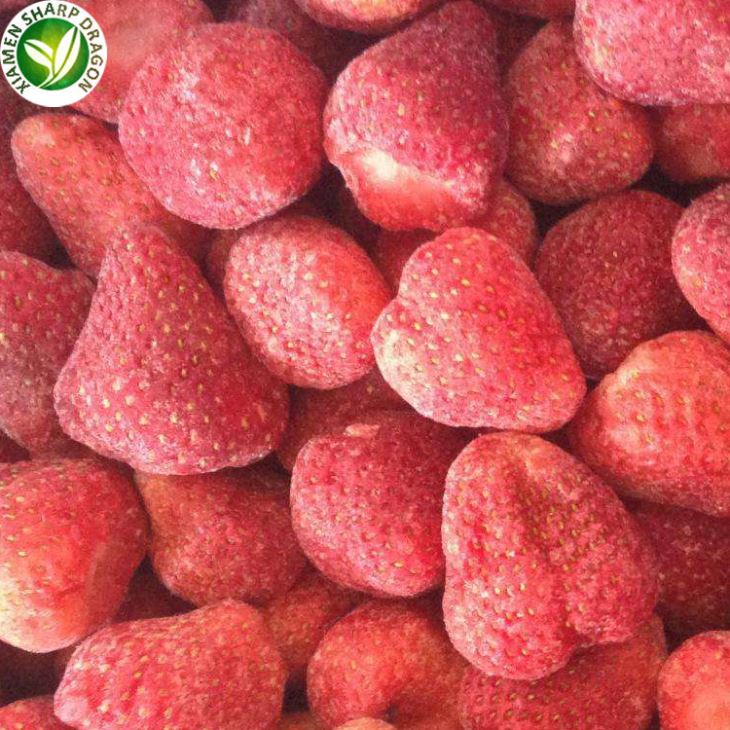
What the nutrition evidence can and cannot say
Vitamin C supports normal physiological functions, including collagen formation and normal immune-system function. Fibre supports digestive health and can contribute to fullness as part of an overall eating pattern. These are nutrient roles, not permission to claim that strawberries treat gum disease, lower cholesterol in every person, prevent cancer, detoxify the body, or "clean the blood." The old style of listing dramatic effects without a source is exactly what a responsible food article should avoid.
The evidence boundary matters because the amount eaten, the rest of the diet, and the product form all change the context. A 100 g raw-fruit database entry is not equivalent to a sweetened jam, a freeze-dried powder, or a smoothie containing juice and syrup. If a health professional has prescribed a specific diet, or if a person has an allergy or persistent digestive symptom, an article about general food advantages is not a substitute for individual advice.
The CDC describes fruits and vegetables as sources of vitamins, minerals, fibre, and other substances important for health, and notes that replacing more calorie-dense foods can reduce the total calories in a meal. That is a useful way to describe strawberries: they can be a practical substitution or ingredient choice. It is more accurate than saying that strawberries burn fat or guarantee weight loss. The advantage comes from how the fruit is used within the whole meal.
Evidence rule: state the nutrient or product property, explain its reasonable role, then state the limit. For example: strawberries provide vitamin C; vitamin C has recognised physiological roles; the fruit should not be presented as a treatment or as a guarantee of a particular health outcome.
Fresh, frozen, and freeze-dried strawberries are not interchangeable
Fresh strawberries are attractive when the buyer wants immediate eating quality, bright surface colour, and a firm bite. Their weakness is perishability. Bruising, moisture, mould, and temperature abuse can reduce usable life quickly. FDA guidance recommends choosing produce without bruising or damage, refrigerating perishable fresh produce at 40°F or below, and washing it under running water before preparation. Soap, detergent, and commercial produce washes are not recommended.
Unsweetened frozen strawberries offer a different advantage: they can decouple the production schedule from the fresh harvest window. Freezing does not make a product nutritionally identical to fresh fruit in every detail, but freezing itself does not automatically add calories. USDA guidance explains that freezing keeps food safe for a very long time when held at 0°F or below, while recommended storage periods are mainly about quality. The actual label and ingredient list remain decisive.
Freeze-dried strawberries have had most of their water removed. That makes them light, crisp, shelf-stable when properly packed, and useful for cereal, chocolate, snack, bakery, and decoration applications. It also concentrates the fruit per gram and makes it easy to overeat compared with a bowl of fresh berries. If sugar or a coating is added, the finished product must be evaluated from its own ingredient statement. The word "strawberry" is not enough to establish the nutrition of a processed product.
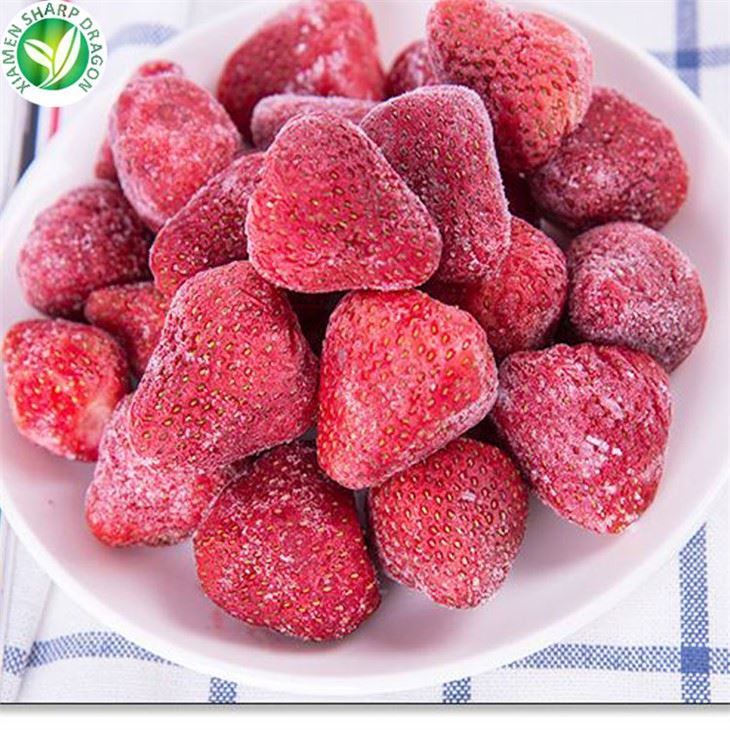
How strawberries can support practical eating patterns
Whole fruit can add volume and texture to a meal. That can be useful when it replaces a more energy-dense snack, or when it helps a foodservice operator build a visible fruit portion into breakfast and dessert. The word "replace" matters. Adding strawberries to an already large sweetened dish does not automatically make the dish light. A smoothie with fruit, sweetened yoghurt, juice, syrup, and ice cream is a different nutritional object from a bowl of plain berries.
Fibre and water also influence eating speed and mouthfeel. Whole berries require chewing and have a different eating experience from juice or a smooth sweetened puree. For some people, that makes a measured portion more satisfying. For others, acidic fruit may aggravate symptoms or an allergy may make strawberries unsuitable. I keep that variation visible rather than offering a universal daily prescription.
Practical example: a hotel breakfast team wants a fruit component for 120 yoghurt cups. The team can test 60 g of plain strawberry slices per cup, then assess colour, drip, portion consistency, and guest acceptance after four hours under the planned service conditions. If the same visual result can be achieved with less sweetened topping, the advantage is both a cleaner ingredient story and better portion control. The production record separates the fruit form from the added ingredients.

Advantages in beverages, bakery, and prepared foods
Smoothies and fruit drinks
Strawberries give a smoothie a familiar colour, aroma, and acid-sweet profile. Frozen pieces can provide coldness and body without relying on as much ice, although the formula still has to control viscosity and separation. We test the fruit at the actual blend ratio, not from a small spoonful in isolation. Check seeds, fibre, colour after holding, sweetness after dilution, and the effect of thawed free liquid.
Bakery and fillings
Strawberries can bring visible fruit identity to cakes, biscuits, fillings, and toppings. The trade-off is water management. Whole or sliced frozen fruit may release juice during thawing and baking, while puree can change the viscosity and migration of a filling. I recommend defining particle size, fruit solids, colour after heating, target moisture, and whether the application needs a fruit preparation rather than plain fruit.
Yoghurt, desserts, and inclusions
In a chilled dairy or dessert system, strawberries can create contrast: soft fruit against a smooth base, bright colour against a pale matrix, and acidity against sweetness. We cover distribution, bleeding, thaw stability, and the time between filling and sale in the application test. A recipe can look excellent on day one and fail after storage if the fruit releases too much liquid or the colour migrates into the base.

What a buyer should check before calling a strawberry product "better"
Start with the application, not the marketing adjective. A whole berry can be the best choice for a retail display but the wrong choice for a high-speed beverage line. A puree can be efficient for blending but unsuitable when the finished product needs visible pieces. A freeze-dried inclusion can be visually strong but may soften in a high-moisture matrix. The advantage is always relative to the job the ingredient must perform.
For frozen strawberries, define the cut or form, colour range, maturity profile, seed and calyx expectations, foreign-material controls, free liquid tolerance, net weight, pack size, storage temperature, and intended destination. Then request a sample and test it under the real process. A supplier's certification and quality documentation can support the evidence file, but it does not replace an application trial or an agreed product specification.
Packaging is part of the advantage as well. Good packaging protects the fruit from moisture migration, freezer burn, odour transfer, and repeated opening. For a factory, a pack that can be opened, weighed, resealed, and traced cleanly may be more valuable than a slightly lower nominal price. Review the supplier's frozen packaging approach alongside the product form and shipping route.
Worked example: a dessert manufacturer plans 2,000 cups with 45 g strawberry pieces per cup. The nominal fruit requirement is 90 kg. If the process trial shows 8% unusable loss from thaw drip and trimming, the purchasing basis becomes 90 ÷ 0.92, or about 97.8 kg, before allowing for handling reserve. If the team instead changes to a puree, the calculation must be rebuilt around solids, viscosity, and finished yield. The advantage is not "frozen" by itself; it is the format that produces the required result with a controllable loss rate.
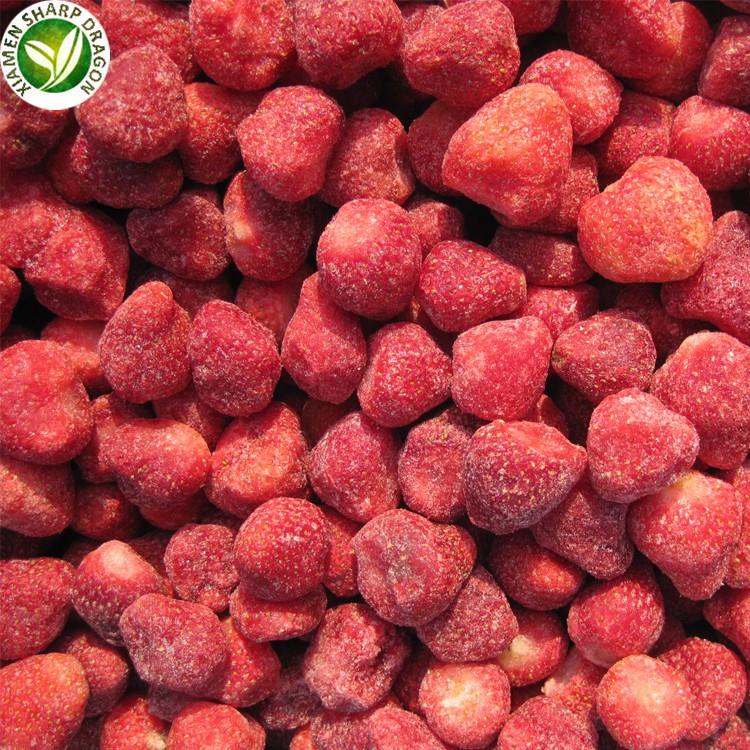
Food safety and tolerance boundaries
Fresh produce can become contaminated during growing, harvesting, storage, handling, or preparation. FDA guidance recommends washing hands, rinsing produce under running water, cutting away damaged areas, and keeping produce separate from raw meat and seafood. Washing reduces surface bacteria but does not eliminate every hazard. In a commercial file, we also review the supplier's food-safety system, lot traceability, allergen controls, and recall procedure.
Frozen fruit is not a licence to ignore the cold chain. Keep the product at the specified frozen temperature, avoid damaged packs, and assess any lot that has thawed, leaked, or been exposed to unknown conditions. USDA notes that freezing preserves safety for long periods, but quality declines over time and thawing changes texture. A receiving record should distinguish a quality complaint from a potential safety issue and escalate both through the correct quality process.
Tolerance is personal. Some people may experience oral allergy symptoms, digestive discomfort, or irritation; others may need to manage a prescribed carbohydrate pattern or another medical condition. That does not make strawberries universally bad, and it does not justify a universal safety promise. The correct response to a serious or repeated reaction is to stop and seek qualified medical advice, while a commercial operator can follow its own allergen and incident procedures.
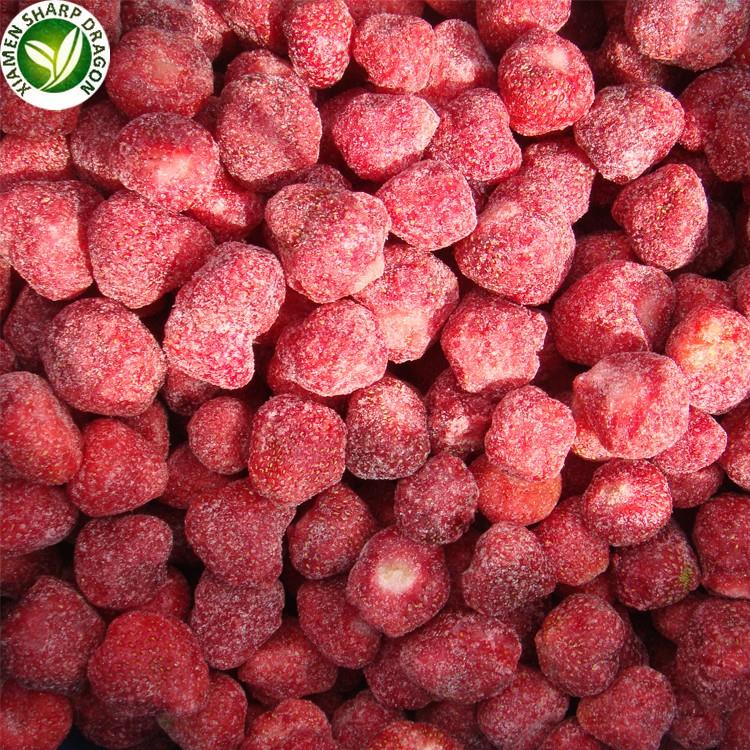
A clear way to use the advantages without overclaiming
For a household, choose a plain form when you want the fruit's own nutrition and flavour to remain visible. Wash fresh berries correctly, keep perishable fruit cold, and check the ingredient list on frozen, dried, or prepared products. For a foodservice or manufacturing team, define the application first, then compare fresh, frozen, puree, and freeze-dried options using the same portion, storage, and finished-product criteria.
For a supplier discussion, request information that can be measured: product form, variety or cultivar information where relevant, cut size, colour, Brix or acidity targets if part of the specification, moisture or solids basis for processed forms, pack format, storage requirements, certificates, and sample-trial conditions. XMSD's application solutions are a starting point for matching product form to use, not a replacement for a signed specification.
The strongest advantage of strawberries is therefore practical rather than sensational. They can make a product look and taste recognisably fruity, contribute useful nutrients in a plain-fruit portion, and offer multiple supply forms for seasonal and production planning. The value is highest when the selected form, recipe, pack, and evidence all point in the same direction. That is a much stronger standard than repeating a list of disease-prevention claims copied from an old page.
A manufacturing team that needs a trial can also review XMSD's equipment and processing context and factory information. The purpose is to connect the reader's question to visible evidence: how the fruit is handled, how the chosen form is packed, and what to measure before a repeat order. That is the point at which a general food advantage becomes a defensible procurement decision.
Our working test is simple: can the claimed advantage be seen in the finished use, measured in the process, and supported by the product record? If the answer is yes, the statement can be useful to purchasing and quality teams. If the answer is only a broad promise about "health," I narrow the wording and return to the actual evidence. This discipline protects the reader from confusing a nutrient fact with a medical claim, and it protects the buyer from approving an ingredient whose format does not fit the recipe.
Our working test is simple: can the claimed advantage be seen in the finished use, measured in the process, and supported by the product record? If the answer is yes, the statement can be useful to purchasing and quality teams. If the answer is only a broad promise about "health," I narrow the wording and return to the actual evidence. This discipline protects the reader from confusing a nutrient fact with a medical claim, and it protects the buyer from approving an ingredient whose format does not fit the recipe.
In practice, that means keeping three records together: the nutrition basis, the physical specification, and the application result. The nutrition basis tells us what can be said about the plain ingredient. The physical specification tells us what arrives in the case or carton. The application result tells us whether the fruit still delivers colour, aroma, texture, and yield after the process. When one of those records is missing, the word "advantage" becomes too vague to guide a purchase.
Questions readers and buyers often ask
Are strawberries a source of vitamin C?
Yes. Raw strawberries are a useful vitamin C source in the USDA reference data. The exact amount varies with product, serving, storage, and preparation, so use the relevant nutrition panel for a packaged product. Vitamin C content does not justify claims that strawberries cure an illness.
Are frozen strawberries still useful?
Plain frozen strawberries can be useful for smoothies, sauces, bakery, dairy, and foodservice because they extend availability and simplify storage. Test thaw drip, texture, colour, and pack handling. Do not assume that every frozen product is unsweetened; check the label.
Can strawberries replace a medical treatment?
No. They are a food. They can contribute nutrients and fit a varied eating pattern, but a food article should not turn those facts into treatment or disease-prevention promises. Follow professional advice for a diagnosed condition, allergy, or repeated symptom.
What is the biggest procurement advantage?
It depends on the application. Frozen fruit may offer availability and portion control; puree may offer blending efficiency; freeze-dried pieces may offer a dry inclusion; fresh fruit may offer immediate appearance. Compare the format against yield, storage, quality, and the finished product rather than choosing by a generic health slogan.
XMSD sourcing note: For a strawberry trial, share the intended application, fruit form, target portion, pack format, destination, and document requirements so the sample can be evaluated against measurable use conditions.