


Are freeze dried strawberries Good For You?
Oct 31, 2019
Plain freeze-dried strawberries can be a useful fruit food, but "good for you" depends on the product, portion, and person. They retain strawberry solids, fibre, natural sugars, minerals, and many plant compounds while losing most of their water. That makes them light and convenient, but it also concentrates what is present per gram. A sweetened, coated, or carrier-based snack must be judged from its own ingredient list rather than from the benefits of fresh fruit.
The fairest comparison starts with four questions: Is the product plain strawberry or does it contain added sugar, oil, carriers, or coating? Are the values stated per 100 g, per serving, or per piece? What serving will actually be eaten or added to a formula? Which laboratory result or nutrition database supports the figures? Freeze-drying can retain many quality attributes better than high-temperature drying, but retention is not complete or identical for every nutrient.
The short answer: plain unsweetened freeze-dried strawberry can fit a varied diet and offers a convenient fruit inclusion, but it is not a gram-for-gram substitute for fresh strawberry. Compare the real serving, read the ingredients, and treat the actual label or specification as the decision evidence.
What does "good for you" mean for freeze-dried fruit?
For one person, the value may be a shelf-stable way to add fruit to cereal or travel food. For another, the decisive issue may be added sugar, energy density, dental stickiness, allergy, or a prescribed diet. For a product developer, the question is whether the ingredient contributes the intended flavour, colour, texture, and fruit solids without creating a label or moisture problem.
I use "good" as a product-fit judgment, not a medical promise. A plain product with a clear composition and a sensible portion can be useful; a heavily coated snack may be less suitable even if the front of pack shows strawberries. Health claims still need evidence and destination-market review.

Why the Nutrition Values Look Concentrated
Fresh fruit carries a large amount of water. University of Minnesota Extension notes that raw foods commonly contain about 80% to 95% water. Freeze-drying removes ice by sublimation and then removes additional surface moisture. The fruit becomes much lighter while most non-water solids remain. If you compare equal weights, the dry sample therefore contains more fruit solids, natural sugars, fiber, and minerals simply because less of that weight is water.
This is why a 100 g column can mislead a casual reader. One hundred grams of fresh strawberries is a normal bowl-sized amount; 100 g of freeze-dried strawberries is a much larger quantity of fruit solids. The comparison is mathematically valid for composition, but it is not automatically a realistic portion comparison. A label reader should check both the standardized 100 g basis and the declared serving.
Worked example: concentration by water removal
Worked example: imagine 100 g of fruit containing 90 g water and 10 g dry solids. If drying removed water until the final product contained 5% moisture, the original 10 g of solids would represent about 10.5 g of finished product: 10 / 0.95 = 10.5. On that simplified basis, 100 g of the dry product would contain roughly 9.5 times as much fruit solids as 100 g of the starting fruit. This is an illustrative mass-balance calculation, not a specification for every strawberry lot. Real values change with starting moisture, process loss, and final moisture.
You can use the same logic in reverse when comparing a small dry serving with fresh fruit. First identify the dry serving weight. Then obtain the supplier's tested moisture or rehydration basis rather than assuming a universal conversion. A realistic portion comparison prevents the false conclusion that drying has "added" natural sugar or that a tiny spoonful contains the same amount as a large dry pack.
What Happens to Vitamin C and Plant Compounds
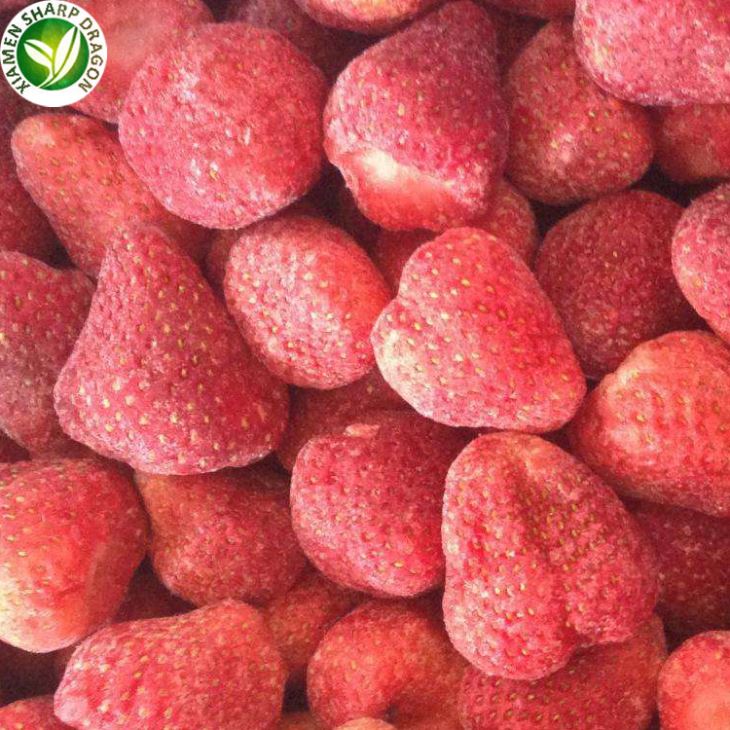
Freeze-drying is often chosen because low-temperature, low-oxygen conditions can protect color, aroma, and heat-sensitive compounds better than conventional hot-air drying. A peer-reviewed Food Chemistry study comparing drying methods across several berries, including strawberries, found that freeze-dried products showed better retention of vitamin C, anthocyanins, phenolics, and measured antioxidant capacity than the hot-air and Refractance Window dried products in that study. The important wording is "better retention," not "perfect preservation."
Vitamin C can be affected by oxygen, light, time, temperature, cutting, and pretreatment. Strawberry-specific research has also shown that slice versus pulp preparation and freeze-drying conditions can change the result. A generic article therefore cannot state one universal vitamin C value for every commercial freeze-dried strawberry. If vitamin C is a label claim or formulation requirement, obtain a result for the defined product and use the rules applicable in the destination market.
The same caution applies to anthocyanins and phenolic compounds. Their presence can help describe composition, but an antioxidant laboratory measurement is not proof that the food prevents or treats disease. Nutrition communication should separate what is measured in the ingredient from a promised health outcome in a person. For ordinary product selection, ingredient purity, serving size, total diet, and application are more useful than exaggerated health language.

Plain Fruit Is Not the Same as a Sweetened Product
A package can show strawberries on the front while the ingredient list reveals a different nutritional story. Plain freeze-dried strawberry should be distinguished from fruit prepared with added sugar, syrup, juice concentrate, chocolate, yogurt-style coating, oil, flavoring, or a powder carrier. Those ingredients can change energy, sugars, fat, protein, sodium, allergen status, and the percentage of actual strawberry.
Powder deserves particular attention. A product called strawberry powder may be milled whole fruit, or it may contain another ingredient to support flow, drying, cost, or flavor delivery. The label or specification should state the composition. Color alone cannot show whether a carrier is present, and a "natural" description does not answer the quantitative question.
For a clean comparison, place products into three groups before reading the numbers: 100% strawberry; strawberry plus processing aids or carriers; and strawberry used inside a coated or composite snack. Compare within the same group first.
This distinction also protects recipe calculations. If a cereal developer assumes that every red powder is 100% strawberry, flavor, color, carbohydrate contribution, and allergen review may all be wrong. The ingredient statement, composition declaration, certificate of analysis where agreed, and nutrition specification should tell the same story.
Fresh, Frozen, and Freeze-Dried Are Different Tools
| Form | Comparison basis | Practical implication |
|---|---|---|
| Fresh strawberry | High water content and fresh serving weight | Large volume for a given amount of fruit solids |
| Plain frozen strawberry | Water remains; texture changes after freezing and thawing | Useful for puree, beverage, sauce, and moist applications |
| Plain freeze-dried strawberry | Most water removed; nutrients concentrated by weight | Crisp dry use, powdering, and low-moisture formulations |
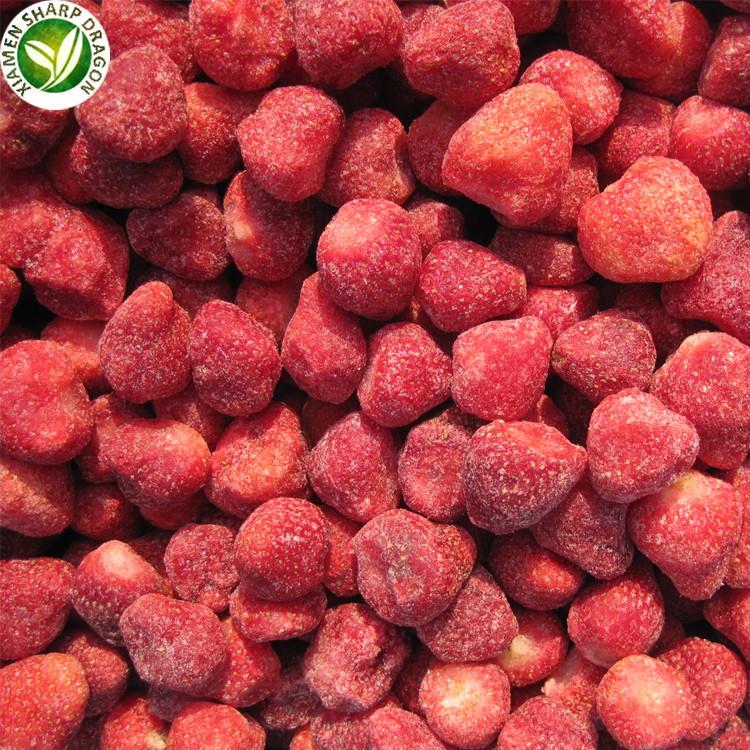
Plain frozen fruit does not automatically contain added sugar, and freezing itself does not add calories. It retains water, so equal-weight nutrition values remain closer to the fresh form than those of dried fruit. Texture is the larger practical change: ice crystals and thawing can soften tissue and release juice. That is useful in smoothies, sauces, fillings, and products where water is expected.
Freeze-dried fruit serves a different formulation purpose. It provides a low-moisture form that can stay crisp in a protected dry system or be milled into powder. Once rehydrated, it does not necessarily reproduce the texture of fresh fruit. For a buyer, the correct nutrition comparison must therefore sit beside the application comparison. XMSD's page on plain frozen strawberry and calories helps separate fruit form from added ingredients.
Practical example: choosing fruit for a breakfast cup
Practical example: consider a breakfast brand designing a 150 g yogurt cup. Frozen strawberry pieces added before distribution will thaw and release moisture, contributing soft fruit texture and juice. Freeze-dried granules added into the yogurt at the same stage will absorb water and lose crunch; their dry-weight nutrition also cannot be substituted gram for gram. If the brand wants crunch at opening, a separate dry topper compartment is the better system. If it wants soft fruit throughout the yogurt, a frozen or prepared fruit component may fit the sensory target better.

How to Read a Nutrition Specification
Begin with product identity. Confirm the strawberry form, ingredient list, country-specific naming, and whether figures describe the ingredient as sold or after preparation. Then confirm the basis: per 100 g, per serving, dry basis, or as-is basis. A dry-basis laboratory result and an as-is nutrition panel are not interchangeable.
Next, look for the source and date of the data. A generic database may be suitable for early formulation, while a finished label may require product-specific calculation or analysis under destination rules. Natural fruit varies. Variety, growing conditions, maturity, and processing can move results, so false precision can be as misleading as no number at all.
Review energy, carbohydrate, total sugars, added sugars where applicable, fiber, protein, fat, sodium, and any declared vitamins or minerals. Then reconcile those values with the ingredient list. A material amount of coating or carrier should not disappear from the composition story. If a vitamin claim is commercially important, identify the test method, units, sampling basis, and tolerance required by the target market.
Finally, connect nutrition to intended use. A 5 g decoration, a 20 g snack serving, and a 1 kg industrial formula addition solve different problems. Your formulation worksheet should convert the ingredient's per-100 g values to the actual use quantity. That calculation gives a more honest picture of contribution than repeating the most dramatic value on the supplier sheet.

Serving Size Changes the Consumer Meaning
Dried fruit is compact and easy to eat quickly. A small volume can represent considerably more starting fruit than the same volume of fresh berries. That can be useful for portable snacks and dry formulations, but it makes portion awareness important. The practical message is not that plain freeze-dried fruit is "bad"; it is that the water and volume cues have changed.
A person choosing between products should compare the declared serving, ingredient list, and total dietary context. Someone managing carbohydrate intake under clinical guidance should use the product label and their professional plan, not a generic article's serving estimate. A severe strawberry allergy also remains relevant after drying. Processing form does not make an allergen automatically safe.
For a composite snack, look beyond the strawberry. Chocolate, sweetened coating, granola, nuts, and other components may contribute more energy, sugar, fat, or allergens than the fruit itself. Separate the nutrition of the whole finished product from the composition of one ingredient.
Worked example: calculating contribution to a cereal serving
Worked example: suppose a cereal formula includes 6 g of plain freeze-dried strawberry in a 40 g serving. To calculate the fruit ingredient's contribution, multiply each verified per-100 g value by 0.06. If the approved specification stated 70 g of total carbohydrate per 100 g, the ingredient would contribute 70 x 0.06 = 4.2 g of carbohydrate to that cereal serving. The 70 g figure here is illustrative and must be replaced by the actual approved product value. The method, not the example number, is the reusable decision tool.

Packaging Protects Both Quality and Data Relevance
Freeze-dried food readily absorbs moisture. University of Minnesota Extension recommends prompt packing in moisture-proof, hermetically sealed containers and explains that room humidity can affect the product. Moisture uptake changes texture and can also change the as-is weight basis used for composition. A pack that no longer protects the dry state undermines both sensory performance and the assumptions behind the specification.
Oxygen and light can also matter for color and sensitive compounds during storage. The appropriate barrier depends on the product, desired life, distribution environment, pack size, and opening pattern. XMSD's packaging overview can support the initial discussion, while the selected material should be qualified with the actual freeze-dried ingredient.
For us, open-pack behavior is part of product design. A foodservice kitchen that uses 100 g per day should not automatically receive a large inner bag intended to remain open for weeks. Smaller inner packs may protect crispness and reduce discard, though they add packaging and handling. The useful comparison is total usable product and consistency, not bag cost alone.
Nutrition Does Not Replace Food-Safety Control
Safety note: freeze-drying lowers water activity but is not a reliable pathogen-kill step. A nutritious composition and a dry texture do not establish microbiological safety.
A ready-to-eat low-moisture ingredient needs suitable raw-material, sanitation, environmental, process, packaging, and verification controls. FDA draft guidance for low-moisture ready-to-eat foods discusses sanitation programs, environmental monitoring where appropriate, corrective action, and the limitations of relying only on finished-product testing. The applicable legal requirements depend on the product and destination.
During supplier approval, align the nutrition specification with the ingredient statement, allergen information, microbiological criteria, process description, lot traceability, packaging data, and agreed certificate of analysis. XMSD's certification page can inform the document discussion, but a general certificate cannot replace lot and destination-specific review.
A Practical Buyer Checklist
Ask for the exact product name, physical form, and full ingredient statement first. Confirm whether the product is 100% strawberry and whether any carrier, sugar, coating, or processing aid must be declared. Record the nutrition basis and serving basis. If values come from calculation, identify the data source; if they come from testing, identify the lot, method, date, units, and sampling plan.
Next, match the values to the real application. Convert per-100 g data to the amount used in one finished serving or batch. Review whether moisture pickup during handling could affect the product. If the ingredient supports a nutrition claim, have the responsible labeling specialist check current destination rules and tolerances rather than assuming one market's label is transferable.
Then run an application trial and a packing trial. Nutrition may drive the label, but particle form, seeds, acidity, flavor, color, water absorption, and texture determine whether consumers will accept the product. XMSD's application and sourcing solutions offer a framework for connecting ingredient form with finished-product needs.
Finally, keep the approved specification and reference sample under document control. When a new lot arrives, compare it on the same as-is or dry basis and use the same test method. This prevents apparent changes caused only by unit conversion or moisture basis. Readers who need the broader food classification can also review how strawberries are classified.
The Reliable Conclusion
A useful approval record should show how every important number will be used. Record whether the nutrition panel is calculated or tested, which product code it covers, whether the results are as sold or on a dry basis, and which serving size appears on the finished label. Keep the supporting ingredient statement, specification revision, and formula version together. If the strawberry inclusion level changes, recalculate the finished product instead of carrying forward the old contribution. If the supplier changes a carrier, coating, or fruit percentage, reopen the ingredient and allergen review. This documentation may feel less exciting than a high nutrient number, but it is what keeps purchasing, product development, quality, and labeling teams aligned.
The same discipline helps during comparison shopping. Normalize quotations to the same fruit form and composition, then compare cost per usable kilogram and contribution per finished serving. A lower-priced powder containing an undeclared or unsuitable carrier is not equivalent to 100% fruit powder. A premium whole piece is also wasted when the process immediately mills it. Nutrition, functionality, and commercial comparison should use one clearly defined product identity.
Freeze-dried strawberries can be a useful fruit ingredient, but their nutrition must be read on the correct basis. Water removal concentrates fruit solids by weight; process and storage can affect sensitive compounds; added ingredients can change the whole profile; and serving size determines practical intake. Use the actual ingredient list and approved data, convert the figures to the real serving or formula quantity, and keep nutrition claims separate from unsupported health promises.
XMSD sourcing note: provide the intended product form, formula use level, destination, required nutrition fields, ingredient declaration, and packing format so the specification review starts from the correct basis.
References
- University of Minnesota Extension: Preserving food at home - Freeze-drying
- Food Chemistry: Phytochemical and physical properties of berries as affected by different drying methods
- Processes: Influence of Pretreatments and Freeze-Drying Conditions of Strawberries
- FDA: Draft Guidance for Low-Moisture Ready-to-Eat Human Foods
- XMSD operational perspective on product form, specification basis, application, and packing.