


Frozen Porcini Mushrooms Nutrition Guide
May 08, 2023

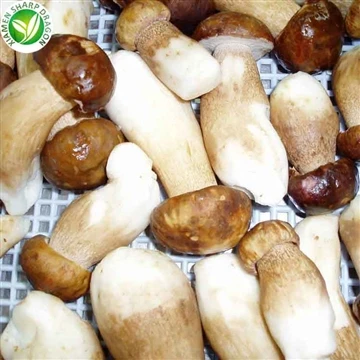
Yes. Plain frozen porcini mushrooms can be a nutritious ingredient: they are water-rich, relatively low in fat and energy, and provide protein, carbohydrates, B vitamins, minerals, and other naturally occurring compounds. The important qualification is that "frozen porcini nutrition" is not one fixed number. Species identity, growing location, maturity, cap-to-stem ratio, cleaning, blanching, freezing, storage time, thawing, and cooking can all change the result. A published analysis of fresh Boletus edulis reported 45 kcal, 2.27 g protein, 0.87 g fat, and 7.37 g total carbohydrate per 100 g fresh weight. Those figures describe the tested mushrooms, not every commercial frozen lot.
The most defensible conclusion is therefore practical rather than promotional: plain frozen porcini can contribute useful nutrients and strong savory flavor without adding much fat on its own, but a nutrition claim should be tied to the actual product form and measurement basis. Freezing makes a seasonal wild mushroom easier to store and portion; it does not turn the ingredient into a treatment for high blood pressure, kidney disease, cancer, heart disease, or arthritis.
The short answer: Judge frozen porcini as a plain food ingredient, not a supplement. Check whether the data refer to fresh, frozen, drained, cooked, or dry weight, then account for added oil, cream, salt, and other recipe ingredients.
What the Nutrition Evidence Actually Shows
The clearest way to understand porcini nutrition is to begin with a defined sample. In the fresh-weight analysis above, almost 89% of the mushroom was water. That explains why the energy value was modest even though the dry matter contained meaningful protein, carbohydrates, and micronutrients. It also explains why figures for dried porcini look dramatically higher per 100 g: drying removes most of the water and concentrates the solids. Comparing 100 g of dried porcini with 100 g of fresh or frozen porcini is therefore not a like-for-like comparison.
The same study found thiamin, riboflavin, and niacin in fresh Boletus edulis, but reported those vitamin values on a dry-weight basis. This detail matters. A number copied from a dry-matter table can overstate what you receive from a water-rich serving by roughly an order of magnitude if the basis disappears during rewriting. We recommend reading the column heading before reading the number. Look for "per 100 g as sold," "per 100 g drained," "per serving," "fresh weight," or "dry weight." If the basis is absent, the figure is not ready for a label, specification, or customer claim.
Worked example: The tested fresh porcini contained 88.84 g water per 100 g, leaving 11.16 g dry matter. Its riboflavin result was 2.57 mg per 100 g dry weight. Converting that specific result to a fresh-weight equivalent gives 2.57 × 0.1116 = 0.287 mg riboflavin per 100 g fresh mushroom. This calculation helps interpret the paper; it is not a guaranteed value for a frozen shipment. To make a commercial claim, use data for the actual product and the same basis used on the final label.
Variation is normal in wild mushrooms. Soil and forest conditions, geography, weather, maturity, and the proportion of cap and stem can change mineral and other component levels. Processing adds another layer. A frozen lot may be whole, sliced, diced, blanched, unblanched, glazed, or packed with another ingredient. The scientifically careful wording is not "every frozen porcini is rich in every listed nutrient." It is "plain frozen porcini can contribute these nutrients, and the exact level belongs to the defined product and batch evidence."

What B Vitamins and Minerals Can-and Cannot-Mean
B vitamins support normal metabolism; they do not create unlimited energy
Riboflavin is part of coenzymes involved in energy production, cellular function, growth, and the metabolism of fats and other compounds. Niacin also participates in reactions that help the body obtain usable energy from food. This supports a measured statement: porcini can contribute B vitamins to a varied diet. It does not support saying that one mushroom dish will give sustained energy all day, correct a deficiency, or improve performance in every active person. Total diet, portion, individual status, and the amount that remains after processing all matter.
B vitamins are water-soluble and sensitive to processing conditions. In the porcini cooking study, preparation reduced several B-vitamin values compared with fresh mushrooms, and blanching before braising caused additional losses in some comparisons. That does not make cooked porcini nutritionally empty. It means the raw table and the cooked plate are different products. If your product will be blanched before freezing, boiled and drained, or held in a prepared meal, data from fresh raw porcini should not be presented as though nothing changed.
Potassium and phosphorus are essential, but context changes the recommendation
Potassium participates in normal nerve transmission, muscle contraction, and fluid balance. Phosphorus is a component of bones, teeth, DNA, RNA, cell membranes, and ATP, a key cellular energy molecule. These physiological roles explain why both minerals matter in the diet. They do not prove that frozen porcini lowers blood pressure, strengthens every child's bones, or treats a medical condition. A food contributes to an overall intake; the body's response is not determined by one ingredient in isolation.
Kidney disease is the clearest reason not to turn a general mineral statement into a universal recommendation. The U.S. National Institute of Diabetes and Digestive and Kidney Diseases explains that chronic kidney disease can make potassium and phosphorus harder to manage, and an individual eating plan may need limits based on blood results and treatment. Therefore, "contains potassium" must not become "beneficial for kidney disease." If you have chronic kidney disease, use the product's actual nutrition information and follow the target set by your renal dietitian or clinician.
Selenium participates in antioxidant systems; that is not a cancer claim
Selenium is incorporated into selenoproteins, including enzymes involved in antioxidant defense. Some analyses of dried Boletus edulis have found notable selenium, but wild mushrooms can vary widely with origin and environment, and dried-food concentrations cannot be copied directly to frozen fresh-weight portions. More importantly, antioxidant activity in a laboratory assay is not the same as prevention or treatment in people.
The evidence boundary is firm. NIH reviews report that selenium supplementation has not reduced overall cardiovascular events in major trials and does not support a general cancer-prevention conclusion. A serving of porcini is food, not a selenium drug or supplement. We can say that porcini contains naturally occurring compounds studied for antioxidant activity. We should not say that eating frozen porcini prevents cancer, heart disease, arthritis, or another disease.

Does Freezing Preserve Porcini Nutrition?
Freezing is useful because it slows deterioration and makes seasonal porcini available in a stable, portionable form. It is better described as preservation than as a promise that every nutrient remains unchanged. The result begins with the quality of the mushrooms at freezing and continues through any washing, trimming, blanching, freezing rate, package protection, storage temperature, storage duration, thawing, and final cooking. Water-soluble compounds may be lost through blanching or discarded liquid; oxidation and long storage can affect other components; added ingredients can change the finished dish much more than freezing itself.
International quick-frozen-food guidance currently uses −18°C as the reference temperature for storage and distribution. That is a cold-chain control point, not a nutritional guarantee. A package held consistently frozen is more likely to protect expected quality than one exposed to repeated warming, partial thawing, and refreezing. Large ice masses, severe clumping, damaged inner bags, collapsed cartons, or heavy free liquid after thawing are practical signals to investigate. They do not by themselves calculate vitamin loss, but they can show that the product did not arrive in the condition expected for consistent use.
| Product form | How to read the nutrition | Main decision |
|---|---|---|
| Plain frozen porcini | Water-rich; use as-sold or clearly defined drained data for the actual frozen item. | Check species, cut, blanching status, ingredients, and measurement basis. |
| Dried porcini | Solids and minerals are concentrated per 100 g; normal use weight is much smaller. | Do not transfer dry-weight figures to an equal weight of frozen mushrooms. |
| Prepared sauce, soup, or risotto | Oil, cream, cheese, salt, starch, and serving size may dominate the final values. | Calculate the complete recipe instead of assigning the result to porcini alone. |
For a commercial specification, ask one more question: is the product plain? A bag containing only frozen porcini is nutritionally different from a retail mix with butter sauce, salt, flavoring, starch, or cream. "Frozen" describes the preservation state; it does not describe the ingredient list. We start with the ingredient declaration, then interpret the nutrition panel. This order prevents a low-fat plain mushroom claim from being attached to a high-fat prepared dish.

Preparation Can Change the Final Dish More Than Freezing
Porcini brings aroma, umami, and a substantial bite to soups, risotto, pasta sauces, stews, fillings, and prepared meals. That culinary strength can help a recipe taste satisfying without requiring a large amount of meat, but porcini is not nutritionally equivalent to meat. Its protein amount and amino-acid profile, iron form, vitamin B12 content, and portion use are different. Treat it as a flavorful mushroom ingredient, then build the rest of the meal around the nutritional goal.
Practical example: In the published porcini study, the fresh sample provided 45 kcal per 100 g. After the mushrooms were braised with 10% canola oil, the prepared product provided 112 kcal per 100 g-about 2.5 times the fresh-sample value. The mushrooms did not suddenly become an unhealthy food; the recipe added oil and cooking reduced water. If you are developing a "light porcini soup," control the oil, cream, cheese, and serving size before debating a small variation in the mushroom's natural energy value.
Cooking method also affects texture and what remains in the dish. If porcini releases liquid into a soup or sauce and that liquid stays in the recipe, dissolved flavor and nutrients remain part of the serving. If the mushrooms are blanched or thawed and the liquid is discarded, the final composition can differ. There is no single instruction that fits whole porcini, thin slices, dice, blanched product, and every appliance. Follow the product directions and validate the method with the actual cut.
We prefer cooking frozen porcini as a savory ingredient rather than eating it raw. Porcini is a traditionally wild-type mushroom, and correct species identity, sound condition, and proper preparation matter. Freezing does not prove that a mushroom was correctly identified, and it does not sterilize food. For a retail or foodservice product, instructions should be clear enough that the intended cooking method, time, and serving use can be followed without guesswork. For an industrial product, validate the heat process within the final recipe instead of relying on a generic household time.

"Suitable for All Ages" Is Too Broad
For many healthy people, a normal portion of properly identified and cooked porcini can fit into a varied diet. That is more accurate than saying the product is ideal for every child, teenager, adult, and senior. Age alone does not decide suitability. Texture, portion, chewing ability, digestive tolerance, allergies, medical conditions, medication, and the rest of the meal can change the answer. A strongly seasoned cream sauce also has a different nutrition profile from plain cooked mushrooms.
If you are serving porcini to someone who has not eaten the mushroom before, begin with a modest cooked portion as part of a meal rather than a large serving. Stop if an allergic reaction or significant digestive symptom occurs and seek appropriate medical advice. A diagnosed mushroom allergy is not removed by freezing. Persistent symptoms, a serious medical condition, pregnancy-related dietary concerns, or a prescribed kidney diet require individual guidance rather than a website's general nutrition statement.
Safety note: Do not use appearance alone to identify a foraged mushroom. Commercial wild-mushroom supply needs controlled species identification, sorting, traceability, and food-safety review. Cook the product according to its validated instructions; freezing is not a substitute for identification or preparation.
Kidney disease deserves a second mention because the original "high in potassium is beneficial" logic can point in the wrong direction. With healthy kidney function, your body normally regulates dietary potassium effectively; with advanced kidney disease, you may need a specific potassium or phosphorus target. Read the actual label and portion, then fit it into the prescribed plan. Do not add or avoid porcini solely because a generic article calls it mineral-rich.

How to Evaluate Frozen Porcini Nutrition as a Buyer
A nutrition claim becomes commercially useful only when it survives the path from raw material to label and finished application. If you are importing, distributing, manufacturing, or packing frozen porcini, we recommend evaluating the product in a fixed order. Each step resolves an ambiguity that would otherwise distort the next one.
- Lock the identity and form. Record the scientific or agreed commercial identity, whole/sliced/diced format, cap-and-stem expectations, blanching status, and ingredient list. The current XMSD IQF frozen porcini page shows the product forms we discuss for commercial applications.
- Lock the measurement basis. Decide whether nutrition will be stated per 100 g as sold, per serving, per drained portion, or after preparation. Keep laboratory samples, formulation calculations, and label rounding on that same basis.
- Test the actual application. Measure thaw or cook yield, liquid release, piece integrity, flavor strength, and the amount used in the finished recipe. A value per kilogram purchased does not automatically equal a value per kilogram served.
- Review evidence and destination rules. Use a current test report or defensible recipe calculation, check ingredient and allergen declarations, and apply the destination market's nutrition-label method. Review relevant certificate and quality-document scope separately from nutrition evidence; a food-safety certificate is not a nutrient analysis.
- Protect the basis through delivery. Agree on inner pack, carton, frozen storage, lot identification, and arrival checks. A suitable frozen packaging format helps protect condition and portion control, but the acceptance plan still needs observable limits for damage, clumping, and temperature history.
Buyer perspective 1: product identity protects both safety and label accuracy
Porcini is a commercial name used around a valued group of boletes, while nutrition and regulatory files may need a more exact identity. We would not accept a nutrition declaration built from "mushrooms, average" when the product is sold as a defined wild mushroom. The evidence should match the agreed identity and origin program. Risk signals include a specification with no scientific name, no explanation of mixed species, inconsistent cap and stem appearance, or traceability that stops at an unverified trader description.
The deciding evidence is a connected file: identity control, raw-material approval, lot traceability, visual and sensory specification, and the nutrition basis. These items answer different questions and should not be collapsed into one certificate. For a visible whole-mushroom retail pack, identity and appearance are central to acceptance. For a finely diced sauce ingredient, the same identity control remains essential even when the pieces are no longer recognizable in the final meal.
Buyer perspective 2: yield determines the real nutrition contribution
Water release is not only a texture issue. It changes how much mushroom solid enters the recipe and therefore how you interpret cost and nutrition. Run a repeatable thaw or cook test with a defined sample weight, method, time, temperature, drainage screen, and drainage time. Record both retained solids and liquid. If the cooking liquid remains in a soup, a drained-yield test alone may understate what stays in the food; if the liquid is discarded before filling, using gross frozen weight may overstate the solid mushroom inclusion.
Worked example: Imagine a soup formula needs 8.0 kg of drained porcini pieces in each 100 kg batch. A controlled trial of the proposed frozen dice yields 88% drained pieces under the factory's method. The required frozen input is 8.0 ÷ 0.88 = 9.09 kg per batch. If another lot yields 82%, the input would rise to 9.76 kg. Your acceptance rule should therefore connect cut, frozen condition, test method, and minimum usable yield; otherwise both ingredient cost and the calculated mushroom contribution will drift.
Buyer perspective 3: the application decides the useful cut
Whole porcini gives strong visual recognition but creates more variation in unit size and cooking time. Slices display cap and stem, suit visible pasta or risotto applications, and make thickness an important control. Dice distributes flavor more evenly in sauces, fillings, and soups, but small pieces make breakage and fines harder to distinguish from intentional cut. Choose the form that makes the finished-product promise easiest to deliver, then set the acceptance criteria around that use.
We evaluate frozen separation, color, typical aroma, off-odor, foreign matter, visible defects, piece integrity, size distribution, and package condition together. Nutrition data cannot rescue a lot with weak identity or poor sensory condition. Conversely, a visually attractive lot cannot support a precise nutrition claim without an appropriate basis. When you review processing and inspection equipment, connect each control to the agreed product risk rather than treating the machine list as proof by itself. The practical standard is alignment: the specification, sample, analytical or calculated data, pack, and final recipe should all describe the same product.

Final Thoughts from XMSD
Plain frozen porcini deserves a place in a balanced savory-food portfolio because it combines distinctive flavor, flexible formats, and a useful nutrient profile without much natural fat. The responsible claim is specific: composition varies, dry and fresh bases are not interchangeable, cooking can change vitamin and energy values, and added ingredients often drive the final dish. Use verified product data for labels and medical caution where it belongs. That approach gives you a stronger nutrition story than an exaggerated list of diseases ever could.
XMSD sourcing note: Tell us your required porcini identity, whole/sliced/diced format, blanching status, application, pack, destination, and testing needs. We can then discuss the product specification and sample plan on the same basis you will use for formulation and acceptance.
References
- Composition and antioxidant properties of wild mushrooms Boletus edulis and Xerocomus badius prepared for consumption
- NIH Office of Dietary Supplements: Riboflavin Fact Sheet for Health Professionals
- NIH Office of Dietary Supplements: Selenium Fact Sheet for Health Professionals
- NIH Office of Dietary Supplements: Phosphorus Fact Sheet for Health Professionals
- NIDDK: Healthy Eating for Adults with Chronic Kidney Disease
- U.S. FDA: Safety advice for morel and other wild-type mushrooms
- FAO/WHO: Impact of freezing temperatures on the microbiological safety of foods
- XMSD operational experience in frozen-mushroom sourcing, IQF product-form evaluation, packaging, cold-chain handling, and B2B application review.