


Frozen Edamame Kernels Specification: Buyer Acceptance Guide
Aug 21, 2026

A usable frozen edamame kernel specification does more than name the product and pack size. It defines what you are buying, how a lot will be sampled, which defects will be measured, how texture and color will be judged after cooking, which food-safety evidence must accompany the lot, and what happens when a result is outside the agreed limit. Without those details, "IQF mukimame, Grade A" can describe several noticeably different ingredients.
For most B2B programs, the correct identity is shelled immature green soybeans, commonly called edamame kernels or mukimame, supplied frozen and usually blanched. The purchase order should still state whether the beans are shelled from fresh pods or processed from a frozen intermediate, whether salt or another ingredient is present, whether the pieces are intended to remain loose under IQF conditions, and whether the product is ready to cook or has another validated status. "Blanched" by itself does not settle the preparation instruction.
Direct answer: Write the commercial specification around five control blocks: identity and ingredients; kernel size and physical defects; blanching and sensory performance; microbiological, chemical and allergen requirements; and pack, storage, sampling and disposition rules. Numeric limits must come from the destination law, customer standard, approved sample and validated process-not from a generic web table.
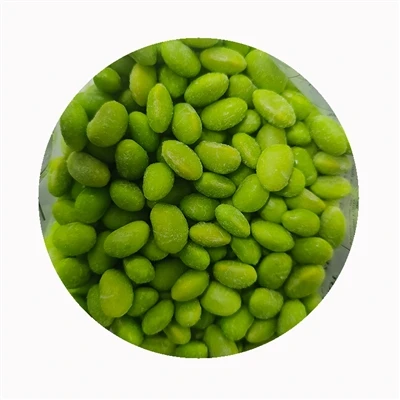
Start with product identity, not the grade name
Edamame consists of soybean seeds harvested while they are still green and tender, before the dry-bean stage. Shelled kernels remove the pod weight and handling step, which makes them practical for ready meals, vegetable blends, bowls, salads, rice dishes and foodservice preparation. Mukimame is a common commercial name for the shelled format. Keep it separate from whole edamame pods because the usable yield, defect vocabulary, blanching exposure, packaging behavior and intended serving method differ.
The first line of a purchase specification can read: "IQF frozen shelled edamame kernels (mukimame), immature green soybeans, blanched, unsalted, no added ingredients, for cooking before consumption." Change each element only when the nominated product supports it. If salt is applied, state the ingredient and target. If the product is organic, non-GMO, identity-preserved or intended for a special claim, list the required certificate, chain-of-custody record, test or declaration instead of treating the adjective as self-proving.
The raw-material line also matters. Variety, crop period and maturity influence seed size, color, sweetness, bite and processing yield. A variety code that is meaningful to one supplier may not be understood by another buyer, so connect the code to measurable results: an agreed kernel-size distribution, color reference, cooked texture, flavor profile and defect tolerance. "Spring crop," "autumn crop," or "75#" can remain useful commercial identifiers, but they should not replace the finished-product criteria that decide acceptance.

Turn appearance words into measurable requirements
Terms such as bright green, tender, clean and uniform are useful descriptions, but they are not yet inspection rules. Define the frozen state used for evaluation, sample mass, lighting, thaw or cook method, reference sample or color range, defect categories, weighing method and rounding rule. The same lot can look lighter under a cool lamp, show more frost after an exposed transfer, or appear softer after a longer cook. A repeatable method prevents the inspection room from becoming a negotiation room.
Size can be expressed by screen range, kernel count per stated mass, dimensional range, or a buyer-approved distribution. The best method depends on the downstream equipment. A retail vegetable blend may need visual uniformity. A depositor or multihead weigher may care more about free flow and predictable piece mass. A puree, filling or soup line may tolerate wider size variation but reject hard mature beans. State whether measurements are taken frozen, tempered or cooked because moisture and softening change the result.
Build a defect glossary before setting percentages. Typical categories include broken kernels, split kernels, loose skins, yellow or pale kernels, overmature or hard kernels, shriveled or undeveloped kernels, insect damage, spots or discoloration, foreign vegetable material, non-vegetable foreign material, clumps and excess surface ice. Decide whether a kernel can enter more than one category or only its most serious category. Otherwise the supplier and receiver may calculate different totals from the same tray.
| Specification block | What to write | How to verify |
|---|---|---|
| Identity | Shelled immature soybean kernels; process and ingredients | Approved document, label and lot code match |
| Size and color | Range, distribution and reference condition | Defined mass, gauge or count, light and reference |
| Defects | Named categories and individual or combined limits | Sort, classify and weigh a stated sample |
| Performance | Cook method, texture, flavor and drained yield | Side-by-side test with fixed time and load |
| Safety and compliance | Markets, analytes, methods, limits and allergen status | Lot-linked reports and current legal review |
Practical example: A bowl factory reports that "small beans" disappear visually after mixing, while "large beans" jam a dosing cup. Instead of asking for medium size, the buyer tests three lots through the real dosing equipment, records kernel count and dimensions, and approves a range with a stated percentage allowed outside it. The commercial term then becomes a measurable line condition rather than a subjective description.

Blanching status must connect to the cook test
Blanching is used in frozen-vegetable processing to control enzymes and influence color, flavor, texture and microbial load before freezing. It is not one fixed recipe for every edamame kernel. Published Virginia Tech guidance summarizes research examples including about 50 seconds at 95°C for shelled beans and different time-temperature combinations for in-pod beans. Those figures demonstrate why product form matters; they are not purchase limits that can be copied into every factory instruction.
Require validation for the actual blancher, load, water or steam system, kernel size, starting condition, cooling step and target enzyme or sensory result. Underblanching can leave enzyme activity and a raw or astringent note. Excess treatment can dull the color, soften the bite and increase soluble-solid loss. You do not need the supplier's confidential setting to require a declared process status, appropriate control records and a finished-product result that can be reproduced.
The cook test should mirror the intended use. Define frozen input mass, water or steam ratio, equipment, start point for timing, time, endpoint, draining period and evaluation temperature. Record color, aroma, bean flavor, astringency, skin separation, mealiness, hardness, mushiness and drained yield. If the kernels enter a ready meal and will receive another heat cycle, test that cycle too. A bean that tastes correct after a short laboratory boil may become too soft after factory mixing, filling, freezing and reheating.
Preparation status belongs beside blanching status. Frozen edamame is soybean and many commercial packs instruct the user to cook it. Do not infer ready-to-eat status from green color, blanching, a microbiological line on a certificate, or the fact that a sample tastes tender. The approved label, hazard analysis, validated process and destination requirements must support the intended use.

Write a sampling plan that can decide a lot
A defect limit is incomplete without a sampling plan. Define the lot as a production code, shift, batch or other traceable quantity. State how many cartons will be sampled, how carton positions are selected, how many inner packs or kilograms form a sample unit, which tests are destructive, and which results are assessed per unit or as an average. The plan should also identify who samples, where the examination occurs, which equipment is used and how results are recorded.
Codex CXS 320 gives a helpful general principle for quick-frozen vegetables: products should have reasonably uniform characteristic color, be sound and clean, be practically free from grit, foreign material, pests and pest damage, and have normal flavor and odor. Its detailed annexes and tolerances are product-specific. Because edamame kernels do not gain a universal commercial defect table merely from that general wording, buyer and supplier still need an agreed mukimame definition, sampling unit and limit set that comply with the applicable market.
Separate critical, major and minor findings. Hard or sharp foreign material, wrong identity, undeclared allergen information, credible loss of traceability or a failed pathogen requirement can justify a hold or rejection under the agreed plan. Broken pieces, skins, size deviation and color variation are usually graded by tolerance and application. Do not hide a critical failure inside an average defect score. Also define retest rights and the authorized disposition person before a dispute occurs.
Worked example: A buyer sets an illustrative maximum of 3.0% broken kernels by weight and takes five 500 g sample units from different cartons. Broken weights are 10 g, 14 g, 18 g, 8 g and 11 g. The combined result is 61 g ÷ 2,500 g × 100 = 2.44%. The combined average passes, but the third unit is 18 g ÷ 500 g × 100 = 3.60%. The decision changes depending on whether 3.0% is an average limit, an individual-unit limit, or both. The purchase specification must say which rule applies.

Food-safety limits need names, methods and market scope
"Pathogens not detected" is not a complete microbiological specification. Name the organism, sample quantity, number of units or composite arrangement, analytical method, detection requirement, laboratory qualification, sampling party and release rule. If indicator organisms or counts are required, state units and limits. The appropriate panel depends on intended use, process status, destination regulation, customer risk assessment and facility food-safety plan. A ready-to-cook industrial ingredient and a no-heat retail application should not inherit the same assumptions without review.
A certificate of analysis should be linked to the exact product, facility, production lot and sample date. Check methods, results, limits, units and authorization. A negative sample result is evidence about the tested sample under the stated method; it does not prove that every kernel in a container is free of every hazard. Combine testing with supplier approval, process controls, sanitation, environmental or other verification where relevant, traceability and a clear intended-use statement.
Chemical limits also require a live market check. Pesticide maximum residue levels and contaminant maximum levels can change, and the applicable crop or food category may differ by jurisdiction. Name the destination market, regulatory source, analyte scope and version or review date. Avoid carrying historic limits for DDT, BHC, lead, cadmium or another analyte into a new contract without verifying that the value, commodity classification, units and test method remain applicable.
Soy allergen declaration is not optional background. The U.S. FDA identifies soybeans as a major food allergen, and EU Regulation 1169/2011 lists soybeans and products thereof in Annex II, subject to specified exceptions. Confirm the legal name, ingredient list, contains statement or emphasized declaration, translation and cross-contact wording required in the destination. Advisory language must not substitute for allergen controls or correct ingredient declaration.
| Evidence | Acceptance question | Common gap |
|---|---|---|
| Specification | Does it define the product, method and disposition? | Grade name without sampling rules |
| COA or laboratory report | Does the lot, method, unit and limit match? | Template or unrelated production code |
| Process and certificate | Do site, scope and product form align? | Certificate for another facility or scope |
| Label and artwork | Are soy, cooking status and storage clear? | Marketing copy conflicts with use status |
| Arrival record | Did the received lot retain identity and condition? | One convenient carton represents the load |

Packaging, cold chain and usable yield affect real cost
Loose IQF condition is commercially valuable because kernels can be dosed from frozen. Define the permitted level of clumping, surface ice and free ice, and describe how the test is performed. A small cluster that separates with gentle handling is different from a solid block that may reflect temperature cycling, excess surface water or compression. Package seal, headspace, liner strength, case compression and time outside frozen storage all influence the condition seen at receipt.
Pack size should match portion rate and exposure time. A 10 kg liner may suit a continuous factory line but create repeated opening and tempering in a low-volume kitchen. Smaller inner units can reduce unused exposure but add packaging and handling. State net weight, inner pack count, food-contact material, seal, carton construction, code position, pallet pattern and storage instruction. XMSD's frozen-food packaging overview can frame the discussion, while the signed pack specification and approved artwork control the order.
Use frozen weight and cooked drained yield to compare offers. Suppose two products have the same case price, yet one loses more skins and solids during the approved cook test or contains more broken pieces that your line discards. Calculate usable kilograms after sorting and cooking, then divide delivered cost by usable kilograms. Keep the calculation tied to your process; it is not a universal yield promise.
At receipt, confirm product and lot identity, seal and carton integrity, label, frozen state, temperature evidence under the agreed method, clumping, ice, color and required documents. The XMSD quick-frozen food receiving guide explains accept, hold and reject logic. If controlled tempering is required for inspection or preparation, use a validated instruction rather than prolonged room-temperature holding; the frozen food thawing guide provides general method boundaries.

Approve a sample, then lock the document set
An approved sample is useful only when it represents a named product code, facility, crop or production condition and specification revision. Record sample lot, receipt condition, preparation method, images, defect weights, size results, cooked sensory notes and yield. Keep a retained portion under controlled storage where practical. "Same as sample" is weak when the sample has no identity or the comparison method changes.
Before production, align the quotation, signed specification, process status, certificate scope, laboratory plan, label artwork, pack drawing, lot code format, shipment documents and receiving checklist. If a facility, raw-material route, blanching status, ingredient, pack material or intended use changes, decide whether the change requires notification, new documents, another sample or formal approval. Version control is part of quality control because an accurate but superseded file can release the wrong product.
For product-format discussions, review XMSD's frozen shelled edamame kernels and edamame in pods. Use those ranges as starting points; the nominated facility, signed specification, sample, label and lot evidence must govern the order.
Final buyer checklist
The strongest frozen edamame kernel specification connects words to methods. Identify shelled immature soybeans and every ingredient. Define frozen-state size, color and defects with a sampling rule. Link blanching status to a repeatable cook test and intended-use instruction. Name microbiological and chemical requirements with methods, units and market scope. Declare soy correctly. Lock pack, code, storage, shipment and receiving requirements. Finally, write the accept, hold, retest and reject rules that turn observations into a decision.
Do not solve uncertainty by copying a long list of impressive limits. A shorter, product-specific document that works across supplier, laboratory, warehouse and production functions is more protective. When the application changes-from bowl garnish to multi-stage ready meal, for example-repeat the cook and line tests. Your approved sample and usable-yield calculation should reflect the product you will actually manufacture.
Frequently asked questions
Are edamame kernels and mukimame the same product?
Mukimame commonly means shelled edamame kernels. Commercial names alone do not confirm size, blanching, salt, cook status or defect tolerance, so the specification should state shelled immature green soybeans and list the full process and ingredient status.
Does blanched frozen edamame need cooking?
Follow the approved label and intended-use statement. Blanching is a processing step, not an automatic ready-to-eat claim. If the pack says cook before consumption, the cooking direction remains necessary. Approve the status only when the hazard analysis, process evidence and destination rules support it.
What defects should a mukimame specification include?
Common categories include broken or split kernels, loose skins, yellow or pale beans, hard or overmature beans, shriveled pieces, insect damage, spots, foreign vegetable material, non-vegetable foreign material, clumps and free ice. Define each category, sample mass, calculation and acceptance rule.
Is one 500 g sample enough to approve a shipment?
Not by default. Sample number and distribution should reflect lot size, risk, process variation and the agreed inspection plan. Take units from meaningful carton and pallet positions, keep traceability, separate destructive tests, and define whether acceptance uses individual results, averages or both.
To review a frozen edamame kernel requirement, send XMSD the application, destination, kernel size, defect limits, cooking status, pack, annual volume, test list and sample plan through the inquiry form. We can organize the questions needed for a nominated product and facility.
References
- Virginia Cooperative Extension: Edamame Processing-What Do I Need to Know?
- Virginia Cooperative Extension: Edamame Handling and Processing from Harvest to Package
- Codex Alimentarius CXS 320-2015: Standard for Quick Frozen Vegetables
- U.S. FDA: What Is a Major Food Allergen?
- U.S. FDA: Food Allergies and Label Declaration
- EUR-Lex: Regulation (EU) No 1169/2011, Annex II