


Freeze-Dried vs Vacuum-Fried Fruit and Vegetable Crisps
Dec 09, 2021

Freeze-drying removes ice from frozen fruit or vegetables as vapor under reduced pressure. Vacuum frying heats the pieces in oil at reduced pressure so water can leave during frying. If you are choosing a crisp snack or ingredient, identify the process, then check the recipe and how the pieces behave when served.
Try a light freeze-dried crumble if you want small fruit pieces in a dry topping. Sample a vacuum-fried slice if the recipe needs a chip with a fried bite. Read the ingredients and compare the same serving weight. The thickness, coating, oil and seasoning can change what you get in the finished portion.
Ask how the product will reach the plate or pack. A piece that is crisp when the bag is opened may behave differently after sitting on yogurt or passing through a mixer. Use the same amount, handling and observation time for each sample so the trial answers the question you need to decide.
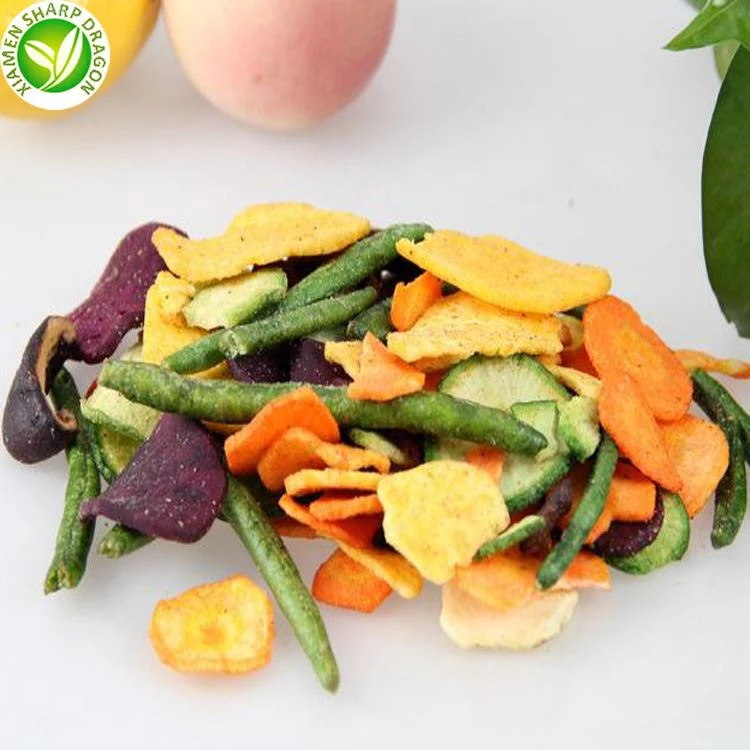
What happens to the water in each process
In freeze-drying, ice in the frozen food passes directly to vapor under controlled vacuum conditions. A later drying stage removes more moisture. The resulting structure can be open and light. The actual bite also depends on the fruit or vegetable, its cut and the way the finished piece has been stored.
Vacuum frying transfers heat through oil while the pressure is reduced. Water can boil at a lower temperature under lower pressure, so it can be removed at a lower frying temperature than under ordinary atmospheric conditions. Ask what oil the supplier uses and how it is declared on the finished product.
Pre-freezing may be used in some frying preparations. In that case the later step remains frying, and the preparation should be described separately. The relevant distinction is how water leaves the product during the process and whether oil is the heating medium.
For a sample request, we name the process and the fruit or vegetable, then specify the cut and recipe. If a sheet says vacuum dried, ask what equipment and method the term describes before putting the sample beside a freeze-dried or vacuum-fried one.
| Check | Freeze-dried | Vacuum-fried |
|---|---|---|
| How water leaves | Ice becomes vapor under vacuum after the food is frozen | Water leaves while the piece heats in oil under reduced pressure |
| What to look for in the sample | Fracture, fines and changes after opening or contact with a moist food | Bite, oil sensation and how the actual slice holds up in handling |
| What to read on the label | Fruit or vegetable, any coating or sweetener, and portion weight | Oil and seasoning, finished fat per stated portion, and portion weight |

Why the bite can be different
Freeze-dried fruit often has an open, light structure and breaks readily when bitten. University of Florida guidance on dried peach describes a porous, crisp freeze-dried product, contrasting it with the denser result of conventional dehydration. That helps explain a familiar texture difference, although the fruit, cut and condition still influence the individual sample.
A vacuum-fried chip combines dehydration with frying. Its bite can be firm, brittle or crisp in ways that vary with the raw material and processing conditions. A thin slice and a thicker piece of the same fruit can give different impressions. The process name is therefore useful for identifying the route, while the sample establishes whether the texture is suitable.
In one vacuum-fried mango study, the researchers varied ripeness, temperature and frying time and found changes in attributes such as hardness and fat content. Use those variables when you ask what changed between two samples. For an order, request the ingredient and nutrition information for the specific cut you intend to use.
Describe the bite in ordinary, repeatable terms. Does the piece fracture easily? Is it hard at the center? Does it leave an oily sensation? Are there large differences among pieces? Record those observations separately from overall liking. A sample can taste pleasant yet have a texture that is wrong for a delicate garnish or for the snack concept being developed.
Check breakage at the handling step that matters
A hand test tells you how a piece breaks under that force. Record whether it fractures into visible pieces or produces fines. Then repeat the handling step that matters for the recipe, such as pouring from an inner bag, scooping into a portion or mixing into a dry blend.
Use the manufacturer's process description and the product specification to establish identity. Then use a controlled handling comparison to answer the narrower question of durability. Apply the same handling to the samples and retain the resulting pieces for inspection. If one sample is squeezed firmly and another is gently poured, the result describes the handling difference as much as the product.
A 2017 study of vacuum-fried and normal-pressure vegetable chips found favorable sensory responses for its vacuum-fried samples, but rupture measurements did not show a consistent trend between the two groups. Instrumental breakage and eating preference are related questions, not interchangeable measurements. That is why a single hand test should not carry the entire acceptance decision.
We would also ask where durability matters.
A garnish assessed immediately after opening faces a different task from an inclusion that passes through mixing, portioning and transport. Define the point at which the sample is judged. Otherwise, a product approved as an intact slice may be rejected later as a crumble even though the additional handling was never part of the initial review.

Keep the process separate from the complete recipe
A plain freeze-dried fruit and a coated freeze-dried snack can share a process name and have different ingredient lists. Check whether oil, sugar or a coating was added before or after drying. Keep the process name with the complete ingredient list when comparing labels or samples.
For a vacuum-fried sample, identify the frying oil and any seasoning. If you need to compare fat, use the nutrition information for the finished products at the same weight. Keep an oily sensation in the tasting record as a separate observation.
Our label-reading guide for fruit and vegetable crisps explains how to compare serving weights and the complete ingredient information. Use it when the choice turns on nutrition or a proposed label statement. Here, the main task is to identify the process and the result it produces in the application.
For a plain fruit inclusion, a coating might change the intended flavor or handling. For a seasoned snack, that same addition could be part of the desired recipe. Write the essential requirement in the brief before reviewing samples. This allows you to distinguish an unacceptable formulation from a perfectly reasonable product intended for a different use.
Suppose one sample label lists 1.2 g of fat per 15 g and another lists 3 g per 30 g. On a 100 g basis those figures are 8 g and 10 g respectively. If the first sample will be served in a smaller amount, use the actual portion again when planning the dish. These hypothetical labels show why a comparison needs both a common weight and a serving weight.

Start a topping comparison with the served food
A topping needs to work on the food on which it is served. Dry pieces tasted alone provide a useful starting point, but they do not reproduce contact with yogurt, cream, a drink or another moist component. Freeze-dried food can take up moisture, so the texture at assembly may differ from the texture when the customer eats it.
Practical example: imagine a menu developer comparing a freeze-dried fruit crumble with a vacuum-fried fruit chip as toppings. The hypothetical brief calls for a recognizable fruit accent on a dessert, with a planned check immediately after assembly and another after 20 minutes. These are trial observation points, not a food-safety holding recommendation; the dessert's established handling controls remain in place.
Prepare the same dessert and use a clearly recorded amount of each candidate. Assess flavor, appearance and bite at both observation points. If crispness is required at service, the decision should use the service-time observation. If a softened fruit accent is acceptable, that can lead to a different choice from a requirement for an audible crunch.
At the end of this hypothetical trial, the team has a direct comparison at the moment that matters: service. It can select a candidate that meets the brief, change the assembly method, or continue sampling if neither performs adequately. Keep the observations with the chosen portion so the kitchen can repeat the result.
Write the dish temperature and planned service time beside the sample code. If a trial for one menu is repeated for another, check whether the assembly order, topping weight or holding time changed before comparing the results.
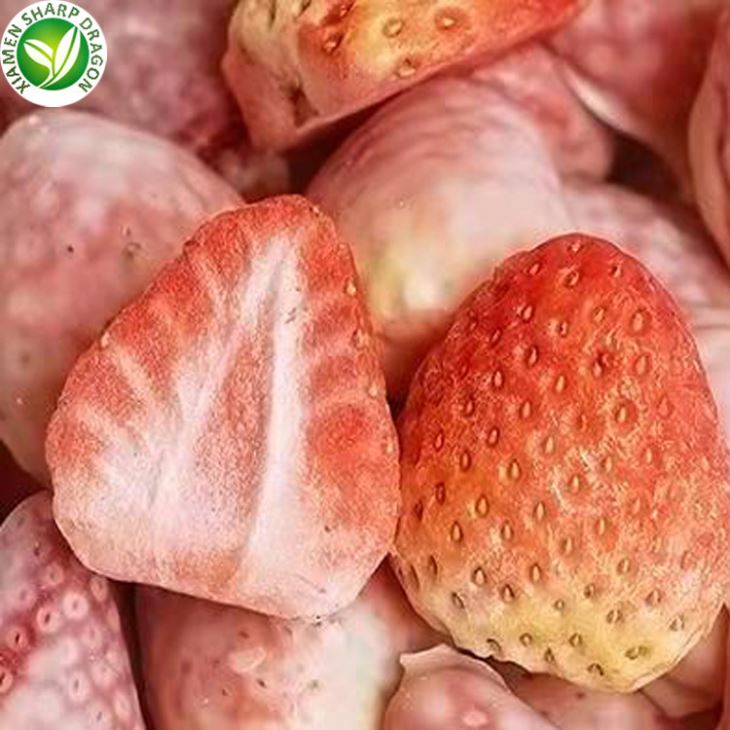
Whole pieces, slices and crumble have different jobs
A whole piece can make the fruit recognizable. A slice can provide coverage or a particular bite, while crumble can distribute small fruit accents through a mixture. These are useful product forms in their own right. Calling every small piece breakage obscures the difference between an intentional size specification and damage to a larger form.
Worked example: consider a hypothetical developer reviewing a 250g fruit-crumble sample for a dry mixture. Under the agreed trial size definition, 225g falls within the usable range and 25g is classified as fines. The sample therefore has a 90% usable fraction on that particular measurement basis: 225 divided by 250, multiplied by 100.
If a trial requires 900g of usable crumble, the arithmetic gives 1,000g of incoming material at that same assumed fraction.
This is a planning calculation, not a guaranteed production yield. The team must establish whether the small sample represents the supplied material and include any additional handling loss before using the value for an order.
The deciding question is whether the fines are unsuitable for this recipe. If they can be used in the same mixture, the usable definition changes. If a visible topping requires a larger piece, the same sample may have a different accepted fraction. State the size criterion and the application together so a yield percentage has an understandable meaning.
For a photograph, spread out the full sample and show the fine fraction as well as the larger pieces. Selecting only the best-looking pieces hides the distribution that determines the result. A clear size description and a representative sample are more useful than a promise that the material will look exactly like a styled product image.
Review snack texture after the expected handling
A retail snack may be poured into a bowl, carried in a bag and eaten directly from its pack. An ingredient can go through a scoop or a mixer before reaching the finished food. Choose handling observations that reflect those steps. An unrelated severe crushing test can reject a suitable product without telling you anything useful about its normal use.
Start with the sample as received and record the package condition. Then perform the planned transfer or portioning step and examine the pieces again. Keeping those two observations separate helps show whether the issue existed on arrival or arose during the trial. Retain enough identifying information to connect the notes to the exact sample.
When mixed fruit and vegetable crisps are involved, examine the components separately as well as together. A broad slice may protect, conceal or break differently from a narrow strip. A pleasing overall mixture can still contain one component that does not meet the required eating texture. The solution may concern a single cut or mixing proportion rather than a change of process for the whole range.
We prefer to settle the acceptance language before the final comparison.
Terms such as crisp and intact need enough context to guide a decision. A reference sample, a defined piece-size range and a stated observation point make the discussion concrete without pretending that every natural piece will be identical.

Protect the result through packaging and opening
Freeze-dried foods can pick up moisture after drying. University of Maine Extension recommends protecting the dried product during storage. For a commercial comparison, record when each bag was opened, how it was closed and how long it was exposed before testing. Check the unopened pack and the opened-pack routine separately.
Ask for the material specification, seal requirements, fill quantity and storage directions. If the sample is meant to be opened several times, trial it that way. A pouch that protects an unopened snack may still be awkward to close between portions. Record the texture after the normal opening and handling schedule.
The packaging information can help start a discussion of available formats. Match the discussion to a dry snack instead of transferring requirements from frozen vegetables. Record how the working amount is taken out and how the remainder is protected. A pack that is appropriate for one large production run may be awkward for small, intermittent portions.
For a trial, keep the interval between opening and evaluation consistent. If one sample has been exposed for much longer, texture differences may reflect that exposure. A simple opening-time note helps keep the practical conditions comparable.
Water activity and moisture content are different measurements. FDA describes water activity in terms of the water available in food. If the supplier provides a water activity result, match it to the actual item and lot and record the test conditions. Use that result with the product and packaging evidence. Crispness is a texture observation and belongs on the sample sheet as a separate item.
Compare product information without ranking entire methods
A process comparison can identify likely texture differences and questions to investigate. Assess nutritional composition for the selected products rather than ranking the entire methods. The raw material, recipe, processing conditions and storage history all belong to the finished product that will be eaten.
Similarly, a laboratory study can explain a mechanism or show what happened under defined conditions. It is useful evidence for understanding variability. When the purchase requires a particular value, use information for the selected product and the measurement basis relevant to the requirement. Do not transfer a research sample's result to a commercial product simply because both use the same fruit name.
Compare price at the amount you can use. If you need large pieces, count or weigh only the pieces in the agreed size range before comparing the cost of two samples. Include the pack and portion in the comparison, because both determine what the recipe receives.
If the pieces go into a ready-to-eat snack, ask which food-safety controls apply to the supplied product. University of Minnesota Extension notes that microorganisms can survive freeze-drying. Review the intended use, process and lot evidence before a texture sample is approved for a finished food.
A useful purchasing comparison also distinguishes a target from an acceptance limit. A target describes the result you are trying to achieve, while an agreed limit determines whether a delivered sample is accepted. Keep the associated measurement method beside either value. Without that method, two people can obtain different results and still believe that they followed the same brief.
For example, measuring fines after one gentle pour is different from measuring them after repeated mixing. Select the method that represents the relevant handling step and describe it well enough to repeat. This makes a later discussion about changed performance more specific than saying that the new sample seems less robust.

Turn the comparison into a focused sample brief
Begin with the fruit or vegetable and the process you want to evaluate. Add the piece form, complete ingredient requirements and the food or snack application. Describe the texture at the point of use and identify which aspects are essential. This gives the sample discussion a direction without requiring a long list of unrelated preferences.
For a strawberry comparison, review freeze-dried strawberry pieces and vacuum-fried strawberry formats. Compare the same piece form and serving weight when both are available. The vacuum-fried foods range can help identify other fruits or vegetables for the same kind of sample brief.
Keep the comparison notes with the samples. Record product identity, opening conditions, portion, handling and the observation that changes the decision. If a later sample has a different seasoning or cut, identify it as a changed candidate. Reusing an earlier approval without noting the change makes the comparison difficult to interpret.
Keep the approved sample, serving weight, trial method and observed result together. If a replacement sample changes the fruit, slice, oil or coating, review the affected checks before treating it as equivalent to the approved sample.
Share the fruit or vegetable, preferred process, cut, intended application and packaging requirements. We will review the relevant product information and sample options for your comparison.
References
- University of Minnesota Extension: Freeze-Drying
- University of Maine Extension: Freeze-Drying and Storage
- University of Florida IFAS: Dried and Freeze-Dried Peach
- Ayustaningwarno et al.: Vacuum-Fried Mango Quality
- Yoshimura et al.: Vegetable Chips Fried in Vacuum
- FDA. Water activity in foods and its distinction from moisture content.
- FDA. Serving size and the basis of nutrition information.