


Food Factory Pollution Prevention (Part 2) | XMSD
Dec 24, 2018

Part 1 covered people, receiving, storage, and zoning. This second part focuses on the production floor, where time, temperature, exposed product, equipment condition, traffic, water, and residues interact. A factory should design these controls around its own products and hazards rather than copy a generic checklist.

1. Keep the process flow under control
A process-flow diagram should show every step from material issue through preparation, washing, cutting, heat treatment where used, cooling or freezing, inspection, packing, hold, and dispatch. Walk the line to confirm that the diagram matches reality, including rework, temporary storage, waste, maintenance access, and staff movement.
At each step, identify conditions that could permit contamination, cross-contact, survival, or growth. Controls may include time and temperature limits, protected product covers, dedicated utensils, controlled batch sizes, line clearance, allergen changeovers, and prevention of contact between raw and ready-to-eat or post-control product. If a limit is critical to food safety, monitoring and corrective-action rules must be clear enough for the operator to act immediately.

2. Use equipment that can be cleaned and maintained
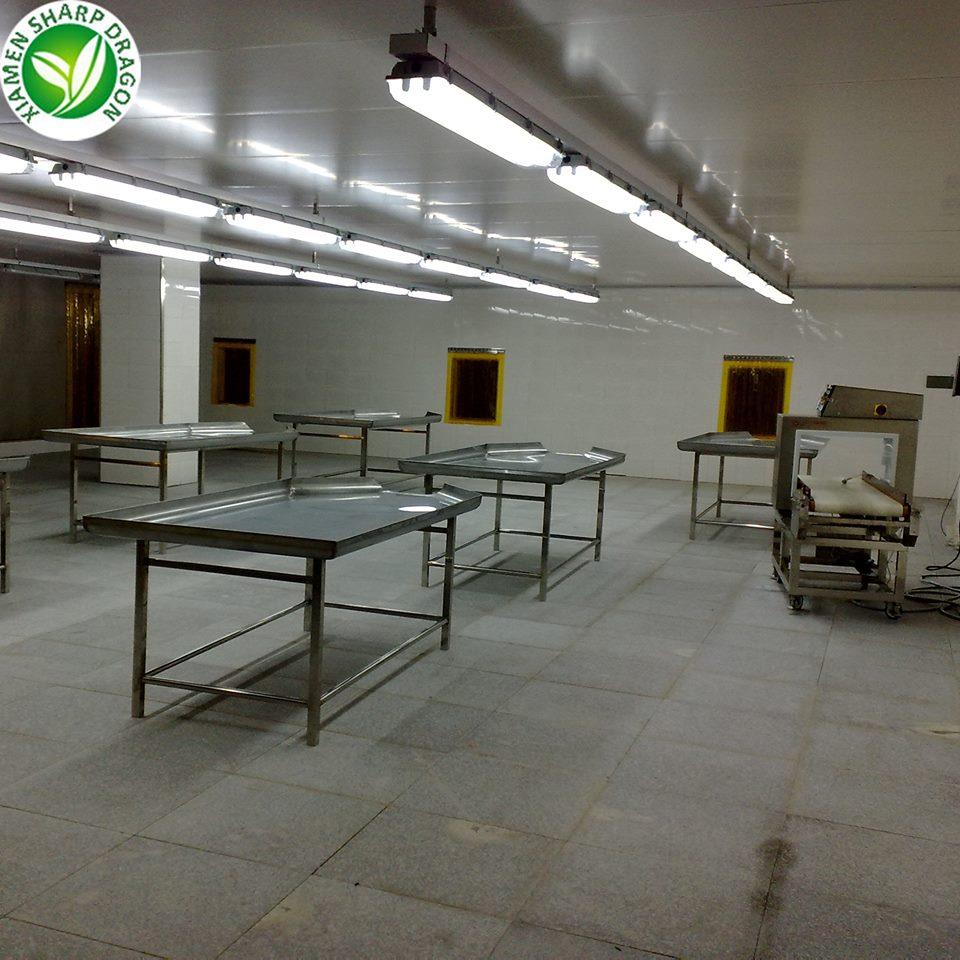
Food-contact surfaces should be corrosion-resistant, non-toxic under intended use, smooth enough to clean, and installed so operators can reach product-contact and splash zones. Hollow frames, cracked seals, worn belts, dead ends, poorly drained pipes, loose fasteners, and temporary repairs can trap residues or introduce foreign material. Preventive maintenance should therefore include hygienic condition, not only machine uptime.
Before starting production, a pre-operational inspection should confirm that the line is clean, dry where required, correctly assembled, free from tools and cleaning materials, and released by an authorized person. After maintenance, the release check should also account for parts, lubricants, swarf, fasteners, and protective covers.
3. Separate product washing from equipment sanitation
Product washing removes soil and other material under defined operating conditions. Equipment cleaning removes food residues and soils from surfaces. Sanitizing, when required, reduces microorganisms on a cleaned surface using a validated or otherwise justified method. These are different operations; a rinse that makes a line look clean is not automatically a sanitation step.
Water that contacts food or food-contact surfaces must be suitable for its intended use. Reused or recirculated water needs controls that prevent it from becoming a contamination source. The facility should define water quality, replacement or treatment, flow direction, temperature where relevant, and monitoring parameters based on product and process risk.

4. Build a usable sanitation standard operating procedure
For each area or item, the sanitation procedure should state responsibility, frequency, disassembly, gross-soil removal, detergent, concentration, water conditions where relevant, contact time, mechanical action, rinsing, sanitizer where used, final handling, drying, reassembly, inspection, and release. Chemical labels and safety data should be available, and only approved compounds should enter the program.
Dry processing areas need special care. When water is not normally used, wet cleaning can spread contamination and create niches unless the area is designed for it and completely dried before production. The method should match the product, equipment, and environmental risk.

5. Monitor completion and verify effectiveness
Monitoring asks whether the procedure was performed as specified: correct item, time, chemical, concentration, contact time, and responsible person. Verification asks whether the program is capable of and continues to control the hazard. Depending on risk, verification may include direct observation, record review, pre-operational inspection, chemical concentration checks, ATP or protein indicators, microbiological testing, environmental monitoring, trend analysis, and periodic reassessment.
No single swab result proves the whole line is safe. Sampling sites, method limitations, timing, baseline, action levels, and response rules should be defined before data are collected. When a result fails, the response may include stopping or holding production, recleaning, resampling, product evaluation, root-cause investigation, and preventive action.

6. Remove waste without creating a return path
Waste containers should be identifiable, suitable for the material, cleanable where reused, covered when exposure could attract pests or spread contamination, and removed at a frequency that prevents overflow or decomposition. Waste routes should not cross exposed product or clean packaging routes without an effective time or space separation and cleaning response.
Drains and wastewater also need control. Backflow, standing water, aerosols, blocked drains, and high-pressure spraying near exposed product can spread contamination. External waste areas should be maintained so they do not attract pests or contaminate receiving and dispatch areas.

7. Protect the product through packing and cold storage
Packing materials should be approved, protected from dust, moisture, pests, and damage, and issued in a way that preserves identity. Line clearance should remove obsolete labels and packaging. Seal checks, code verification, net-weight controls, and package-integrity checks should follow the product and customer specification. Finished lots should remain on hold until required records are complete and release criteria are met.
We can discuss process flow and pack formats through our equipment overview, frozen packaging page, and supply solutions. Order-specific controls, inspection points, labels, and records should be agreed before production.
Frequently Asked Questions
1. What is the difference between cleaning and sanitizing?
Cleaning removes soil and food residues. Sanitizing, when required, reduces microorganisms on a properly cleaned surface. Sanitizer cannot reliably replace effective cleaning.
2. Must every surface be sanitized after cleaning?
Not automatically. The method and frequency depend on the surface, product, process, hazard analysis, applicable law, and whether the surface contacts food. Some dry operations rely on controlled dry-cleaning methods.
3. What should an SSOP include?
It should define scope, responsibility, frequency, preparation and disassembly, cleaning method, approved chemicals and parameters, rinsing or drying, reassembly, inspection, release, records, and deviation action.
4. How is chemical concentration checked?
Use a suitable measuring method such as a calibrated dosing system or appropriate test kit, at the defined point and frequency. Record the result and act when it falls outside the approved range.
5. Can high-pressure water be used during production?
It can spread aerosols and contamination. Its use should be risk-assessed and controlled, especially near exposed food, food-contact surfaces, drains, or high-hygiene areas.
6. What is a pre-operational inspection?
It is a documented check before production that equipment and the area are clean, correctly assembled, free of foreign materials, suitable for use, and released by an authorized person.
7. Does ATP testing prove a surface is pathogen-free?
No. ATP can provide rapid hygiene information, but it is not a pathogen test. Use it within a defined verification program and understand the method's limits.
8. When is environmental monitoring needed?
Its need and design depend on the food, process, exposure after a control step, target organisms, regulatory requirements, and hazard analysis. It should answer a defined verification question.
9. How often should waste be removed?
Often enough to prevent overflow, odors, pest attraction, leakage, and interference with hygienic operations. Frequency should reflect the material, volume, temperature, route, and production schedule.
10. What should happen after maintenance?
Account for tools and parts, remove debris and temporary materials, clean and sanitize where required, inspect guards and food-contact areas, verify settings, and authorize release before food is exposed.
11. Is a metal detector part of sanitation?
No. It is a possible physical-hazard control. Sanitation reduces contamination from residues and microorganisms; equipment inspection and detection address different hazards.
12. What sanitation evidence should a buyer review?
Depending on risk, review the sanitation program, pre-operational release, relevant verification trends, environmental monitoring approach, allergen-changeover verification, deviation records, and evidence tied to the facility and product.
Final Thoughts
Good sanitation is a controlled process, not a cosmetic result. Clear procedures, hygienic maintenance, disciplined waste flow, meaningful verification, and documented release protect the line from start-up through packing. Part 3 addresses chemical contamination, food additives, lubricants, and foreign-material control.
References
- U.S. Electronic Code of Federal Regulations: 21 CFR Part 117, Subpart B-Current Good Manufacturing Practice
- U.S. Electronic Code of Federal Regulations: 21 CFR Part 117, Subpart C-Hazard Analysis and Risk-Based Preventive Controls
- U.S. FDA: HACCP Principles & Application Guidelines
- World Health Organization: World Food Safety Day 2026 Call to Action