


Food Factory Pollution Prevention (Part 1) | XMSD
Dec 21, 2018

The word pollution is common in older factory guidance, but contamination prevention is usually the clearer food-safety term. Biological hazards may arrive with people or raw materials, chemical hazards may come from residues or misused compounds, and physical hazards may enter through incoming goods, packaging, tools, or damaged equipment. The practical objective is not a vague promise of "zero risk." It is a documented system that reduces foreseeable risk and reacts when control is lost.

1. Start with a written hazard-based framework
Management should first map the flow of people, ingredients, packaging, waste, air, water, and finished products. For each step, the team asks what biological, chemical, or physical hazard could reasonably occur; how serious it could be; how likely it is without control; and whether a preventive control is needed. A written food safety plan then connects identified hazards with controls, monitoring, corrective actions, verification, and records.
Regulatory details vary by destination market. For example, facilities supplying the United States should assess the applicability of 21 CFR Part 117, while international operations may use Codex hygiene principles and HACCP as reference frameworks. Customer specifications can add further requirements but cannot cancel applicable law.
2. Control personnel health and hygiene
Illness reporting comes before entry
Workers should know which symptoms, diagnoses, infected wounds, and exposure events must be reported to a supervisor. A competent manager decides whether the person must be excluded from food-contact work, reassigned, or protected by an effective covering. A universal annual medical certificate is not a substitute for day-to-day reporting and observation; any medical-examination requirement should follow local law and the facility program.
Make hygiene observable
Entry procedures should specify protective clothing, handwashing moments, glove use, hair and beard restraints, jewelry restrictions, and where phones, food, medicines, and personal items are stored. Supervisors need a simple way to detect noncompliance and record corrective action. Training is effective only when the required behavior can be seen and verified during the shift.

Control movement between hygiene zones
Changing footwear or clothing matters only if it supports a defined zoning plan. Raw-material, post-lethality or ready-to-eat, allergen, waste, maintenance, and visitor routes should be separated by location, time, barriers, airflow, or validated cleaning as appropriate. Color coding can help, but the rule must cover people, tools, containers, forklifts, rework, and maintenance parts-not uniforms alone.
3. Approve suppliers before accepting materials
Purchase specifications should identify the material, intended use, legal and customer limits, allergen status, microbiological or chemical criteria where relevant, packaging condition, temperature, traceability fields, and required documents. Supplier approval should be proportional to risk: a high-risk ingredient or a material used without a further kill step needs stronger evidence than a low-risk secondary packaging item.
At receiving, staff should confirm the approved supplier, lot identity, vehicle and package condition, seal where used, temperature where relevant, signs of pests or moisture, and document status. Questionable lots should move to a clearly identified hold area, not into normal inventory while someone waits for an answer.

4. Protect materials during storage
Storage controls should preserve both food safety and identity. Keep ingredients and packaging off the floor and away from walls as needed for inspection and cleaning. Separate allergens, cleaning chemicals, damaged goods, returned goods, rework, and waste. Apply the facility's defined stock-rotation rule, maintain readable lot codes, and protect opened materials with closed, identified containers.
Frozen materials should remain frozen unless thawing is a controlled process. Chilled or ambient storage limits must come from product risk, law, and validated process requirements rather than a single universal temperature. Alarms, review of temperature records, door discipline, and an excursion-response procedure are more useful than a display that nobody checks.

5. Design the facility to prevent cross-contamination
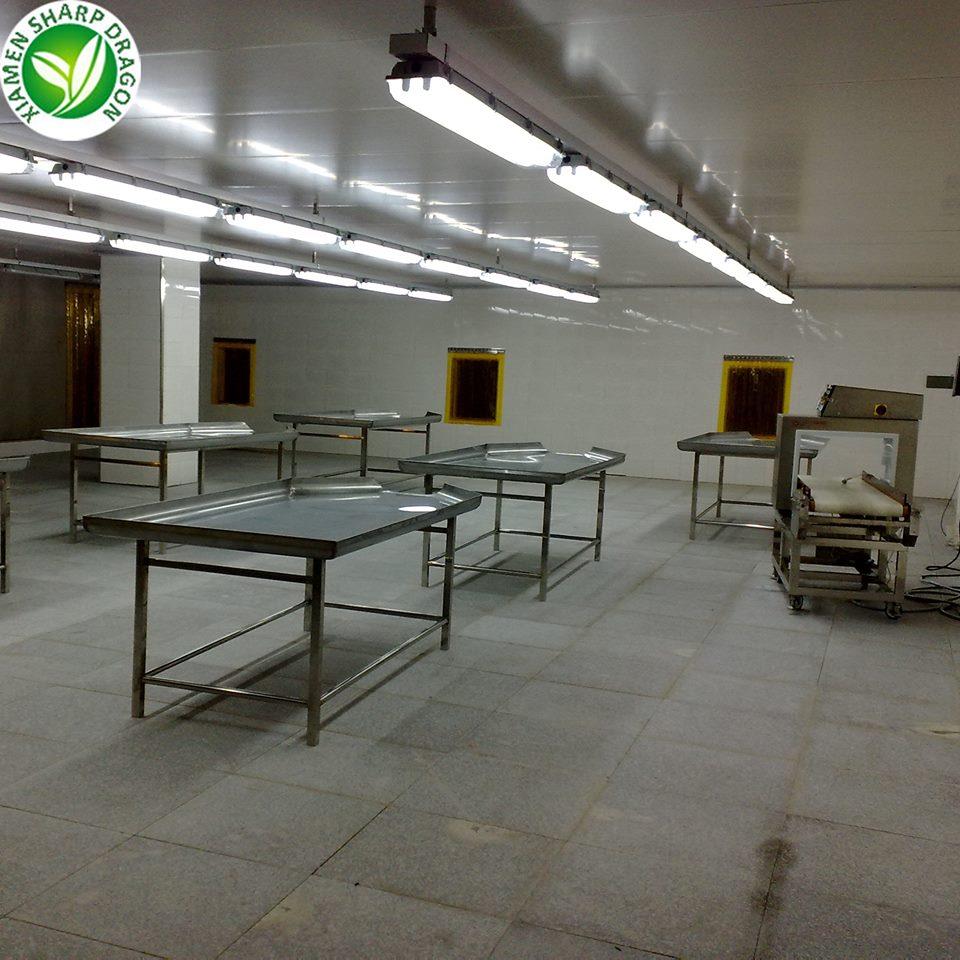
The building should provide enough space for sanitary operations and separation. Floors, walls, ceilings, drains, pipes, platforms, and food-contact equipment need to be cleanable and maintained. Condensation or lubricants must not drip into exposed food. Ventilation and airflow should not carry dust, aerosols, or microorganisms from a less controlled area toward exposed product.
Pest prevention combines exclusion, inspection, sanitation, and trend review. Doors, windows, roof openings, drains, incoming pallets, landscaping, and waste areas all matter. Pest-control devices must be positioned and managed so they do not themselves contaminate food, packaging, or food-contact surfaces.

6. Verify the system instead of trusting appearances
A clean-looking room is not proof that controls work. The factory should review illness reports, entry checks, supplier performance, rejected lots, environmental or product testing where appropriate, pest trends, storage excursions, corrective actions, and recurring deviations. Verification may include record review, calibration, observation, sampling, testing, and periodic reassessment of the hazard analysis.
For buyer qualification, request documents relevant to the actual facility, product, and shipment. Our public factory overview, certification page, and equipment page can support an initial review, but current scope, validity, product specifications, and lot-specific evidence should still be confirmed during procurement.

Frequently Asked Questions
1. What is the first measure for preventing contamination in a food factory?
Begin with a written, facility-specific hazard analysis. It determines which personnel, supplier, receiving, zoning, storage, sanitation, allergen, process, and physical-hazard controls are actually needed.
2. Does every worker need an annual health certificate?
Not as a universal international rule. Follow local legal requirements, but maintain active illness reporting, supervisory observation, wound control, exclusion or reassignment decisions, and hygiene training every day.
3. When should food handlers wash their hands?
At entry and whenever hands may have become contaminated, including after toilet use, breaks, touching waste or non-food surfaces, changing tasks, or handling raw materials before moving to a higher-hygiene activity.
4. Are gloves enough to prevent contamination?
No. Gloves can transfer contamination just like hands. They must be suitable, kept intact and clean, changed at defined times, and used alongside hand hygiene and task separation.
5. How should visitors be controlled?
Visitors should receive health and hygiene instructions, wear the required protective clothing, follow defined routes, avoid prohibited items, and remain supervised according to the risk of the area entered.
6. What should be checked when raw materials arrive?
Confirm supplier approval, lot identity, vehicle and package condition, seal where used, temperature where relevant, traceability, allergen status, signs of pests or damage, and any required test or compliance documents.
7. What happens to a questionable incoming lot?
Identify and physically or electronically hold it, prevent unintended use, investigate against defined acceptance criteria, document the disposition, and evaluate whether supplier corrective action is needed.
8. How should allergens be stored?
Identify them clearly and segregate them to prevent cross-contact, including leakage or dust transfer. The exact method may use dedicated areas, closed containers, controlled stacking, color coding, and restricted handling tools.
9. Is keeping frozen ingredients frozen enough?
No. The factory also needs lot control, package protection, temperature monitoring, alarm and excursion procedures, hygienic handling, and controlled thawing if thawing is part of the process.
10. What is hygienic zoning?
It is the risk-based separation of activities and flows so that people, tools, materials, air, water, waste, or traffic do not carry hazards from less controlled areas into exposed or higher-risk product areas.
11. Does a certificate prove every lot is safe?
No. Certification can support supplier qualification, but buyers should verify current scope and validity and review product specifications, process controls, traceability, testing where relevant, and lot-specific documents.
12. Which records should a buyer request?
The answer depends on risk and contract, but common items include the specification, allergen statement, traceability data, certificate scope, relevant test results or certificate of analysis, temperature records, packaging details, and corrective-action evidence when a deviation affected the lot.
Final Thoughts
Personnel rules, approved materials, protected storage, hygienic zoning, and pest exclusion form the first barrier against contamination. Part 2 moves onto the production floor: process flow, waste handling, cleaning, sanitation, monitoring, and verification.
References
- U.S. Electronic Code of Federal Regulations: 21 CFR Part 117, Subpart B-Current Good Manufacturing Practice
- U.S. Electronic Code of Federal Regulations: 21 CFR Part 117, Subpart C-Hazard Analysis and Risk-Based Preventive Controls
- U.S. FDA: HACCP Principles & Application Guidelines
- World Health Organization: World Food Safety Day 2026 Call to Action