


Does Sugarcane Increase Weight? Form and Serving Guide
Aug 05, 2019

Sugarcane does not make body weight rise independently of the rest of your diet. Body weight is influenced over time by total energy intake and energy use, along with factors such as activity, sleep, age, genes, health conditions and medications. Sugarcane can contribute energy because its edible juice and derived products contain carbohydrate, but a single serving cannot tell you what a person's long-term weight will do. The useful question is whether the serving is added to the usual diet, replaces something else, and is repeated often enough to change total intake.
Product form changes the calculation. A cane stick is chewed and much of its fibrous structure is discarded, so the pack weight is not automatically the swallowed amount. Pressed juice is a drink and should be read by its actual serving and calories. Syrup, concentrate, jaggery or granulated cane sugar is more concentrated and belongs to a different specification. A beverage made "with sugarcane" may also contain water, fruit juice, flavorings or other sweeteners. One calorie number cannot honestly cover all of those products.
For personal use, start with the label or a measured serving, then decide whether it is an addition or a substitution. For a food or beverage business, calculate from the as-sold ingredient specification and final formula, and approve nutrition information under the destination market's rules. That method is more reliable than either "sugarcane causes weight gain" or "natural sugarcane helps weight loss."
The short answer: Sugarcane can add calories, but it does not guarantee weight gain. The decision depends on form, amount, frequency and what the serving replaces. Use the finished product's serving data; do not transfer a number from cane sticks to juice, syrup or sugar.

What "Increase Weight" Actually Means
A food can provide energy without being a unique cause of weight gain. The explanation that excess sugar is simply "not digested in time" and then accumulates is not an accurate model. Digestion, absorption, storage, energy expenditure and appetite regulation are dynamic. For a practical decision, you do not need to predict every metabolic step. Ask whether the eating pattern repeatedly supplies more usable energy than you use, while recognizing that individual needs and weight responses vary.
The U.S. Centers for Disease Control and Prevention explains that physically active people can still gain weight if they consume more calories than they use, and also notes that sleep, age, genes and medications can influence weight.[1] The FDA likewise defines calories as energy from carbohydrate, fat, protein and alcohol in a serving, and advises balancing calories consumed with calories used.[2] These sources support an energy-balance framework; they do not turn one sugarcane drink into a diagnosis or a guaranteed outcome.
Time scale is another source of confusion. Drinking a sweet beverage can raise scale weight temporarily because the liquid itself has mass and because normal fluid and stored-carbohydrate changes occur. That is not the same as demonstrating a change in body fat. Conversely, a small daily energy addition may be hard to notice on any one day but can matter across a repeated pattern. A defensible answer therefore uses the serving and frequency, not a dramatic conclusion from one occasion.
Addition versus substitution is the most useful test. If a 120-calorie drink is added to a day that otherwise stays the same, the arithmetic records a 120-calorie addition. If it replaces another 120-calorie drink, the label-based net change is approximately zero. If it replaces water, the full 120 calories are newly added. Appetite and later food choices can change the real result, so this is planning arithmetic rather than a forecast of kilograms gained.
| Question | Evidence to use | What it can tell you |
|---|---|---|
| How much did I consume? | Measured volume or edible amount, serving size, servings per container | The multiplier for calories and nutrients |
| Was it an addition? | What the serving replaced, if anything | Estimated net change in planned intake |
| Does it determine my future weight? | Longer-term food, drink, activity and health context | Only a qualified pattern-level judgment, not a guarantee |

Cane Sticks, Juice, Syrup and Sugar Are Not One Serving
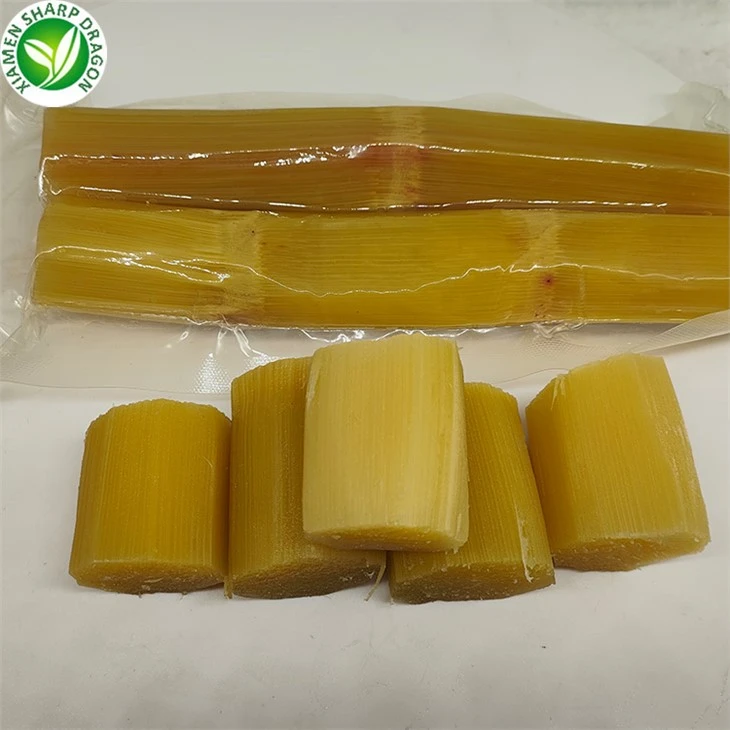
Chewable cane sticks: A prepared stick is a physical format, not a complete nutrition declaration. You bite or crush the cane, swallow released juice and normally discard the tough residue. Pack net weight includes material that may not be swallowed. Extraction depends on cane structure, cut, chewing and the amount left behind. It would therefore be misleading to treat a 200 g pack as 200 g of consumed juice or to describe it as equivalent to 200 g of ordinary whole fruit.
This does not mean cane sticks are calorie-free. It means the consumed amount requires an appropriate basis. If you need a nutrition panel, define an edible-portion method and obtain the representative analytical or calculation support allowed in the destination market. Without reliable data, keep the personal decision simple: use a modest, countable portion and do not attach a precise calorie value copied from a different cane product. The XMSD peeled fresh sugarcane presentation shows the physical pack form, not a universal nutrition value.
Pressed sugarcane juice: Once cane is pressed, the swallowed amount is easier to measure by volume, but the composition is still not universal. A 2024 peer-reviewed review describes fresh juice as mostly water with carbohydrate as its main macronutrient, while also showing that refined sugar and non-centrifugal cane sugar are compositionally different products.[3] Cultivar, maturity, extraction and formulation can change the liquid. USDA Agricultural Research Service work found that juice Brix and the relative sugar components changed during ripening and varied among cultivars.[4]
Brix is useful for soluble-solids control, but it is not automatically "grams of sugar per 100 mL," and it is not a calorie declaration. Other soluble substances contribute to a refractometer reading, while density and reporting basis matter. The dedicated XMSD guide to sucrose, glucose, fructose, Brix and purity owns that analytical distinction. For a weight-context decision, use the finished drink's calorie and carbohydrate data instead of converting Brix by assumption.
Syrup, concentrate, jaggery and cane sugar: Removing water concentrates the solids. A teaspoon, tablespoon, sachet or formulation percentage is the meaningful unit, depending on the product. Granulated sugar is different again: it is a dry, highly concentrated ingredient rather than a beverage. "From sugarcane" describes origin, not dilution. The broader sugarcane uses and commercial-output map separates the fresh-food, juice and ingredient routes without turning them into one nutrition category.
Formulated cane beverages: Lime, ginger or water may change flavor and dilution. Fruit juice, milk, coconut products, syrup or another sweetener can change energy and total sugars. Ice changes the served volume but not the nutrients already present unless it displaces part of the formula before filling. The only safe shortcut is to stop using shortcuts: read the complete label for a packaged drink or obtain the complete standardized recipe for a prepared one.

Use Serving Math Before Making a Weight Claim
Start at the top of a packaged product's nutrition panel. The FDA advises checking both serving size and servings per container; if you consume two servings, you consume twice the listed calories and nutrients.[5] This sounds obvious, yet beverage bottles frequently look like one drinking occasion even when the panel basis is smaller. A front label saying "100 calories per serving" does not mean the bottle contains 100 calories if it holds two servings.
Worked example: packaged serving. Suppose a packaged sugarcane drink declares a serving of 250 mL, 110 calories per serving and two servings in a 500 mL bottle. Drinking 250 mL gives the label basis: 1 × 110 = 110 calories. Drinking the full 500 mL gives 2 × 110 = 220 calories. If the full bottle is added five days per week, the recorded addition is 220 × 5 = 1,100 calories per week. If each bottle instead replaces another beverage that also supplies 220 calories, the simple label-based net difference is approximately zero. These numbers are illustrative, not nutrition data for XMSD sugarcane or for every cane drink.
Do not convert that weekly number directly into a promised amount of weight gain. The body is not a fixed calculator: energy use, appetite, food choices, fluid balance and adaptive responses can change. The calculation has a narrower and more honest job. It shows whether a serving is trivial or material within your intended intake and exposes the difference between half a bottle and the whole bottle.
Frequency can matter more than whether one serving is "small." An occasional 110-calorie half bottle and a daily 500 mL bottle are different patterns. Add-ons also matter. A plain pressed drink, a drink blended with syrup, and a dessert topped with cane syrup should be logged separately. The sugarcane name should not hide a larger serving, a concentrate or a second sweetener.
Practical example: You usually drink water with lunch but buy a 500 mL cane drink on three workdays. The label says 220 calories per bottle. Your planning estimate is 660 added calories per week. You do not need to ban the drink or claim it will inevitably change your weight. You could buy 250 mL, share the bottle, choose it less often or deliberately replace another caloric item. Each action changes a visible input rather than relying on a vague "moderation" promise.

Natural, Fresh and Fat-Free Do Not Set the Calorie Total
"Natural" is not a unit of energy. Fresh sugarcane juice can be minimally processed and still provide carbohydrate and calories. A product can contain little or no fat and still provide energy from carbohydrate. The FDA explicitly warns that terms such as "fat-free" and "no added sugars" do not mean "calorie-free."[2] Check calories, total carbohydrate, total sugars, serving and ingredients together.
"No added sugar" also does not mean "no sugar." It normally addresses whether qualifying sugars were added under a particular market's rules; it does not erase sugar already present in the ingredient. WHO's free-sugars framework includes sugars added by a manufacturer, cook or consumer as well as sugars naturally present in honey, syrups, fruit juices and concentrates, and recommends limiting free sugars to less than 10% of total energy intake.[6] That population guidance is not an individualized serving prescription, but it shows why ingredient origin alone does not settle the dietary question.
Be cautious with claims that pressed cane juice is high in dietary fiber. The visible stalk is fibrous, but pressing separates much of that structure from the liquid. Chewing cane and discarding residue also differs from swallowing an intact fruit or vegetable. A finished product should claim only the dietary fiber supported by its compliant nutrition data. A generic statement about the crop cannot establish the fiber in a filtered drink.
Likewise, the presence of small amounts of minerals or plant compounds does not cancel calories. Nutrient density and energy balance are related but separate evaluations. You can value a product's taste or cultural role while still counting its serving. You can also reduce a portion without labeling the ingredient "bad." This avoids the false choice between a miracle drink and a forbidden food.
Evidence about sugar-sweetened beverages belongs at the pattern level. A USDA systematic review prepared for the 2025 Dietary Guidelines Advisory Committee concluded, with moderate evidence, that sugar-sweetened beverage consumption in adults and older adults is associated with unfavorable body composition and higher obesity risk.[7] It does not establish that every cane juice has the same formula or that one serving causes weight gain. It does support careful attention to frequent calorie-containing drinks, particularly when they are added rather than substituted.

When a Smaller Portion Is the More Useful Choice
Reduce the portion or frequency when the serving is routinely added to other calorie-containing drinks or desserts, when the container has multiple servings but is consumed at once, or when you cannot verify what is in a mixed beverage. Those are decision signals, not moral judgments. A smaller bottle, measured glass or split serving makes the amount observable.
You may also need a smaller or specially planned serving when a qualified professional has given you an individual carbohydrate or energy target-for diabetes management, pregnancy, medication effects or another reason. Follow the plan from the clinician or registered dietitian who knows your history. Product guidance cannot diagnose a condition or replace individualized care.
For chewable cane, consider practical tolerance. Tough pieces require chewing and the fibrous residue is normally discarded rather than swallowed. If a person has dental problems, difficulty chewing or swallowing, or has been told to follow a texture-modified diet, cane sticks may be inappropriate even before calories are considered. A liquid alternative changes texture but also changes the serving method, so it needs its own label and safety assessment.
Do not compensate for a cane drink by skipping nutritious meals or using extreme exercise. The CDC recommends a varied eating pattern rather than eliminating an entire type of food and notes that calorie needs vary with personal characteristics and activity.[1] The proportionate response to a recurring added drink is usually to review the serving and the surrounding pattern.
A simple three-check rule works well: identify the product form, measure the amount actually consumed, and name what it replaces. If any one of those is unknown, avoid a precise calorie or weight claim. If all three are known, you can make a transparent comparison without pretending to predict the individual's body.
For Brands and Buyers: Keep Formulation, Label and Claim Boundaries Clear
You cannot build a finished nutrition panel from a photograph, a historical website number or a supplier's Brix value alone. Begin with the legal identity of the purchased material and the basis of every result: cane stick, expressed juice, treated juice, concentrate, syrup, non-centrifugal sugar or refined sugar; as sold or as reconstituted; grams per 100 g, grams per 100 mL or grams per serving. Record the test or calculation method and the lot or formula revision to which it applies.
For a packaged beverage, establish net content, serving size and servings per container before finalizing the calorie statement. FDA guidance for the U.S. market makes clear that serving size reflects the amount people typically consume and is not itself a recommended amount.[5] Other markets use their own reference quantities, units, rounding and presentation rules. If you sell in several destinations, do not assume that one panel can be copied unchanged.
Total sugars and added sugars are also different declarations. The FDA explains that added sugars include sugars added during processing, foods packaged as sweeteners, sugars from syrups and honey, and sugars from concentrated fruit or vegetable juices; single-ingredient sugar and syrup products have specific presentation rules.[8] Whether a particular cane juice, concentrate, syrup or finished beverage is declared in a certain way depends on the exact ingredient use and destination law. Ask the ingredient supplier for identity and composition evidence, then have the qualified team responsible for your finished brand approve the legal classification and panel.
| Control point | Required input | Common error to stop |
|---|---|---|
| Product identity | Physical form, treatment state, concentration and ingredient name | Using "sugarcane" for every derivative |
| Composition basis | As-sold or reconstituted basis, units, method, lot and tolerance | Treating °Brix as a finished calorie panel |
| Serving | Reference amount, net content, density where needed and servings per pack | Showing per-serving calories while implying per-bottle |
| Finished formula | All ingredients, processing loss or gain, dilution, overrun and final yield | Calculating from the cane ingredient alone |
| Claims | Exact wording, jurisdiction, evidence, conditions of use and approval owner | "Weight-loss," "non-fattening" or guaranteed gain language |
Worked example: formulation basis. A beverage developer is testing a hypothetical drink containing 8.0% cane syrup by finished mass. The planned 300 mL serving has a measured density of 1.05 g/mL, so serving mass is 300 mL × 1.05 g/mL = 315 g. Syrup per serving is 315 g × 8.0% = 25.2 g. The hypothetical ingredient specification states 72 g total carbohydrate per 100 g syrup on an as-sold basis. Carbohydrate contributed by the syrup is therefore 25.2 g × 0.72 = 18.1 g. Using the conventional planning factor of 4 calories per gram of carbohydrate gives about 72.6 calories attributable to that syrup carbohydrate.[9]
That is not yet the finished label. Your formulation team must include every other energy-contributing ingredient, verify actual batch yield and serving basis, apply the destination's permitted methods and rounding, and validate the formula with appropriate records or testing. If "8%" means volume rather than mass, if syrup density differs, or if 72% came from Brix rather than a valid carbohydrate result, the calculation is not acceptable. The example exposes those assumptions before artwork approval.
Claims need a separate gate. "Helps you gain weight," "supports weight loss," "guilt-free," "non-fattening" and similar phrases can be misleading because outcome depends on the complete diet and the individual. Even a mathematically correct calorie panel does not prove a weight-management claim. Keep identity copy, nutrition declarations and health or weight claims in separate review fields, each with an owner and evidence.
For processors building a cane-based beverage or food, the XMSD food-processing buyer framework can help structure questions about ingredient form, pack, throughput, testing and change control. It does not replace regulatory approval. We can coordinate available product documents and samples; your qualified formulation, laboratory and regulatory teams remain responsible for the finished panel and market claims.

XMSD sourcing note: If you are evaluating peeled sugarcane for retail or a processing trial, send the intended form, piece size, pack, quantity, destination, serving concept and documents you need. We will review the available commercial format and coordinate current specification and sample questions without supplying a finished-product weight claim.
Final Thoughts from XMSD
Sugarcane is not automatically weight-gaining or weight-reducing. Cane sticks, pressed juice, syrup and granulated sugar deliver different edible amounts and concentrations, so the reliable decision begins with form and serving. For personal use, compare the amount consumed with what it replaces. For a commercial product, calculate from the current ingredient specification and complete formula, then approve the finished label and claims under the destination rules. We recommend that buyers keep the physical sugarcane specification, nutrition calculation and marketing claim as three controlled decisions rather than one broad promise.
References
- CDC - Tips for Maintaining Healthy Weight
- U.S. FDA - Calories on the Nutrition Facts Label
- Comprehensive Reviews in Food Science and Food Safety - Flavonoids and Phenolic Acids from Sugarcane
- USDA Agricultural Research Service - Dynamics and Cultivar Variation of Sugar Components During Sugarcane Ripening
- U.S. FDA - Serving Size on the Nutrition Facts Label
- World Health Organization - Healthy Diet: Sugars Guidance
- USDA Nutrition Evidence Systematic Review - Sugar-Sweetened Beverages and Body Composition and Obesity Risk
- U.S. FDA - Added Sugars on the Nutrition Facts Label
- U.S. FDA - Interactive Nutrition Facts Label: Total Carbohydrate
- XMSD operational experience in fresh-produce sourcing, product-form review, specification coordination, packaging and B2B export communication.