


Can Broccoli Burn Belly Fat? Look at the Whole Meal
Jun 14, 2022

Broccoli belongs on the menu as a vegetable, not as a treatment for abdominal fat. The public-health guidance discussed below concerns eating patterns and the composition of meals; it offers no evidence that a serving of broccoli selectively burns belly fat. A more useful question is what you are making with it: a side of florets, a pasta dish, a vegetable soup or a cheese-covered bake. Those foods can all contain broccoli and still be very different meals.
Start with the dish you actually want to eat
Plain broccoli gives a cook a recognisable green ingredient with several possible roles. A few large florets can sit alongside a main course. Smaller pieces can appear throughout a noodle bowl. Finely chopped broccoli can become part of an egg filling, while a blended preparation can make its presence much less obvious. Choosing between these forms starts with the food you enjoy and how you want to serve it.
Think about a broccoli and chicken bowl. Rice may form the base, chicken may sit in separate pieces, and florets may provide the green component. Now think about a broccoli-cheese pasta bake: the pasta, broccoli and sauce are mixed together, with a topping across the surface. Calling both dishes "broccoli meals" tells you little about their ingredient proportions. Their names are useful starting points for a recipe, but the food in the bowl deserves a closer look.
At home, this can be as simple as separating the planned ingredients on the counter before cooking. Which items will make up the main part of the dish? Which are a sauce, garnish or side? If you are working from an existing recipe, read the whole ingredient list, including what appears after the main cooking steps. A finishing handful of cheese or a dressing served at the table still belongs to the food being eaten.
The broccoli nutrition guide explains the vegetable's composition in more detail. This article takes the next step: following broccoli from an ingredient into a recognisable meal. That means paying attention to the foods around it as well as the vegetable itself.
For a menu description, be equally specific. "Broccoli with lemon and pepper," "broccoli in a cheese sauce" and "broccoli, bean and pasta salad" set different expectations about taste and texture. A photograph may show a creamy coating or visible florets, but it cannot tell a reader how much dressing was used. A clear dish name helps people choose something they actually want to eat without turning the vegetable into a promise about their waistline.

Compare adding broccoli with replacing part of another ingredient
CDC describes substituting vegetables for some calorie-dense ingredients as one way to change the energy content of a meal. Adding vegetables to an otherwise unchanged meal is a different operation. This distinction is useful when revising a familiar recipe: decide which ingredient amounts are changing before interpreting the result.
Practical example: comparing cooked pasta and broccoli. USDA SR Legacy records list 158 kcal per 100 g for cooked enriched pasta without added salt and 35 kcal per 100 g for boiled, drained broccoli without salt. Using those reference foods:
|
Cooked components
|
Combined weight
|
Component energy
|
|---|---|---|
|
A: 150 g pasta + 50 g broccoli
|
200 g
|
237 + 17.5 = 254.5 kcal
|
|
B: 100 g pasta + 100 g broccoli
|
200 g
|
158 + 35 = 193 kcal
|
|
C: 150 g pasta + 100 g broccoli
|
250 g
|
237 + 35 = 272 kcal
|
B has 61.5 kcal less than A in these components. C adds broccoli while retaining the pasta. These hypothetical calculations exclude sauce, oil and sides. All weights are cooked and drained; the records are not an analysis of XMSD frozen broccoli. Equal weight establishes neither equal fullness nor a body-fat outcome.
The practical cooking question is whether the revised proportions still produce a dish you like. In a forkful of pasta with florets, you may want recognisable pieces of each. In a finely chopped mixture, broccoli can be distributed through the pasta more closely. These are different eating experiences even before the sauce is chosen, so a numerical comparison is only one part of deciding which version to make again.

Choose florets, chopped broccoli or stems for the bite
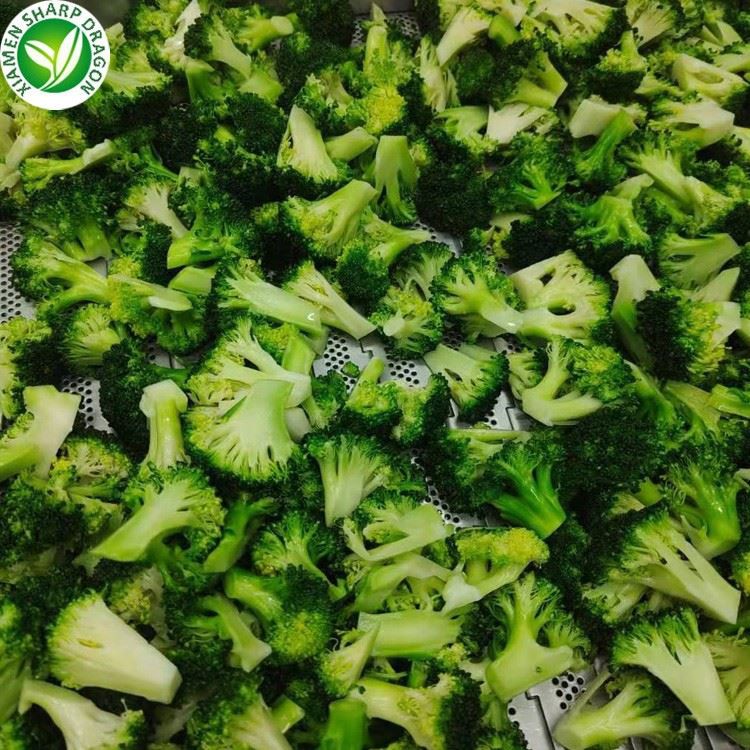
Broccoli has a branching shape, and that matters when it shares a spoon or fork with other foods. A floret brings a compact head with a stalk underneath. Chopped broccoli gives a mixture of smaller green and pale pieces. Stem sections have a smoother surface and a different outline. The frozen broccoli range is a starting point for seeing the supplied forms before planning their place in a dish.
Oregon State University's Food Hero guide treats both broccoli heads and stems as edible. It advises peeling heavy or woody stems and cutting stalks into similar-sized pieces for even cooking. That is a useful distinction for fresh broccoli: a tough outer stem layer and the edible interior are different parts of the ingredient, rather than a reason to discard every stalk automatically.
For a pasta bowl, our suggested starting point is a floret small enough to share a forkful with the pasta. Very large pieces may be better presented as a separate side that the diner cuts. In an egg filling, finely chopped prepared broccoli offers a different approach: green pieces can run through each slice instead of a few large heads occupying only certain sections. These are recipe design choices, and the other ingredients and the intended serving utensil help determine which one makes sense.
Stems also change the appearance of a dish. A pale stem section can be clearly visible in a mixed vegetable bowl, while finely chopped stalk pieces may disappear into a filling. If you want a dish with recognisable florets, choose the cut for that appearance. If the broccoli will be blended, retaining a perfect head shape has much less practical value. A mix of stalk and head pieces can be quite suitable for a filling, whereas a plated floret presentation asks a different visual question.
Cooking should suit the actual product and recipe. Food Hero notes that overcooking can produce an olive-green colour and an unpleasant sulfur smell, and that piece size affects cooking time. For commercially frozen broccoli, follow the pack's cooking directions, as FDA advises. A frozen vegetable intended for cooking should not become a raw salad ingredient simply because it has thawed.
The point is to choose a form that works with the meal. A soup ladle, a narrow fork and a filled pastry each accommodate broccoli differently. Starting with that ordinary eating detail is more helpful than buying large florets for every purpose and then having to break them down at the last moment.
Give the broccoli a flavour you want to come back to
Broccoli can sit in more than one flavour setting. For a proposed warm side dish, we would start with a choice between a sharp finish, such as lemon, and a savoury seasoning direction, such as garlic and pepper. Keep the first version simple enough to taste the broccoli itself. Adding every possible seasoning at once makes it harder to decide which combination you enjoyed.
A pasta salad offers another direction. Nutrition.gov publishes a version combining broccoli with cucumber, carrot, tomato, pepper, radish and onion, using a vinegar-based dressing. It is an example of broccoli sharing a dish with several crisp vegetables, rather than carrying the entire bowl. Its ingredient list also illustrates why the name "vegetable salad" leaves many possible flavours open. Use a complete recipe and its preparation directions when making the dish, especially when choosing between fresh and frozen vegetables.
In our own proposed variation for a cooked broccoli bowl, the aim would be contrast: green florets alongside a bean component, with a tangy dressing served at the table. The beans and broccoli would remain recognisable, so someone who wants a bite of each can take them together. For a more integrated version, chop the prepared broccoli and fold it through the other ingredients. The difference is how the food is arranged and eaten, rather than a new claim about the ingredient.
Cheese can have several roles too. A small amount scattered on a surface gives a finishing accent; cheese melted into a sauce becomes part of the coating across the dish. To compare their nutrition, the actual quantities and formulations matter. To compare their flavour, notice where the cheese is encountered: at the top, on each floret or throughout a spoonful of sauce. That distinction helps you choose a recipe that matches the result you want.
Serving sauce separately can be convenient when people prefer different tastes or amounts. Mixing it throughout can suit a casserole meant to be served as a single combined dish. Neither arrangement sets the amount automatically. Decide how the meal will be served, then prepare the quantity of sauce that fits that plan. A useful flavour variation changes something specific, such as the dressing or garnish, while leaving enough of the familiar dish intact to recognise why it tastes different.

Read broccoli soup as a combination of ingredients
Broccoli soup is a good example of why appearance can be misleading. A bowl may look uniformly green even though several ingredients contribute to its body. A smooth soup and a chunky soup can begin with similar foods, then be handled differently. The visible broccoli pieces describe the texture you can see; they are only part of the recipe.
Ohio's Celebrate Your Plate broccoli-potato soup uses broccoli in two sizes. Some goes into the mixture that is blended, and smaller chopped pieces are added later. Potato, milk and cheese are also included. This gives a concrete example of using the same vegetable both within a smooth base and as visible pieces. A cook following that recipe should use its full directions, including the safe handling of hot soup and blending equipment.
Purdue Extension publishes a different broccoli-potato soup using chopped broccoli, onion, broth, evaporated milk and potato, with cheese added as a topping. Its directions allow a little more milk or water if the soup becomes too thick. The useful lesson is about the recipe's structure: liquid, vegetables and thickening ingredients all contribute to what ends up on the spoon. Creaminess alone reveals neither a particular ingredient list nor a fixed nutritional value.
For a proposed lunch menu, decide whether you want broccoli visible in every spoonful or a mostly smooth soup with a separate topping. A chunky version can make sense when pieces are part of the attraction. A smooth version can make sense when you want a consistent base for a garnish. Choose a tested recipe for the preparation itself; a change in how finely you cut the broccoli is not a complete replacement for the recipe's cooking directions.
Also decide what goes beside the bowl. Bread, a sandwich or another side changes the actual lunch being served. When comparing two soup lunches, describe those accompaniments as carefully as the soup. A modest bowl with several sides is a different menu from a larger bowl served on its own. Naming the complete lunch makes the comparison understandable without guessing from the colour of the soup.

Portion the prepared broccoli across the batch
A kitchen preparing several meals needs to distribute food as well as cook it. The number of florets is a tempting shortcut, but pieces can have different head sizes and stalk lengths. Equal counts may produce visibly uneven portions. The broccoli floret product page shows the type of ingredient involved; the amount served is determined by the kitchen's actual preparation and portioning.
Worked example: planning twelve broccoli portions. Suppose a kitchen has measured 2.4 kg of usable prepared broccoli and wants to divide it evenly among 12 portions. The calculation is 2,400 g ÷ 12 = 200 g of prepared broccoli per portion. Those quantities are assumptions for the example, not a suggested dietary serving or an XMSD yield claim.
The phrase "usable prepared" matters. The broccoli has reached the stage at which it will be portioned, and the measured amount excludes anything already set aside. If 2.4 kg is instead the incoming frozen bag weight, the kitchen needs to measure its prepared output before applying that calculation. Measure the broccoli separately before incorporating it into a mixed preparation. The finished weight of a casserole or soup includes its other ingredients and liquid, so it cannot stand in for the prepared broccoli weight.
For a plate with separate components, weigh the broccoli allocation before adding the other foods. A serving of chicken, a grain component and a sauce can then be portioned according to the chosen menu. This gives the cook a clear view of each component. For service, complete one portion as a guide to the arrangement: broccoli at the side, sauce where the recipe calls for it, and the main component given enough space to eat comfortably.
For a mixed casserole, prepare an even mixture before dividing the finished dish. A tray with florets concentrated at one end will not distribute them evenly simply because the cuts across the tray are equal. Small broken pieces and larger heads can both be included, but their arrangement affects the portions. If the recipe calls for florets to remain visible on top, allocate them across the portions deliberately rather than scattering them all into the centre.
Our foodservice and catering page is the relevant next step for a kitchen considering frozen ingredients for repeated service. At XMSD, we would begin a broccoli discussion with the intended dish and cut, followed by the required quantity and packing. A soup ingredient and a visible vegetable side may call for different forms, even when both menus use broccoli.

Keep digestive comfort separate from the body-fat question
A feeling of fullness in the abdomen after a meal can be confusing when someone is watching their waist. NIDDK defines bloating as a feeling of fullness or swelling in the abdomen. That sensation is a different issue from measuring body fat, so a change in how your stomach feels after dinner is not a way to judge whether broccoli has removed abdominal fat.
NIDDK also lists cruciferous vegetables, including broccoli, among foods that can cause gas symptoms in some people. Certain carbohydrates reach the large intestine, where bacteria break them down and produce gas. Eating too much fiber can also contribute to symptoms. If broccoli repeatedly causes discomfort, discuss the pattern with a doctor or dietitian rather than forcing a very large quantity in pursuit of a hoped-for weight effect. The appropriate response depends on the person and their symptoms.
For weight management more broadly, CDC describes a pattern involving food choices, physical activity, sleep and stress management. Health conditions, medicines and other individual factors can also matter. Questions about a personal weight goal therefore belong in a conversation that considers more than a single vegetable.
Broccoli can still be a welcome part of ordinary meals: florets beside a main course, chopped pieces in a filling, or a vegetable component in a soup. Choose a preparation you enjoy, give the other ingredients the same attention, and make the next cooking decision about the food you intend to serve.

Planning a broccoli dish? Tell us the dish, the broccoli cut and the quantity you need. We will review suitable frozen broccoli options and packing for your request.
References
- CDC: vegetables within meals, July 2026
- USDA SR Legacy: cooked pasta 169737 and broccoli 169967, April 2018
- Oregon State University Food Hero: Broccoli Basics, March 2021
- FDA: commercial frozen food cooking directions
- Nutrition.gov: vegetable and pasta salad
- Ohio Celebrate Your Plate: broccoli-potato soup
- Purdue Extension: broccoli-potato soup
- NIDDK: definition of bloating, June 2021
- NIDDK: food and gas symptoms, June 2021
- CDC: the broader weight-management picture, January 2025
- The two calculations use hypothetical food quantities. They are not prescribed portions, measured customer meals or body-fat results. Photographs show broccoli ingredients and commercial handling; they do not depict the pasta calculation or twelve prepared portions.