


Freeze-Dried Vegetable Nutrition: Reading Retention Data
Apr 12, 2020

Freeze-dried vegetables still contain nutrients. The useful question is how much of a particular nutrient remains in the food you actually eat. Freeze-drying can preserve vitamin C well compared with some other processing methods, but there is no single retention percentage that describes every vegetable, every vitamin, and every storage period. Evaluate the food by the nutrients present in the portion you intend to use.
For water-soluble vitamins, the entire preparation route matters. Vitamin C can be affected by heat, contact with water, and storage; an observation made immediately after drying describes only one stage. The National Institutes of Health identifies vitamin C as water-soluble and notes that cooking and prolonged storage can reduce its content. The practical response is to use product-specific information, follow preparation instructions, and compare amounts on a consistent basis.
Begin with three pieces of information: which vegetable is involved, what processing stage the nutrient result describes, and how much food the number represents. A report per 100 g of dry material is useful for one comparison, while a result per prepared serving answers another. Confusing them can make ordinary water removal look like a nutritional improvement or make dilution look like destruction.

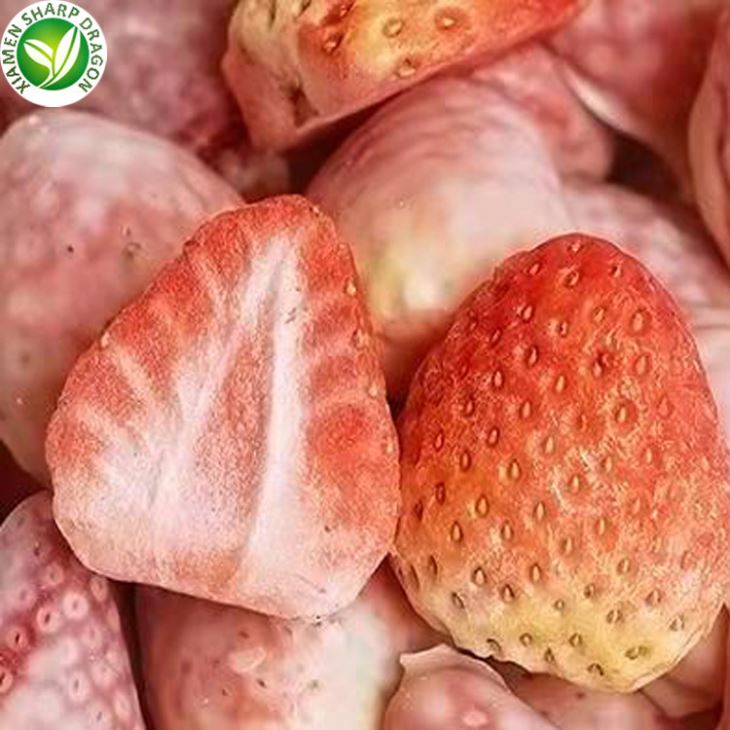
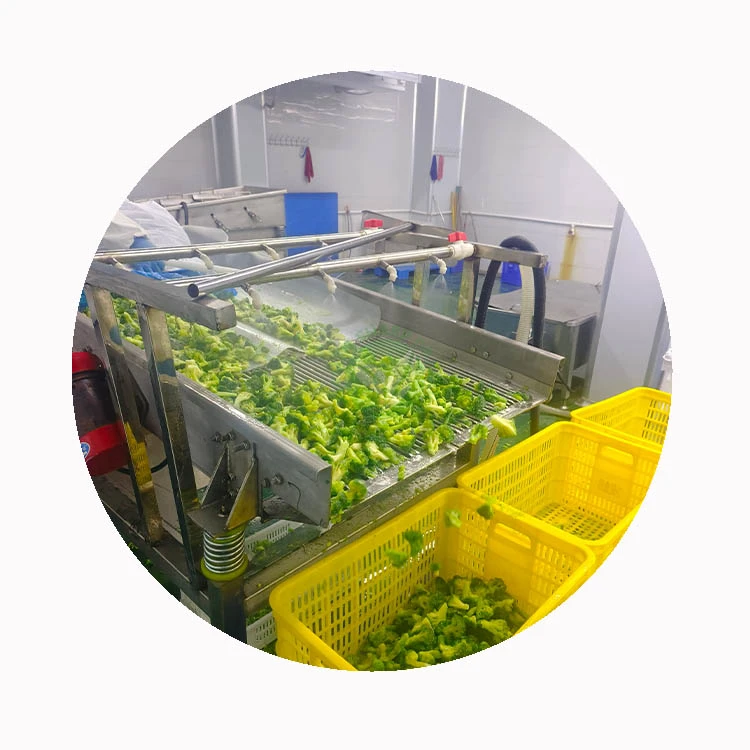
The photographs illustrate vegetable identities, frozen ingredient forms and handling. The dried strawberry photograph is a cross-food illustration of a dried structure. None is a nutrient test result or a photograph of the representative calculations below.
Vitamin C is informative, but it is not the whole food
Vitamin C has normal roles in collagen formation, immune function, and absorption of iron from plant foods. Its susceptibility to processing also makes it a useful nutrient to investigate when comparing vegetable preservation. A measured change in vitamin C describes that particular nutrient. Evaluating an entire meal requires a wider view of its composition and portion.
Keep the name of the measured nutrient visible. Vitamin C, vitamin E, carotenoids, protein, and dietary fiber are different report entries, not interchangeable versions of one figure called nutrition. A supplier who has measured one of them has answered one question. If another nutrient is important to the recipe or label, request information for that nutrient rather than extending the first result to everything in the ingredient.
This distinction is useful for everyday eating, too. A vegetable can remain a useful part of a meal even if processing reduces one vitamin. The decision is not a contest in which any loss makes a food worthless. Look at the portion, the rest of the meal, and whether the form helps you use vegetables regularly. A varied menu has more room for practical choices than a ranking built around one laboratory measurement.
What vegetable studies actually show
A 2012 study by Yamaguchi and colleagues examined vitamin C in paprika, spinach, parsley, broccoli, and peas processed by freeze-drying, air-drying, or retort sterilization. In those comparisons, freeze-drying produced the highest vitamin C retention. That is useful evidence for the method's potential. It is a result for the tested materials and procedures, not a universal percentage to print on every bag of dried vegetables.
A separate 2024 study by Gębczyński and colleagues compared freeze-dried and air-dried green beans and peas over twelve months. It included cold storage at 2–4°C and room storage at 18–22°C and examined several compounds, including vitamins C and E. Freeze-drying and colder storage favored retention overall. These were experimental storage conditions, not a blanket instruction to refrigerate all commercial freeze-dried products.
Together, the studies point to a better purchasing question than asking whether the method is good or bad: which nutrient was measured, in which vegetable, after which treatment and storage interval? For a pea ingredient, evidence from peas is more directly relevant than a result for an unrelated fruit. Use the study's design to choose suitable sampling points and comparisons for your own product evaluation.

Identify the beginning and end of a retention claim
A retention claim needs a starting point. Does the comparison begin with freshly harvested raw vegetables, washed and trimmed material, blanched vegetables, or material already frozen for drying? Those are different boundaries. A result described as retention after freeze-drying may cover the drying stage alone, while another result covers preparation and drying together. Both can be informative if their boundaries are stated clearly.
Pretreatment deserves particular attention. University of Minnesota guidance includes blanching as a preparation option for vegetables before freeze-drying. Since vitamin C is heat-sensitive and water-soluble, the way vegetables are prepared belongs in the interpretation of a nutrient result. Omitting that step from a comparison can leave the reader with an incomplete impression of how the final food was produced.
We would ask for the sample description and process boundary before discussing a headline percentage. A useful report names the vegetable and its state at both measurements. It should also say whether the later sample was tested directly after drying or after a period in its final package. This is a more productive first discussion than comparing two percentages whose starting materials and measurement dates are unknown.
Four reporting bases answer different questions
An as-sold concentration describes nutrient content in a stated mass of the food being supplied. For a dry ingredient, that mass contains much less water than the same mass of a fresh vegetable. A dry-matter concentration removes water from the denominator mathematically and can help compare compositions. Neither is automatically the amount eaten in a normal serving.
Total nutrient amount compares how much of the measured nutrient is present in the defined material before and after processing. That requires both concentration and material mass. It is the appropriate starting point for understanding how much remained within the selected process boundary. A serving calculation then translates the product information into the food actually used by a person or recipe.
| Reporting basis | Question it helps answer | Information still needed |
|---|---|---|
| Per 100 g as sold | How concentrated is this product? | Amount actually used |
| Per unit of dry matter | How do compositions compare without water? | Moisture method and material yield |
| Total amount before and after | How much remained across this process? | A clearly defined process boundary |
| Per prepared serving | What does this portion contribute? | Recipe and preparation conditions |
A comparison of frozen broccoli forms with a dried broccoli ingredient should identify both products correctly. The frozen category is useful when considering a wetter ingredient for a meal; its values cannot be borrowed to fill a missing dry-product nutrition panel. Match the data to the food rather than matching only the vegetable name.

Example: a higher concentration with a lower total amount
Consider a representative analyst comparing a hypothetical 100 g portion of prepared vegetable before drying with the dried material obtained from that same portion. Suppose the initial material contains 5 mg of vitamin C. After processing, the resulting 12 g of dried material contains a total of 4 mg. These are invented inputs to explain the calculation, not measurements from an XMSD product or a published vegetable trial.
Across the defined process boundary, the retained amount is 4 mg ÷ 5 mg × 100 = 80%. The nutrient amount fell by 1 mg. Yet the concentration in the final dry product is 4 mg ÷ 12 g × 100 g = approximately 33.3 mg per 100 g. That looks much higher than the initial 5 mg per 100 g because the denominator now contains much less water.
The analyst should report both findings accurately: the dried material is more concentrated on an as-sold weight basis, and the total vitamin C amount is lower in this hypothetical material comparison. There is no contradiction. The useful action is to keep the mass records alongside the laboratory values so that a concentration change is not advertised as creation of additional vitamin C.
The calculation assumes that the defined input and output refer to the same material stream and that the nutrient measurements are comparable. If part of the vegetable is discarded or another ingredient is added, include that change in the material record. A simple percentage becomes misleading when the two samples no longer represent the same processing question.
Keep dry-matter comparisons honest
Dry-matter reporting is valuable, but the phrase does not complete the comparison on its own. Check how moisture was determined and whether the result is actually expressed per gram of dry matter or merely per gram of a dried sample. Commercial dried foods can still contain residual moisture. A sample that feels dry is not a mathematical definition of zero water.
The nutrient measurement method matters as well. Compare results that refer to the same reported substance and use compatible analytical methods. A laboratory may report ascorbic acid, while another result is described more broadly as total vitamin C. Read the method and ask the laboratory how its reported quantity should be compared. Do not silently treat differently defined measurements as identical.
We would retain the original units when reviewing the evidence, then create a separate working calculation for the intended comparison. Repeatedly copying a number into new units without keeping its source basis makes errors difficult to trace. A practical review sheet has the original result, the mass basis, the calculation, and the resulting units together. That allows another colleague to reproduce the answer rather than simply trust the spreadsheet total.
A serving is a food decision, not a laboratory denominator
The FDA explains that nutrient amounts on a Nutrition Facts label relate to the stated serving. That serving describes an amount typically consumed; it is not an instruction that everyone should eat exactly that quantity. Start with the grams on the label and the grams you plan to use. If the portion changes, adjust the nutrient amount on the same basis before drawing a conclusion about the meal.
For a family choosing vegetables, this can be quite straightforward. Read the product's preparation instructions, measure the amount you intend to serve, and use the corresponding nutrition information. A dry handful, a fresh cup, and a cooked cup need not contain the same vegetable mass. Their visual volumes are a poor foundation for a precise nutrient comparison.
For a processor, connect the ingredient contribution to the complete formula. A small quantity of vegetable powder may provide flavor and color while contributing only the nutrients associated with that actual quantity. A large per-100-g number does not mean a lightly sprinkled ingredient supplies that amount in every finished meal. The recipe inclusion is the link between the specification and the customer's portion.
Example: water changes the concentration in a prepared portion
Imagine a representative meal developer using a hypothetical dry vegetable ingredient whose declared vitamin C content is 30 mg per 100 g as sold. A portion uses 15 g of that ingredient. Before allowing for any subsequent nutrient changes, its calculated contribution is 30 mg × 15 g ÷ 100 g = 4.5 mg. The developer now has a clear ingredient contribution to carry into the recipe calculation.
Suppose adding plain water makes the total prepared portion 150 g, with no other ingredients added and, solely for this arithmetic illustration, no vitamin loss during preparation. The total remains 4.5 mg, while the concentration becomes 4.5 mg ÷ 150 g × 100 g = 3 mg per 100 g prepared food. The lower concentration reflects dilution. Water has not removed the vitamin in this simplified example.
The developer's action is to keep separate fields for the dry inclusion, final portion weight, and any preparation-related adjustment supported by appropriate data. When the product is cooked, drained, or mixed with other foods, extend the calculation to reflect those additional operations and ingredients. Evaluate the real finished recipe before deciding the nutrition information to declare.

Include storage in the question you ask
The 2024 green-legume study is a useful reminder that a nutrient result belongs to a time and a storage condition. A product tested soon after drying and the same product examined later are different sampling points. Retention at the dryer outlet cannot establish how much remains at the end of a commercial shelf life. Decide which point matters for the purchasing or labeling decision.
When reviewing data, identify the package used for the tested sample and its storage history. Keep the actual report date and the product's production information connected. A technically sound analysis can still answer the wrong commercial question if the sample was kept under different conditions from the product being offered. The next step is then to obtain relevant stability evidence, not to adjust the result by an invented standard loss factor.
Our discussion of packing formats and product identification provides a place to define how an ingredient is supplied. For freeze-dried food, review the specific moisture barrier and closure suited to that product. A frozen-food pouch specification should not automatically be treated as a validated long-term freeze-dried package. Keep the package decision tied to the food and its intended storage route.
Preparation should serve the meal and follow the safety instructions
Nutrient retention is one consideration in preparing food, alongside taste, texture, and safety. NIH guidance notes that cooking can reduce vitamin C and that steaming or microwaving may lessen cooking losses. Use that as general context, not as permission to shorten a product's required cooking step. Choose a suitable preparation method that still meets the instructions for the food being served.
Freeze-drying itself is not a reliable microbial kill step. University of Minnesota guidance distinguishes foods that can be consumed dry from those needing further preparation and warns that adding moisture can allow surviving microorganisms to become active again. Check the intended-use statement. A dry vegetable piece is not automatically ready to eat simply because its texture is crisp.
For an alternative such as IQF green peas for meals and soups, follow the frozen product's own preparation and storage requirements. Choose between forms according to the meal, available equipment, and handling route. Nutrient information is most useful when it accompanies a product you can prepare consistently, rather than a theoretical winner that does not fit the kitchen.
Ask for evidence that matches the finished food
A buyer developing a vegetable-containing meal should distinguish an ingredient analysis from a finished-product analysis. The food-processing application brief should state the ingredient form, addition quantity, processing sequence, and intended portion. These details let a supplier and the buyer's technical team discuss which information is already available and what further work is needed.
We would compare the received ingredient and the prepared food as separate samples when the downstream process is central to the nutrition question. The first tells the team about the supplied material; the second reflects the recipe the customer eats. Keeping both descriptions clear helps locate the source of a difference. The team can then investigate the ingredient, the inclusion rate, or the preparation step with the corresponding evidence.
Do not use color as a substitute for nutrient data. A green pea, bright carrot piece, or attractive broccoli floret may be useful for judging appearance, but a photograph cannot supply a vitamin concentration. Keep visual acceptance and nutrition evidence as complementary records. The same discipline applies to a crisp texture: it describes an eating characteristic, not a measurement of vitamin preservation.
Make a practical nutrition choice
For household use, a sensible choice is a clearly identified vegetable product that fits the meals you make, has understandable preparation instructions, and supplies relevant nutrition information. Use the declared portion as a calculation basis, then consider what you actually eat. Include different vegetables and other foods across the menu instead of expecting one dried ingredient to account for the whole diet.
For ingredient purchasing, the strongest comparison names the nutrient, keeps the measurement basis consistent, and follows the food through the process that matters. Record the initial and final material state, sample date, packaging conditions, and actual recipe inclusion. This turns a vague promise of preserved nutrition into an answer that can be checked and used by purchasing, production, and quality colleagues.
Good evidence makes the choice specific: which vegetable, which nutrient, how much in the portion, and at what point in its preparation and storage? Once those questions are answered, the result is easier to compare and easier to explain accurately to the person eating the food. Keep that explanation with the recipe so that later changes can be evaluated on the same basis.

Share your vegetable ingredient and intended application with XMSD for a product-information discussion.