


Classification of Frozen Vegetables: Product Forms, Grades, and Buyer Specifications
Apr 09, 2020

There is no single classification of frozen vegetables that answers every commercial question. A useful classification separates five things: the vegetable identity, the presentation style and size, the freezing form, the preparation level, and the quality or acceptance grade. "Frozen broccoli" identifies a product family, for example, but it does not tell a buyer whether the offer is florets or cuts, free-flowing or compacted, blanched or otherwise prepared, or controlled to a particular defect and size schedule.
That distinction matters because category names, product standards, customs or statistical codes, factory controls, and purchase specifications serve different purposes. Codex CXS 320-2015 defines quick-frozen vegetables and provides commodity-specific styles and quality provisions, while other systems may group products for trade statistics or grade a particular vegetable under national rules. For procurement, the practical answer is to classify the product in layers, then turn those layers into measurable contract language. The class name starts the conversation; the specification makes the product orderable and inspectable.
The short answer: Classify frozen vegetables by product identity, cut or presentation, frozen form, preparation level, and measurable quality criteria. Never treat a broad label such as "IQF vegetables" or "Grade A" as a complete specification.
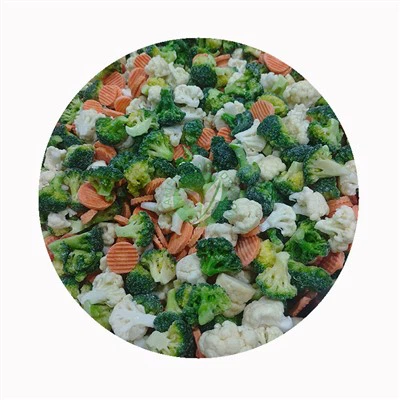
Why One Frozen-Vegetable Label Is Not Enough
Classification is only useful when its purpose is clear. A category manager may need to distinguish broccoli, peas, corn, carrots, spinach, and mixed vegetables. A production team needs the cut, size range, blanching status, and free-flowing condition. A quality team needs defect definitions, sampling rules, and acceptance limits. A customs or statistics team may need a code that separates simply frozen vegetables from further-processed products. These are related descriptions, but they are not interchangeable.
The safest approach is layered classification. Begin with what the product is, then describe how it is presented and prepared, and finally define how conformity will be judged. This prevents a common sourcing error: comparing two quotations as if they describe the same item when one includes smaller pieces, a different blanching condition, a wider defect tolerance, or another pack format.
| Classification lens | What it answers | Typical contract detail |
|---|---|---|
| Product identity | Which vegetable or blend is offered? | Common name, species when needed, single item or formula |
| Style and size | What shape reaches the user? | Whole, floret, slice, dice, strip, kernel, leaf, or other defined cut |
| Frozen form | How should the product separate and dispense? | Free-flowing units, permitted clumping, or a defined block format |
| Preparation level | What has happened before freezing? | Washed, peeled, trimmed, cut, blanched, cooked, seasoned, or blended |
| Quality and acceptance | How will the lot pass or fail? | Defect schedule, tolerance, sample method, pack, temperature, and documents |

Classification by Vegetable Group and Product Identity
A commercial product list often begins with recognizable families: flower or head vegetables such as broccoli and cauliflower; roots such as carrots; legumes and pulses such as peas and edamame; kernels such as sweet corn; leafy vegetables such as spinach; and blends made from two or more vegetables. This is a practical merchandising and sourcing structure, not a universal botanical system. Corn, peas, beans, and some fruiting vegetables can be treated differently by botanical, culinary, tariff, or statistical frameworks.
For a purchase order, use the identity that the product, label, and destination requirements actually need. "Mixed vegetables" should be followed by a formula or permitted composition, because the category alone does not establish the ratio of peas, corn, carrots, broccoli, or cauliflower. A single-vegetable item may need a variety, maturity class, or other identifier when it changes color, texture, yield, or regulatory treatment. When that detail has no decision value, adding it only creates paperwork without improving control.
Codex CXS 320-2015 covers specified quick-frozen vegetables through commodity annexes and excludes products identified as intended for further industrial processing from its direct-consumption scope. The United Nations CPC classification takes another administrative view: class 2131 covers frozen vegetables, pulses, and potatoes that are uncooked or simply cooked, while further-processed products are directed elsewhere. The useful lesson is not to force one system onto every task. Choose the classification framework that matches the contract, label, customs declaration, standard, or statistical report.
Buyers who need a working view of available vegetable families can review the XMSD frozen vegetable range, then narrow the inquiry by application and required product form rather than sending only a broad category name.
Classification by Presentation Style, Cut, and Size
Presentation style describes the physical unit a buyer receives: whole vegetables, florets, spears, slices, diced pieces, strips, kernels, leaves, chopped material, purée, or another clearly described form. The correct terms are commodity-specific. A floret is meaningful for broccoli or cauliflower, a kernel for sweet corn, and a pod or shelled bean for edamame. Using one generic cut vocabulary across all vegetables can conceal material differences.
Codex illustrates this product-specific logic in its annexes. Carrot styles include forms such as whole, finger, halved, quartered, sliced or ring cut, diced, double dice, and shoestring or julienne. Broccoli has its own style definitions and defect rules. These names are useful only when the offered product actually matches the selected definition or when the contract supplies an equally clear alternative description.
Cut and size affect more than appearance. They change portioning, cooking rate, sauce pickup, visual coverage, breakage risk, line dosing, and the yield of usable units in the final application. A foodservice side dish may value recognizable florets, while a soup or filling may accept smaller pieces if the defect schedule and eating quality remain suitable. The better offer is therefore not automatically the one with the largest unit or the lowest price per kilogram; it is the one whose usable format fits the process.

Size Grade Must Include a Measurement Rule
A declared size is incomplete without a measurement basis and tolerance. State whether the dimension applies to length, diameter, thickness, mass, or a combination; define how irregular pieces are measured; and establish the share of units that must fall inside the declared range. Codex sets product- and style-specific provisions rather than one tolerance for every vegetable. A private specification can be tighter or differently structured when the application requires it, but both parties need the same method.
Sample evaluation should reproduce the buyer's actual decision. Measure enough units to reveal variation, cook or handle them in the intended process, and record the result against agreed criteria. A few attractive pieces photographed on top of a sample do not establish lot consistency. Risk signals include a wide tail of undersize pieces, excessive fragments, uneven thickness, and a cut that meets a nominal range but performs inconsistently after cooking.

Classification by Frozen Form and Preparation Level
"IQF" describes a freezing and handling outcome, not a vegetable grade. Codex notes that quick-frozen vegetables may be free flowing, meaning the individual units are not stuck together or joined in blocks to the point that they cannot be separated easily while frozen. This property is valuable for portioning and continuous dosing, but a buyer still needs to define the acceptable level of clumping and the condition in which it will be checked.
Block formats can be intentional for chopped leafy vegetables, purées, or applications that use a complete unit at once. Unplanned solid masses in a product sold as free flowing are different: they may indicate excess surface water, weak separation during freezing, package compression, or temperature fluctuation. The acceptance decision should distinguish an agreed block product from avoidable agglomeration.
Preparation level is another independent layer. A vegetable may be washed, peeled, trimmed, cut, blanched, cooked, seasoned, coated, sauced, or combined with other ingredients before freezing. Blanching is commonly used to inactivate enzymes and help control quality during frozen storage, but it should not be interpreted automatically as a full cook or a microbial kill step. Product handling and cooking directions must follow the validated process, intended use, label, and destination requirements.
For a deeper explanation of the factory sequence, see how frozen vegetables are processed and controlled. Keeping that process guide separate allows this page to focus on classification and specification without repeating a full production manual.

Classification by Quality Grade and Defect Tolerance
Quality grades are not globally interchangeable. USDA describes its vegetable grade standards as voluntary tools that give the marketplace a common language, and the requirements are commodity-specific. Its frozen broccoli standard, for example, distinguishes U.S. Grade A, U.S. Grade B, and Substandard through prerequisites and defined defect limits. That structure should not be assumed to apply unchanged to spinach, peas, carrots, or a private export specification.
Codex also uses product-specific annexes, definitions, sample units, and allowances. Relevant observations may include varietal or style conformity, color, blemishes, mechanical damage, extraneous vegetable material, small pieces, fragments, fibrous units, greening, or other commodity-specific defects. A buyer may add application-focused criteria such as stem length, broken-unit share, loose material, cooking texture, drain loss, clumping, or blend ratio when these are measurable and lawful for the destination.
Buyer rule: Treat "Grade A," "premium," and "standard quality" as shorthand until the offer identifies the governing standard or reproduces the measurable defect, size, sampling, and acceptance rules.
A defensible acceptance plan specifies the sample unit, lot definition, inspection point, test condition, defect categories, individual and total tolerances, and the action taken when a limit is exceeded. There is no universal rule that five percent of every frozen-vegetable lot must be opened, just as there is no universal two-percent weight addition that fits every contract. Sampling and net-content control should follow the agreed specification, applicable standard, destination regulation, and the risk of the intended use.

How Processing Creates the Declared Product Class
Receiving, inspection, and preparation come first. Raw material is checked for identity, maturity, condition, and suitability before unsuitable material and foreign matter are removed. Washing, peeling, trimming, cutting, and size grading then create the intended style. The exact operations vary with the vegetable and final specification; a pea, broccoli floret, carrot strip, and spinach block cannot share one mechanical recipe.
Blanching, cooling, and dewatering must be product-specific. When blanching is required, its schedule should be validated for the vegetable, unit size, equipment, and target quality outcome. Prompt cooling limits continued heat exposure, while controlled drainage removes excess surface water that could contribute to ice buildup or clumping. A single time, water temperature, cooling endpoint, or enzyme-test chemistry should not be copied across every product without validation.
Quick freezing is defined by the product, not just the machine setting. Codex states that the range of maximum ice crystallization should be passed quickly and that the process is not complete until the thermal center reaches −18°C after thermal stabilization. Air or equipment temperature may be lower, but it is not a substitute for the product criterion. Freezer loading, piece thickness, incoming temperature, airflow, and product distribution can all change the result.
Post-freeze handling protects the classification. Frozen units may be sorted, inspected, weighed, packed, and moved into frozen storage under controlled conditions. The operation should preserve the declared style, free-flowing condition, net content, package integrity, and lot identity. Processing and inspection equipment can support repeatability, but the buyer still needs records and acceptance criteria tied to the actual lot.
Packaging and the cold chain preserve rather than create quality. Suitable packaging helps protect frozen food from dehydration, contamination, and physical damage. Product temperature should be controlled during packing, storage, loading, transport, and transfer. Codex defines quick-frozen food around maintenance at −18°C or colder throughout the cold chain, subject to permitted tolerances. Buyers should therefore review packaging, temperature evidence, and arrival condition together rather than treating any one reading as a complete judgment.
Food-safety note: Freezing is not a universal lethal treatment for microorganisms. Safety controls, product status, cooking instructions, hygiene, testing, and destination requirements remain separate from visual grade and frozen quality.

A Buyer Workflow for a Measurable Frozen-Vegetable Specification
The order of specification work matters. If the application and product identity are unclear, later decisions about cut, defects, packing, and documents may optimize the wrong item. If sampling is discussed only after production, the buyer and supplier may use different methods on the same lot and reach different conclusions. A controlled sequence reduces those avoidable disputes before artwork, production, and shipment make changes expensive.
- Name the product and intended use. Define the vegetable or blend, the application, and whether the item is for retail, foodservice, or further processing. This prevents a technically correct category from being unsuitable for the cooking system or label.
- Fix the style, size, frozen form, and preparation level. State the cut and measurement method, whether free-flowing condition is required, and what washing, trimming, blanching, cooking, seasoning, or formulation has occurred. Review a representative sample in the intended process.
- Write the quality and sampling rules. Define material defects, tolerances, sample units, test condition, and pass/fail logic. Replace vague labels with the named public standard or a private schedule that both parties can apply consistently.
- Align packing, label, documents, and cold-chain responsibility. The product name, ingredient statement, pack format, carton marks, specification, certificate or report set, shipping papers, and storage instructions should describe the same commercial identity. Review frozen-food packaging options only after the product and channel requirements are clear.
- Approve evidence and define arrival checks. Keep the approved sample or agreed visual reference, specification revision, inspection record, and temperature evidence together. On arrival, check lot identity, package condition, temperature according to the agreed method, free-flowing or block condition, and the application-critical attributes before release.
This sequence also improves quotation comparison. If two suppliers use the same category name but quote different styles, tolerances, pack formats, or inspection evidence, the price difference is not meaningful until those variables are normalized. A comparable offer should identify what is included, which values remain subject to approval, and which acceptance rules will govern the shipped lot.
The most useful evidence is evidence that closes a defined uncertainty: a measured sample for cut consistency, a cooked application test for texture, a defect tally for visual acceptance, an artwork check for product identity, and temperature records for cold-chain review. Repeated claims such as "high quality" do not replace those records. Acceptance should follow the criteria agreed for the intended use, with a documented response for borderline or nonconforming results.
XMSD sourcing note: Send us your intended application, vegetable type, cut, size, frozen form, quality limits, and packing requirement. We can review the requested classification and identify the details needed for a comparable specification and sample.
A Practical Classification Rule
Use the broad category to find the right product family, use style and preparation terms to define what the factory must make, and use measurable quality rules to decide whether the lot is acceptable. Administrative codes and public standards should be applied for the task they were designed to perform, not treated as substitutes for a purchase specification.
A well-classified frozen vegetable can be described in one controlled line: product identity, presentation and size, frozen form, preparation status, pack, governing quality schedule, and intended use. Everything that changes application performance or compliance should then be defined in the supporting specification. That is what turns "frozen vegetables" from a loose category into a product that can be quoted, sampled, packed, shipped, and inspected consistently.
References
- Codex Alimentarius: Standard for Quick-Frozen Vegetables (CXS 320-2015)
- Codex Alimentarius: Code of Practice for the Processing and Handling of Quick Frozen Foods (CXC 8-1976)
- United Nations Statistics Division: CPC Version 2, Class 2131
- USDA Agricultural Marketing Service: Vegetable Grades and Standards
- USDA Agricultural Marketing Service: Frozen Broccoli Grades and Standards