


Can a Bad Avocado Make You Sick? Spoilage and Safety Triage
Jun 28, 2019

Yes, a contaminated, moldy, or badly mishandled avocado can make you sick. But "bad" is not a diagnosis. A thin brown layer that develops after cutting can be enzymatic browning, while disease-causing bacteria may be present without changing the fruit's color, smell, or taste. Appearance can help you reject obvious defects; it cannot certify safety.
If you already ate a questionable avocado, stop eating or serving the suspect item, keep the package and lot code, and note when and how much was eaten. Watch for diarrhea, stomach pain or cramps, nausea, vomiting, and fever. Seek medical help for bloody diarrhea, diarrhea lasting more than three days, fever above 102°F (about 38.9°C), vomiting that prevents you from keeping liquids down, or signs of dehydration. Breathing difficulty, throat swelling, faintness, or another severe allergic pattern requires emergency care.
For a buyer, kitchen, or distributor, the same complaint also starts a lot-control decision. Do not decide that "it was only an overripe fruit" before checking product identity, lot, package condition, time-temperature history, preparation, other meal components, the number of people affected, and whether the same signal appears elsewhere. A symptom report can justify investigation without proving avocado was the cause.

The image retained from the duplicate legacy page shows normal-looking fruit; appearance alone cannot rule pathogens in or out.
First Decide What "Bad" Means
People use one word for several different conditions: normal browning after cutting, bruising, over-ripeness, rancidity, mold, microbial contamination, a broken cold chain, or a product under recall. Those conditions do not carry the same evidence or action. A useful check separates quality, spoilage, and safety instead of treating them as one scale from green to brown.
| Observation | What it can mean | Practical action |
|---|---|---|
| A thin brown surface develops after cutting; texture and odor remain normal | Enzymatic browning is plausible because damaged plant tissue is exposed to oxygen. This is primarily a quality mechanism. | Use time, storage, texture, odor, package, and handling evidence too. Browning alone is not a pathogen test. |
| A localized bruise or damaged area on otherwise sound fresh fruit | Physical damage can accelerate softening and browning and can create a route for contamination. | FDA advises cutting away damaged or bruised areas before preparation; reject fruit that looks rotten. |
| Fuzzy mold, leakage, slime, a fermented or rotten odor, or extensive tissue breakdown | The item has a strong spoilage or loss-of-integrity signal. Mold may extend below the visible surface in soft, high-moisture produce. | Discard it; do not sniff mold closely and do not use a taste test to decide. |
| The fruit looks normal, but the lot is recalled or the package/cold-chain history is unacceptable | Pathogens do not have to create a visible spoilage signal. | Do not serve or sell it. Quarantine the affected identity and follow the recall or food-safety procedure. |
| Symptoms occur, but avocado looked and tasted normal | Foodborne illness, allergy, intolerance, infection, or another meal ingredient remains possible. | Use symptom pattern, onset, other exposed people, meal history, medical review, and lot evidence; do not infer cause from appearance. |
Enzymatic browning is a real biochemical process. Polyphenol oxidase initiates oxidation of phenolic compounds, and later reactions form dark pigments. Avocado varieties differ in polyphenol-oxidase activity and browning rate. That mechanism explains why cut flesh can darken without a visible mold colony. It does not prove a browned item was handled safely, and it does not make extensive decay acceptable.
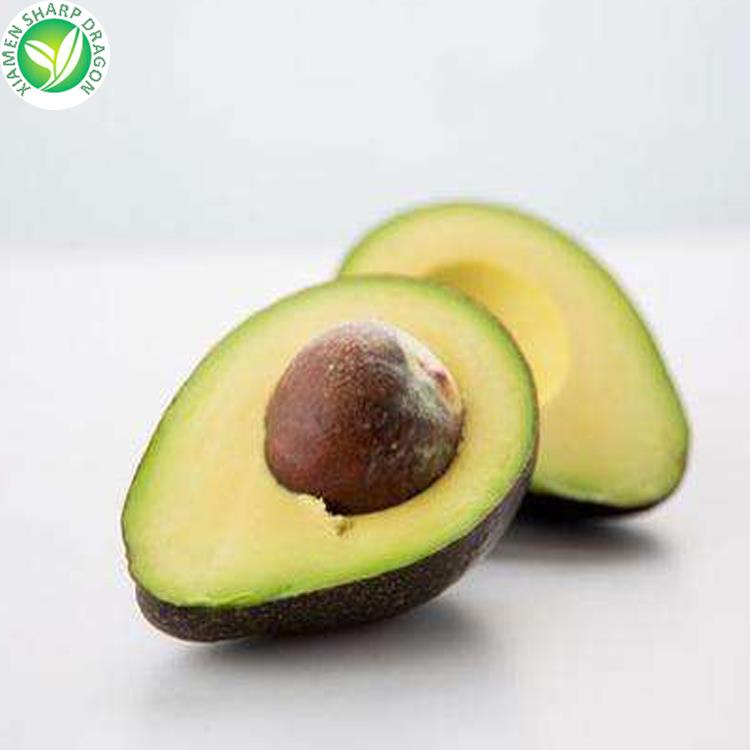
A reference image can support quality inspection, but no photograph can replace lot and handling evidence.
Can You Tell Whether an Avocado Carries Pathogens?
Not reliably by looking, smelling, or tasting. FDA explains that foodborne pathogens differ from the organisms that make food look or smell spoiled; food can cause illness while appearing normal. That is why a sound-looking avocado still needs clean handling and why an ugly-looking avocado should not automatically be blamed for a later illness without an investigation.
FDA's fiscal-year 2014–2016 whole-fresh-avocado sampling assignment gives a useful historical example. The agency tested 1,615 domestic and imported samples. Twelve, or 0.74%, tested positive for Salmonella. For Listeria monocytogenes, 3 of 1,254 pulp samples were positive, while 64 of 361 skin samples were positive. The skin result is one reason surface hygiene matters even though the peel is not normally eaten.
Those numbers need guardrails. They come from a historical federal surveillance assignment, not a random sample of the avocado on your counter and not a current supplier scorecard. They cannot tell you the chance that one present-day fruit will make someone ill. They do show why "the flesh looked fine" is not a complete control and why a knife can transfer contamination from an unwashed surface toward edible flesh.
Handle Whole Fresh Avocado Before the Knife Enters
FDA advises rinsing produce before peeling so dirt and bacteria are not transferred by the knife. Wash your hands for at least 20 seconds with soap and warm water before and after preparation. Hold the avocado under plain running water, gently rub the surface, and dry it with a clean cloth or paper towel. Do not wash produce with soap or detergent.
Use a clean knife, cutting board, work surface, and storage container. Keep produce away from raw meat, poultry, seafood, and equipment that contacted them. Inspect the stem area, peel, and package before cutting. Remove localized damage as FDA directs, but throw away fruit that looks rotten. If soft avocado has visible mold, USDA guidance for soft, high-moisture fruits and vegetables is to discard it because contamination can extend below the surface.
After cutting, control both time and temperature. Refrigerate prepared or pre-cut avocado promptly, keep the refrigerator at or below 40°F (4°C), and follow the product label or validated kitchen procedure. FDA's general two-hour rule says perishables should not sit at room temperature for more than two hours, or one hour when air temperature is above 90°F (32°C). A kitchen still needs a product- and jurisdiction-specific holding rule; the general limit is not a shelf-life validation for every avocado dish.
If You Ate It, Use Symptoms and Severity-Not Panic
Food poisoning symptoms depend on the germ. CDC lists diarrhea, stomach pain or cramps, nausea, vomiting, and fever as common symptoms. Some germs cause illness within hours, while others take days. The fact that symptoms began after an avocado meal is a time sequence, not proof that avocado caused them. Record everything eaten, who shared the meal, and whether other people became ill.
Contact a clinician promptly for severe food-poisoning signs: bloody diarrhea; diarrhea lasting more than three days; fever above 102°F (38.9°C); vomiting so frequent that liquids will not stay down; or dehydration signs such as little urination, dry mouth or throat, and dizziness when standing.
Pregnant people, older adults, young children, and people with weakened immune systems or significant health conditions can face higher risks from some foodborne infections and should seek individualized medical advice sooner.
Allergy is a separate pathway. Hives, lip or tongue swelling, wheezing, throat tightness, trouble breathing, dizziness, or fainting after eating can indicate a serious allergic reaction. Use prescribed emergency medication as directed and call the local emergency number for anaphylaxis signs. Do not test the same avocado again to see whether the reaction repeats.
Gas, bloating, or loose stool without fever or a cluster may also have a portion or gut-tolerance explanation. Our avocado gut-tolerance guide explains how to test repeatable meal variables, while the avocado symptom and allergy guide separates ordinary digestive discomfort from urgent patterns. Neither route should be used to dismiss a suspected outbreak.

Frozen condition preserves the product; it does not retroactively correct contamination or mishandling.
Frozen Avocado Changes the Control Point, Not the Biology
FDA states that food properly handled and stored at 0°F (−18°C) can remain safe, although sensory quality declines over time. Freezing stops most bacterial growth but does not kill most bacteria. Freezer burn is a quality defect, not proof of a food-safety hazard. Unsafe thawing or open-pack handling can allow surviving bacteria to grow or can introduce cross-contamination, depending on the product, time, and temperature.
Do not assume every frozen avocado item is ready to eat. Confirm the intended use, ingredient statement, allergen declaration, microbiological criteria, storage temperature, thawing instructions, open-pack rule, and any cooking instruction on the applicable product specification. A nutrition sheet describes composition; it does not replace a food-safety plan. Use our frozen avocado nutrition overview only as orientation, then verify the actual SKU documents.

Natural variation needs a written defect library so quality findings are not confused with safety release.
For Buyers, Separate a Defect Decision from a Safety Hold
A quality defect and a food-safety hazard can coexist, but they are not the same disposition. Color outside the agreed tolerance, excessive frost, broken pieces, texture loss, or low usable yield may trigger a commercial claim. A positive pathogen result, recall match, package-integrity failure with safety implications, or credible illness cluster can require a safety hold. One must not be used to downgrade the other.
| Record | Decision it supports | Weak substitute to avoid |
|---|---|---|
| Product name, form, supplier code, production and expiry dates, lot and carton code | Defines the exact identity to hold, trace, and compare | "All avocado from that supplier" without code reconciliation |
| Seal, liner, carton, thaw state, received temperature, storage and handling record | Tests package integrity and cold-chain plausibility | A photo taken after uncontrolled thawing |
| Complaint time, portion, preparation, symptoms, onset, duration, other foods and other affected people | Supports clinical and epidemiological review | "Customer got sick the same day" |
| Representative retained samples, laboratory method, chain of custody and result | Provides test evidence that can be tied to identity | Testing one convenient open bag with unknown handling |
| Distribution list and remaining inventory by location | Controls the full suspect scope while facts are checked | Holding only the opened carton |
When a complaint arrives, first stop movement of the suspect identity that remains under your control. Preserve records and retained samples. Notify the supplier and the responsible food-safety authority or customer according to the contractual and legal procedure. Do not wait for a second complaint if the first report contains a serious hazard signal, and do not publish a cause before the evidence supports it.
Worked example: a complaint rate cannot release a lot
Suppose 600 cartons at 10 kg each represent 6,000 kg of avocado. At a hypothetical 75 g served portion, that is 6,000,000 g ÷ 75 g = 80,000 theoretical portions. If the company receives 12 illness complaints, the arithmetic rate is 12 ÷ 80,000 × 100 = 0.015%. That percentage looks small, but it cannot clear the lot.
The denominator assumes every kilogram became a complete 75 g exposure, which may be false because of waste, inventory, different portions, and unused stock. The numerator depends on reporting and case de-duplication. Neither number shows which people ate the product, whether symptoms met a case definition, whether another food was shared, or whether a pathogen was detected. Complaint rate is a monitoring signal, not a microbiological release test.
Pattern matters more than the comforting percentage. Twelve unrelated reports across different products and months lead to one investigation path; 12 people who ate the same preparation, from cartons carrying the same lot code, within a compatible onset window lead to another. Preserve the case-level data, map reports by lot, customer, preparation, date, and symptom pattern, and let qualified investigators determine scope. Do not average a cluster away by dividing it across all historical sales.

Inspect a defined sample against a written defect library; avoid judging an entire lot from one photogenic handful.
Worked example: observed defects in a receiving sample
Suppose a receiving team examines 1,200 avocado pieces under its approved sampling procedure and classifies 18 as mold-like, leaking, slimy, or extensively broken down. The observed finding is 18 ÷ 1,200 × 100 = 1.5%. That number is an observation in the inspected sample, not proof that exactly 1.5% of every carton is affected and not a pathogen result.
The next action depends on the written acceptance plan and the defect classification. If mold is a critical reject condition, the team should hold the represented lot, preserve the sample and photos, verify codes and sampling method, and escalate according to the plan. It should not quietly trim the 18 pieces and report a 98.5% pass rate. The calculation tells you what was observed; the specification tells you how to act.
Worked example: define the complete lot hold
Assume lot A contains 240 cartons at 10 kg each, or 2,400 kg. A distributor has shipped 180 cartons and still holds 60. One customer reports a serious illness signal and provides a carton code that matches lot A. The warehouse hold is 60 × 10 kg = 600 kg, but the controlled scope is not only those 600 kg. The trace exercise must also locate 180 × 10 kg = 1,800 kg downstream.
If customer records show that 50 downstream cartons were already used, then potentially recoverable downstream inventory is 180 − 50 = 130 cartons, or 1,300 kg. The status ledger should reconcile 600 kg on hand + 1,300 kg recoverable + 500 kg used = 2,400 kg. "Used" means no longer recoverable in this ledger; it does not prove that all 500 kg was eaten, so service, waste, and further distribution still need reconciliation. These figures are hypothetical, but the arithmetic demonstrates the discipline: hold and trace by full lot identity, not by the three kilograms left in the complained-about bag.

Facility images are useful only when tied to the product, line, date, control record, and lot under review.
Build the Specification Before a Complaint Happens
The word "bad" is too vague for receiving inspection. Define acceptable form and piece size; color range after a named thaw method and time; maximum frost, free liquid, broken pieces, skin or stone fragments, and other foreign material; odor and texture checks; pack and liner integrity; net weight basis; storage temperature; shelf life; intended use; microbiological criteria; sampling method; defect categories; and the disposition for each failure.
Also define which evidence travels with each lot. Depending on the order and market, that may include a certificate of analysis, production and packing dates, lot coding, temperature records, ingredient and allergen declarations, plant and product certifications, and loading documents. A generic certificate folder is not enough if the holder, scope, validity, and covered product cannot be matched to the shipment.
For complaint readiness, name the contact route, response time, responsible decision maker, sample-retention period, laboratory escalation rule, and recall or withdrawal communication route. Test the trace record with a mock question: can the team reconcile received, on-hand, shipped, returned, destroyed, and used quantities for one lot without inventing a number?

Legible carton and inner-pack codes turn a vague complaint into a controllable identity.
The Decision in One Minute
If the avocado is visibly moldy, slimy, leaking, rotten-smelling, or extensively broken down, discard it without tasting. If a lot is recalled, incorrectly held, or connected to a credible safety signal, quarantine it even when it looks normal. If the only issue is a thin brown surface after cutting, oxidation is plausible, but time, storage, texture, odor, package, and handling still decide whether the item fits your quality and safety procedure.
If someone is ill, use severity and medical guidance, not a photo of the fruit. Preserve the label and lot code, record the complete meal and onset, and report suspected foodborne illness through the appropriate local route. For a business, stop the suspect lot from moving, reconcile its distribution, preserve evidence, and involve qualified food-safety personnel. The safest answer is not "brown means bad" or "it smelled fine." It is a documented decision built from the right evidence.
Reviewing a frozen avocado program? Compare the available frozen avocado forms, then align pack and lot controls with our frozen packaging overview.
Send the intended use, destination market, form, pack, lot-document needs, estimated volume, and required acceptance tests through the XMSD inquiry form. We will review the product and specification points that need confirmation before an order decision.
References
- U.S. Food and Drug Administration. Microbiological Surveillance Sampling: FY14–16 Whole Fresh Avocados. Accessed August 24, 2026.
- U.S. Food and Drug Administration. 7 Tips for Cleaning Fruits, Vegetables. Accessed August 24, 2026.
- U.S. Food and Drug Administration. Are You Storing Food Safely?. Accessed August 24, 2026.
- Centers for Disease Control and Prevention. Food Poisoning Symptoms. Updated November 24, 2025.
- National Institute of Diabetes and Digestive and Kidney Diseases. Symptoms & Causes of Food Poisoning. Accessed August 24, 2026.
- USDA Food Safety and Inspection Service. Molds on Food: Are They Dangerous?. Accessed August 24, 2026.
- MedlinePlus. Food Allergy. U.S. National Library of Medicine. Accessed August 24, 2026.
- Tilley A, McHenry MP, McHenry JA. Enzymatic Browning: The Role of Substrates in Polyphenol Oxidase Mediated Browning. Current Research in Food Science. 2023;7:100623.