


XMSD Whole Shiitake Guide: Caps, Stems and Usable Yield
Jun 04, 2019

Most of a cultivated shiitake fruiting body can enter a food process: the cap is the familiar tender portion, while a sound stem is also food material but usually firmer and more fibrous. "Edible" does not mean every part belongs in every finished product. The dry or woody base may need trimming, and a tough stem that performs poorly in a whole-piece dish can still suit stock, sauce, filling, seasoning or milling.
For commercial use, make the decision by identity, soundness, texture, cut, process and finished application. Do not use one whole-mushroom statement to release decay, foreign matter, substrate residue or a product outside its intended preparation route. This guide shows how we separate the anatomical question from specification, yield and cost.
Practical answer: You can use the cap and a sound, properly prepared stem of cultivated shiitake. Trim the attachment end and reject damaged or decayed tissue. Keep the cap whole or sliced when appearance and tenderness matter; slice, dice, mince, extract or mill firmer stems when the application can use their texture and flavor. Confirm the purchased form and cook or process it according to its instructions.

Define what "all of the mushroom" means
A shiitake sold for food is a harvested fruiting body, not the cultivation block. The visible cap, gills and stem belong to that fruiting body. The base can carry compressed substrate or a dry attachment point, so trimming is a preparation and quality step even though the stem above it is not automatically waste.
The cap is normally the highest-value visible piece. Its diameter, thickness, edge shape, color, gill condition and breakage influence grade and presentation. The gills are part of the cap; they are not a separate inedible layer that must routinely be scraped away. Remove tissue because it fails the agreed condition, not because the underside looks different from the brown cap surface.
The stem attaches the cap to the growing substrate. Its firmness varies with cultivar, maturity, water status, fresh versus dried form and distance from the base. The upper stem may be pleasantly chewy after an appropriate cut, while the bottom can remain hard. A binary "keep every stem" or "discard every stem" rule hides that useful gradient.
Packaging language matters. "Whole," "whole with stems," "caps," "cap pieces," "sliced," "stems and pieces," and "diced" describe different yield and appearance. USDA fresh-mushroom standards use terms such as mature, well trimmed and free from decay or damage. Those standards are not a shiitake recipe, but they demonstrate why trimming and defect tolerances must be defined instead of assumed.
Species identity also belongs at the front of the decision. Cultivated shiitake should arrive under a traceable commercial identity. A photograph, common-name translation or resemblance to another brown mushroom is not enough to approve unknown foraged material. FDA analytical guidance notes that mushroom differentiation can require authentic specimens and specialist examination. Buy from an approved cultivated source and retain the product and lot identity through processing.
| Part or condition | Typical decision | Reason to change the decision |
|---|---|---|
| Sound cap and gills | Use as the primary visible piece | Decay, contamination, severe damage or application mismatch |
| Sound upper stem | Use whole, sliced, diced or minced after a texture trial | Too fibrous for the selected cut or serving method |
| Dry attachment end | Trim to the written standard | A purchased pre-trimmed form already controls it |
| Decay or abnormal contamination | Hold and dispose under the lot procedure | Do not rescue it merely by changing the cut |
Separate edibility from eating quality
Edibility answers whether identified food material can be used under the intended preparation. Eating quality asks whether its bite, appearance and flavor fit the product. A safe, sound stem can still be too stringy for a delicate topping. Conversely, that same stem can perform well after fine dicing in a dumpling filling or after extraction in a broth.
Test texture in the final geometry. A 25 mm stem section and a 3 mm dice do not present the same bite. Cutting across the fiber, reducing thickness and allowing enough hydration or cook time can improve usability. Record the result rather than turning a successful kitchen trial into a universal time-and-temperature promise.
Do not confuse toughness with toxicity. The related XMSD shiitake-stem safety guide owns the narrower poisonous-versus-fibrous question. Here the commercial decision is how much sound stem your application can use and how that choice affects paid yield.
Keep food-safety release separate from sensory acceptance. Correct species identity, approved cultivated source, intact packaging, lot traceability, condition, storage history and the stated preparation route come first. A tender bite cannot prove the absence of a hazard, and a firm bite does not prove a toxin.

Match each usable part to an application
Reserve attractive caps for applications where the customer sees the piece: retail whole mushrooms, hotpot, garnish, pizza, prepared rice, premium soup or a recognisable frozen mix. Control diameter, cap thickness, open versus closed appearance, gill color, breakage and slice orientation according to what the finished pack promises.
Use upper stems when the bite can be managed. Thin cross-cuts can enter stir-fry or soup; small dice can enter sauces, fillings and formed foods; mince can support seasoning pastes or mushroom blends. A producer may also dry and mill suitable stem material, but that becomes a separate ingredient with particle-size, moisture, microbiological, foreign-material and label requirements.
Stock and extraction can capture flavor from pieces that lack premium appearance, provided they remain sound food material and the process is approved. Extraction is not a disposal route for decay or dirty bases. Define the input specification, water ratio, thermal process, filtration, concentration, storage and how you will control post-process contamination.
Application example: A central kitchen buys whole dried shiitake for a filled bun. Rehydrated caps are diced to a visible 5 mm component. Sound stems are separated, cut across the fiber to 2–3 mm and tested at three inclusion levels. The team selects the level that meets bite and filling-machine performance, rather than rejecting all stems or hiding an unlimited amount in the formula.
Write the allocation into production records. We recommend separate weights for premium cap use, acceptable secondary use, trim and true reject. That distinction reveals whether a new cut improves value or merely moves a defect into another bin.
Run the first comparison blind where practical. Serve the approved cap-only control beside fixed cap-and-stem ratios under coded samples. Score chewiness, juiciness, visible color, aroma, flavor release and any machine or hold-time issue. Then open the codes and connect the sensory result to the yield calculation. This prevents a preconceived "stem equals low grade" judgment from replacing application evidence.
| Application | Useful starting form | Trial question |
|---|---|---|
| Visible whole or sliced dish | Selected caps or specified whole pieces | Do appearance and bite survive the real process? |
| Sauce or filling | Cap pieces plus qualified fine-cut stems | What inclusion keeps flavor without a fibrous bite? |
| Stock or extract | Sound trim and pieces | Is extraction yield repeatable and safely controlled? |
| Powder or seasoning | Qualified dried cap/stem material | Are moisture, size, microbiology and identity specified? |
Fresh, frozen and dried forms change the answer
Fresh shiitake lets you see cap, gills, stem and base clearly, but it is perishable and can change during distribution. Specify temperature, pack ventilation where applicable, maturity, cap size, stem length, surface condition, decay and shelf-life method. The percentage you trim at arrival may not match the percentage at packing if storage conditions differ.
Freezing fixes neither an undefined cut nor an unsuitable raw material. IQF whole, sliced and diced products can provide portioning and year-round handling advantages, but ice, breakage, dehydration, clumping, cut distribution and cooking loss affect the result. Compare current frozen shiitake formats against your pan, kettle or filling process, and keep the cook-before-use instruction visible in the finished procedure.
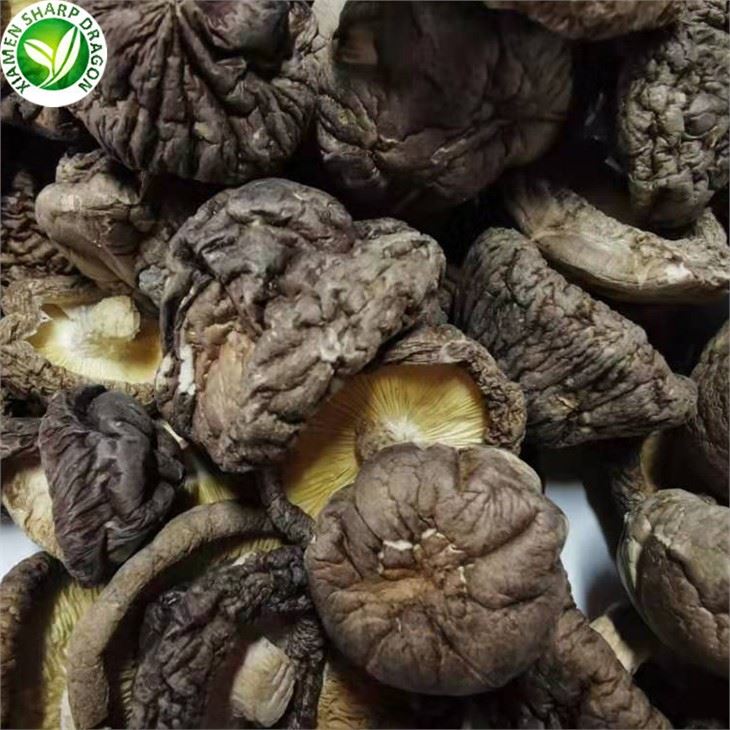
Dried shiitake concentrates solids and changes the texture problem into a hydration problem. Whole pieces, caps, slices and broken grades hydrate at different rates. Water temperature, time, mushroom-to-water ratio, agitation, piece thickness and post-hydration hold all affect yield. The dried mushroom range is a starting point for defining form; your trial must still establish the usable result.
Do not compare fresh purchase price, frozen invoice weight and dried price per kilogram without normalizing usable output. Fresh includes substantial water and may need trim. Frozen may carry glaze only if declared and allowed, and can lose purge during preparation. Dried gains water during rehydration. Price per delivered kilogram therefore answers less than cost per kilogram of approved finished-use material.
Use the broader XMSD frozen mushroom category only when you need to compare shiitake with other species or mixed formats. Species are not interchangeable: flavor, firmness, water release, piece geometry and processing response must be tested in the actual formula.
Keep preparation instructions attached to the commercial form. A frozen sliced product, a dried whole product and a fresh product can share the name shiitake while reaching the kitchen with different hydration, thaw, cooking and holding needs. Translate those instructions accurately for the destination and verify that retail or foodservice artwork does not imply a ready-to-eat use that the supplier documentation does not support.

Measure trim, hydration and usable yield
Start the trial with a representative lot and a written classification. Weigh unopened input, packaging, sound cap mass, usable stem mass, dry base trim, application rejects and any other non-overlapping category. For dried material, add rehydrated mass, drained mass and cooking yield. Record drain time because a wet basket can inflate the result.
Practical example: A kitchen evaluates 100.0 kg of thawed or prepared shiitake pieces. It obtains 68.0 kg of cap material for visible use, 19.0 kg of sound stem material suitable for fine dicing, 5.0 kg of dry base trim and 8.0 kg of non-overlapping defects or unusable pieces. Whole-mushroom usable yield is (68.0 + 19.0) ÷ 100.0 = 87.0%. Cap-only yield is 68.0%, but that smaller number is not the true economic yield if the approved filling can use the stems.
At a delivered cost of USD 420 for the lot, cost per usable kilogram is 420 ÷ 87.0 = USD 4.83/kg before labor, cooking loss, sauce, packaging and overhead. If you discard all 19.0 kg of usable stem, cap-only material costs 420 ÷ 68.0 = USD 6.18/kg. The difference is an allocation result, not permission to use stem where texture fails.
Repeat the calculation after the real cook. If a fine-cut stem binds more sauce or releases water, its inclusion can change formula yield and filling-machine behavior. Record cooked batch mass, drained loss, rejected finished units and portion count. A raw-material saving that creates more finished-product rejects is not a saving.
Add labor to the comparison when trimming is manual. Record minutes per case, operator count and the amount of usable cap or stem recovered. A tightly trimmed premium cap may carry a higher invoice price but reduce labor and variation. A less-prepared whole grade may win only if the recovered secondary stream has a real approved use and the line can separate it consistently.
Worked example: normalize dried material after hydration
A trial hydrates 20.0 kg of dried whole shiitake and records 92.0 kg after the defined drain. Hydration yield = 92.0 ÷ 20.0 = 4.60 kg/kg.
After base trimming and texture sorting, 83.0 kg remains usable. Net usable yield = 83.0 ÷ 20.0 = 4.15 kg/kg dry input.
If the dry lot costs USD 260, raw-material cost per usable hydrated kilogram = 260 ÷ 83.0 = USD 3.13/kg. Use the same hydration, draining and classification method when comparing suppliers.

Build a specification around the intended output
Name the species and cultivated food source. Then specify form: fresh, frozen or dried; whole, caps, slices, dice, pieces, stems and pieces, or powder. For visible products, state cap diameter, slice thickness, piece range, stem-length treatment and whether gills or broken caps affect grade. Include photographs with a scale and a retained approved sample.
Define defects separately. Substrate residue, foreign material, decay, insect damage, discoloration, broken pieces, off-size pieces, stem percentage, hard bases and dehydrated or freezer-damaged tissue need methods and limits appropriate to the form. Do not double-count one piece in several reject columns unless the contract explicitly uses that method.
Add sensory and process tests. Your approval can include aroma, cooked flavor, cap bite, stem bite at the chosen geometry, hydration ratio, drain method, cooking loss, sauce uptake and finished-machine performance. A specification that says only "good texture" gives receiving staff no reproducible release decision.
Complete the safety and commercial fields: microbiological and contaminant plan, destination requirements, packaging material, unit and master-case weight, lot code, storage temperature, shelf life, preparation instruction, traceability, inspection documents and change-control triggers. If stems will enter a secondary ingredient stream, give that stream its own food-contact, holding, process and lot-record controls.
Sample across the lot, not from one convenient case. Record case and pallet positions, piece counts and weights. A single attractive cap photograph cannot describe stem proportion, lower layers, breakage distribution or hydration performance. Predefine what happens after a failed result: hold, expanded inspection, rework, alternate application, claim or rejection.
Use retained samples to control drift. A change in cultivar, harvest maturity, stem-cutting position, dryer, slice thickness, blanching, freezing line, packing film or storage condition can alter the result even when the sales name stays the same. Name which changes require notification and which require a new hydration, cook, yield or shelf-life evaluation.

Avoid four costly whole-mushroom mistakes
"Every visible part must stay in the premium SKU." No. Soundness does not guarantee premium appearance or tenderness. Allocate cap, usable stem, trim and reject by the finished specification. Keeping hard bases in a retail whole-piece product can damage acceptance even if most of the stem has value elsewhere.
"All stems are waste." That can understate usable yield and overstate raw-material cost. Run a controlled cross-cut, dice, mince, extraction or milling trial. Keep the stem only when the result meets the application; the trial creates evidence, not an obligation.
"A lower-priced broken grade always lowers formula cost." Not if sorting labor, hydration variation, fines, cooking loss or finished defects rise. Calculate accepted output and line performance. Invoice price is one input to the decision, not the denominator you finally sell.
"Cooking repairs poor incoming condition." A thermal step does not turn decay, unknown wild species, foreign matter or uncontrolled history into acceptable raw material. Approve identity and condition first, then validate the preparation for the specified product.
Questions to close before buying whole shiitake
Must the gills be removed? Not routinely. Gills are part of a sound cap. Remove or reject material only when the agreed condition, cleaning, appearance or application requires it.
How much stem can a pack contain? There is no useful universal percentage. State the purchased form-whole pieces, caps, slices, stems and pieces or another cut-then set the stem definition and test it in the finished product.
Can stem and cap use the same cut? Sometimes, but do not assume it. Their fiber direction and firmness differ. Compare the selected geometries after the same hydration and cook, including hold time and reheating if those occur in service.
Does dried shiitake yield more because it gains water? It gains mass during hydration, but the relevant result is drained, trimmed, usable cooked output. Fix the hydration and drain method before comparing ratios.
What evidence should accompany a complaint? Send product and lot codes, form, pack condition, storage record, preparation method, cap/stem weights, defect categories, photographs with scale, retained sample details and the exact specification limit that failed.
Can everything sound become a secondary ingredient? Only after that stream has a defined food process and holding limit. Once trim is separated, protect it from contamination, identify its lot, control time and temperature, and transfer it only to the approved recipe. Uncontrolled collection between batches destroys the traceability and yield evidence you were trying to create.

Send the application and the yield method
Tell us whether you need fresh, IQF or dried shiitake; whole pieces, caps, slices or dice; the cap and stem treatment; finished application; pack; annual volume; destination and required documents. You can review XMSD processing and quality evidence before defining the trial.
Submit the brief through the XMSD inquiry form. We will review format fit and coordinate samples around your cut, hydration, cook and usable-yield method.
References
- USDA Agricultural Marketing Service, Mushrooms Grades and Standards
- USDA Agricultural Marketing Service, United States Standards for Grades of Canned Mushrooms
- U.S. FDA, Macroanalytical Procedures Manual V-11, Mushroom Identification
- U.S. FDA, Food Code
- USDA FoodData Central, Shiitake Mushroom Data
- Analysis of Volatile Aroma Components in Shiitake Caps and Stems
- Study on Rehydration Quality Improvement of Shiitake Mushroom