


Are Grapes Bad for Weight Loss? A Failure-Mode Audit
Sep 25, 2019

Grapes do not automatically prevent weight loss, and they do not cause weight loss by themselves. Their effect depends on energy balance across time, the portion and product form, what the grapes replace, and whether the eating pattern is realistic enough to maintain. A measured serving of whole or unsweetened frozen grapes can fit a weight-management plan.
Problems usually appear when grapes are added rather than substituted, an open package hides the amount, juice or raisins are treated like an equal-volume whole-fruit serving, or coatings and syrups are ignored. The right audit follows the complete eating occasion, not the fruit name.
The short answer: Grapes are not inherently bad for weight loss. They can work against a planned energy reduction when the serving is unmeasured, repeatedly added, concentrated into juice or dried fruit, or carried by a high-energy formula. Define the form, weigh the portion, and record the item it replaces.

The Real Decision Is Addition Versus Substitution
Weight change is not assigned to one fruit in isolation. Energy intake, activity, sleep, medicines, health conditions, appetite, and adherence interact over time. The useful food-level question is whether the grape serving reduces, preserves, or increases the energy of the complete meal or day.
The CDC emphasizes substitution when using fruits and vegetables to help manage weight. Replacing a more energy-dense item can reduce meal energy; eating fruit in addition to everything already planned adds energy. That distinction is more informative than labeling grapes as a "fat-burning" or "fattening" food.
Ask one operational question: what leaves the plate, cup, cart, or formula when the grapes enter? If the answer is "nothing," the serving is an addition. It may still fit the day, but it should be counted honestly. If it replaces a specified dessert or snack, compare the two measured portions rather than relying on a healthy-looking photograph.
The grape substitution guide owns the positive choice question. The narrower task here is failure analysis: find exactly where a grape use erases the intended reduction and correct that point without banning the fruit.
Correct the Starting Number Before Calculating
A claim that every 100 g of grapes provides only 43 kcal is not a dependable general reference. USDA FoodData Central's SR Legacy entry for raw red or green European-type grapes, including Thompson seedless, reports 69 kcal per 100 g edible portion. Other cultivars, lots, and commercial products can differ, so identify the data record and food state.
The number is neither a warning nor a weight-loss promise. It is a calculation input. A fresh edible portion, an IQF portion weighed frozen, a thawed portion after drip loss, a raisin serving, and a coated frozen snack do not share one denominator. Product-specific nutrition data takes priority when it is validated for the marketed item.
Worked example: Using 69 kcal per 100 g as the stated raw-grape reference, a 150 g portion supplies about 150 ÷ 100 × 69 = 103.5 kcal. If it replaces a 280 kcal pastry, the direct arithmetic difference is 280 − 103.5 = 176.5 kcal less. If it is eaten after the pastry, the same portion adds approximately 103.5 kcal instead. The grape has not changed; the substitution has.
This is an illustrative food swap, not a prediction of body-weight change. Appetite later in the day, actual portions, activity, metabolic adaptation, and adherence can alter the outcome. Use a multi-day record and qualified care where weight change is clinically important.
Failure Mode 1: The Portion Is Invisible
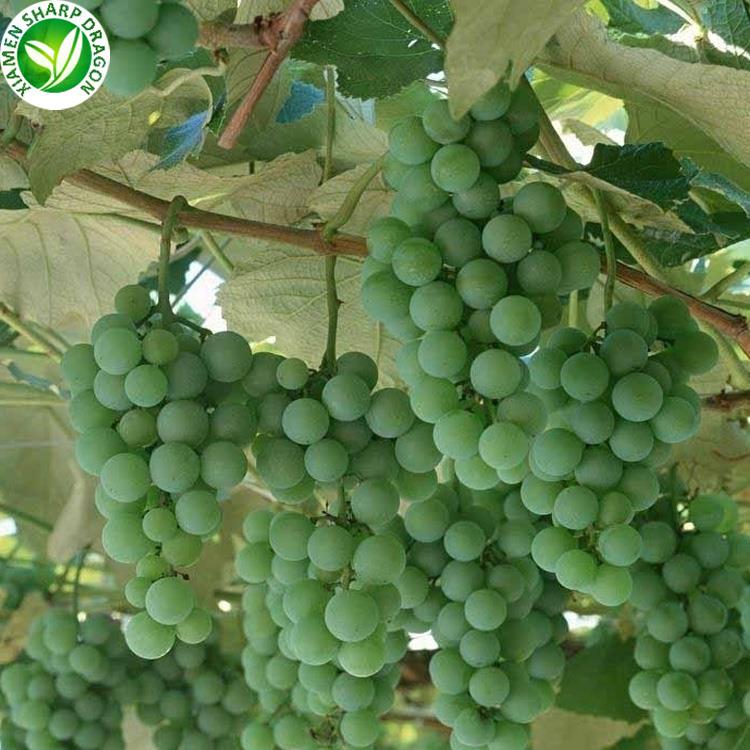
Grapes are easy to pick repeatedly from a large bowl, buffet pan, or resealable bag. Count becomes difficult when berry size varies, and "a few" can turn into several handfuls without a stopping point. The solution is not a universal grape ban; it is a visible serving unit.
Choose a bowl, cup, pouch, scoop, or gram weight that matches the eating occasion. Move that amount out of the bulk pack and close the remainder. If the product is frozen, state whether the portion is weighed frozen or after thawing. If it is drained from syrup, state whether the label and recipe use net or drained weight.
A measured portion also improves diagnosis when progress stalls. Without it, the review cannot distinguish grape quantity from dressing, yogurt, nuts, cereal, bakery pieces, or another food eaten at the same time. The large grape portion guide covers digestive and safety consequences; the focus here is the hidden energy contribution.
Portion example: A diner intends to eat one 140 g fruit bowl but keeps a 1 kg bag beside the desk. The correction is to weigh 140 g into the bowl, return the bag to storage, and record the serving once. This creates a testable input without claiming 140 g is the right amount for every person.
Failure Mode 2: The Fruit Is Added to an Unchanged Meal
A food can be nutrient-containing and still increase total intake when it is simply layered onto an existing pattern. Adding grapes to breakfast without reducing cereal, granola, sweetened yogurt, juice, or another component may create more energy than intended. The package statement "contains fruit" does not prove that the complete breakfast is lighter.
Write the before-and-after meal on one line. Show every ingredient and portion. A real swap has an outgoing item, a reduced quantity, or a documented formula change. If grapes improve enjoyment but no ingredient can be removed, count them as an addition and adjust elsewhere only if that choice remains practical.
Timing is not a magic correction. Grapes at breakfast, as a snack, or in the evening still contribute to the total eating pattern. The grape timing guide helps match a serving to meals, exercise, sleep, and tolerance, but no clock hour cancels an unplanned addition.

Failure Mode 3: Juice and Dried Grapes Masquerade as Whole Fruit
Drying removes much of the water, concentrating grape solids into a smaller volume. Juicing changes structure and makes a serving easy to drink quickly. Those foods can fit some plans, but a cup-for-cup comparison with whole grapes is misleading. Use the labeled serving and actual use amount.
CDC guidance recommends whole fruits over fruit juices for weight management because whole fruit retains fiber and tends to provide more volume. It also warns that the total calories still count and recommends frozen or canned choices without added sugar or syrup. That is a form decision, not a claim that juice or raisins are poisonous.
For a smoothie, count everything that goes into the blender: grapes, juice, milk, yogurt, nut butter, protein powder, sweetener, and toppings. Blending does not remove their energy. A beverage marketed as "grape" may also be a fruit drink with added sugars rather than 100% juice; the ingredient list and Nutrition Facts label answer that question.
Form example: A recipe changes from 120 g whole frozen grapes to 120 g raisins because both are grape products. The developer stops the trial and compares energy, carbohydrate, water, serving size, rehydration, texture, and use rate on a consistent basis. Equal gram weight does not preserve the same nutrition or sensory result.

Failure Mode 4: Coatings, Syrups and Toppings Go Uncounted
A product can display visible grapes while most of its energy difference comes from yogurt coating, chocolate, sugar syrup, dough, cream, granola, nuts, or portion size. The grapes do not neutralize those ingredients. Evaluate the finished food per labeled serving and per amount actually consumed.
The FDA Nutrition Facts label distinguishes total sugars from added sugars. Naturally occurring fruit sugar is included in total sugars; sugars added during manufacture are declared under added sugars where the rule applies. Read serving size, servings per container, calories, ingredient list, and added sugars together. "No added sugar" does not mean no calories, while "contains natural fruit" does not mean no added sugar.
A restaurant or private-label developer should calculate the full serving. If a 100 g base receives 25 g coating, the marketed portion is not still 100 g of plain fruit. The formula, coating pickup, actual piece count, portion tool, label basis, and consumer instructions all need alignment.
Do not assume a wellness-style name fixes the mismatch. "Frozen grape bites," "fruit clusters," and "grape yogurt bark" can describe very different recipes. Request the specification and current label rather than inferring nutrition from the name.
Failure Mode 5: The Plan Is Too Restrictive to Maintain
Banning grapes because they taste sweet may create a rule that is unnecessary and difficult to follow. Weight management depends on a sustainable overall pattern, not a contest to remove every food containing natural sugar. If a measured grape serving improves enjoyment and replaces a higher-energy item, it may support adherence.
The opposite can occur when grapes are not satisfying for a particular person. Someone may eat a fruit-only snack and then buy another snack soon afterward. That does not make grapes harmful; it means the occasion may need a different portion or combination. A protein or other meal component might fit the individual's plan, preferences, allergies, and energy target better.
Avoid moral labels such as "clean," "guilty," or "cheat." They do not quantify a serving and may worsen an unhealthy relationship with food. People with eating-disorder symptoms, major unintended weight change, pregnancy, childhood growth needs, or complex medical conditions need qualified individualized guidance rather than a generic online restriction.
The grape health guide separates general food quality from disease and beauty promises. A food can contribute to a varied diet without becoming essential for weight loss.
Run a Seven-Day Failure Audit
Record the grape form, grams or milliliters, time, complete meal, toppings, and intended substitution for seven representative days. If the product is frozen, note frozen or thawed basis. If it is syrup-packed, note net or drained basis. If it is juice, record the vessel volume rather than "one glass."
Then classify each use: substitution, planned addition, or unplanned addition. A substitution has a named outgoing item and comparable serving basis. A planned addition is counted within the day. An unplanned addition appears after the meal or through repeated picking and has no assigned place.
Review hunger and satisfaction as well as arithmetic. Record whether the serving was enjoyable, whether hunger returned quickly, and whether the plan caused compensatory eating later. Do not interpret a one-day scale change as fruit-specific fat gain; body water, sodium, stored carbohydrate, digestion, and measurement conditions change daily weight.
Change one variable at a time. Portion the grapes before eating, replace a defined food, or move from a sweetened form to an unsweetened form. Keep the rest of the occasion similar long enough to see whether the correction is practical. If weight changes unexpectedly or the record triggers distress, take it to a clinician or registered dietitian.
Correct the Failure Without Discarding the Fruit
If your audit finds repeated picking, pre-portion the grapes and put the bulk pack away. If it finds an added snack, name the food the grapes will replace or count the addition within the plan. If juice or raisins create the mismatch, compare their labeled serving with the whole or unsweetened frozen option rather than replacing equal volume.
If a coating or syrup is responsible, the correction may be a different specification, a lower pickup, a smaller finished serving, or an unsweetened base. You should recalculate the complete item after the change; removing one ingredient can alter texture, yield, sweetness, cost, and portion acceptance.
If hunger drives a second snack, adjust the eating occasion rather than blaming grape sugar alone. Record whether a different serving, meal placement, or suitable companion food improves satisfaction. The best correction is the smallest measurable change that survives ordinary service, appetite, cost, and labeling conditions.
Frozen Grapes: State, Yield and Portion Control
Unsweetened IQF grapes can support portion control because free-flow pieces can be weighed without thawing the full case. That operational advantage does not make every frozen grape product low in energy or suitable for direct consumption. Confirm ingredients, glaze or syrup, pack statement, intended use, and storage instructions.
Thawing changes texture and may produce drip. If a foodservice recipe calls for 100 g usable thawed fruit, the frozen issue weight may need to be higher. Nutrition, cost, and yield teams must agree whether calculations use frozen input, thawed total, or drained usable fruit.
Yield example: A trial begins with 5.00 kg frozen grapes and obtains 4.70 kg usable fruit after the defined thaw and drain. Yield is 4.70 ÷ 5.00 × 100 = 94%. To deliver 150 g usable fruit, approximate frozen issue is 150 ÷ 0.94 = 159.6 g. The team uses its verified product data for nutrition rather than automatically applying the raw-grape reference to the frozen issue weight.
Review the frozen fruit category for sourcing context, then request a grape-specific trial. Portion control is meaningful only when product identity, ingredient status, state, usable yield, and dispensing method are defined.

Specification and Label Checks for Weight-Positioned Products
Begin with ingredient identity and percentage: grapes, added water, syrup, sugar, juice concentrate, coating, stabilizers, flavors, and carriers. Define the nutrition calculation source, laboratory or database basis, serving size, servings per container, and rounding rules required in the destination market. A generic raw-fruit number is not sufficient for a multi-ingredient product.
Align the physical pack with the intended serving. A 1 kg foodservice bag needs a portion tool and staff instruction. A retail pouch intended for several servings needs clear servings-per-container information and reseal performance. A single-serve claim should match the quantity reasonably consumed and the applicable labeling rule.
For IQF fruit, add cultivar or accepted variety group, berry-size range, color, maturity, seed status, defects, stems, clumping, broken fruit, sensory criteria, storage temperature, shelf life, pack, pallet, traceability, microbiological criteria, residue requirements, and intended use. Those controls affect yield and serving repeatability even when they do not directly determine body weight.
Avoid claims that grapes burn fat, guarantee weight reduction, prevent obesity, cancel dessert, or can be eaten without limit. "Made with grapes" describes an ingredient, not a clinical outcome. Submit weight-related wording to qualified regulatory review in the destination market before printing.

When Weight Concerns Need Professional Review
Seek individualized guidance for unexplained or rapid weight change, persistent gastrointestinal symptoms, diabetes medicines, pregnancy, childhood growth, kidney disease, severe food restriction, binge episodes, purging, or distress around eating. A grape calculation cannot diagnose the cause or set a safe target.
Bring a representative food record, product labels, portion measurements, medicines, activity, symptoms, and weight-measurement conditions. This lets the professional evaluate the overall pattern rather than removing one fruit on suspicion.
Final Answer from XMSD
Grapes are not inherently bad for weight loss. They become a problem when their actual contribution is hidden: a large or repeated portion, an addition to an unchanged meal, a switch from whole fruit to juice or raisins without changing the serving, or a coating and syrup that goes uncounted.
Use a verified food-state number, weigh the serving, and write down what it replaces. The worked example shows why: 150 g raw grapes at the cited 69 kcal/100 g reference is about 103.5 kcal; it lowers the arithmetic of a 280 kcal snack only when it replaces that snack, not when it follows it.
For commercial use, define ingredients, frozen or prepared weight basis, usable yield, serving tool, pack, nutrition source, and destination claim requirements. That turns a vague good-versus-bad question into an auditable product and meal decision.
XMSD sourcing note: Share the grape form, full ingredients, target serving, frozen or usable basis, thaw method, pack, application, destination, and proposed label position. We can review the sourcing brief and trial measurements.

References
- U.S. Centers for Disease Control and Prevention: Fruits and Vegetables for Healthy Weight
- USDA FoodData Central: Raw Red or Green Grapes, FDC ID 174683
- USDA FoodData Central: Foundation Foods Documentation
- U.S. Food and Drug Administration: Added Sugars on the Nutrition Facts Label
- U.S. Food and Drug Administration: The Nutrition Facts Label
- XMSD operational experience in frozen-grape product-form comparison, thawed-yield testing, portion design, pack review, and B2B specification development.