


Are Grapes Good for Weight Loss? Use Them as a Swap
Sep 24, 2019

Grapes can fit a weight-loss eating pattern, but they do not cause weight loss by themselves. Their practical advantage is simple: a measured serving of whole grapes can replace a more energy-dense snack or dessert while still providing sweetness, water, and some fiber. If you add the grapes after eating everything you normally eat, their calories are still added to the day. The useful question is therefore not "Do grapes burn fat?" but "What will this portion replace, and how much energy will the swap change?"
Food form matters as much as fruit identity. Whole fresh grapes and plain frozen grapes retain the fruit structure and are easy to weigh. Juice is consumed quickly and has little or no intact fiber. Raisins contain far less water, so an apparently small handful carries more energy per gram. Grapes in syrup, candy coatings, cream, sweetened yogurt, or a large smoothie must be judged as a complete recipe. If you are trying to reduce energy intake, we would start with a pre-portioned bowl of whole or plain frozen grapes and use it as a deliberate substitution.
The short answer: Grapes are compatible with weight loss when a defined portion helps lower total energy intake and the rest of the eating pattern remains adequate. They are not a weight-loss treatment, a free food, or proof that a meal is low in calories.
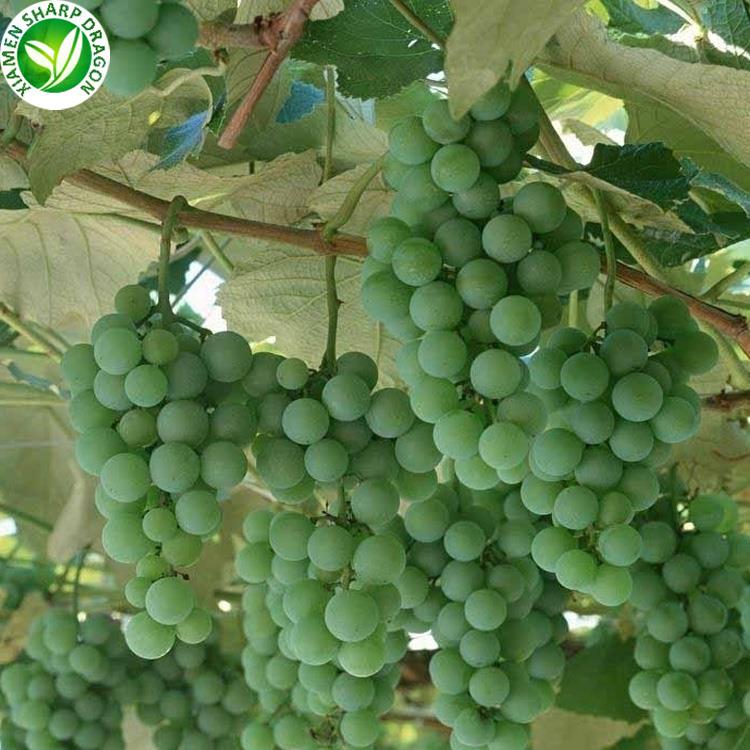
What "Good for Weight Loss" Can Honestly Mean
Body weight changes in response to the broader energy balance over time, with individual needs influenced by body size, activity, metabolism, medication, sleep, health conditions, and other factors. NIDDK therefore frames a maintainable eating plan and physical activity as the foundation of weight management. One fruit cannot override the complete pattern. A grape serving may help only through the job it performs inside that pattern.
There are three defensible jobs. First, grapes can replace a higher-energy food. Second, a measured portion can provide a sweet finish without turning into an open-ended bag or bowl. Third, whole fruit can supply more food volume than the same energy from a concentrated dried form. None of these jobs guarantees that you will eat less later, and none gives grapes a special fat-burning property.
The evidence supports that restrained interpretation. A 2025 systematic review and meta-analysis of randomized controlled trials found no significant effect of grapes or grape products on body weight, waist circumference, body fat, or several appetite-related markers. The reported BMI change was trivial and the study quality was low. That conclusion is especially important because trials grouped several grape forms, including products that are not equivalent to a bowl of table grapes.
Earlier research on increasing fruits and vegetables also warns against treating addition as substitution. A systematic review of randomized trials found no discernible weight-loss effect when people were merely advised or supplied to eat more fruits and vegetables without an explicit reduction in other energy sources. CDC's current practical guidance makes the same distinction: substitute fruits and vegetables for calorie-dense foods, because total calories still count.
Decision example: You normally eat a packaged afternoon snack and want a fruit option. Put one weighed portion of grapes in a bowl before you begin, compare it with the snack label, and replace the snack rather than eating both. If you remain hungry, add a suitable protein or plan a more complete meal; do not quietly turn a small fruit swap into several uncounted additions.

Use Current Numbers, Not the 43-Calorie Myth
The common claim that every 100 g of grapes contains only 43 kcal is too low for ordinary table grapes and should not guide a label or meal calculation. USDA FoodData Central's Foundation Foods entry for raw green seedless grapes reports about 80.1 kcal, 18.6 g carbohydrate, 16.1 g total sugars, and 79.9 g water per 100 g of analyzed food. Other grape varieties and databases can give different values, so name the exact entry and basis rather than borrowing one number for every color, cultivar, or commercial lot.
CDC lists one cup of grapes among snack ideas near 100 calories. Cup measures are convenient at home, but grams are better for a recipe, retail pack, or repeatable serving because berry size and how tightly the cup is filled change the weight. For planning, choose one declared basis and stay with it. If you calculate with 80.1 kcal per 100 g, a 150 g portion is about 120 kcal; if your product label gives another value, use that label for that product.
Natural sugar is not the same as added sugar, yet it still contributes carbohydrate and energy. The whole fruit matrix, water, chewing, and modest fiber content make grapes different from a sweetened drink, but they do not erase the carbohydrate. If you monitor glucose, use glucose-lowering medication, or follow a clinician-set carbohydrate plan, fit grapes into that individualized plan rather than inferring a safe amount from a general weight-management serving.
Energy density is a comparison tool, not a moral label. At roughly 0.80 kcal per gram on the cited green-grape basis, grapes provide more physical weight for the same calories than raisins, cookies, or chocolate. They may still provide more energy than berries or melon per gram. You do not need to rank one fruit as universally superior. You need a portion that fits the intended swap and an eating pattern you can maintain.
Worked example: Suppose a snack label lists 240 kcal and you replace it with 150 g of raw green seedless grapes. Using 80.1 kcal per 100 g, the grape serving is 150 ÷ 100 × 80.1 = 120.15 kcal. The immediate difference is about 240 − 120 = 120 kcal. Repeating that substitution five times gives 5 × 120 = about 600 kcal less that week, provided nothing else is added. This is menu arithmetic, not a prediction of kilograms lost, because appetite, activity, adaptation, and later intake can change the result.

Substitution Works Differently from Addition
A substitution has a named displaced food and a measurable difference. "I ate grapes today" says nothing about that difference. "I replaced my usual 240 kcal confectionery snack with 150 g grapes at about 120 kcal" does. When you name both sides, you can see whether the choice reduces energy, leaves it similar, or increases it.
Addition often hides inside healthy language. A bowl of grapes placed beside a normal dessert adds energy. A smoothie that includes grapes, banana, juice, sweetened yogurt, nut butter, and syrup may be a full meal or more, even though every individual ingredient sounds wholesome. A fruit topping can also become an addition when the original cereal, granola, or dessert portion stays unchanged.
Use a simple replacement test. Identify the usual food, record its actual portion and label energy, choose a grape portion, and compare the complete serving. Then watch whether the swap changes hunger and later eating. If it leaves you hungry and leads to another snack, a better choice may be grapes paired with plain yogurt, cottage cheese, nuts, or another appropriate protein source, with the complete pair counted rather than treating the partner as free.
The best comparison is personal but not vague. NIDDK notes that calorie needs vary with age, body size, metabolism, sex, and activity. A 120 kcal serving may be a useful snack in one plan and an unnecessary extra in another. A clinician or registered dietitian can adapt the plan when pregnancy, an eating disorder, diabetes, kidney disease, medication, or another condition makes generic advice inadequate.
Practical example: You are developing a café dessert cup. Version A contains 150 g grapes and replaces a 70 g pastry. Version B contains the same grapes on top of the pastry. Version A is a substitution; Version B is an addition. Compare the nutrition of complete finished servings, not the reputation of one ingredient, and choose the version that matches the menu promise.

Whole, Frozen, Juiced, Dried, and Sweetened Are Not Interchangeable
Fresh whole grapes give you visible units, chewing, water, and intact fruit structure. Plain frozen grapes can keep the same ingredient identity and make pre-portioning convenient. Freezing changes firmness and the eating experience, but it does not remove the fruit's energy. If a commercial frozen pack contains only grapes, compare it on the declared weight and nutrition basis. If sugar or syrup is present, evaluate the complete ingredient list.
Grape juice removes much of the structural advantage. CDC recommends choosing whole fruit over juice because whole fruit contains fiber and tends to be more filling. A glass can deliver several fruit servings quickly, and a sweetened grape drink may add sugars beyond those naturally present in fruit. Do not count a large juice as equivalent to slowly eating a measured bowl merely because both originated from grapes.
Raisins are grapes with most of the water removed. That concentration is useful for shelf-stable bakery, cereal, and snack applications, but the portion must shrink. Comparing equal weights of fresh grapes and raisins is misleading because their water content and energy density are very different. Compare the intended serving, not a handful described without grams.
Chocolate-coated grapes, grape candy, syrup-packed fruit, sweetened frozen cups, and creamy grape salads are recipes. The grape may contribute flavor and fruit, while coatings, cream, oil, sugar, nuts, or cereal can dominate energy. The right question becomes whether the finished serving replaces a more energy-dense option and whether its label reflects the real formulation.
| Grape form | Weight-management judgment | What to check |
|---|---|---|
| Fresh or plain frozen whole grapes | Usually the clearest starting form for a measured swap | Net grams, ingredients, serving context, frozen firmness |
| Juice or blended drink | Easy to consume quickly; judge the complete drink | Volume, fruit share, added sugars, other ingredients |
| Raisins or sweetened recipes | Concentrated or multi-ingredient; smaller portions often apply | Serving grams, energy, coating or syrup, intended replacement |

Choose a Portion You Can Repeat
There is no universal grape portion that causes weight loss. CDC's one-cup snack idea is a useful everyday reference, while grams make the choice reproducible. Start by weighing the bowl you actually serve. If it is 100 g, 150 g, or 250 g, calculate from the relevant database or package label and compare that number with the food it replaces.
An open bag creates poor feedback because grapes are small, sweet, and easy to eat quickly. NIDDK recommends taking one serving from a package and placing it on a plate or in a bowl. That method matters more than arguing about a precise number of berries, because berry weights vary. A count is acceptable only after you have mapped that cultivar and size to a net weight.
Pairing changes satisfaction and energy. Grapes alone may be enough when the next meal is near. When you need a more substantial snack, add a measured protein or fat source and count the pair. The goal is not to minimize every snack at any cost. It is to choose a serving that prevents repeated grazing and fits the day without turning a modest fruit portion into a dense mix.
Frozen grapes may take longer to eat, but that sensory feature is not a metabolic advantage. Firm frozen fruit can also be unsuitable for a young child or anyone with chewing or swallowing difficulty. Serve a safe texture and size for the person, and thaw when necessary. The nighttime grape decision guide covers reflux timing, evening context, and serving safety rather than general weight loss.
Portion example: A 300 g bowl calculated at 80.1 kcal per 100 g provides about 240 kcal. Dividing it into two 150 g containers creates two servings of about 120 kcal each. Nothing about the fruit changed; the eating boundary did. Label the containers or use a scoop validated by weight so the second serving remains a conscious choice.

Translate the Claim into a Commercial Product
A retail or foodservice product cannot responsibly promise weight loss from grapes. It can provide accurate ingredients, serving size, nutrition information, net weight, preparation guidance, and a format that supports portioning. Keep consumer-facing language focused on the factual product form and intended use. Any nutrition or weight-management claim needs destination-market legal review and evidence appropriate to the exact wording.
For plain frozen grapes, define variety or approved type, color, seed status, maturity, berry size range, defects, separation, permitted ingredients, net weight, pack format, storage, intended use, and sensory acceptance after the intended tempering or thaw condition. A general frozen fruit range is a category starting point, not the finished grape specification.
Serving yield is a practical bridge between nutrition and procurement. A nominal case weight is not the number of saleable cups if clusters, damaged berries, ice, drip, or unsuitable pieces reduce usable mass. Define when the yield is measured: fully frozen, tempered, thawed, or drained. Use the same state in the specification, trial, cost sheet, and nutrition calculation.
Worked yield example: A hypothetical 12.00 kg case gives 97% usable mass after the agreed condition and defect removal. Usable fruit is 12.00 × 0.97 = 11.64 kg. At 150 g per cup, 11.64 ÷ 0.150 = 77.6 portions, so the case provides 77 complete cups with 90 g remaining. Cost and label planning should use 77 complete saleable units unless the remainder has a documented use.
Packaging should reinforce the intended portion. A resealable family bag offers flexibility but relies on household measuring. Individually portioned pouches offer a clear boundary but add material and packing cost. A foodservice liner may suit measured assembly but should match shift use so repeated opening does not increase frost, clumping, or handling loss. Review available frozen packaging formats against use rate, serving weight, freezer space, and label area.
If the product is sold under a store or distributor brand, align the approved formula, declared serving, artwork, preparation text, barcode, lot code, and case configuration before production. Use the private-label frozen food route after you have locked the grape form, market, target pack, and substantiated wording in the commercial brief.

A Five-Question Decision Test
First, what does the grape serving replace? If the answer is "nothing," it is an addition. Second, what is the net serving weight and its energy on the chosen basis? Third, is the product whole and plain, or is it juice, dried fruit, syrup, coating, or a multi-ingredient recipe? Fourth, does the portion satisfy you well enough to avoid unplanned grazing? Fifth, is the claim proportionate-"can fit a calorie-controlled pattern"-rather than "makes you lose weight"?
A yes to all five does not guarantee a change on the scale. It does show that the serving has a defined role, an accountable energy value, and a realistic place in the plan. If one answer fails, repair that point: name the displaced food, weigh the portion, simplify the format, adjust the pairing, or remove the claim.
Do not merge three different questions. Grapes can contribute nutrients to an overall eating pattern; a particular portion may or may not fit an individualized carbohydrate plan; and a serving may reduce energy only when it replaces something higher in energy. Evidence for one statement does not prove the other two. Keeping the questions separate prevents a healthy-food reputation from becoming an unsupported slimming claim.
For broader nutrition context rather than a slimming claim, use the grape health evidence page. The distinction is practical: grapes may be a useful food, yet usefulness and weight loss are not synonyms.
XMSD sourcing note: For a frozen grape brief, share the intended serving, plain or formulated status, berry size, seed requirement, pack, serving state, usable-yield method, market, and proposed label language. We can review whether the physical product and pack support the intended portion.
Final Verdict from XMSD
Grapes are neither a slimming remedy nor a food you must avoid. They are most useful for weight management when you choose whole or plain frozen fruit, define the serving in grams, calculate it from a credible data or label basis, and replace a more energy-dense choice. Juice, raisins, coatings, syrup, and large mixed recipes require a different comparison. Measure the whole decision-displaced food, complete serving, later hunger, and repeatability-not just the healthy reputation of the fruit.
Our preferred starting point is a weighed whole-grape serving used as a genuine swap. Review the result after several occasions: if the portion fits the plan and does not trigger compensatory eating, keep it; if it becomes an extra or leaves you unsatisfied, change the serving, pairing, or displaced food. That is a stronger decision than expecting a single ingredient to move the scale.
References
- USDA FoodData Central: Grapes, Green, Seedless, Raw
- CDC: Tips for Increasing Vegetables and Fruits for Healthy Weight
- NIDDK: Food Portions-Choosing Just Enough for You
- PubMed: Whole Grapes or Grape Products and Body Weight-2025 Systematic Review
- American Journal of Clinical Nutrition: Increased Fruit and Vegetable Intake and Weight Loss
- XMSD operational experience in frozen-fruit specification, serving-state definition, usable-yield trials, packaging comparison, and B2B application review.