


Are Bananas Bad for Your Heart? Benefits, Risks and Limits
Jul 16, 2019

Bananas are not bad for the heart of most people. A plain banana is a fruit that supplies carbohydrate, fiber and potassium, and it can fit a varied heart-healthy eating pattern. That is a more accurate answer than saying bananas either protect the heart or damage it. No single food prevents a heart attack, corrects an abnormal rhythm or treats high blood pressure. The overall diet, smoking, activity, sleep, body weight, medical conditions and prescribed treatment matter much more.
The important exception is not "having a heart" but having difficulty regulating potassium. Chronic kidney disease, dialysis, previous high blood potassium, some medicines and potassium-containing supplements or salt substitutes can change whether a usual banana portion fits your plan. In those situations, the right amount depends on blood results, kidney function, medicines and total intake-not on a universal good-food or bad-food list.
Quick answer: If you have normal kidney function and no potassium restriction, an ordinary plain banana portion is generally compatible with a heart-healthy diet. If you have kidney disease, heart failure, a history of hyperkalemia, dialysis, or medicines that affect potassium, ask the clinician or dietitian who knows your results how banana fits. Do not use food to treat palpitations or change prescribed medicine on your own.

What a Banana Contributes-and What That Cannot Prove
The FDA raw-fruit reference defines one medium banana as a 126-gram edible portion. On that basis it provides about 110 calories, 30 grams of carbohydrate, 3 grams of dietary fiber, 19 grams of total sugars and 450 milligrams of potassium. NIH lists a similar 422 milligrams of potassium for one medium banana. Natural variation, serving definitions and rounding explain the small difference. For a calculation, choose one accepted data source, state its serving basis and use it consistently.
Potassium is an essential mineral, not an intrinsic heart toxin. It helps maintain cellular fluid balance and participates in nerve transmission and muscle contraction. The heart is muscle with an electrical conduction system, so the body regulates blood potassium within a narrow range. This is why both severely high and severely low blood potassium can affect the heart. It is also why the simple statement "potassium affects the heart" does not establish that a potassium-containing fruit harms it.
For healthy people with normal kidney function, NIH states that potassium from foods has not been shown to cause harm because the kidneys remove excess potassium in urine. That conclusion applies to ordinary dietary intake; it is not permission for extreme eating challenges or careless use of concentrated supplements. It also does not apply automatically when kidney excretion is impaired. Population guidance and a personal medical plan answer different questions.
A banana's nutrition panel cannot tell you your blood potassium. Food composition describes what enters the meal. Blood potassium reflects absorption, movement between cells and blood, kidney removal, hormones, hydration, illness and medicines. Only appropriate clinical testing can identify hyperkalemia or hypokalemia. A person can also have abnormal potassium with few or no early symptoms, so feeling normal is not a reliable test in a high-risk situation.
Worked example: Suppose a bowl uses four FDA-sized medium bananas. The edible banana weight is 4 × 126 g = 504 g. Using the FDA reference, the banana contributes 4 × 450 mg = 1,800 mg of potassium and 4 × 110 kcal = 440 kcal before any other ingredient is added. If the bowl makes eight equal servings, each serving contains 63 g of banana, about 225 mg of banana-derived potassium and 55 banana-derived calories. Those figures describe the recipe; they do not diagnose the consumer or create a safe upper limit.
Heart-Healthy Patterns Are Bigger Than One Fruit
Current American Heart Association dietary guidance emphasizes a complete pattern: a variety of fruits and vegetables, whole grains, healthy protein sources, liquid plant oils, and foods prepared with less sodium and added sugar. A banana can occupy one fruit slot in that pattern. It does not cancel a diet dominated by sodium-rich prepared meals, refined snacks, sugary drinks or excessive alcohol, and it does not have to appear every day for the pattern to be sound.
The distinction matters when people hear that potassium-rich diets are associated with blood-pressure control. The DASH eating pattern is effective as a structured combination of fruits, vegetables, whole grains, low-fat dairy and other foods with lower saturated fat and sodium. A banana contributes potassium, but the evidence for a whole pattern cannot be reduced to "eat a banana to lower blood pressure." Our focused guide on bananas and blood pressure explains that boundary in detail.
Fiber is another reason plain fruit can be useful, but the amount should stay in proportion. The FDA medium-banana reference supplies 3 grams of fiber. That is a contribution, not a complete daily fiber strategy. Beans, vegetables, whole grains, nuts, seeds and other fruits broaden the nutrient mix. Variety also prevents a health halo around one convenient item. Someone who eats several bananas but few other plant foods still has a variety problem.
The banana's natural sugars do not make it "bad for the heart." They arrive in a water-containing fruit matrix with fiber and micronutrients. Yet quantity and context still count. A large blended drink made with multiple bananas, sweetened yogurt, syrup and fruit juice can deliver much more carbohydrate and energy than one fruit. If repeatedly added on top of usual intake, that recipe can work against an energy goal. If a measured portion replaces a dessert or sugary drink, the comparison is different. Substitution and addition should never be treated as the same intervention.
There is also no reason to force bananas into a plan that does not suit your preferences, glucose-management plan, allergy history, gastrointestinal tolerance or kidney instructions. Apples, berries, citrus, pears and many other foods can contribute to a varied pattern. Heart health is not dependent on one fruit, and a banana is not a moral test of whether a diet is healthy.

When Kidney Function or Medicines Change the Answer
Kidney function is the most important dividing line in this question. Chronic kidney disease can reduce the body's ability to remove potassium. NIDDK advises people with CKD to work with their health professional or renal dietitian because the right potassium amount depends on stage, blood results, medicines and treatment. Some people need a limit; others do not. "Kidney disease means no bananas" is too broad, while "bananas are always safe because they are natural" is also too broad.
Dialysis adds further variables. Potassium management can change with dialysis type, treatment schedule, residual kidney function, laboratory trend and the prescribed meal plan. Missing treatment can increase risk. A friend's renal diet, a generic low-potassium chart or an online serving rule cannot replace instructions from your own kidney-care team. The useful question is not simply "Can I eat banana?" but "What edible gram amount, if any, fits my current total plan and blood results?"
Medicines can matter even when the food itself has not changed. NIH identifies ACE inhibitors, angiotensin receptor blockers and potassium-sparing diuretics as examples that can raise potassium in some people by reducing its removal. Spironolactone is a familiar potassium-sparing diuretic example. Heart failure, diabetes, adrenal disorders and acute illness may also alter risk through disease, treatment or kidney function. These facts do not mean that everyone taking one named medicine must avoid banana. They mean your prescriber should interpret the medicine, dose, kidney function and laboratory results together.
Potassium supplements and potassium-chloride salt substitutes deserve separate attention. They can add concentrated potassium without looking like a fruit serving. "Reduced sodium" does not automatically mean suitable for everyone with CKD or a hyperkalemia history; some products replace sodium chloride with potassium chloride. Read the ingredient statement, include supplements and salt substitutes in the discussion, and do not assume that counting bananas captures total potassium exposure.
Practical example: Suppose you have heart failure, use an ACE inhibitor and have been told that your recent potassium is high. Breakfast contains one banana, milk and a protein powder, while a reduced-sodium seasoning appears elsewhere in the day. The safe action is not to blame only the banana, stop the medicine, or remove every fruit. List the foods, drinks, supplements and salt substitute; bring the labels and actual serving sizes to your treating clinician or renal dietitian; then follow the individualized change. The banana may be reduced, replaced or retained depending on that complete assessment.
Safety boundary: Do not stop a heart or blood-pressure medicine because it appears on a potassium-risk list. Do not start potassium supplements or potassium-based salt substitutes to "support the heart" without checking whether they fit your condition and medicines. Use the plan from the clinician who can see your blood results.

High Potassium, Heart Rhythm and the Symptom Boundary
Hyperkalemia means blood potassium is above the laboratory range used for the clinical situation. Because potassium participates in electrical signaling, a sufficiently abnormal level can disturb cardiac conduction and muscle function. That is a real medical risk, but it should not be converted into the claim that an ordinary banana causes arrhythmia in healthy people. Risk depends on the person's potassium handling and the complete exposure, not merely the presence of potassium in one food.
Symptoms are unreliable as a screening tool. Hyperkalemia may produce no obvious symptoms, or symptoms may be vague. When they occur, reported features can include weakness, nausea, tingling, shortness of breath, palpitations or chest discomfort. These signs have many possible causes. You cannot confirm potassium trouble by matching a list, and you should not eat or avoid a banana to test the theory. Blood testing and clinical interpretation are the deciding tools.
Get emergency help for chest pain, severe trouble breathing, collapse, new severe weakness or a persistent new abnormal-heartbeat sensation. If a clinician has already told you that potassium is dangerously high, follow the urgent instructions you were given even if you feel well. If the concern is nonurgent-perhaps you have CKD and are unsure about a frozen-fruit portion-contact the kidney or prescribing team rather than experimenting with restriction.
Low potassium can also affect rhythm, but that does not make banana a treatment. Vomiting, diarrhea, diuretics and other medical problems can contribute to low blood potassium, and the cause determines the treatment. A clinician may use diet, an oral supplement, medicine changes or other care based on the severity and electrocardiogram findings. Palpitations after eating deserve medical evaluation when concerning; guessing that more or less banana will correct them can delay the right response.
People often turn a safety question into a daily-count rule. That shortcut overlooks other foods and the person's clinical status. If your question is simply whether repeated intake crowds out variety or adds too much carbohydrate for your meal plan, see the separate guide to three bananas a day. A routine-portion decision is not the same as evaluating a symptom or abnormal laboratory result.

Whole, Frozen, Blended, Dried and Sweetened Are Not Equal
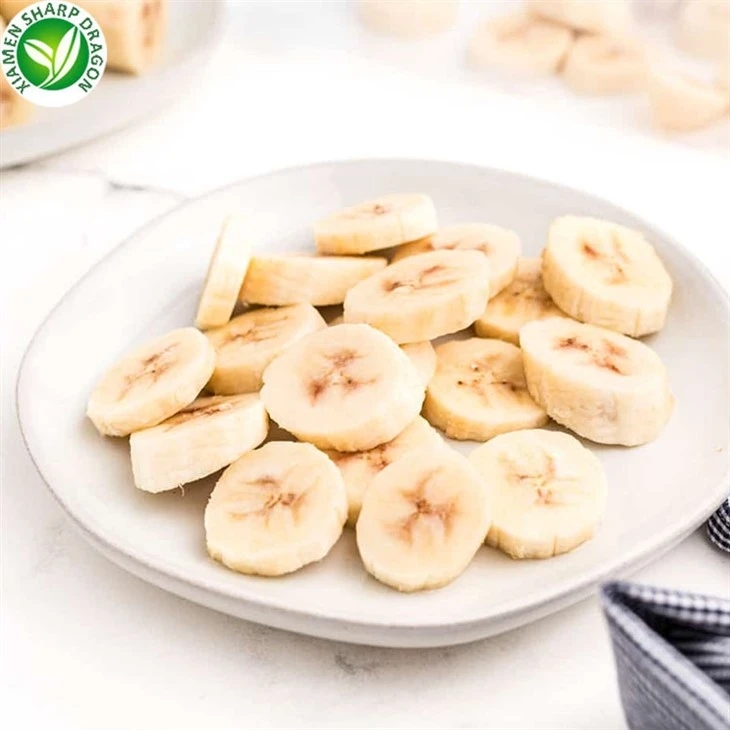
Freezing a plain banana does not turn it into a heart hazard. Plain IQF banana remains a fruit ingredient, and its health meaning depends on edible weight, serving size and what accompanies it. Frozen pieces can make portioning easier in foodservice or manufacturing because the program can specify a gram weight. They can also make multi-banana smoothies easy to assemble, so the measured serving still matters.
Blending changes the eating experience more than the fruit's potassium content. Several bananas plus juice, sweetened yogurt, honey or syrup may be consumed quickly and may provide a substantial carbohydrate and calorie load. The blender does not create sugar or potassium, but it can hide how many fruit equivalents and added ingredients are in the cup. A smoothie should therefore be assessed from the full recipe and final serving, not from the healthy reputation of its first ingredient.
Drying removes water and concentrates the food per gram. A small handful of dried banana can represent more fresh fruit than its volume suggests. Banana chips may also be fried, coated with sugar or flavored with sodium-containing seasonings. Their saturated-fat, added-sugar, sodium and calorie profile can differ greatly from plain fresh or frozen fruit. The product name alone does not establish equivalence; the ingredient list, serving weight and nutrition information do.
| Banana form | What to check | Useful heart-health decision |
|---|---|---|
| Whole fresh banana | Edible size and the rest of the meal | Use as one fruit portion within a varied pattern |
| Plain frozen pieces | Net banana grams and any added ingredients | Portion by weight; freezing alone is not the issue |
| Smoothie or purée | All fruit equivalents, liquid, sweeteners and serving count | Calculate the complete finished serving |
| Dried or fried chips | Water loss, oil, added sugar, sodium and gram serving | Do not treat the same volume as whole fruit |
| Banana bread or dessert | Flour, butter or oil, sugar, sodium and slice weight | Judge the finished food, not the banana name |
If you are comparing commercial ingredients, request the product specification, ingredient declaration, cut style and tolerances. Our IQF frozen banana supply page shows available forms for application planning. That commercial information helps define what is being purchased; it does not turn an ingredient specification into a medical recommendation.

A Practical Decision Guide for Consumers
If you are generally healthy: treat banana as one optional fruit choice. A medium piece or a measured amount of plain frozen banana can fit a meal or snack. Pair it according to your preferences and energy needs, and rotate other fruits and vegetables through the week. There is no need to eat banana for your heart, and no evidence-based reason to fear an ordinary portion solely because it contains potassium or natural sugar.
If you have a heart diagnosis but no potassium instruction: do not infer a restriction from the diagnosis name alone. Ask whether your kidney function, laboratory results or medicine requires a potassium change. Heart failure management, for example, may involve medicines that affect potassium, but individual advice differs. Keep the question concrete: "Does my current medicine and latest blood work change how much potassium I should eat?"
If you have CKD, dialysis or previous hyperkalemia: use the target or food-exchange method given by your kidney team. Weigh the edible portion rather than saying "a little" or "one banana," because fruit size varies. Count smoothies, dairy, juices, powders, supplements and salt substitutes that accompany it. If the plan is unclear, ask for a gram amount or an exchange that you can apply consistently.
If you are worried after a symptom: do not self-diagnose from the timing of one meal. Note the symptom, time, serving and relevant medicines, then seek appropriate care. Use emergency services for severe or persistent chest pain, severe breathlessness, collapse or a concerning new rhythm sensation. For a mild, resolved symptom with no urgent features, contact your healthcare professional for guidance, especially if you have known heart or kidney disease.
If you dislike banana or it does not fit: choose another food. No benefit claim makes banana mandatory. The most defensible goal is a sustainable, varied dietary pattern that fits your medical needs and energy balance. The broader discussion of banana drawbacks and suitability covers tolerance and product-form issues without labeling the fruit universally harmful.
How Food Programs Can Communicate the Answer Responsibly
For formulators, the first job is to replace the word "banana" with a measurable input. Record edible banana grams per batch, source form, added ingredients, finished batch yield and declared serving. If the formula uses 504 g of banana in a 2,000 g finished smoothie base, banana represents 504 ÷ 2,000 × 100 = 25.2% of the finished weight. Eight 250 g servings then contain 63 g of banana each. Use the complete recipe and accepted nutrient data to calculate the finished serving; never copy a raw medium-fruit panel onto a composite product.
For foodservice, a scoop name is not a portion control. Weigh at least several filled scoops, compare the range with the target and train the operator on a repeatable fill level. If the target is 63 g and observed portions run from 50 to 85 g, the program does not yet deliver the same banana amount to every customer. A pre-portioned frozen pack or a better-defined utensil may reduce the variation. The acceptance rule should use grams, not the number of visible pieces, because slice thickness and breakage vary.
For retail and private-label teams, separate a truthful composition statement from a disease claim. "Contains banana" or a properly substantiated nutrition value describes the food. "Protects your heart," "prevents arrhythmia" or "treats high blood pressure" moves into a very different claim category and is not justified by the fruit's potassium content. Check the complete formulation, serving basis, destination-market labeling rules and final approved artwork. Our overview of frozen packaging options can support the pack-format discussion, while regulatory and clinical statements still require appropriate professional review.
For procurement and quality teams, ask for product form, ingredient declaration, cut-size tolerance, defect criteria, net weight, microbiological requirements, packing format and storage conditions. A health-focused concept does not relax ordinary frozen-food controls. It also does not justify assuming that all banana pieces are nutritionally identical. Variety, maturity, processing loss and laboratory method introduce normal variation, so final label work should follow the accepted basis for the intended market.

The Bottom Line from XMSD
Bananas are not inherently bad for your heart. For most people with normal kidney function, a measured serving of plain fresh or frozen banana can be one part of a varied heart-healthy pattern. The fruit supplies potassium, but that fact does not prove that it treats heart disease, lowers blood pressure on its own or prevents an abnormal rhythm.
The answer changes when potassium regulation changes. Kidney disease, dialysis, abnormal blood potassium, certain medicines, supplements and potassium-containing salt substitutes require an individualized decision. Use blood results and professional guidance rather than banning a food from a generic list or adding it because of a wellness claim. Urgent chest, breathing, collapse or rhythm symptoms need medical care, not nutritional guesswork.
For a food product, define edible grams, product form, full formulation and finished serving. Plain frozen banana, a sweetened smoothie, fried chips and banana bread are different decisions even when they share a name. Clear measurement is more useful than a "good" or "bad" label for consumers, clinicians, formulators and buyers.
Planning a frozen banana application? Tell XMSD the cut, ingredient declaration, serving target, packing format, destination and annual volume. We can review product-form and supply requirements for your program.
References
- U.S. Food and Drug Administration. Raw Fruits Poster: Text Version. Medium-banana serving weight and reference nutrient values.
- National Institutes of Health, Office of Dietary Supplements. Potassium: Fact Sheet for Health Professionals. Physiological roles, food values, kidney handling and medicine interactions.
- National Institute of Diabetes and Digestive and Kidney Diseases. Healthy Eating for Adults with Chronic Kidney Disease. Individual potassium planning and blood-test guidance.
- American Heart Association. 2026 Dietary Guidance to Improve Cardiovascular Health. Whole-pattern recommendations for cardiovascular health.
- American Heart Association. How Potassium Can Help Control High Blood Pressure. Dietary context and kidney or medicine cautions.
- American Kidney Fund. High Potassium (Hyperkalemia). Risk factors, testing, symptoms and emergency boundaries.
- Harvard T.H. Chan School of Public Health, The Nutrition Source. Bananas. Nutrition composition and dietary-pattern context.