


How Mushrooms Grow: From Mycelium to Harvest
Dec 15, 2021

A mushroom that appears to unfold overnight is the visible fruiting body of a fungus whose growth began earlier. Before a cap emerges, a network called mycelium has been developing within its food source. Small structures called pins then enlarge into recognizable mushrooms. A time-lapse makes this change easy to see, but the few seconds on screen do not reveal the length of the full growing cycle.
For food sourcing, the useful connection is between that development and the mushroom delivered: its species, maturity, shape, trim and condition. At XMSD, we would start a mushroom discussion with the named product and required form, then examine the sample against its intended use. A dramatic growth image is interesting background; the product specification establishes what a buyer is ordering.
The cap is only the visible part of the story
Mycelium consists of fine fungal threads growing through a substrate, the material from which the fungus obtains nourishment. In cultivation, that material is selected and prepared for the particular crop. A log, a bagged substrate block and a composted growing bed can all appear in mushroom production, but they belong to different growing systems. Identify the system before interpreting a photograph of a crop.
The visible mushroom develops from that established network. Its cap and stem become much easier to notice than the threads within wood or another substrate. Looking only at the moment of emergence can therefore give the impression that the whole organism appeared suddenly. The earlier colonization period is part of the process even when it never appears in a growth video.
Cornell's cultivation guide separates preparation and incubation from initiation, fruiting and harvest. This distinction helps explain what a time-lapse leaves out. A sequence beginning with small caps already above the surface shows fruiting development. It does not show the full interval from selecting a culture or preparing the substrate to producing a harvestable crop.
The natural-growth animations here illustrate changes in visible form. Their species and recording intervals are unverified, so they should be viewed as observations of shape rather than food identification or cultivation instructions. The commercial product photographs elsewhere on this page serve a different purpose: they show named food formats available for a product discussion.
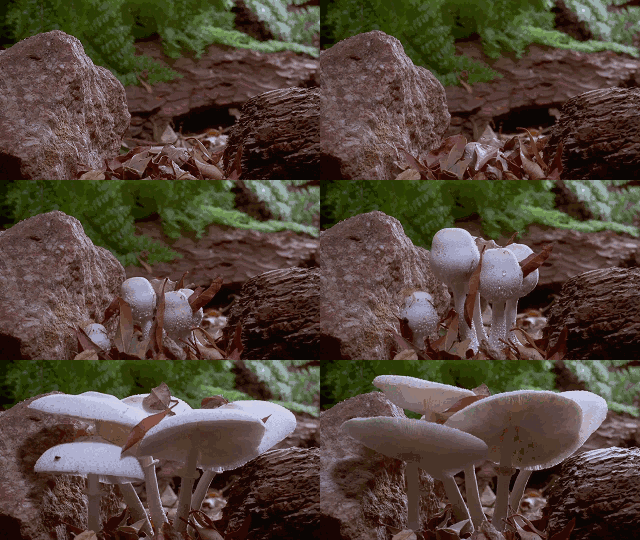
Cultivation starts with a known organism and a suitable substrate
Spawn is material carrying cultivated mycelium that is introduced into a prepared substrate. It is different from a packet of plant seed. The University of Florida's oyster-mushroom publication describes a progression from a maintained culture to spawn and then to a fruiting substrate. That sequence gives a grower a way to work with a known organism instead of relying on an unidentified mushroom appearing naturally.
Species identity comes first.
Oyster mushrooms, shiitake and button mushrooms are distinct products, with different growing systems and finished appearances. Within a species, strains can also differ. When reviewing a supply proposal, use the scientific name where clarification is needed and agree the commercial product name that will appear on the specification and labels. A broad description such as "white mushroom" may leave too much room for interpretation.
The substrate supports the growing fungus. Illinois Extension describes specialty mushroom blocks made from prepared materials such as hardwood sawdust or straw, with the selected mixture placed in growing bags. Its block-farming explanation includes inoculation, colonization and exposure to fruiting conditions. A bag in a growing room therefore represents a stage in a managed process, rather than a finished food package.
Our frozen oyster mushroom information identifies a commercial food category. An oyster product sample should be assessed as that named item, including its cut and preparation state. Similar-looking natural mushrooms in a picture cannot substitute for the identity and traceability information attached to a food lot. Keep the scientific background connected to the actual item being purchased.

Pinning marks the start of recognizable mushrooms
Pins are small developing fruiting bodies. As they enlarge, a cap and stem may become easier to distinguish, depending on the mushroom's form. In cultivated button mushrooms, Penn State describes development from very small initials through pins toward mature mushrooms. That is the visible change many growth sequences capture: a small structure becomes a recognizable cap supported above the growing surface.
Not every point on a substrate becomes a saleable mushroom at the same moment.
A cluster can contain pieces at several stages. Some may be larger, others newly emerging, and their positions can make them harder to see. A camera angle that follows one prominent cap may conceal the rest of the cluster. When assessing a sequence, look across the whole frame rather than treating the largest mushroom as representative of every piece.
For a food buyer, this explains why a photograph of a growing crop and a photograph of a sorted product can look different.
Harvesting and grading select material according to an intended specification. The crop contains biological variation; the finished lot is described by the agreed product requirements. Ask for representative finished-product views when the decision concerns size or uniformity.
A pin count can be useful within a grower's own crop assessment, but it is a different measure from packed weight.
Pieces still have to develop, be harvested and meet the intended grade. A dense-looking growing surface gives an impression of abundance without establishing the kilograms of usable product that will be packed. Keep those measurements separate in planning discussions.

Read a time-lapse as a sequence, not a growing timetable
Time-lapse compresses an interval into a shorter viewing period. The apparent speed depends on the recording interval and playback settings. Two clips that both last ten seconds could represent very different lengths of real time. Unless the recording includes a reliable time reference, the safe conclusion is about visible change, such as a cap opening, rather than the number of hours needed for cultivation.
Practical example: imagine two hypothetical records of the same type of cultivated mushroom. Record A shows a labeled cluster in photographs taken at 08:00 on Monday and 08:00 on Tuesday, with a ruler in both frames. Record B is an unlabelled compilation of several clips. A viewer can use A to describe the observed change over 24 hours for that cluster. B can illustrate forms, but it cannot support the same timed comparison.
The next action is to request the missing context if growth rate matters: species, stage at the first image, timestamps and whether the camera follows the same material. Even record A describes one observation under its recorded conditions. It would need broader supporting records before being used as a production schedule or a delivery promise.
Scale also matters.
A close camera can make a small cap look larger than a mature mushroom photographed from farther away. Include a ruler or another reliable size reference when measurements are part of the question. Keep the camera position and framing consistent where possible. This turns an attractive sequence into something that can support a precise discussion of visible development.
An animation that loops back to its opening frame can create another misleading impression. The repeated collapse and expansion is playback, not the mushroom repeatedly reversing its growth. Watch for the loop point before drawing conclusions. In a written observation, describe what changes during one sequence and identify what remains unknown about the recording.
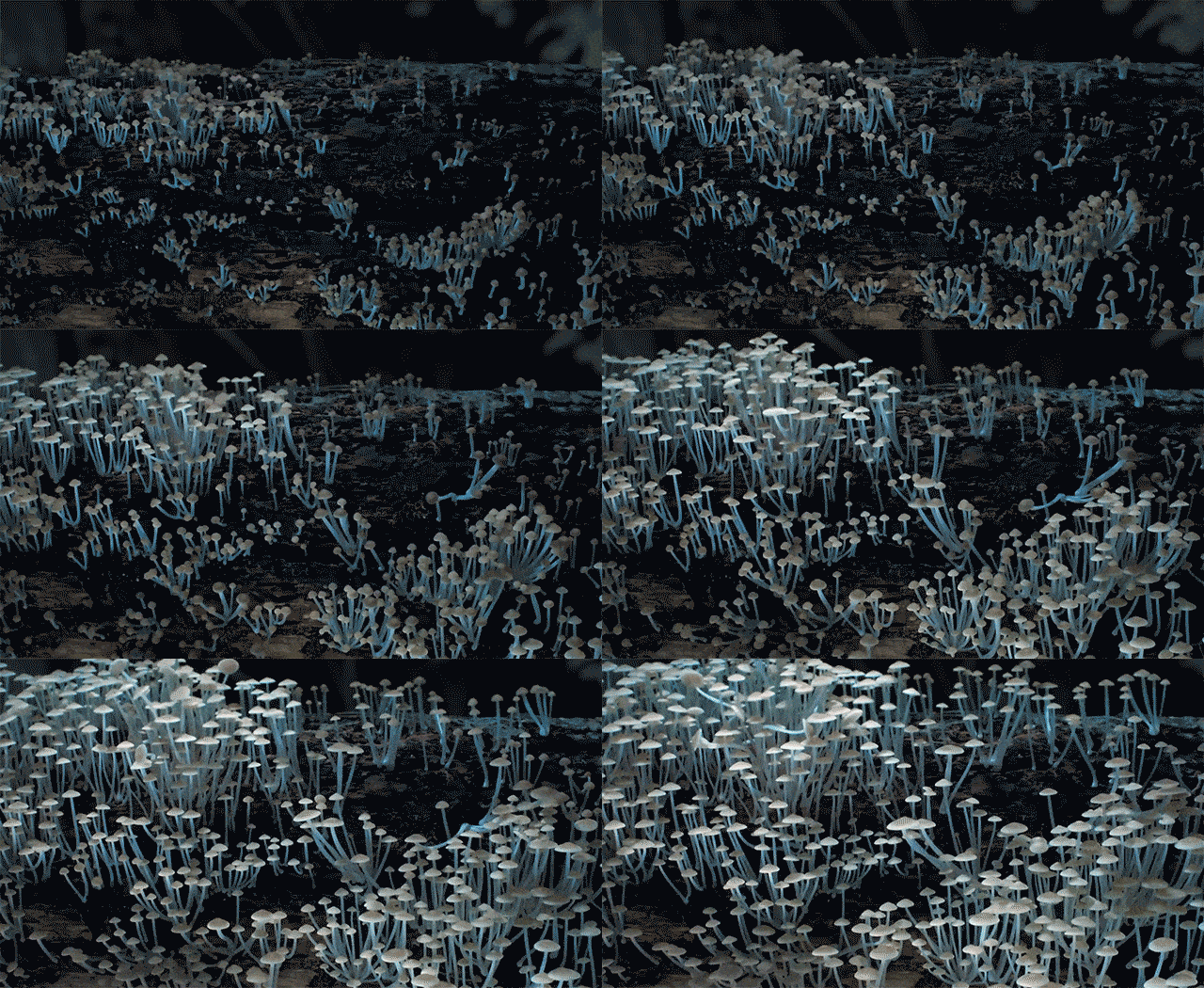
Growing conditions belong to the species and stage
Cultivators manage conditions around the organism as it develops. A colonizing block and a fruiting crop have different immediate jobs, so a single temperature or ventilation number taken from a growing guide is incomplete without its context. The species, strain, substrate and stage explain which instructions apply. Use a guide written for the actual growing system when operational settings are needed.
Illinois Extension describes moving colonized specialty blocks into a controlled fruiting environment. Cornell likewise separates incubation from the conditions used to initiate fruiting. These sources support the distinction between stages. Their examples should not be collapsed into one universal recipe for button mushrooms, oyster mushrooms and shiitake, especially when the growing materials and equipment differ.
For someone purchasing food rather than cultivating it, the practical question is how variation is managed in the supplied product.
Ask for the agreed grade, acceptable size distribution and sample information. Growing-room settings alone provide an incomplete basis for accepting a finished lot. The product still needs to meet its own identity, condition and handling requirements after harvest.
If a supplier attributes an unusual shape to growing conditions, request a clear description of the observed feature and its effect on the agreed product. A long stem may matter for a whole presentation, while a sliced ingredient may be judged differently. Decide whether the feature changes usable trim, appearance or performance in the recipe, then record the acceptance decision in the specification.
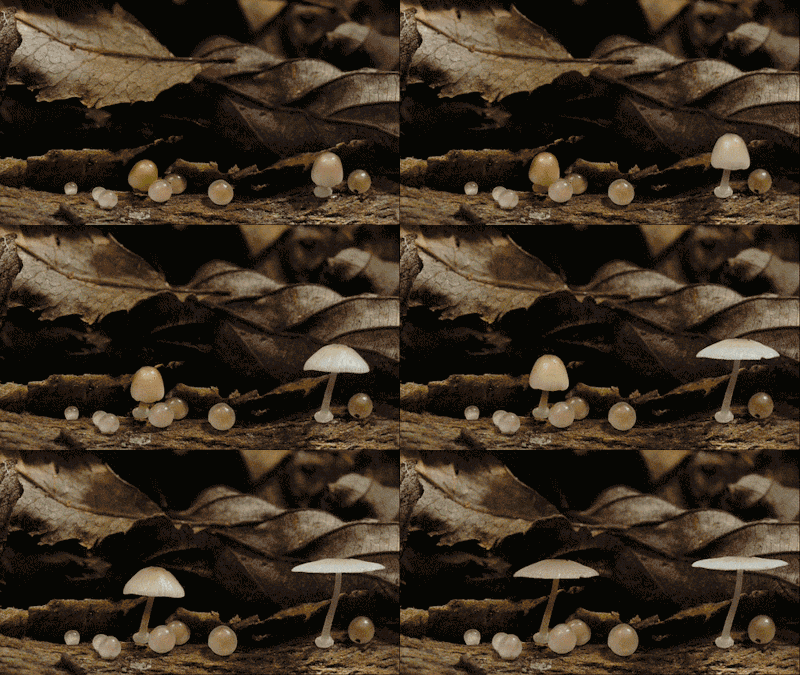
Harvest maturity changes the product's appearance
Caps develop and may open as mushrooms mature. The preferred harvest stage is linked to the species and the market. A closed button presentation and an open cap sold for a different culinary purpose are not interchangeable descriptions. Agree the desired appearance using a representative sample and clear terminology, rather than assuming that the largest cap is always the best choice.
Penn State's button-mushroom guidance discusses harvest selection and different preferences for closed or more mature open caps. Its harvesting-technology material also notes that mushrooms reach maturity at different times, requiring selective picking.
This is a useful reason to distinguish a growing crop from a graded lot. Harvest is a selection step, not simply the moment when every mushroom reaches the same size.
Our frozen champignon range concerns button-mushroom products. When comparing them, separate whole diameter from slice thickness. These measurements describe different aspects of the ingredient. A slice can come from a larger cap yet have the same thickness as a slice from a smaller one, producing a different outline on a pizza or in a clear soup.
Shiitake provides another example of why the product name matters. A darker cap and a different cap-to-stem relationship should be assessed within the shiitake specification, not against the appearance of a white button mushroom. Our sliced shiitake product information shows that processed format. Use it to define the required slice and trim before comparing samples from different sources.

Separate harvested weight from usable ingredient yield
The amount harvested and the amount usable for a particular product are different records.
Sorting, trimming and the chosen cut affect how much material enters the next step. A whole-mushroom specification may retain parts that another application removes. Describe the weighing point before comparing numbers, or two apparently different yields may simply reflect different definitions.
Worked example: suppose a hypothetical 20 kg harvested lot provides 18 kg after the sorting and trimming required for a particular fresh ingredient specification. Its usable proportion at that stage is 18 ÷ 20 = 90%. If the same proportion were demonstrated again, 45 kg of that trimmed ingredient would require an estimated 50 kg at the same starting stage. The figures illustrate a material calculation; they are not XMSD production results or a guaranteed mushroom yield.
This calculation says nothing about yield from the growing substrate. It also stops before any later processing loss or gain. If the final order is frozen slices, track the relevant later stages separately. Combining harvest, trim, blanching, cooling and packing into one unexplained number hides where the difference occurred and makes a meaningful comparison harder.
For an application trial, use the form that the kitchen or factory will receive. If the delivered item is frozen and trimmed, a calculation based on whole freshly harvested mushrooms answers a different question. Follow the product preparation instructions and record the amount used in the actual recipe. That result is closer to the purchasing decision than a striking image of a heavy harvest.
Translate a growth interest into a useful product specification
Begin with the mushroom species and the form required: whole, sliced, diced or another agreed cut. Add the dimensions that affect the application and describe the trim.
A whole cap for a visible dish needs a different appearance check from pieces dispersed through a sauce. At XMSD, we would use those differences to decide which sample and product information to review with you.
Next, identify the preparation state and intended use. Check the instructions for cooking and handling the supplied product. Keep that information with the sample so the kitchen assesses it under the right conditions. A photograph of a cultivated mushroom cannot establish whether a later processed ingredient is ready to eat, blanched or supplied for further cooking.
Make the size language measurable.
"Medium" can be understood differently by two businesses. A diameter range for whole mushrooms or a thickness range for slices is easier to compare when the measurement method is agreed. Include representative images with a scale, and state whether the example shows a typical sample or a selected presentation. Both can be useful, but they answer different questions.
Record the visible defects that matter to the application. Broken pieces may be acceptable within an agreed limit for one recipe and disruptive in another. Excessively long stems may add unwanted trimming work. Avoid treating every visual difference as the same quality problem; describe the feature, the permitted amount and the effect on the finished food.
Agree how the sample will be assessed before comparing offers. For whole mushrooms, specify where the diameter is measured and whether stem length is recorded separately.
For slices, describe the thickness check and the treatment of fragments. Use the same method for each sample. If one assessment includes broken pieces and another removes them before weighing, the resulting comparison will favor a different product for reasons unrelated to the crop itself.
Keep a distinction between a requested change and a failed specification. A kitchen may decide after testing that it prefers smaller pieces, even when the delivered sample matched the original brief. Record the revised requirement explicitly so the next sample is assessed against the new target.
Our frozen mushroom range includes several species and product forms for discussion. Send the required species, cut, application and packing quantity so we can review relevant options and sample information. A brief based on those details gives both sides a clearer starting point than a request based only on a growth photograph.

Keep the lot connection through packing and use
The story of growth becomes commercially useful when the harvested and processed product can be connected to its records. Ask for the lot reference relevant to the supplied item and retain it alongside the agreed specification. When assessing a sample, label the trial record with that reference. It provides a concrete starting point if the later discussion concerns a difference in size, trim or appearance.
Packaging is part of that connection.
The packaging information for an item should cover the actual pack format and stated storage instructions. Match the working quantity to the way the ingredient will be used, and review handling after opening. A large foodservice pack and a retail pack create different portioning and handling patterns even when they contain the same named mushroom.
When a sample arrives, first check its identification and condition, then assess it against the specification. Photograph representative portions rather than only the most attractive pieces. Keep the preparation method and the intended recipe in the record. If the result differs from expectations, those details help separate a product discrepancy from a difference in handling or application.
Mushroom growth is worth observing because it makes biological change visible: small pins expand, caps unfold and clusters develop unevenly. For a food purchase, carry that curiosity into precise questions about species, maturity, cut and usable form. The strongest link between a growing crop and a successful ingredient is a clearly described product, supported by the sample and records for the lot being supplied.
Send the mushroom species, required form, size or thickness and intended application. We will review the relevant product and sample information with your packing requirements.