


Freeze-Dried or Dehydrated Apple: Choose the Bite You Need
Mar 11, 2020

Freeze-dried apple is most useful when a light, crisp bite, recognizable slice shape or dry apple addition matters to the finished food. Conventionally dehydrated apple can be a better fit when you want a chewy piece or an economical ingredient that has time to soften during cooking. The advantage belongs to the application, not automatically to whichever drying method sounds more advanced.
Start by describing the bite you want. An apple piece sprinkled onto a dessert immediately before serving has a different job from one baked into a moist loaf. A pouch carried as a snack has a different job from a bulk ingredient mixed into a cooked filling. The same apple product can perform well in one of those jobs and disappoint in another.
Both methods remove water. Freeze-drying freezes the apple and removes ice under reduced pressure; hot-air drying removes moisture with moving heated air. Their different effects on the fruit's structure help explain the texture and rehydration differences. Neither method restores poor raw material, guarantees an additive-free recipe or supplies a universal shelf life.
When we compare apple samples at XMSD, we ask whether the desired result is a dry crunch, a chewy inclusion or a moist cooked piece. That answer determines the comparison. Testing only a dry bite can reject an ingredient that would work well in a sauce; testing only a soaked piece can miss the quality that made a crisp snack worth buying.

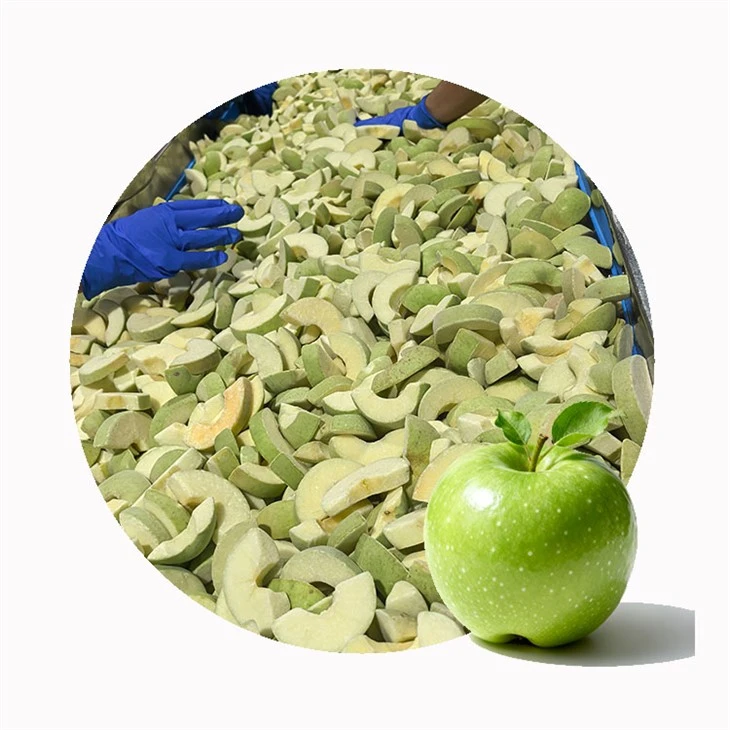
Slice size and skin are visible features; the process needs a clear product description.
Why two dried apple slices can feel so different
Freeze-drying removes much of the water while the material is frozen, helping retain a relatively open structure. The Institute of Food Technologists describes the method as preserving structure and producing crisp products with good rehydration behavior. That is the useful starting point for understanding a light apple piece. It is a physical explanation, rather than proof that every slice has exactly the same porosity or bite.
Hot-air drying commonly produces more shrinkage. Many dried apple rings are flexible and chewy, although thin slices and a different drying endpoint can give a crisper result. The word dehydrated covers a broad range of finished textures. It would be a mistake to judge every hot-air apple by one tough sample or every freeze-dried apple by one unusually delicate piece.
Ask how the texture fits the eating task. A light piece that fractures easily may be pleasant on its own but can break during mixing. A flexible piece may resist handling better yet remain too chewy in a quick, cold breakfast. Neither characteristic is a defect until it conflicts with the intended food.
Cut shape makes the comparison more demanding. A thin ring and a thick cube have different distances for moisture movement and different behavior when bitten. Skin also changes the feel at the edge. Compare similar cuts when trying to isolate the effect of drying, then test the actual cut that you intend to purchase.

Apple rings from a crisp product range illustrate why appearance alone cannot identify the drying method.
Freezing, freeze-drying and frying are separate choices
The similar names can hide an important purchasing error. Frozen apple retains water as ice and belongs in a frozen supply chain. Freeze-dried apple is a dry material whose storage depends on its finished specifications and protective pack. A product described only as frozen apple should never be assumed to be a crisp, dry snack.
Vacuum frying is a different route again. It uses oil and reduced pressure to make a crisp food; it is not another name for freeze-drying. Some apple chip photographs look similar across product types, so a picture is best used for cut and appearance, with the processing description and ingredients alongside it.
A household shopper can resolve much of this from a clear package. A commercial buyer should receive an equally clear product description before sample approval. If a quote simply says apple chips, ask which process, whether oil or sweetener is used, and whether the proposed material is ready to eat. The answer can change both the application and the label.
The apple-chip process comparison also distinguishes baked, dried and fried products. Once the product types are clear, select two apple samples that could realistically do the same job in your food. That keeps the trial useful.

Frozen apple wedges retain water and require frozen storage; they are not freeze-dried slices.
Rehydration is useful, but judge the recovered bite
Good water uptake is one practical attraction of freeze-dried ingredients. An open structure offers routes for liquid to enter the piece. Even so, taking up water and returning to the bite of a fresh apple are different outcomes. A hydrated slice may be soft enough for its intended use without recreating the firmness and juiciness of freshly cut fruit.
Test the property that the recipe needs. For a soft filling, uniform hydration and a pleasant flavor may matter more than retaining a perfect ring. For a visible fruit topping, intact shape may matter. For a dry snack, rehydration may be irrelevant. A single water-uptake number is therefore too narrow to decide the purchase.
Keep the comparison conditions consistent: the initial weight, liquid amount, liquid temperature, waiting time and draining method. Record them so that another person can repeat the test. A sample immersed in warm water for longer will not provide a fair comparison with one briefly stirred into a cold, thick mixture.
The actual recipe is the final test. A liquid with sugar, acid or other dissolved ingredients is not the same environment as plain water. A thick food may wet pieces unevenly. Instead of assuming a fixed number of minutes or a universal water ratio, begin with the supplier's directions and check the center and edge of the selected cut in the intended mixture.
The University of Minnesota Extension recommends keeping before-and-after weights as a useful starting point when rehydrating home freeze-dried foods. For a purchased apple ingredient, use the product's guidance and your documented recipe trial. Keep preparation consistent, and handle the rehydrated food as a moist food rather than extending the unopened dry product's storage claim to it.
Flavor and color depend on the apple as well as the dryer
A preserved apple begins with a particular variety and maturity. The balance of sweetness and acidity influences how it tastes after drying, while peeling and cutting change the material presented to the consumer. A pale slice and a darker slice may differ in raw material or pretreatment as well as drying history. Color alone is not a reliable process label.
Illinois Extension advises choosing firm, mature apples for drying and describes pretreatments that limit discoloration. That guidance explains why comparing two suppliers without asking about the starting fruit can be misleading. The preparation choices belong in the product description when they change the flavor, appearance or ingredient declaration.
Evaluate aroma and flavor separately from visual appeal. A very attractive slice may have a weak apple note in a strongly flavored mixture. Another may have enough acidity to remain recognizable after mixing. The desired balance depends on whether apple is the main snack or a small ingredient among oats, spices, nuts or other fruit.
Freeze-drying is valued for limiting thermal damage and retaining desirable sensory qualities. That is a reason to sample it, not a reason to promise identical fresh-fruit flavor under every condition. Drying method, storage and the individual product all influence the result. A comparison works best when the samples are in comparable condition and have been protected after opening.
Other fruits need their own evaluation. A strawberry that suits one dry mixture says little about which apple cut will work in it. The freeze-dried fruit range illustrates different fruit forms; choose the apple sample on its own eating and handling performance.

Freeze-dried strawberries illustrate another fruit form, whose performance should not be assumed to match apple.
Decide whether the premium buys something you can use
Freeze-drying requires refrigeration, vacuum control and a managed drying cycle. Those requirements can make it more costly than conventional dehydration, as IFT explains. The practical question is not whether it carries a premium in principle, but whether the resulting product delivers enough value in the portion you serve.
A price per kilogram is useful only after the proposed material is properly defined. Compare similar ingredients, agreed quality and the same commercial basis. Pack size, cut, added ingredients and delivery terms can all affect a quote. A dated internet price is a poor substitute for the current offers for the products under consideration.
Worked example: Consider a hypothetical breakfast business comparing two approved apple toppings, using illustrative costs rather than market quotations. The freeze-dried option costs 18 currency units per kilogram and works at 4 grams per bowl in the business's taste test. The conventionally dehydrated option costs 10 units per kilogram and its selected portion is 7 grams.
The ingredient costs are 18 × 4 ÷ 1,000 = 0.072 units per bowl and 10 × 7 ÷ 1,000 = 0.070 units per bowl. Despite the large difference in kilogram price, the costs in these particular recipes are close. The decision is then about the selected texture and portion, plus handling, packaging and any waste.
Now change the application so both products are needed at 7 grams. The freeze-dried ingredient costs 0.126 units per bowl, while the dehydrated one stays at 0.070. That is a different comparison. The business should choose the amount for the food first, then calculate cost; choosing a smaller amount solely to lower the quoted portion cost can leave the finished bowl disappointing.
Both examples assume the stated weight is actually dispensed and used. If crumbs are unacceptable for presentation or a pack loses its desired texture before it is finished, the effective cost rises. Include those observed losses from a real trial instead of inserting a convenient allowance to force the preferred answer.
Match the trial to the serving point, not just the sample bag
Practical example: In a hypothetical dessert counter, apple pieces are intended as a crisp finishing garnish. The team compares a freeze-dried sample and a chewy dehydrated sample using the same serving dishes. It tastes them separately, then checks each at immediate service and after the counter's planned 20-minute waiting interval. The interval is a chosen service test, not a safe holding-time instruction.
The chewy sample remains pleasant but misses the intended crunch. The freeze-dried sample gives the preferred immediate bite yet softens against the moist dessert during the waiting interval. The team selects it for dishes finished to order, while using a separate garnish container until service. If dishes must be assembled ahead, it changes the garnish requirement instead of describing the lost crunch as a product failure.
The decisive change is the point at which the dry ingredient touches the moist food. Keeping it separate until service preserves its purpose as a crisp garnish. Mixing it in earlier asks it to do a different job.
For foodservice applications, that serving point is often the most useful detail to include in a sample brief. State whether the apple is mixed, cooked, sprinkled, packed separately or held against a moist surface. A product that is excellent at the moment of assembly may need a different presentation after transport or waiting.
At XMSD, we would also compare the apple after the intended handling, not only after careful removal from a small sample pouch. Pouring, scooping and blending can create broken pieces. If the application calls for visible slices, the sample review should distinguish acceptable fragments from material that no longer serves that purpose. If the use is a blended filling, the same fragments may be useful rather than waste.
Apple preparation and handling help define the slice or piece that reaches the customer.
Check pack performance alongside crispness
A delicate, dry product needs a pack that protects it from moisture and from excessive breakage. These are separate jobs. A moisture barrier can help preserve crispness while the outer arrangement reduces crushing. A rigid outer carton alone says little about the inner seal, and an attractive pouch alone says little about how slices arrive after handling.
For dry ingredients, the University of Minnesota Extension emphasizes prompt packaging and protection from humidity. Apply that principle when using a purchased pack: follow its storage instructions, limit unnecessary exposure and close it properly after taking a portion. Choose a pack size that fits the rate of use, rather than buying the largest pack without considering its after-opening life.
Compare the condition at first opening with the condition during normal use. If the product is only exposed briefly and still changes rapidly, record the conditions and discuss the package and handling instructions with the supplier. If it sits open beside steam, changing the opening routine may be more useful than changing the apple.
The packaging format should be considered with the actual dry-food requirement. Material structure, closure, fill weight and physical protection all affect suitability. A zipper makes reopening convenient; the complete approved package determines how the unopened product is protected.
Food safety remains a separate requirement from a pleasant crunch. Freeze-drying is not a dependable kill step for harmful microorganisms. Select a product appropriate for its intended use and follow any cooking instructions. Keeping this distinction clear avoids treating a dry texture, a bright color or a long storage claim as proof that any apple ingredient may be eaten straight from the bag.

A resealable pouch format needs barrier and seal performance suited to the selected dry food.
Write a short acceptance brief before choosing
A useful apple brief can be concise. Name the process and the form, state whether the skin is retained, describe the desired bite and identify the serving application. Include the pack size and the specific defects that would change the decision. These details are more informative than asking for the best quality without explaining what best means in the finished food.
Separate essentials from preferences. A dry finishing garnish may need a defined proportion of intact slices. A powder application may place less value on whole pieces but more on dispersibility and flavor. A chewy fruit mix may favor flexibility. If everything is marked equally critical, the brief becomes difficult to use and price.
Keep the approved sample and test conditions linked to the written description. A photograph can document appearance, while a weighing record documents the tested portion. Note whether the sample was evaluated dry or rehydrated and how long it had been open. That makes it easier to investigate a later difference without guessing whether it came from the product, package or preparation.
The outer case is part of the practical review, too. Check whether the pack arrangement protects the intended presentation through the handling route. The commercial value of recognizable slices is partly lost if the route turns them into unwanted crumbs. Conversely, buying extra protection for an ingredient destined to be ground may offer little benefit.
Choose freeze-dried apple when its light bite, dry format or recovery in the intended food earns its place. Choose conventionally dehydrated apple when its chew, handling and cost fit the job better. The decision is strongest when you can point to a tested serving result, not simply to a longer list of advertised advantages.

Outer packing protects the filled packs; inner moisture protection is a separate requirement.
To compare apple forms for a defined application, send XMSD your cut, texture and packing requirements. We can review the suitable product information and the sample questions before you make a sourcing decision.