


Where to Buy Frozen Blueberries: Retail and Bulk Options
Apr 29, 2019

Where to buy frozen blueberries depends mainly on how much you need and what you will do with them. For household use, start with supermarket freezer aisles, warehouse clubs, online grocery services, or a nearby blueberry farm that offers frozen packs. Restaurants and small foodservice operators are usually better served by a regional frozen-food distributor or cash-and-carry wholesaler. Importers, manufacturers, private-label brands, and large distributors should approach an IQF frozen blueberry supplier that can provide a current specification, sample, packing details, compliance documents, and a shipment plan.
The short answer: Buy locally for a few retail bags, use a foodservice distributor for recurring kitchen volumes, and use a verified IQF supplier for bulk, industrial, import, or private-label programs.
Do not choose only by the advertised price. Compare like for like: cultivated or wild berries, free-flowing or block-frozen product, whole-berry condition, size or grade, ingredients, pack weight, delivery basis, and temperature handling. A low case price can become expensive if the format does not suit the application or if the product arrives clumped, damaged, or without the documents your market requires.

Choose the Buying Channel That Fits the Order
A useful seller for one household may be the wrong supplier for a food factory. Start with volume and route to market, then compare products within the appropriate channel.
| Buying need | Best starting channel | What to confirm |
|---|---|---|
| Household or occasional use | Supermarket, warehouse club, online grocery service, or local farm | Local availability, ingredient list, pack size, package condition, and use-by guidance |
| Café, restaurant, bakery, or catering | Regional frozen-food distributor or cash-and-carry wholesaler | Bag size, delivery area, order frequency, frozen handling, and application performance |
| Import, industrial processing, distribution, or private label | IQF processor, exporter, or specialized bulk supplier | Specification, sample, packing, certificate scope, traceability, shipment terms, and arrival checks |
Retail search results are location-sensitive, so check stock and delivery coverage before travelling or ordering. Commercial supply is different: the useful question is not simply who lists blueberries, but who can document and deliver the agreed product to the required market.

Match the Product to the Application Before Choosing a Seller
"Frozen blueberries" is not one universal specification. The Codex Standard for Quick-Frozen Blueberries recognizes several blueberry species and distinguishes free-flowing berries from a non-free-flowing block. A buyer may also need to distinguish cultivated from wild fruit, whole berries from fruit intended for further processing, and unsweetened product from fruit packed with sugar or syrup.
- Bakery and visible toppings: review whole-berry condition, size range, breakage, color, and performance in the actual formula.
- Smoothies, purée, jam, and fruit preparation: confirm flavor, soluble-solids target when relevant, clumping, defect tolerance, and processing yield.
- Retail and private label: confirm ingredient declaration, bag and carton configuration, label responsibility, lot coding, barcode or artwork needs, and destination-market rules.
- Foodservice: match the bag size, portioning behavior, delivery frequency, and thawing or direct-from-frozen use to the kitchen workflow.
Check the ingredient list instead of assuming that every frozen blueberry product is unsweetened. For a commercial order, put the required ingredients and any prohibited additions directly into the purchase specification.

Write an acceptance specification, not a wish list
Codex identifies practical quality factors such as color, foreign flavor or odor, cleanliness, stems, unripe or blemished berries, extraneous plant material, and berries adhering to one another in a free-flowing pack. These are a useful starting point, but the contract should state the buyer's own application-specific limits, sampling method, and acceptance procedure.
A complete request for quotation normally identifies the product form, intended application, variety or type, size or grade direction, defect expectations, packing format, required documents, destination, estimated order quantity, and requested delivery window. Ask the supplier to mark any item that remains subject to crop availability or final confirmation.

A Six-Stage Process for Buying Bulk Frozen Blueberries
For a commercial order, the sequence matters. A quotation obtained before the specification is clear is difficult to compare and easy to misread.
- Define the application and channel. State whether the berries are for bakery, beverage, dairy, foodservice, retail packs, repacking, or further processing.
- Request a current specification and representative sample. Compare the sample against whole-berry condition, size, color, flavor, defects, separation, and real-use performance.
- Review the supplier and compliance scope. Confirm the legal selling entity, manufacturing or packing site, certificate scope, traceability method, and documents required by the destination market.
- Approve packing and labeling. Confirm inner material, net weight, carton strength and marks, lot coding, pallet pattern, retail artwork where relevant, and responsibility for legal label review.
- Agree commercial and shipment terms. Record price basis, quotation validity, minimum order, production or dispatch timing, Incoterm, loading plan, temperature requirement, and change-control process in the contract.
- Inspect the arrival. Check seals, temperature records when used, carton and inner-bag condition, lot codes, product separation, odor, visible defects, and representative samples against the agreed acceptance plan.
Codex describes quick-freezing as reaching −18°C (0°F) at the thermal centre after stabilization and calls for handling that maintains quality through transportation, storage, distribution, and sale. The contract and destination rules should define the actual monitoring, tolerance, and corrective-action requirements for the shipment.

How to Verify a Supplier Before Committing
A supplier's website is a starting point, not the whole approval file. Ask for current documents that match the legal entity, site, product, and activity involved in the order. Check issue and expiry dates, scope statements, report references, and whether the document applies to the actual producing or packing facility.
For U.S. imports, the FDA's Foreign Supplier Verification Programs guidance explains importer responsibilities, while the FDA's supplier-evaluation resources point buyers to warning letters, import alerts, recalls, import refusals, and inspection information. Buyers in other markets should perform the equivalent review against their own authority and product rules.
A formal purchasing specification can also make acceptance less subjective. The USDA Commodity Specification for Frozen Fruit is written for USDA purchasing rather than every commercial transaction, but it is a useful example of how packaging, label traceability, net weight, inspection, and lot acceptance can be documented.
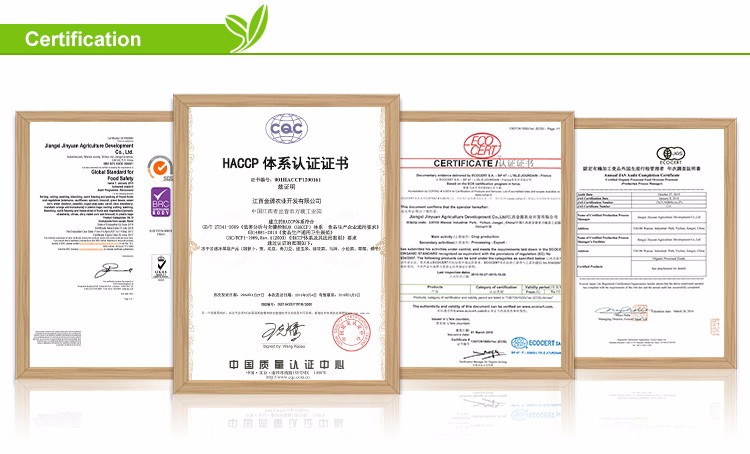
When reviewing XMSD, buyers can open our current certification page and then request the current certificate or report scope relevant to the proposed product and factory. A logo or certificate image on a page should never replace document review.
Where XMSD Fits
At XMSD, we supply IQF frozen blueberries for B2B projects rather than positioning a commercial export offer as the answer for every shopper. Household buyers will usually find a local supermarket or delivery service more practical. Importers, distributors, food manufacturers, foodservice buyers, and private-label teams can review our current IQF frozen blueberry page before discussing a project.
We recommend sending the intended application, product form, size or grade direction, packing format, destination market, required documents, estimated quantity, and expected shipment timing. We can then identify what is currently available, what remains subject to specification approval, and what must be confirmed before quotation or contract.
Packing is part of the product decision, not an afterthought. Buyers can review our frozen-food packaging approach and request order-specific confirmation for inner packs, cartons, labels, pallets, and loading.

XMSD sourcing note: A useful inquiry begins with the application and specification, not only the words "frozen blueberries." Tell us what the berries must do in your product and which market they must enter.
Final Buying Decision
For a few bags, buy from a retailer or local delivery service with stock in your area. For recurring foodservice needs, use a distributor that can deliver the right pack reliably. For industrial, import, or private-label supply, choose a supplier only after the specification, sample, documentation, packaging, shipment terms, and arrival checks are clear. The best place to buy is the channel that can meet the real use case with evidence.
References
- Codex Alimentarius: Standard for Quick-Frozen Blueberries (CXS 103-1981)
- USDA Agricultural Marketing Service: Commodity Specification for Frozen Fruit
- U.S. Food and Drug Administration: Foreign Supplier Verification Programs Guidance
- U.S. Food and Drug Administration: Firm and Supplier Evaluation Resources
- XMSD operational experience in frozen-food sourcing, IQF product review, quality control, packaging, and B2B export coordination.