


Mulberry Season Planner: From Orchard Window to Frozen Supply
Nov 27, 2019

Mulberries commonly ripen from late spring into summer in temperate production areas, but there is no single worldwide harvest month. Cultivar, species, latitude, elevation, winter chill, spring temperature, rainfall and protected cultivation move the dates. Published examples range from a mid-March start for an early cultivar in Guangzhou to May–June maturation in Hefei and June–August fruit ripening in a U.S. forestry reference.[1][2][3]
Season also has two meanings. Orchard season is the period when suitable fruit can be harvested. Commercial availability can continue for months after that fruit is sorted, frozen and held under controlled storage. A buyer planning frozen mulberries needs both calendars, plus the conversion from harvested mass to accepted finished stock.
Replace a fixed date with a live window. Record budbreak, flowering, fruit set, first color, first acceptable harvest, peak intake and final pick for each cultivar and origin. Update the expected tonnage and maturity mix as the season develops.
Planning answer: Ask for origin, cultivar, expected first/peak/last harvest, weekly field estimate, maturity standard, processing capacity and carryover stock. "May" or "summer" alone is too broad for a purchase or production plan.
A Month Name Is Only a Location-Specific Snapshot
In Hefei, China, a recent Morus alba study described flowering from late February through March, fruit set in April and maturation during May–June.[2] In Guangzhou, the early cultivar Yueshen 145 was reported to germinate in mid-to-late January, mature from mid-March and continue harvesting for about 30–35 days.[1]
A U.S. Department of Agriculture woody-plant manual gives June–August fruit ripening for the mulberry taxa and regions covered by its table.[3] Turkish white-mulberry genotype research found first harvest dates from May 15 to June 16 and last harvest dates from June 28 to August 10.[4]
These dates do not conflict. They belong to different places, plant material, years and cultivation systems. Their combined message is that "mulberry season" needs coordinates and a cultivar name. One orchard's May peak can coincide with another origin's flowering or post-season storage.
For sourcing, write the period as an estimate: earliest likely intake, most probable peak, and latest commercially useful pick. Attach the season year. A calendar built from last year's date alone misses current temperature, rainfall, pruning, bloom and crop-load changes.
Species and Cultivar Move the Window
Mulberry is a genus, not one synchronized crop. Black, white and red mulberries contain multiple cultivars and local selections. Early, medium and late harvesting types can extend a regional supply window. The same common color name may also be applied loosely, so botanical identity and cultivar records matter.
The Korean cultivar study explicitly selected early, middle and late ripening fruit types.[5] That is the production logic behind a staggered orchard calendar. It spreads labor and factory intake, reduces dependence on one short peak, and offers separate sensory or processing profiles.
Cultivar choice also changes more than date. Fruit size, firmness, sweetness, acidity, stem behavior and yield influence the useful processing window. An early cultivar with fragile fruit may need immediate freezing and gentle handling. A later, firmer selection may hold its form more reliably during intake but still requires prompt cooling.
Build the calendar by product code. "Black mulberry, origin A, cultivar group B, whole IQF grade" is a useful row. A single line labeled "mulberry" can hide two harvest waves, different maturity standards and incompatible product specifications.

Weather and Protected Cultivation Shift the Dates
Temperature controls the pace of bud development, flowering, fruit set and ripening. Late frost can damage flowers or young fruit. Heat can accelerate phenology. Rain around harvest changes picking access, fruit condition and processing pressure. Track stage dates with weather rather than treating weather as an explanation added after a missed plan.
Protected cultivation can bring fruit forward. A study comparing two mulberry cultivars in greenhouse and field conditions found greenhouse phenological stages 5–13 days earlier; cultivar and cultivation mode both affected the sequence.[6] That measured shift belongs to the studied site and setup, not every greenhouse.
Create three forecast dates at flowering: optimistic, expected and late. Update them at fruit set and first color. Pair each forecast with weekly kilograms rather than one total. A processing line needs to know whether 60 tonnes arrive over six balanced weeks or whether half may arrive in one peak week.
Rain forecasts near peak harvest change action. The orchard may advance picking of suitable fruit, increase picking rounds, add field crates, or reduce the accepted maturity range. The processor may add intake shifts or reserve cold space. Each choice trades maturity, damage risk and throughput; document the new quality boundary before fruit arrives.

Harvest Readiness Is a Fruit Condition
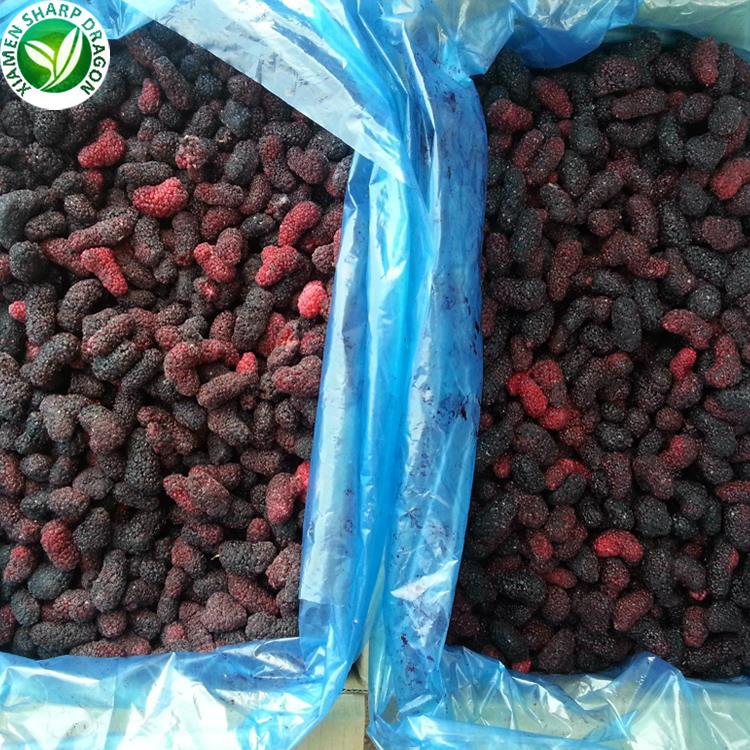
Mulberries are non-climacteric, so picking maturity deserves close control. A four-genotype study comparing semi-ripe and ripe fruit emphasized appearance, texture and color as maturity cues and reported major genotype and maturity effects on fruit quality.[7] Fruit harvested too early will not simply become equivalent to tree-ripe fruit in a carton.
Define color against the cultivar. Dark-fruited types move through green and red-purple stages, while white-fruited cultivars follow another appearance path. Pair color with firmness, detachment, taste and agreed Brix or acidity checks. A black exterior alone neither proves species nor guarantees the approved maturity.
The tree may carry several stages together. Sampling only the darkest fruit overstates the mature fraction. Walk defined orchard zones, select branches by a repeatable pattern, and count fruit by maturity class. The result guides picking labor, accepted yield and the date of the next round.
For fresh sale, firmness and immediate market time may favor a slightly different maturity window from fruit going directly into purée. Whole IQF fruit needs flavor plus enough structure for handling. A sauce line may accept softer ripe fruit if food-safety and defect standards are met. The end use belongs in the harvest instruction.
Repeated Picking Defines the Real Harvest Window
Fruit maturity is staggered across the canopy rather than concentrated in one morning. Harvest therefore becomes a sequence of rounds. First pick, peak rounds and tail-end pick differ in volume, maturity distribution, weather exposure and labor efficiency.
Record each round separately. Include orchard block, cultivar, date, picked mass, rejected immature fruit, overripe or damaged fruit, temperature at receipt and hours from picking to cooling or freezing. These records make the season curve visible and reveal whether a quality shift follows weather, block or harvest stage.
Peak fruit can overload sorting and freezing. The resulting delay matters more than the attractive field tonnage. Match daily picking plans to line capacity, cold-room staging and packaging availability. If field volume exceeds controlled intake, reduce the pick or add verified capacity before extending holding time.
XMSD experience: the season forecast becomes useful when it shows accepted kilograms by week, not only estimated orchard yield. We separate field crop, picked fruit, accepted raw material and packed frozen output. That conversion catches the maturity and handling losses hidden inside a single optimistic tonnage figure.

The Processing Calendar Starts Before Peak Picking
Reserve labor, inspection space, wash and sorting capacity, freezing slots, liners, cartons and frozen storage before the peak. Record the booked capacity, fallback date and release cutoff beside each resource. Confirm the product specifications and sample approval early enough to affect orchard and line instructions. A specification signed after harvest offers no control over maturity selection.
Map the flow in hours: pick, shade or field cooling, transport, receipt, inspection, sorting, pre-freeze preparation, freezing, packing and transfer to storage. The permissible time and temperature limits come from the facility's validated food-safety and quality system. The planning sheet assigns ownership and capacity at every stage.

Packaging is part of season readiness. A liner shortage during the peak can strand frozen product or force an unapproved pack change. Count units from expected accepted mass and net pack weight, then add the site's approved operational allowance. Confirm labels, lot coding and pallet configuration before the first commercial run.
Use the farm-sourcing overview to frame origin and crop questions, and the food-processing application overview to connect fruit form with line and packing requirements.

Worked Example: Match Daily Picking to Freezing Capacity
A representative orchard forecast shows 12 tonnes of mulberries reaching harvest condition across ten days. The line can freeze 1.0 tonne of accepted fruit per day. Field sampling predicts 88% acceptance after maturity and defect sorting, and packed yield from accepted raw material is planned at 97% for this product.
Worked example: Expected accepted mass is 12.0 × 0.88 = 10.56 tonnes. Expected packed output is 10.56 × 0.97 = 10.24 tonnes, rounded for planning. At 1.0 tonne of accepted fruit per day, the line requires 10.56 processing days. The forecast already exceeds the ten-day window even before disruption.
The action is to cap daily picking to verified intake, add a separately approved shift or capacity, or extend harvest through more selective rounds if fruit condition allows. Piling the extra 0.56 tonne into uncontrolled staging is not a solution. The revised schedule assigns block and picking volume to each day.
The result is a feasible season plan expressed in accepted raw material and packed output. If the observed acceptance drops to 82% after rain, update both the output forecast and labor plan immediately. The formula makes that change visible.
Practical Example: Turn a Short Crop Into a Twelve-Month Supply Plan
A frozen-fruit program expects releases of 6 tonnes per month for twelve months. The demand plan is therefore 6 × 12 = 72 tonnes of usable stock. It assumes one principal harvest and a verified frozen-storage program, with 2% total planned allowance for sampling, handling and non-saleable stock.
Practical example: Required packed stock at the season close is 72 ÷ 0.98 = 73.47 tonnes. The planner rounds only after matching pallet and carton quantities. It then separates committed customer volume, release schedule, test holds, retain samples and operating buffer. Monthly shipment dates are not mistaken for fresh harvest dates.
The action is to place the production commitment against the crop window, freeze the release specification, verify storage capacity, and review remaining stock each month against forecast changes. A second origin or later cultivar may provide contingency, but it enters only after separate sample and document approval.
This decision differs from the daily-capacity case. The first protects fruit condition during a ten-day harvest. The second protects twelve months of allocations after freezing. One schedules orchard-to-line flow; the other governs inventory and release.

Read a Crop Calendar as a Set of Operational Dates
A crop note that says "May to July" can hide four different dates. The biological start records the first fruit reaching the target maturity. The commercial start marks enough accepted volume to operate the line efficiently. Peak identifies the weeks with the greatest usable intake. The commercial finish records the last round that still meets the agreed condition. Write all four dates and their definitions. That small discipline prevents an early handful of fruit from being treated as full production and stops low-volume tail picking from inflating the supply window.
Give every calendar entry a place, cultivar, observation date, observer and maturity basis. "South China" is too broad for a working plan; a named growing area, orchard block and elevation provide usable context. Replace "ripe" with recorded color stage, firmness range, detachment behavior and the agreed soluble-solids or acidity method where those measurements control acceptance. A dated orchard observation carries more planning weight than an undated regional description.
Express the forecast as weekly accepted mass, not a flat total spread across the season. Mulberry volume usually builds, peaks and tapers. If an eight-week forecast assigns 5%, 10%, 18%, 24%, 20%, 13%, 7% and 3% of expected accepted fruit, capacity planning immediately exposes the two congested weeks. The percentages are a planning curve, then field observations replace them with actual weights as picking advances.
Attach a confidence band to each revision. A pre-flowering estimate has wide uncertainty because frost, fruit set, rain and heat still lie ahead. A forecast after fruit set can narrow the range; one after the first commercial rounds can use measured acceptance and packed yield. Record the low, central and high cases together with the event that will trigger the next update. Procurement commitments made against the high case alone create an avoidable allocation risk.
Bridge orchard tonnes to saleable frozen tonnes with separate conversion steps. Start with fruit expected to reach picking condition. Deduct field loss and unpicked fruit, then apply receipt acceptance, trimming or sorting yield, freezing loss and packed-product yield. Keep test holds, retains and damaged cartons outside saleable inventory. This chain shows whether a volume change began in the orchard, at inspection, on the line or in finished-stock control.
Build the response column beside the calendar. Heavy rain may trigger an extra decay and texture check plus shorter pick-to-cooling time. An early heat event may advance maturity and compress labor demand. Lower acceptance may reduce the packed forecast even when field tonnage looks unchanged. A factory interruption may cap picking until freezing resumes. Each trigger receives an owner, observation source and decision deadline, so the calendar drives action rather than serving as a decorative season chart.
Keep the record set compact and comparable: dated orchard photographs from the same reference points, pick-round sheets, incoming inspection summaries, temperature records, accepted-weight tickets, packed-yield records and frozen-stock balances. Link each record to the product code and lot. When an estimate changes, preserve the earlier version and write the reason. Version history distinguishes normal biological forecasting from silent movement of promised volume.
Run a short weekly review during development and a daily review near the peak. Compare forecast against picked mass, acceptance, packed yield, capacity and allocation. Move production or release plans only from those observed differences. A calendar managed this way shows more than when mulberries grow: it reveals when fruit can enter a controlled process, how much becomes approved stock and which commitments remain covered.
Frozen Availability Is Not the Same as Crop Season
Freezing decouples shipping from harvest, but only within verified stock and storage life. A supplier can ship in winter from fruit harvested months earlier. The buyer still needs the production date, lot identity, storage condition, agreed shelf life and remaining life at arrival.
Ask whether an offer is current-crop production, carryover inventory or a future crop commitment. Each has a different proof set. Current production may still be in testing. Carryover stock can be inspected immediately but needs remaining-life and condition review. Future crop volume relies on a forecast and allocation plan.
XMSD experience: the most reliable annual plans show harvest window, production lots, frozen stock and monthly releases on separate lines. We track the conversion from field estimate to packed inventory, then reserve by product code. That prevents a strong crop forecast from being presented as finished stock before sorting, freezing and release.
Review the frozen fruit range for commercial formats. The frozen packing overview frames liner, carton and handling decisions that protect the season's output.
The Useful Season Answer
Mulberries often ripen from late spring through summer in temperate production regions, with earlier or later windows in other climates and systems. Guangzhou, Hefei, Turkey and the United States provide very different documented examples. A single month fails to represent them all.
For your plan, name the origin and cultivar, forecast first/peak/last picking, measure the maturity distribution, and translate field yield into accepted and packed kilograms. Then build a separate frozen-stock calendar. That is how a short biological harvest becomes a controlled year-round supply program.
Share the origin preference, product form, monthly volume, first delivery, packing, destination and maturity needs. XMSD can review crop-window, production and frozen-stock questions for the inquiry.
References
- Liao and colleagues, Acta Horticulturae Sinica 48(S2), 2815–2816 (2021). Yueshen 145 early-ripening mulberry cultivar and Guangzhou harvest period. DOI: 10.16420/j.issn.0513-353x.2020-0457.
- Sun and colleagues, Journal of the Science of Food and Agriculture (2026). Mulberry phenology and climate comparison in Anhui, including May–June maturation.
- USDA Forest Service. Woody Plant Seed Manual entry for Morus, including regional flowering and fruiting table.
- Sütyemez and colleagues, Bahçe 47(Special Issue 1), 80–84 (2018). Phenological and pomological characteristics of seeded white mulberry genotypes.
- Sung and colleagues, Korean Journal of Breeding Science 37(1), 73–77 (2005). Mulberry cultivar selection by early, medium and late ripening season.
- Zhang and colleagues, Horticulturae 9(12), 1334 (2023). Phenology of two mulberry cultivars under greenhouse and field cultivation. DOI: 10.3390/horticulturae9121334.
- Mahmood and colleagues, Scientia Horticulturae 266, 109311 (2020). Genotype and harvest-maturity effects on mulberry fruit quality.