


Orange Benefits That Hold Up in Real Meals and Products
Nov 26, 2019

Oranges provide vitamin C, dietary fiber, water, carbohydrate and a useful way to add fruit to a varied diet. Their most practical advantages depend on how the fruit is served. An intact orange brings edible structure and fiber; juice is convenient but is not nutritionally identical; plain frozen segments can place recognizable fruit into recipes throughout the year. None of these forms is medicine, and none earns a health claim merely by carrying an orange name.
The useful short answer: USDA SNAP-Ed gives a reference serving of one orange at 131 g, with 62 kcal, 15 g carbohydrate, 3 g dietary fiber and 77 mg vitamin C. Those numbers support four sensible conclusions: an orange can make a meaningful vitamin C contribution, whole fruit retains fiber, citrus can help the body absorb nonheme iron from plant foods, and a defined fruit portion can fit into many meals.
The numbers are a reference for raw orange, not a certificate for every variety, glass of juice, frozen segment or finished food. The product form, eaten quantity, recipe and destination-market rules still control what can truthfully appear on a menu or label.

Start with Four Defensible Orange Benefits
A long list of dramatic promises makes oranges sound more impressive but leaves the reader with less usable information. A better answer separates the nutrient or food property from the result a person may reasonably expect. It also marks the point where evidence about normal nutrition ends and a medical claim would begin.
| Orange feature | Practical benefit | Important boundary |
|---|---|---|
| Vitamin C | Contributes to normal collagen formation, antioxidant protection and immune function; also improves nonheme iron absorption | Does not mean an orange prevents infection or treats disease |
| Fiber in whole edible fruit | Adds bulk and retains a slower-to-eat food structure that juice largely loses | A single serving is not a high-fiber diet by itself |
| Water and fruit carbohydrate | Makes orange a refreshing fruit choice and supplies carbohydrate in a defined portion | Natural sugar still counts in total carbohydrate |
| Bright flavor and recognizable pieces | Can make fruit easier to include in snacks, salads, yogurt, desserts and foodservice dishes | Recipe sugar, syrup and portion size can change the finished product substantially |
This hierarchy matters for consumers and commercial teams. A consumer needs to know whether eating the fruit changes the meal in a useful way. A product developer needs to know whether a nutrient statement still applies after the orange becomes an ingredient. An importer needs to know whether the supplied form matches the specification behind that statement. The same word, "benefit," therefore leads to three different checks.
Vitamin C Is Valuable, but the Function Must Be Stated Accurately
Vitamin C is the clearest nutritional reason oranges receive attention. The National Institutes of Health explains that the vitamin is required for collagen biosynthesis, participates in antioxidant defense, supports normal immune function and improves absorption of nonheme iron. Collagen is part of connective tissues and wound healing, but that biological role does not turn an orange serving into a skin treatment. Normal immune function is also different from a promise that one food will prevent a cold.
The 77 mg in the USDA one-orange reference is meaningful when compared with the NIH recommended dietary allowances of 75 mg per day for adult women and 90 mg per day for adult men. It is still a reference comparison, not a statement that every orange supplies exactly that amount. Variety, maturity, edible size, storage and preparation introduce variation. A commercial frozen item may also use a different serving size and must be supported by data for that exact item.
There is another reason to avoid inflated language: total diet matters. People obtain vitamin C from many fruits and vegetables, and more is not always the deciding need. An orange can make a substantial contribution without being a cure, a "detox," or an excuse to ignore variety. Clear wording is stronger than a dramatic claim because the reader can connect it to an actual serving.

Whole Orange Structure Changes the Eating Experience
The benefit of a whole orange is not captured by vitamin C alone. The edible membranes and pulp carry fiber, while peeling and chewing slow the act of eating compared with drinking. The USDA reference serving supplies 3 g of dietary fiber. FDA material describes dietary fiber as carbohydrate that is not fully broken down and absorbed in the small intestine, with recognized physiological effects depending on the fiber. An orange adds to daily fiber intake; it does not supply an entire day's requirement.
Juicing changes the structure. Even 100% orange juice can provide vitamin C and carbohydrate, but much of the edible fiber is absent and a drink can be consumed quickly. The sensible comparison is therefore not "orange good, juice bad." It is a choice between different jobs. Whole fruit fits a snack or a meal component when intact structure matters. Juice fits a beverage when convenience and fluid form matter. Serving volume and total recipe composition decide the result.
Representative Scenario 1 - Menu nutrition decision. Worked example: A café wants a fruit option beside an iron-containing lentil and grain bowl. It can offer one 131 g raw orange reference portion, use 80 g of plain orange segments in the bowl, or sell a separate juice. The first option carries the full reference serving and its edible structure. The second supplies only 80 ÷ 131, or about 61%, of that reference mass. The juice requires its own label values and serving basis.
The menu team should choose the form by eating experience, calculate the actual mass served, and describe the nutrient contribution only from data applicable to that form. Pairing orange with the plant-based bowl is nutritionally logical because vitamin C improves nonheme iron absorption; calling the meal a treatment for iron deficiency would go beyond the evidence.
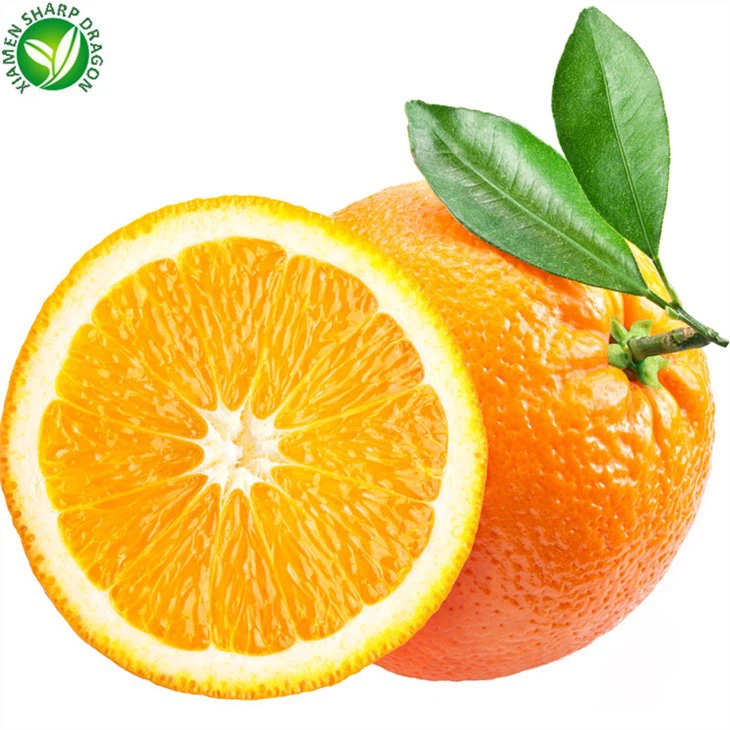
Orange Can Make a Plant-Iron Meal More Useful
One of the least exaggerated orange benefits is also one of the most actionable. Vitamin C improves absorption of nonheme iron, the form found in plant foods. That makes orange a purposeful companion to meals containing beans, lentils, tofu, fortified grains, seeds or leafy vegetables. The point is meal design, not a guaranteed clinical outcome.
A person might add fresh segments to a spinach and lentil salad, finish a bean dish with orange, or serve plain citrus fruit beside an iron-fortified breakfast. A food developer might build a grain salad containing orange pieces and chickpeas. In each case, the orange contributes vitamin C at the time the plant iron is eaten. Whether the complete meal supplies enough iron for a particular person is a separate calculation.
This benefit also illustrates why food form and handling deserve attention. A small decorative piece makes only a small contribution. Extended heating or holding can move a product-specific vitamin C value away from raw-fruit data because the vitamin is sensitive to heat and oxygen. For label work, use the finished recipe and an accepted evidence method; a visible orange piece alone proves no nutrient total.
Convenience Is a Real Benefit When It Leads to More Usable Fruit
Nutrition discussions sometimes treat convenience as irrelevant. In practice, fruit that is unavailable, difficult to prepare, inconsistent in yield or discarded before use provides no benefit at all. Plain frozen orange segments can reduce peeling work, provide an edible-weight ingredient and make portioning possible outside a short fresh window. Harvard Health notes that plain frozen fruit is generally quick-frozen and can be a nutritious option; the ingredient list should still be checked for added sugar or other additions.
Convenience does not make every frozen orange equivalent. A free-flowing IQF segment, a solid block, a broken-piece grade, puree and concentrate solve different production problems. A yogurt topping may require intact, attractive pieces. A bakery filling can often use controlled broken segments. A smoothie manufacturer may value rapid blending more than visual integrity. The benefit appears only when the format suits the process and the product is handled correctly.
For buyers comparing formats, the XMSD frozen mandarin orange range provides a useful starting map. It should not replace a specification. Confirm fruit identity, whether the segment is membrane-free, the whole-to-broken ratio, size tolerance, ingredient declaration, packing, storage temperature and intended application.
Sweet Orange, Mandarin, Juice and Frozen Segments Need Separate Evidence
Everyday English often uses "orange" broadly, but commercial identity cannot be broad. Sweet oranges are commonly associated with Citrus sinensis, while mandarins belong to a different citrus grouping and are often smaller and easier to peel. Varieties within each group differ. A nutrition database entry for one fruit cannot automatically substantiate a label for another.
The same distinction applies to edible basis. A whole fresh orange includes peel in the purchased weight, while a frozen segment specification normally refers to edible product. Juice may be single-strength or concentrated and reconstituted. Canned pieces may be measured with or without packing liquid. A comparison that ignores those bases can be mathematically neat and commercially wrong.
| Form | Benefit that remains relevant | Evidence to confirm | Common mistake |
|---|---|---|---|
| Whole sweet orange | Fiber-rich fruit structure plus vitamin C | Edible serving mass and applicable database entry | Treating purchased weight as edible weight |
| Fresh mandarin | Convenient portion with citrus nutrients | Species or variety, size and edible mass | Copying a sweet-orange serving value |
| 100% juice | Fluid delivery of citrus flavor, carbohydrate and vitamin C | Serving volume, concentration and label panel | Calling it equivalent to intact fruit |
| Plain frozen segments | Recognizable fruit, edible-weight convenience and year-round recipe access | Exact fruit, ingredients, nutrient basis and temperature history | Assuming the word frozen guarantees a nutrient value |
| Sweetened preparation | Orange flavor and fruit inclusion | Complete formula, added sugar and finished serving | Presenting raw-fruit totals as finished-food totals |
XMSD's fresh mandarin orange reference and IQF frozen orange segments illustrate two identities and supply formats. The exact specification, rather than either page name, controls which nutrition, size and handling statements belong to the purchase.
What Freezing Preserves-and What It Cannot Guarantee
Freezing does not remove the fruit's carbohydrate, fiber or minerals. It slows many changes and can hold fruit for later use, but it does not freeze quality at an abstract "perfect" level. Raw-material maturity, delay before freezing, peeling method, oxygen exposure, storage duration and temperature stability all affect the supplied ingredient. Vitamin C is more vulnerable than minerals to processing and storage losses.
A buyer making a nutrient claim should ask what the number represents. It may come from a database calculation, a test near production, a composite sample or a shelf-life study. Those are not interchangeable evidence types. The destination market may prescribe eligible methods, rounding and claim thresholds. A supplier document also needs to match the formula, item code and serving basis on sale.
Texture follows a separate path. Ice formation and thawing can soften tissues and increase juice release. A segment may remain nutritionally useful yet fail as a visible topping. Partial thawing and refreezing can cause clumping and further damage. The receiving team should therefore inspect carton condition, product temperature, free-flowing state and abnormal ice accumulation, then perform the agreed thaw test.
Representative Scenario 2 - Product-development and purchasing decision. Practical example: A dairy team plans an 800 kg pilot batch of yogurt with 8% orange segments. It needs 800 × 0.08 = 64 kg of fruit in the mixer. If the approved trial shows 92% usable yield after controlled thawing and draining, purchasing plans 64 ÷ 0.92 = 69.6 kg for the batch, before allowing for normal line loss.
Product development owns flavor, visible-piece size and nutrient calculation in the finished yogurt. Purchasing owns supply format, usable cost and pack. Quality owns the thaw method, defect limits and lot evidence. Keeping those functions separate prevents a raw-orange reference number or an attractive frozen sample from becoming an unsupported finished-product promise.
XMSD Experience: Segment Grade Determines Whether the Fruit Is Useful
In XMSD's work with frozen-fruit applications, the first useful question is rarely "Is orange healthy?" We ask where the fruit will be visible and what happens after thawing. A hotel fruit station, a clear dessert cup and a yogurt topper expose membrane, color variation, broken pieces and drip. A blended smoothie or bakery filling can accept a less cosmetic grade, but may still need stable flavor and no hard peel fragments.
This changes the commercial meaning of benefit. Intact segments may reduce preparation and improve presentation, yet buying the highest whole-piece percentage for a blended filling wastes money. Broken pieces may lower the invoice price but increase juice loss or make portions inconsistent. We compare the approved sample after the buyer's normal thaw time, not just while the fruit is frozen. The recorded outputs should include drained yield, whole-to-broken ratio, membrane, seed or peel defects, color, aroma and final-recipe behavior.
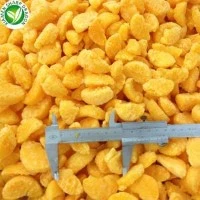
The ruler visible in a frozen-piece inspection is more valuable than a vague "premium" adjective. It lets both sides agree on a meaningful size range and check future lots in the same way. The aim is not to make orange sound universally superior; it is to make the chosen fruit form perform reliably in the buyer's product.
XMSD Experience: Documentation Must Follow the Exact Product
The second recurring issue is evidence drift. A raw sweet-orange database value appears in a presentation, the purchased ingredient becomes frozen mandarin segments, the serving changes, and the number survives every handoff. By the time packaging is reviewed, the claim may no longer describe the item. We stop that drift by tying each document to the product name, item code, ingredient statement, test or calculation basis, serving unit and destination.
For a nutrition-led project, request the specification, ingredient declaration, nutrition support, allergen statement, microbiological limits and traceability information. If vitamin C is commercially important, clarify whether the value is guaranteed, typical or informational, when it was measured, and whether it is intended to hold through shelf life. The buyer's regulatory specialist should approve any destination-specific claim.
Quality and food safety records are separate from nutrition records but travel with the same lot. The receiving plan may require temperature evidence, package integrity, sensory checks, foreign-material controls, pesticide-residue documentation and microbiological criteria. Our citrus safety and spoilage guide explains why a beneficial nutrient profile never cancels a genuine spoilage or handling concern.

A Practical Orange Checklist for Buyers and Menu Teams
Define the fruit: State sweet orange, mandarin or the required variety where identity affects flavor, segment size or label data. Avoid using "orange" as the only specification field.
Define the form: Record whole fresh, peeled segment, IQF segment, broken piece, puree, single-strength juice, concentrate or sweetened preparation. Include every added ingredient and clarify whether weights are frozen, thawed or drained.
Define the serving: Use the mass actually eaten or the amount entering the finished recipe. For a multi-ingredient food, calculate the orange contribution from the inclusion percentage and then calculate the complete formula.
Match the evidence: Confirm whether a database record, laboratory result or approved calculation is acceptable in the destination. Keep source identity, date, sample basis and rounding method with the result.
Test application performance: Thaw under a written method and record usable yield, drip, breakage and sensory quality. Evaluate visible toppings and blended fillings by different standards. Use the approved sample and method as the commercial reference.
Plan supply and documents together: Pack size, private-label requirements, order volume, destination, cold-chain route and document list should be discussed before price comparison. The XMSD buyer solutions overview can help structure that brief.

Claims About Oranges That Need Restraint
"Boosts immunity" can imply a guaranteed resistance to infection. The defensible point is that vitamin C supports normal immune function, provided the product supplies an eligible amount under the relevant rules.
"Detoxifies the body" is too vague to be useful. If the intended point is vitamin C, water or fiber, name the measurable component. Orange does not replace the body's organs or medical treatment.
"Prevents cancer or heart disease" turns research on dietary patterns or citrus compounds into a disease claim for one food. Observational associations, laboratory work and a product-specific authorized claim are different levels of evidence.
"Ideal for diabetes" ignores natural sugar, total carbohydrate, portion size and individual needs. Plain whole fruit can fit many eating plans, but medical guidance belongs with a qualified clinician who knows the person's circumstances.
"Frozen is exactly the same as fresh" is unnecessarily absolute. Frozen fruit remains real fruit and can preserve valuable nutrients, while its vitamin C, texture and serving basis may differ. A product-specific statement is more credible.
Frequently Asked Questions
1. What is the main benefit of eating an orange?
The strongest concise answer is its vitamin C contribution combined with the fiber and edible structure of whole fruit. Vitamin C has established roles in collagen formation, antioxidant defense, normal immune function and nonheme iron absorption.
2. Is a whole orange better than orange juice?
For fiber and intact food structure, whole fruit has the advantage. Juice can still provide vitamin C and can be useful as a beverage. Compare actual serving sizes, ingredients and nutrition panels rather than treating the forms as identical.
3. Do frozen orange segments still have benefits?
Yes. Plain frozen segments retain fruit carbohydrate, fiber, water, minerals and some vitamin C while adding preparation and seasonal convenience. The exact nutrient amount and physical performance depend on the product, processing and storage history.
4. Can oranges help with iron absorption?
Vitamin C improves absorption of nonheme iron from plant foods. Serving orange with beans, lentils, tofu, fortified grains or leafy vegetables is therefore a practical pairing. It does not replace iron assessment or treatment when deficiency is suspected.
5. What should a frozen-orange buyer verify before using a nutrition claim?
Verify fruit identity, complete ingredients, serving basis, applicable nutrient data, evidence date and method, destination thresholds and whether the value belongs to the exact supplied item. Then calculate the finished recipe and obtain the required regulatory approval.
XMSD sourcing note: Share the fruit identity, application, piece grade, pack, volume, destination and nutrition evidence you require. We will review suitable frozen-orange options and identify which values need product-specific confirmation.
The Useful Answer Is a Serving, Not a Slogan
Oranges are valuable because they combine vitamin C, fiber, water, fruit carbohydrate and an appealing flavor in a familiar food. Their advantages become clearer when connected to a real decision: choose whole fruit when structure matters, use citrus alongside plant-iron foods, select frozen segments when preparation and availability matter, and calculate every commercial claim from the exact product and serving.
That answer is deliberately modest. It respects what oranges genuinely contribute and avoids asking one ingredient to carry a medical promise. For buyers, the same discipline produces a better specification, a more reliable application trial and claims that can survive document review.
References
- USDA SNAP-Ed: Oranges, nutrition facts and selection guidance
- NIH Office of Dietary Supplements: Vitamin C Fact Sheet for Health Professionals
- U.S. FDA: Interactive Nutrition Facts Label, Dietary Fiber
- Harvard Health: Whole-fruit variety, juice and plain frozen fruit
- Cleveland Clinic: Whole fruit and 100% fruit juice