


Water Chestnut Benefits: Nutrition, Crunch and Product Form
Nov 28, 2019

Chinese water chestnut is a crisp aquatic vegetable that contributes carbohydrate, fiber and several micronutrients while adding a texture that survives cooking unusually well. Its most useful benefits are practical rather than medicinal: it broadens vegetable variety, gives a low-fat crunchy inclusion, works in hot and cold dishes, and is available fresh, frozen or canned.
The name creates two common mistakes. It is not a tree nut; the edible part is the corm of Eleocharis dulcis, a sedge. It is also different from water caltrop, Trapa species, which is called water chestnut in some markets. A nutrition statement or allergen review must begin with the exact species and product.
Form changes the result. Raw, drained canned and frozen products can differ in water, solids, serving basis, sodium, texture and cooking yield. Use the lot specification and finished-product nutrition calculation instead of transferring one online table to every pack.
Fast answer: water chestnuts offer a crisp vegetable texture, mostly carbohydrate energy, some fiber and minerals, and flexible use. They do not need exaggerated antibacterial, detox or disease-treatment promises to be valuable.

Identify the Right Water Chestnut First
Chinese water chestnut grows in wet soil and produces a rounded brown corm with white flesh. The corm, not a botanical nut, is peeled for food. Its crisp bite and mild sweetness explain its use in stir-fries, dumpling fillings, vegetable blends, salads and prepared foods.
Water caltrop is botanically and physically different. Its horned fruit, starch behavior and traditional uses should not be merged with Eleocharis dulcis. Scientific reviews explicitly warn about the shared common name.[1]
The word chestnut also causes allergen confusion. A common name does not establish a tree-nut identity, but a supplier still needs to assess the whole facility, shared line, added ingredients and destination-market labeling. A plain frozen corm and a seasoned canned product do not share the same allergen file.
Put the scientific or unambiguous commercial name on the specification. Add peeled status, whole/slice/dice form, ingredient declaration, origin, processing method and pack. Identity turns a vague benefit claim into a reviewable food record.
Read Nutrition per 100 Grams and per Served Portion
USDA FoodData Central keeps food-composition records with values standardized to a stated amount, commonly 100 grams, and separate portion weights.[2] This makes foods comparable, but a menu portion or labeled serving may be smaller or larger.
Chinese water chestnut is primarily water and carbohydrate, with little fat. It can contribute fiber, potassium, copper, manganese and vitamin B6, though the reported amounts depend on form and data source. Call it a source of a nutrient only after applying the applicable labeling threshold to the finished serving.
Convert a 100-gram value with simple proportion. If a verified data record lists 3 grams of fiber per 100 grams and the recipe contains 60 grams of that ingredient per serving, the ingredient contribution is 3 × 60 ÷ 100 = 1.8 grams. Then account for yield, other ingredients and the jurisdiction's rounding rules.
Do not treat the calculation as the final label. Drained weight, cooking loss, moisture gain, formulation and laboratory or database methodology can change the finished number. Keep the source record, calculation date and serving basis beside the draft panel.

The Crunch Is a Genuine Food Benefit
Water chestnut remains crisp through cooking because its cell-wall structure and phenolic cross-linking resist softening differently from many vegetables. Research on Eleocharis dulcis cell walls has linked ferulic-acid-associated structures to this characteristic texture.[3]
Texture can increase the appeal of a vegetable blend without relying on deep frying or heavy fat addition. A small dice creates frequent crisp points in a filling; slices create larger bites in a stir-fry; whole corms make a distinct visible component. The benefit belongs to the meal design.
Processing still matters. Overcooking, repeated freeze-thaw exposure, oversized ice crystals and poor raw maturity can weaken structure. A product described as water chestnut may fail its role if it arrives soft, split, woody or heavily dehydrated.
Write a sensory method around the final use. Define thaw or cook time, temperature, sample size and comparison reference. Score crispness, fibrousness, mealiness, off-flavor and piece survival. A raw frozen bite alone cannot approve a component destined for a cooked dumpling.
Fresh, Frozen and Canned Forms Serve Different Jobs
Fresh corms allow direct control of peeling, cut and immediate texture, but they require cleaning, peel removal, trim management and rapid handling after preparation. Availability and labor can limit their fit in a large standardized program.
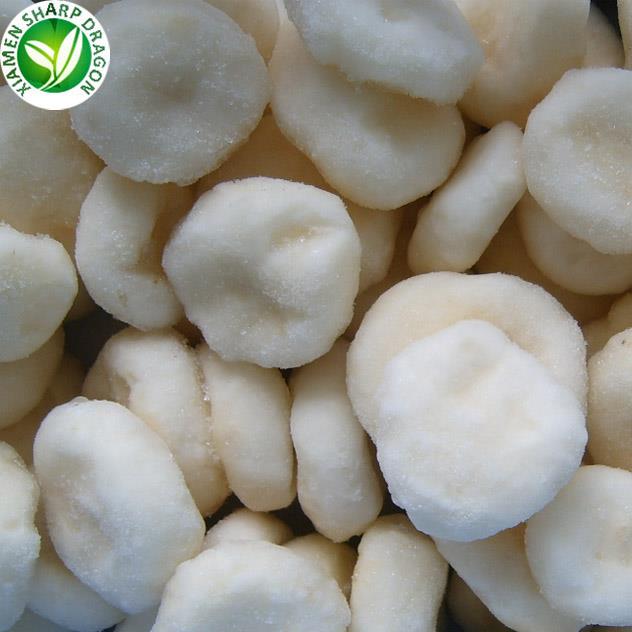
Frozen water chestnuts offer whole, slice or dice formats with a stable ingredient statement and measured pack unit. They support portioning across the year, yet the cook method needs to account for frozen temperature and any surface ice. Evaluate piece separation and texture after the intended process.
Canned products are shelf stable before opening and convenient for kitchens without frozen storage. Brine, drained weight and thermal processing change the comparison. Sodium can range widely by recipe; rinsing affects both sodium and yield. Use the can's own nutrition panel and ingredient declaration.
Compare on served mass and application performance, not gross pack weight. For a frozen route, the IQF water chestnut format gives a starting point for whole and cut requirements.

Fiber and Vegetable Variety Need Honest Language
Dietary fiber supports normal digestive function as part of an overall eating pattern. Water chestnuts can add some fiber, but they are not an unusually concentrated fiber supplement. The portion and product form decide whether the contribution is meaningful.
Their mild flavor makes vegetable inclusion easier in dishes where strong bitterness or leafy texture would be rejected. That can help a menu create contrast and variety. It does not mean a water-chestnut dish automatically meets a vegetable or fiber claim.
Look at displacement. Adding water chestnut to a dumpling while removing some higher-fat filling changes the recipe differently from adding it on top of the existing formula. The useful benefit may come from the reformulation choice rather than a special property of the corm.
For consumer information, state what the serving contains and how it is prepared. Avoid promises that it "cleanses," cures constipation or controls metabolism. Those claims exceed the evidence available from a normal food portion.
Minerals Matter Only at the Actual Dose
Potassium, copper and manganese commonly appear in water-chestnut composition tables. Phosphorus is present too, but the statement that it contains more phosphorus than every stem vegetable requires a defined comparison database and serving basis. It should not be repeated as a timeless fact.
A mineral amount can be nutritionally useful without supporting a therapeutic claim. Healthy blood-pressure, bone or metabolism language has legal and scientific conditions. Calculate the percentage of the applicable daily value from the finished serving before considering label wording.
Preparation changes exposure. A canned product with added sodium may not match a low-sodium positioning even if the corm itself is naturally low in sodium. A frozen plain ingredient gives the developer more control, but sauces and seasonings still determine the final meal.
Keep database figures timestamped. USDA explains that FoodData Central combines several data types with different update cycles and methods.[4] Choose the record matching the exact form, then document any recipe calculation or laboratory result.
Laboratory Antioxidant Findings Are Not Meal Outcomes
A 2022 review catalogs phenolics, polysaccharides and other components reported in Chinese water chestnut, along with laboratory and preclinical research.[5] This work supports further study and ingredient characterization.
The same review notes that peel can contain more phenolics than edible pulp. That distinction blocks a common leap: strong activity measured in peel extract cannot be assigned to an ordinary serving of peeled corm. Extraction solvent, concentration, assay and consumed dose all differ.
"Antioxidant" can describe a chemical assay without demonstrating prevention or treatment of disease in people. Clinical outcomes require human study design, appropriate comparison and a relevant dose. Food marketing should stay with supported composition and sensory function.
The strongest practical statement is modest: Chinese water chestnut is a vegetable ingredient containing nutrients and plant compounds. Its contribution belongs inside a varied diet. Product development can emphasize crispness, convenience and recipe fit without converting early research into a cure.
Practical Example: Reformulate a Dumpling Filling
Practical example: In this representative formulation scenario, the decision function is adding crisp vegetable texture while controlling serving nutrition. A 100-kilogram filling contains 55 kilograms of seasoned protein, 30 kilograms of vegetables and 15 kilograms of binder and sauce.
The developer tests 8 kilograms of frozen water-chestnut dice by replacing 5 kilograms of protein and 3 kilograms of another vegetable. The full recipe still totals 100 kilograms. The test records frozen dice mass, thaw loss, cook loss, piece survival, sodium and sensory scores.
A 5-millimeter dice disappears into the filling; a 10-millimeter target gives distinct crisp points but causes occasional wrapper puncture. The accepted size range sits between those candidates and includes a limit on oversize pieces.
The result is a recipe decision, not a broad health promise. The finished product receives its own nutrition calculation and cooking validation. Water chestnut earns its place through measurable texture and substitution.

Worked Example: Compare Frozen and Canned Yield
Worked example: In this representative foodservice scenario, the decision function is selecting the lower-cost served portion after drainage and cooking. A kitchen compares a 10-kilogram frozen carton and cans totaling 10 kilograms gross weight.
The frozen sample produces 9.3 kilograms after the specified cook. The canned sample yields 6.4 kilograms after draining and rinsing, then 6.2 kilograms after heating. Quoted costs are divided by 9.3 and 6.2, not by the identical gross weight.
The canned route needs no freezer space and has simpler opening-day handling. The frozen route offers higher usable mass and closer control of sodium and cut. The kitchen chooses by total operating need rather than declaring one form universally healthier.
This scenario differs from recipe reformulation. It is a purchasing and service-yield decision. The action is to repeat the yield test with commercial packs and lock a draining or cooking method into the cost sheet.
XMSD Experience: Texture Approval Follows the Cook Step
In our XMSD water-chestnut reviews, we separate frozen appearance from finished bite. A clean white piece can soften too much in the customer's heating cycle, while a frosted-looking sample can perform well after a controlled cook.
We record cut distribution, broken pieces, peel remnants, discoloration, ice, clumping and raw aroma first. The application test then measures time, temperature, piece recovery and texture against a retained reference. Both stages remain linked to the lot.
The dice specification needs a distribution rather than one photographed cube. The frozen water chestnut dice format can start the sample discussion, followed by sieve or measurement results and a cooked-product decision.
This process protects the benefit the ingredient was selected to provide. Crunch is accepted in the food, not inferred from a catalog word.

XMSD Experience: Pack and Thaw Method Protect Usable Yield
A separate lesson from our XMSD frozen-vegetable work is that unit size changes handling loss. Repeated opening and tempering of a large liner can create clumps and uneven portions. A smaller inner bag costs more packaging but may fit one production batch.
We map the inner weight to the mixer, kettle or prep shift. The handling plan states frozen addition, controlled tempering or complete thaw, and whether released liquid enters the recipe. Yield comparisons use the same route.
Carton strength, liner closure, code legibility and pallet condition protect the accepted cut during transport. The frozen packaging framework organizes these checks around the exact product and route.
When the operational method is stable, nutrition and cost calculations become more trustworthy because the served mass no longer shifts with ad hoc drainage or partial thawing.
Turn a Nutrition Idea into a Releaseable Product Brief
Start with the final food and the role water chestnut will play. Name the served portion, cooking route, desired crunch, visible-piece expectation and any nutrient or sodium objective. A stir-fry inclusion, dumpling filling and blended vegetable patty place different stress on the same dice.
Translate that role into measurements. Define whole, slice or dice geometry; oversize and undersize tolerance; broken pieces; peel remnants; discoloration; foreign material; clumping; free ice; and frozen temperature. Describe the texture reference after the chosen heat treatment. A photo can illustrate appearance but cannot carry the acceptance method.
Build nutrition from the exact formulation. Identify the database or laboratory source for the water chestnut form, calculate its contribution at the served mass, add every other ingredient, and apply cooking yield. If a claim is under consideration, check the destination rule and retain the calculation. A menu description can emphasize crisp vegetable texture when the nutrient threshold is not met.
Add the safety and documentation layer: microbiological limits, pesticide or contaminant expectations, allergen controls, traceability, lot coding, certificate needs and destination labeling. The broader frozen vegetable range helps compare cut and packing directions, but each water-chestnut order retains its own agreed limits.
Run a pilot using normal equipment. Sample the beginning, middle and end of the batch, count or weigh retained pieces, and score texture immediately after cooking and after the expected service hold. Record mixer loading, cook temperature and hold time so a later lot receives the same challenge.
Release follows evidence, not ingredient reputation. Product identity, frozen condition, cooked texture, usable yield, label calculation and pack performance should all point to the same decision. The food-processing application overview can frame line and finished-food questions before the sample plan is locked.

Specify the Benefit You Actually Need
Begin the purchase brief with species, ingredient statement, peeled status and form. Add whole or cut dimensions, defect definitions, texture method, frozen separation, microbiological criteria, pack and destination documents. Nutrition values need a stated source and serving basis.
Name the role in the finished food: crisp inclusion, visible vegetable, mild flavor, portioned frozen input or shelf-stable convenience. Then test that role after the full cook and hold cycle. The most relevant benefit is the one the serving retains.
Chinese water chestnut is a distinctive aquatic vegetable with useful texture, modest nutrient contributions and broad application flexibility. Accurate identity and form-specific evidence make that honest answer stronger.
For a product comparison, keep five bases aligned: edible or drained mass, ingredient statement, preparation, serving weight and destination labeling rules. Only then compare energy, carbohydrate, fiber, minerals, sodium, cost and texture. Misaligned bases can make a diluted canned serving appear superior to a denser raw or frozen serving without explaining the different amount of actual corm.
Retain the sample and calculation record with the approved specification. When cut, pack, brine, source or recipe changes, reopen the affected parts of the comparison. This keeps a straightforward vegetable benefit grounded in what the customer receives and eats.
The final message can then stay simple: identify it as an aquatic vegetable, describe the crisp bite, give nutrition for the declared serving, and explain the product form. Clear facts are more useful than a long list of biological promises that a normal serving has never demonstrated.
Share the whole, slice or dice form, cooking route, batch size, texture target, annual volume and pack. XMSD can review sample, specification and usable-yield questions.
References
- Zhu. Chemical composition, health effects and uses of water caltrop. Trends in Food Science & Technology, 2016. Includes the identity distinction from Chinese water chestnut.
- U.S. Department of Agriculture. FoodData Central food-composition database.
- Parr and colleagues. Chinese water chestnut cell-wall material and texture-related composition. Journal of Agricultural and Food Chemistry, 2001.
- U.S. Department of Agriculture. FoodData Central data types and release files.
- Zhang and colleagues. Eleocharis dulcis corm: phytochemicals, processing and food products. Journal of the Science of Food and Agriculture, 2022.