


Blueberries vs Blackberries: Which Is Better for You?
Jun 14, 2019

Neither berry is better in every situation. If your immediate priority is more fiber with fewer calories and less total sugar per equal weight, blackberries have the stronger nutritional profile. USDA reference data for 100 g of raw fruit list blackberries at 43 kcal, 5.3 g fiber, and 4.88 g total sugars, compared with 57 kcal, 2.4 g fiber, and 9.96 g total sugars for blueberries. Blueberries, however, have a milder flavor, smaller individual pieces, fewer noticeable seeds, and a substantially larger body of human-intervention research. Those characteristics can make them the more practical choice for some diets, frozen packs, beverages, bakery products, and foodservice applications.
The sensible answer is therefore goal-specific: choose blackberries when fiber density, tartness, or deep color matters most; choose blueberries when a gentler flavor, a round free-flowing berry, lower seed perception, or a better-studied ingredient matters more. Choosing plain whole fruit also matters more than debating a small difference between the two. Added sugar, syrup, juice concentration, portion size, thawing practice, and the rest of the recipe can change the final nutritional and functional result.
The short answer: Blackberries lead on fiber and have fewer calories and sugars per 100 g in the USDA raw-fruit entries. Blueberries often lead on mild flavor, easy portioning, seed-free mouthfeel, and breadth of human research. For a useful decision, compare the same product form and decide what the finished meal or commercial application needs.

What the Nutrition Numbers Actually Show
A fair comparison starts with the same measurement basis. The figures below use 100 g of raw, edible fruit from USDA legacy food-composition entries. They are reference values, not guaranteed values for every cultivar, harvest, farm, or frozen lot. Water content, maturity, variety, and laboratory method introduce normal variation. Still, the equal-weight comparison answers the core question much more reliably than comparing one loosely filled cup of one berry with a differently packed cup of the other.
| USDA raw-fruit reference, per 100 g | Blueberries | Blackberries |
|---|---|---|
| Energy | 57 kcal | 43 kcal |
| Dietary fiber | 2.4 g | 5.3 g |
| Total sugars | 9.96 g | 4.88 g |
| Carbohydrate | 14.49 g | 9.61 g |
| Vitamin C | 9.7 mg | 21.0 mg |
| Vitamin K | 19.3 micrograms | 19.8 micrograms |
Blackberries provide a little more than twice the fiber per equal weight in these entries. Fiber adds bulk to the diet and contributes to normal digestive function, but that does not make a single food a treatment for constipation or another condition. The same high-fiber characteristic can also be uncomfortable when a person increases intake abruptly or has an individual digestive disorder. Start with a moderate portion if you are not accustomed to berry seeds and fiber, then judge tolerance in the context of the full meal.
Blackberries also contain more vitamin C in the reference data, while vitamin K is very similar on an equal-weight basis. Both fruits contain anthocyanins and other polyphenols, but their amounts vary by species, cultivar, maturity, processing, and analytical method. Color alone cannot tell you the exact quantity or predict a clinical outcome. It is more defensible to treat both as useful whole-fruit choices and use the measured nutrient difference when it directly serves your goal.
Worked example: Suppose you compare 150 g portions using the USDA per-100-g values. Multiply every figure by 1.5. The blueberry portion supplies about 85.5 kcal, 3.6 g fiber, and 14.94 g total sugars. The blackberry portion supplies about 64.5 kcal, 7.95 g fiber, and 7.32 g total sugars. The calculation supports blackberries for fiber density, but it does not account for toppings, yogurt, pastry, sweetener, or juice in the final dish. Add 20 g of sugar to either recipe and that added ingredient overwhelms the berries' natural-sugar difference.

Does One Berry Have Better Health Evidence?
Blueberries have been studied more extensively in human interventions, particularly in relation to vascular function and cardiometabolic markers. That is an evidence-volume advantage, not proof that blueberries are universally healthier. A 2024 systematic review and meta-analysis of blueberry interventions included 16 studies in its systematic review and 11 in its meta-analysis. It reported improvements in some endothelial-function measures and a small pooled change in diastolic blood pressure, while heterogeneity was high for key outcomes. The authors called for larger trials in defined populations. A separate review covering 45 human studies likewise described promising findings but emphasized the need for more high-quality controlled research.
That distinction matters. A nutrient database tells us what is in a measured food sample. A randomized trial tests a particular intervention, dose, product, population, and outcome. A systematic review combines related studies but cannot erase differences between them. None of those evidence types shows that a normal serving of blueberries prevents disease, replaces treatment, or produces the same response in every person. We would therefore describe blueberries as a well-studied berry that can fit a balanced diet, not as a medicinal product.
Blackberries contain fiber, vitamin C, vitamin K, manganese, and colored plant compounds, yet the direct human-intervention literature specific to whole blackberries is smaller. It would be misleading to infer that less research means the fruit is less valuable. It only means the clinical-claim boundary must be narrower. For a person choosing ordinary food, the measured fiber difference may be more actionable than a broad antioxidant claim. For a brand writing a label or marketing page, the safer approach is to use verified composition and legally permitted claims for the destination market rather than translate emerging research into a promised result.
Evidence judgment: Blackberries win the simple fiber comparison; blueberries win on the breadth of berry-specific human research. Neither advantage establishes one universal winner, and neither supports disease-prevention or treatment language.

Whole, Frozen, Dried, Juiced, and Sweetened Are Different Comparisons
The product form can change the answer more than the species. Plain unsweetened frozen berries retain the whole edible fruit structure, although freezing and thawing soften cells and release juice. They are not automatically nutritionally identical to the USDA raw entries: a commercial result varies with cultivar, maturity, freezing process, storage, thawing, and any added ingredient. Still, plain whole IQF fruit is a much closer comparison with fresh whole fruit than sweetened dried fruit, strained juice, syrup-packed fruit, jam, or a dessert filling.
Drying removes water and concentrates solids per 100 g. Some dried berry products are also infused with sugar. Juice may remove much of the insoluble material, while purée keeps more of the fruit but changes the physical structure. Jam and bakery filling introduce sugar, pectin, heat, and a different serving pattern. If you compare a 30 g dried snack with 150 g frozen fruit, you are no longer testing blueberries against blackberries on an equivalent basis. Read the ingredient list, serving mass, added-sugar declaration, and nutrition panel before drawing the conclusion.
Frozen format also changes kitchen behavior. Blueberries are compact, round, and usually less seedy in the mouth, so they can be portioned directly into oatmeal, yogurt, muffins, sauces, and beverage mixes. Blackberries are larger aggregate fruits with many drupelets and perceptible seeds. They can give stronger tartness, dark color, and a distinctive berry identity, but their shape is more delicate and they may break down more visibly after thawing. These are not nutritional defects; they are application variables.
If you need a plain frozen ingredient, review the live frozen blueberry range and the corresponding frozen blackberry category as product-form references. The final decision should still be made against the actual specification and sample rather than a generic category description.
Flavor, Seeds, Color, and Texture Often Decide the Better Choice
Choose blueberries for a milder, more uniform bite
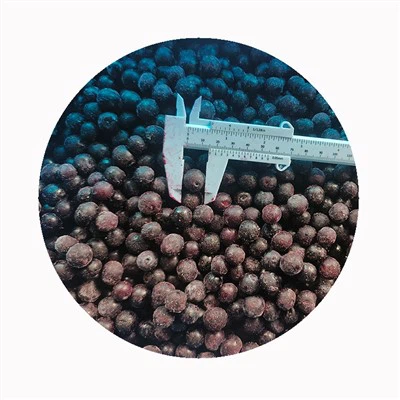
Blueberries tend to offer a sweeter, milder flavor and a discrete round piece. That makes them easier to distribute through muffins, breakfast products, yogurt cups, and mixed-fruit packs where the recipe needs visible berries without dominant seed texture. Piece size still matters. A narrow size distribution can improve portion consistency and reduce the chance that one pack receives mostly large fruit while another receives mostly small fruit. When appearance is important, also examine bloom, color variation, broken fruit, stems, leaves, and excessive surface frost.
The blueberry's skin and round shape do not make it damage-proof. Overripe raw material, rough movement, slow freezing, temperature fluctuation, or thaw-refreeze exposure can increase clumping and juice release. A photograph cannot establish these controls. For repeat production, ask for an agreed size description, defect definitions, sampling method, frozen-state inspection, and an application trial. The smaller berry is better only if it actually performs in your process.
Choose blackberries for stronger berry character and visible identity
Blackberries bring a tart-sweet profile, dark color, and recognizable aggregate shape. They can work especially well when the fruit itself should remain visually prominent, or when a sauce, compote, filling, or beverage benefits from a deeper berry note. The trade-off is seed perception and fragility. If the end product must be smooth, you may need milling or straining, which can change yield and fiber retention. If intact fruit is the visual goal, thawing and mixing conditions require more care.
Practical example: A hypothetical foodservice kitchen wants a fruit topping for 200 yogurt portions. If the priority is fast portioning with distinct whole pieces and low seed perception, we would trial blueberries first. If the priority is a darker, sharper berry sauce, we would trial blackberries and decide whether visible seeds suit the menu. The kitchen should test the fruit with its actual thaw time, mixing method, serving spoon, and yogurt rather than approve it from color photographs alone.

How We Choose for a Commercial Application
In frozen-food work, we do not turn "healthier" into a purchasing specification. We translate the intended benefit and application into measurable product attributes. If the brief says high fiber, the final recipe calculation and legally compliant nutrition analysis matter. If it says premium whole-berry appearance, we look at piece integrity, size distribution, color, foreign material, and drip after controlled thawing. If it says smoothie, we test seed perception, viscosity, flavor balance, and whether the processing equipment handles the fruit.
For blueberries, useful specification questions include cultivated or wild type where relevant, expected size or size range, intact-versus-broken tolerance, color, stem and leaf limits, clumping, and packing format. For blackberries, add maturity, red-cell reversion or color variation where relevant, drupelet integrity, seed acceptance, whole-versus-broken expectation, and the intended use after thawing. These points require agreed definitions and a representative sample; a broad grade word cannot replace them.
Packaging should match the quantity opened in one production cycle and the route through frozen storage. Repeatedly opening a large liner exposes the remaining fruit to humid air and handling. Small inner bags may reduce that exposure but add packaging material and labor. Carton strength, liner seal, pallet pattern, storage temperature, and transit monitoring all affect arrival condition. Our overview of frozen packaging choices can help frame the discussion, but the pack must be matched to the actual unit use and distribution route.
Worked example: Consider a hypothetical 10 kg unsweetened berry blend containing 6 kg blueberries and 4 kg blackberries. Using the raw USDA reference values only as an illustrative calculation, the fruit contributes about 356 g fiber: 6,000/100 × 2.4 g = 144 g from blueberries, plus 4,000/100 × 5.3 g = 212 g from blackberries. Reference total sugars would be about 792.8 g: 597.6 g plus 195.2 g. These are formulation estimates, not label values for a frozen commercial lot. The next action is to add every other ingredient, apply the destination's labeling rules and rounding, and use appropriate verified data or testing for the finished product.
A sample trial should reproduce the real use. Record the starting frozen mass, thawing conditions, recovered fruit, separated liquid, breakage, color transfer, and sensory result. A bakery trial should use the actual mixing and baking process; a beverage trial should use the actual screen or homogenizer; a retail pack review should include frozen appearance and normal consumer thawing. This turns a vague preference into evidence you can approve.

Quality, Documents, and Arrival Checks
Both berries are vulnerable to the same broad cold-chain failures: temperature fluctuation, damaged liners, poor seals, dehydration, clumping, and physical breakage. These are different from a nutrition comparison, but they determine whether the product remains usable. Freezer burn or loss of bloom primarily signals a quality problem; it does not by itself establish a food-safety conclusion. Damaged packaging, evidence of thawing, contamination, unusual odor, or an uncertain time-temperature history requires separate evaluation under the applicable food-safety plan.
Before approval, define the item name, species or commercial type where needed, whole or broken form, size, ingredient statement, packing, net weight, defect limits, microbiological and residue requirements, labeling, and destination documents. The destination market and intended use determine which tests and certificates are relevant. A general certificate list is not proof that a specific lot, facility, product, or shipment falls within scope. Review the current certification information, then request the applicable controlled document and verify its holder, scope, and validity for your order.
At arrival, examine the container or truck condition before unloading, verify product identity and seal information, review temperature records where specified, and inspect representative cartons for crushing, wetness, open liners, clumping, ice accumulation, color, odor, and foreign material. Use the sampling and acceptance rules written into the order. If the product does not conform, preserve photographs, labels, lot codes, temperatures, sample records, and affected quantities before the product is moved or mixed into production.
For blueberries, record the proportion of whole, broken, and visibly damaged fruit in the agreed sample. For blackberries, include drupelet integrity, color variation, and seed or fragment concerns that affect the application. Do not reject either berry merely because thawed texture is softer than fresh fruit; that is expected after ice crystals disrupt cells. Judge it against the specified frozen format and the performance required after processing.
XMSD sourcing note: Tell us whether you need a whole-berry topping, a bakery inclusion, a smoothie ingredient, a sauce base, or a retail pack. We can review the target berry, size, defect language, packing format, sample plan, and application trial before quotation.

Frequently Asked Questions
Are blackberries healthier than blueberries for weight management?
Blackberries supply fewer calories and more fiber per 100 g in the cited USDA raw-fruit data, which can help when those are your chosen dietary criteria. They do not independently cause weight loss. Total energy intake, portion, recipe, beverage form, toppings, and what the fruit replaces in the diet determine the practical result.
Do frozen blueberries and blackberries lose all their nutrients?
No. Freezing does not remove all nutrients, but retention is not identical for every nutrient or product. Raw material, maturity, processing, storage time, temperature, thawing, and preparation affect the result. Compare a plain unsweetened frozen product with a matching fresh food, not with syrup, sweetened dried fruit, jam, or juice.
Which berry is better for smoothies?
Blueberries usually give a milder flavor and fewer perceptible seeds. Blackberries can give deeper color, sharper berry character, and more reference fiber per equal weight, but their seeds may remain noticeable. Trial the actual blender, screen, recipe, serving temperature, and hold time. For more context on the studied blueberry ingredient, see our frozen blueberry nutrition guide.
Can people taking medication eat these berries?
Most people can use ordinary berry portions as food, but personal conditions and medicines can change the advice. Both reference entries contain vitamin K, which is relevant to consistency of intake for some people using warfarin or related anticoagulation management. Do not remove nutritious foods or change medication on the basis of an article; ask the clinician managing the treatment how berry intake fits the individual plan.
Final Decision
Choose blackberries when the decision centers on fiber per equal weight, lower reference calories and sugars, tart flavor, deep color, or a visibly distinctive berry. Choose blueberries when you need a milder fruit, small separate pieces, lower seed perception, easy portioning, or an ingredient with a broader base of human-intervention research. Use both when variety and complementary texture serve the meal or product.
Then check the form. Plain whole frozen fruit, sweetened dried fruit, juice, purée, jam, and bakery filling are not interchangeable nutritional or processing choices. Compare on the same weight basis, read the full formulation, and test the actual application. For commercial purchasing, approve measurable attributes and arrival evidence rather than the word "healthy." That method gives you a berry decision that remains useful after nutrition claims meet real production, packaging, and cold-chain conditions.
References
- USDA FoodData Central: Blueberries, raw, SR Legacy (FDC ID 171711)
- USDA FoodData Central: Blackberries, raw, SR Legacy (FDC ID 173946)
- Effect of blueberry intervention on endothelial function: a systematic review and meta-analysis
- Blueberries and Their Polyphenols: A Review of the Evidence and the Potential Impact on Inflammation, Oxidative Stress, Vascular and Cardiometabolic Function
- NIH Office of Dietary Supplements: Vitamin K Fact Sheet for Health Professionals