


Asparagus Health Benefits by Serving, Color and Preparation
Jan 02, 2020

Asparagus is a useful vegetable for adding folate, vitamin K, fiber and variety to meals. Plain spears contribute relatively little energy, so they can make a plate more substantial without needing a heavy sauce. Their strongest health benefit is this ordinary food contribution: another enjoyable way to eat vegetables, not a treatment hidden inside a green stalk.
The amount you actually eat matters. Four boiled spears supply about 89 micrograms of dietary folate equivalents in the NIH food table, but four thin spears and four thick ones need not weigh the same. The table describes a reference serving, not every bunch or frozen bag. For a meal at home, an ordinary side portion is a sensible starting point. For a nutrition calculation, use the edible weight and the correct prepared-food entry.
Fresh and frozen asparagus can both fit that role. Choose by how you will cook it, how much you will use and whether whole spears or cut pieces suit the dish. Green versus white asparagus is mainly a product and culinary choice; color alone cannot tell you which purchase will provide the most useful nutrition after trimming, cooking and serving.

Folate is a concrete reason to include asparagus
Folate helps the body make DNA and supports normal cell division. NIH lists asparagus among foods with substantial folate content. Its four-boiled-spear example provides 22% of the US Daily Value. That is a meaningful contribution from a side vegetable, although you still obtain folate from other foods across the day.
Food folate and folic acid are related but are not interchangeable numbers. Dietary folate equivalents account for differences in absorption. CDC recommends 400 micrograms of folic acid daily for people capable of becoming pregnant, from vitamins or fortified foods, in addition to folate-rich foods. Eating asparagus is not a reason to stop that advice or change a prescribed prenatal supplement. A clinician can explain individual needs.
For everyday cooking, the useful question is less dramatic: can you put a vegetable you enjoy into a meal you already make? Spears beside eggs, chopped asparagus folded into a grain dish, or pieces in a vegetable soup are straightforward options. A small garnish contributes less than a proper serving. It still counts as food, but it should not carry the same nutrition message as the larger portion shown in a reference table.
Fiber helps the meal, but more is not always more comfortable
The edible spear contains fiber within a water-rich plant structure. That combination gives you something to chew and adds vegetable bulk to a meal. It is more useful to think of asparagus as one contributor to total dietary fiber than as a food that will resolve constipation on its own. Fluids, overall eating habits, activity and the cause of any persistent symptoms also matter.
Some carbohydrate reaches the large intestine, where bacteria can ferment it and produce gas. NIDDK notes that increasing fiber can worsen gas symptoms for some people. If a large serving leaves you uncomfortable, try a smaller serving and observe the pattern instead of assuming that asparagus is harmful or that discomfort proves a cleansing effect. Cooking can make the stalk easier to chew, but softness is not a guarantee of digestive tolerance.
There is a practical distinction between tough fibers in the mouth and symptoms later in digestion. A woody base can be unpleasant even when the rest of the spear is tender. Remove that part rather than cooking the entire batch until the tips collapse. If you follow an IBS diet, use the portions and food choices agreed with your dietitian. Persistent pain, substantial changes in bowel habits or suspected allergy deserve medical assessment rather than increasingly restrictive self-testing.
Vitamin K and the limits of a benefits claim
Vitamin K has established functions in blood clotting and bone health. Asparagus can contribute to intake alongside other vegetables and foods. That does not make an asparagus meal a proven way to prevent fractures, lower blood pressure or treat a metabolic condition. Nutrient composition tells us what a food contains; a clinical claim asks a different question about an outcome in people.
One medication issue is important enough to state plainly. If you take warfarin, NIH advises keeping vitamin K intake broadly consistent and discussing changes with your healthcare professional. You do not need to declare every green vegetable forbidden. A sudden jump from rarely eating vegetables to very large daily servings is the sort of change to discuss, including supplements and the rest of your diet.
The same care is needed with research headlines about asparagus extracts, roots or concentrated powders. Their composition, dose and use may differ from cooked spears. We would keep such ingredients separate from a food specification: the plant name is not enough to establish equivalence. For a normal side dish, folate, fiber, vitamin K and dietary variety already provide an adequate explanation of its value. There is no need to borrow a stronger claim from another material.
Green, white and purple are not a nutrition ranking
White asparagus is grown with light excluded so that the spear does not develop its usual green chlorophyll. This growing practice is different from blanching vegetables in hot water before freezing, even though both processes use the word blanching. Purple types have their own appearance. A reference value for one form should not be presented as a measured value for all colors and cultivars.
At the table, choose the color and preparation you want to eat. For purchasing, put the color in the product description because it changes menu expectations. A white-asparagus side and a green-asparagus stir-fry are not interchangeable merely because both contain the same vegetable species. Peeling requirements, trim and cooking behavior also need to match the actual material received.
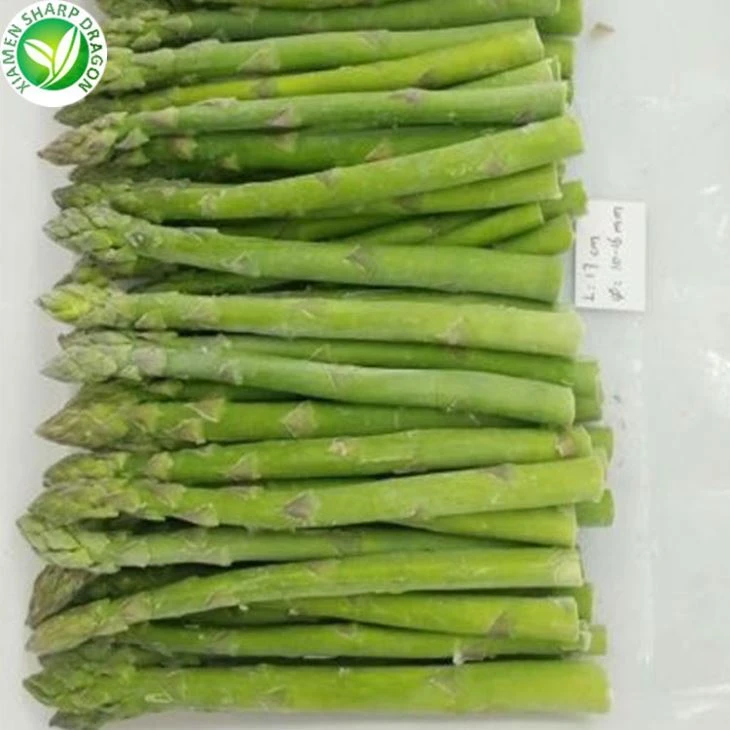
The frozen asparagus range is a useful place to distinguish available product forms before discussing an application. From our perspective, the first sample question is whether the edible stalk has the bite and appearance your dish needs. A nutrition-led menu still has to taste good; an uneaten vegetable portion contributes little to that meal.

Fresh and frozen solve different kitchen problems
Fresh asparagus gives you control over trimming and the final cook. It also leaves you responsible for using a perishable bunch while its texture is still appealing. Frozen asparagus can make it easier to take out a planned amount and retain the rest according to the pack instructions. Neither label, fresh or frozen, establishes a universal nutritional winner. Variety, harvest condition, processing, storage and preparation all influence the food you eventually serve.
Freezing is not a promise that every vitamin remains unchanged. Equally, a frozen spear has not ceased to be a vegetable. Treat a plain frozen ingredient differently from a ready-seasoned or sauced product, whose label describes additional ingredients. In recipe calculations, do not choose a raw-food database entry simply because it gives a more attractive nutrient figure than the matching cooked or frozen entry.
Our application preference would follow the service pattern. For individual plated sides, intact tips and a reasonably consistent diameter are valuable. For soup, pasta filling or a mixed vegetable dish, cut pieces may be more convenient and can avoid paying for a whole-spear presentation that disappears during preparation. A named green-asparagus format provides a specific starting point for that discussion, but the useful comparison still happens in a cooking trial with the dish you intend to serve.
Preparation should protect both the tip and the bite
A spear is not uniform from end to end. The tip is delicate, while the lower stalk can be much firmer. Asparagus with a broad spread of diameters is also harder to cook evenly in one batch. Select a method for the size and product state you have, and test tenderness in the stalk as well as appearance at the tip. Do not rely only on bright color.
For home freezing, the National Center for Home Food Preservation gives a specific sequence: wash, sort by size, trim, water-blanch, cool promptly, drain, package and freeze. Its blanching times are 2 minutes for small spears, 3 for medium and 4 for large. These are home-preservation instructions for that stage, not universal final cooking times and not a commercial factory process specification.
Purchased frozen asparagus may already have undergone a preparation step, so follow its cooking directions rather than automatically repeating the entire home-freezing procedure. When assessing a new product, keep the trial simple: use the same batch size, cooking equipment and draining method for each sample. Taste it at the point you would actually serve it. A sample that looks good immediately after cooking may not be the right choice for a longer service hold.

Use serving weight when the number has to be reliable
Piece count works for an attractive plate, but it is a weak basis for comparing lots with different spear thicknesses. For a recipe or menu analysis, weigh the edible cooked portion under a consistent draining method. Keep the purchasing weight separate from the weight after trimming and from the weight after cooking. These are three different quantities, even if a spreadsheet happens to call each one a serving.
Worked example: Suppose a catering kitchen needs 80 plates containing 90 g of cooked, drained asparagus each. It needs 80 × 90 g = 7,200 g, or 7.2 kg, at service. In an illustrative trial, 1 kg of its selected product produces 900 g after the agreed preparation. The planning yield is therefore 90%, and 7.2 kg ÷ 0.90 = 8 kg is the ingredient quantity before any contingency. These are assumed trial figures, not an XMSD yield guarantee.
The kitchen would repeat that measurement with its actual product before ordering against it. If the yield is lower, the required purchase rises even though the plated serving remains 90 g. A tighter trim or extra broken pieces can change the outcome; the asparagus cost-in-use guide develops that purchasing comparison. This calculation also gives the nutrition analyst a clear edible portion to work with; it does not estimate nutrients lost into cooking water. Use a matching food-composition source or product analysis for that separate task.
Judge the sauce as part of the dish
Asparagus remains asparagus under cheese, butter or cream, but the finished dish has a different nutritional profile from plain spears. Oil, sauce, salt and toppings belong in the recipe calculation. That is not an argument for serving everything unseasoned. Lemon, herbs, garlic, a measured dressing or a small amount of sauce can make a vegetable much more enjoyable. The useful habit is to measure additions rather than treating them as invisible.
Practical example: Take a retail developer comparing two proposed sides. Each contains 120 g asparagus, but one adds 20 g sauce and the other 40 g. The second uses twice as much sauce for the same vegetable quantity. The developer would calculate both complete recipes and taste them after the intended preparation, then choose whether the extra sauce improves the dish enough to justify its effect on energy, sodium, allergens and package size. The result is a product choice, not a claim that folate offsets the sauce.
For a branded product, the pack directions also affect the result. A stovetop method and a microwave method can leave different amounts of free liquid. Test the sauce distribution and stalk texture in the consumer preparation you intend to print. The asparagus brand and private-label page is relevant when that discussion includes a retail format. Any nutrition or allergen statement must describe the final approved recipe.

At home, you can make the same comparison without calculating every nutrient. Put the sauce on the side once and notice how much you actually use. If the asparagus is pleasant with a smaller amount, keep that version; if it is dry or unappealing, change the cooking method before adding more sauce automatically. Seasoning can be adjusted to the food rather than used to conceal a tough stalk or a watery result. Keep any relevant allergy or salt restriction in view when choosing the dressing.
A mixed meal also needs more than a vegetable. Asparagus beside a protein food and an appropriate grain or other starch plays a different role from asparagus eaten alone as a very small lunch. There is no nutritional prize for removing the rest of the meal. For a satisfying routine, use the spears to add vegetable variety and flavor, then judge the complete plate against your appetite, dietary needs and any advice you have already received.
The pack and the application need to agree
For us, a useful asparagus sample review starts with the way the product will be handled. Long spears may be right for a plated side but awkward for a small portioning scoop. Cut pieces can distribute more evenly through a filling. Neither is inherently a higher-quality choice; the difference is whether the product solves the job without extra cutting, sorting or waste in your kitchen.
We would compare tip breakage separately from flavor and stalk tenderness. A broken but otherwise acceptable piece may work in soup, while an intact spear is important for a premium-looking side. Set these priorities before judging the sample. Otherwise, a visually impressive lot may be approved for an application in which it offers no advantage, or a useful cut form may be rejected for a cosmetic feature that never reaches the plate.
The same reasoning applies to pack size. A pack that is comfortably emptied in one planned preparation is easier to manage than one opened repeatedly for small withdrawals. Ask how the pieces separate, whether the working container accommodates them and how unused product will be kept under its stated storage conditions. For manufacturers combining asparagus with other ingredients, the food-processing application information can help frame the discussion around the finished product rather than a photograph alone.

Make asparagus one option in a varied routine
There is no need to eat asparagus at every meal to obtain value from it. Rotate vegetables that suit your budget, preferences and preparation habits. The distinct flavor of asparagus may make it especially welcome beside eggs, grains or fish, while a different vegetable may work better in a heavily seasoned stew. Variety is more useful than repeatedly choosing a single food because it has the most impressive benefit headline.
For menu planning, consider whether the asparagus is the main vegetable portion or only one ingredient in a larger mix. If a blend contains a small proportion, describe it as a blend rather than implying every serving contains a full asparagus portion. The wider frozen vegetable selection is relevant when you want to vary a menu or build a mixed side. Keep the role of each ingredient clear in the recipe and on the plate.
A sound choice is therefore quite practical: select spears or pieces that you will enjoy, prepare them to a pleasant texture, use an amount that fits the meal, and account for the other ingredients. Where a medical diet applies, follow the relevant professional advice. Where a commercial product is being developed, approve the cooked result and the complete recipe, not just the frozen appearance. That is how asparagus becomes a useful food rather than a list of promised outcomes.

For an asparagus product discussion, send XMSD the intended dish, whole or cut format, target serving, cooking method and pack requirements. Those details make a sample comparison useful.
References
- NIH Office of Dietary Supplements: Folate, Health Professional Fact Sheet
- NIH Office of Dietary Supplements: Vitamin K, Consumer Fact Sheet
- CDC: Folic Acid Safety, Interactions, and Health Outcomes
- NIDDK: Eating, Diet, and Nutrition for Gas in the Digestive Tract
- University of Maryland Extension: Growing Asparagus in a Home Garden
- National Center for Home Food Preservation: Freezing Asparagus