


What Can Frozen Sweet Potato Be Used For?
Feb 28, 2019

Frozen sweet potato can be used in soups, stews, curries, roasted vegetable sides, grain bowls, casseroles, mash, puree, bakery and dessert fillings, fries, snacks, ready meals, mixed vegetable packs, and foodservice dishes. The best use depends less on the ingredient name than on the product form. Small dice mix evenly into prepared foods; larger cubes and chunks give visible pieces; strips and fries suit dry-heat cooking; steamed pieces shorten preparation; and puree works where a smooth texture is required.
Before using frozen sweet potato as a direct substitute for fresh roots, confirm whether the product is raw, blanched, steamed, par-fried, coated, seasoned, or sweetened. Those differences affect moisture, browning, shape retention, cooking time, and the ingredient declaration. A format that performs well in soup may be too soft for roasting, while a fry designed for an oven or air fryer may not suit a bakery filling.
The short answer: Match the cut and pre-cooking state to the final dish. For most buyers, that decision matters more than a long list of possible sweet potato products.

Best Uses by Frozen Sweet Potato Format
Sweet potato can be frozen as whole pieces, slices, cubes, fries, paste, or puree. Research from the USDA Agricultural Research Service also notes that preparation may include peeling, sizing, cutting, blanching or cooking, packaging, and freezing. That is why two products carrying the same general name may behave very differently in a recipe or production line.
| Frozen format | Good application matches | What to confirm |
|---|---|---|
| Small dice | Ready meals, soups, mixed vegetables, fillings, portioned sides | Dice size, breakage, pre-cooking level, water release |
| Cubes or chunks | Stews, curries, bowls, casseroles, roasted sides | Shape retention, center texture, color, cooking yield |
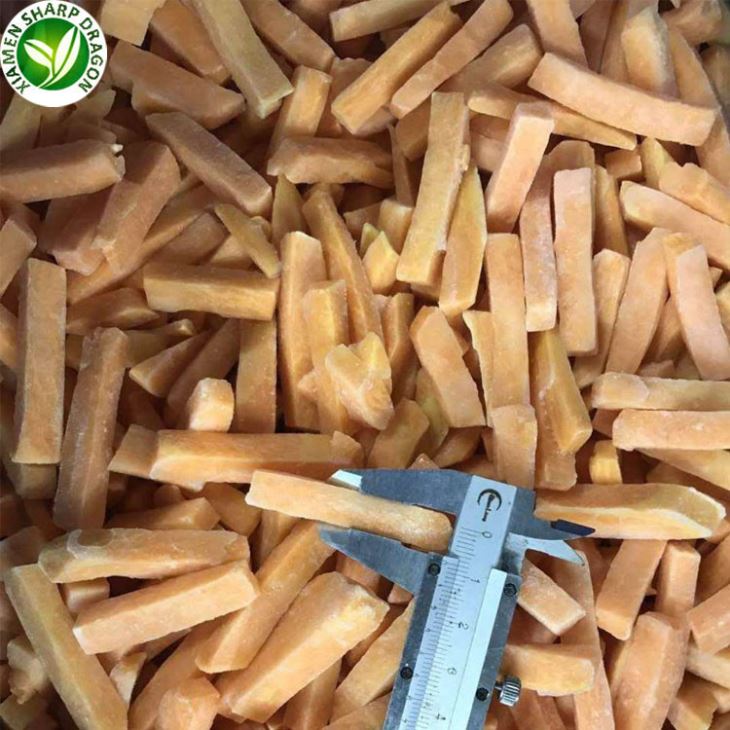
| Strips, wedges, or fries | Oven, air-fryer, snack, side-dish, and quick-service programs | Plain or coated, par-fried or not, oil, seasoning, dimensions |
| Steamed pieces | Quick-preparation sides, mash, prepared meals, soft fillings | Steaming degree, tenderness, fiber feel, moisture |
| Puree or paste | Soups, bakery products, desserts, sauces, smooth fillings | Smoothness, color, solids, added ingredients, pack format |
The current XMSD frozen sweet potato range shows fries, cubes, dice, chunks, and customized cuts. Buyers should still treat each product page as a starting point and approve the actual specification and sample for the intended application.

Roasted Sides, Fries, and Snack Applications
Strips, wedges, fries, and larger pieces are natural choices when the finished product needs visible shape and surface browning. They can be developed for oven-baked sides, air-fryer packs, foodservice accompaniments, snack items, or mixed roasted-vegetable trays. A plain strip is not the same product as a coated or par-fried fry, so package instructions and the agreed specification should control the cooking method.
For dry-heat applications, surface moisture and spacing matter. Crowded pieces tend to steam rather than brown. Thawing is not automatically required, but a buyer developing a crisp product may compare direct-from-frozen cooking with a controlled thaw-and-drain test. The result should be evaluated for edge color, center texture, breakage, oil pickup, and holding quality under the service conditions that will actually be used.
A frozen steamed sweet potato strip format can be considered for side-dish or further-processing trials, provided its cooking degree and texture match the target result.

Soups, Stews, Curries, Bowls, and Ready Meals
Cubes and chunks work well in moist applications because crisp edges are not the main goal. They can add visible pieces, mild sweetness, color, and body to soups, stews, curries, casseroles, grain bowls, plant-forward meals, and frozen entrees. Small dice distribute more evenly; larger chunks make the sweet potato a more prominent component.
The main development risk is texture mismatch. A fully steamed piece may soften or break down during a long retort, simmer, or reheating cycle, while a less-cooked piece may remain too firm in a short microwave process. Product trials should reproduce the real heating method, sauce acidity, mixing intensity, freeze-thaw cycle, holding time, and portion size. If the finished dish needs intact pieces, the buyer should also agree on broken-piece tolerance and cut-size distribution.

Mash, Puree, Bakery, Dessert, and Filling Uses
Frozen cooked pieces can be mashed after reheating, while a purpose-made puree or paste is more suitable when consistency and smoothness are central to the product. Sweet potato puree has documented uses in baked and fried foods, soups, baby-food formulations, desserts, and other processed foods. It can contribute color, sweetness, starch, and body, but recipe performance depends on the variety and the puree specification.
For bakery and dessert work, moisture control is especially important. A watery thawed ingredient can loosen dough, batter, custard, or filling; a dry, starchy ingredient can make the product dense. Before scaling up, processors should measure or specify the variables that matter to their formula, such as solids, smoothness, flesh color, sweetness, fiber level, and any added sugar or stabilizer. A dice intended to remain visible in a bun, pastry, mooncake, or dessert cup requires a different trial from a puree blended into the base.

Food Uses Versus Industrial Raw-Material Uses
Sweet potato as a crop has broader processing uses than the normal uses of an IQF food product. Research describes sweet potato in flour, bread, pastries, noodles, beverages, fermented products, starch-based ingredients, fries, puree, and many other foods. Sweet potato can also serve as a fermentation substrate for products such as distilled beverages and soy-sauce-type processes.
The important distinction: those possibilities do not mean that a bag of foodservice frozen pieces is automatically the correct or economical feedstock for starch extraction, alcohol production, soy sauce, chemicals, or resins. Industrial processors need a purpose-defined raw material and process specification. IQF cuts are normally selected for food applications where shape, portioning, preparation, and cold-chain handling create value.
If the goal is fermentation, starch recovery, flour, puree, or another ingredient stream, the buyer should define the required cultivar traits, solids, starch behavior, pre-treatment, microbial limits, pack format, and process yield with the relevant technical team. It is more accurate to start from the desired process than to assume every frozen format is interchangeable.

How Commercial Buyers Should Choose an Application
For importers, foodservice distributors, retail brands, central kitchens, and food manufacturers, the useful question is not only what frozen sweet potato can be used for. It is which specification will keep the intended result consistent. Start with the finished product and work backward to the ingredient.
- Define the dish, processing method, serving channel, and required visible shape.
- Confirm variety, flesh color, cut dimensions, pre-cooking state, and whether the product is plain, coated, fried, seasoned, or sweetened.
- Run a sample in the real oven, fryer, kettle, retort, microwave, bakery, or filling process.
- Evaluate texture, color, breakage, water release, flavor, yield, and holding performance.
- Align inner packing, carton, label, cold-chain plan, documents, and destination-market requirements before shipment.
Retail, foodservice, and factory packs solve different handling problems. Buyers can review XMSD's frozen-food packaging guidance when discussing pack size, storage, transport, labeling, and application needs. Final details remain subject to the agreed project specification.
XMSD sourcing note: We can discuss cut format, flesh color, processing state, packing, and sample requirements for a frozen sweet potato project. Share the target dish or manufacturing process so the product review can focus on measurable performance.
Frequently Asked Questions
Are frozen sweet potatoes already cooked?
Not always. A product may be raw, blanched, steamed, par-fried, or fully prepared before freezing. Check the specification and package instructions instead of assuming from the word "frozen."
Do frozen sweet potatoes need to be thawed before use?
It depends on the application. Soups and stews may accept pieces directly from frozen. Thawing and draining can help when a processor needs controlled moisture, better browning, or a thicker filling. The supplier's instructions take priority.
Can frozen sweet potato be used for starch or alcohol production?
Sweet potato can be processed for starch and fermented products, but a standard IQF foodservice pack is not automatically the correct industrial input. The processor should source a raw material or intermediate designed for the required yield, composition, pre-treatment, and production system.
Final Thoughts from XMSD
Frozen sweet potato is versatile, but the strongest application is the one matched to its form. Dice and chunks support prepared meals; strips and fries support dry-heat sides and snacks; steamed pieces reduce preparation; and puree serves smooth foods and formulations. For commercial use, approve the cut, processing state, moisture, texture, packing, and application performance rather than buying by ingredient name alone.
References
- USDA Agricultural Research Service - Sweetpotato Production, Processing, and Nutritional Quality
- USDA Agricultural Research Service - Sweet Potato Purees and Powders
- International Institute of Tropical Agriculture - Puree Production and Products for Sweet Potato
- UK Foreign, Commonwealth & Development Office - Expanding Industrial Uses of Sweetpotato