


Fig Fruit Benefits: Evidence Limits for Product Claims
Oct 09, 2019

Figs can make a useful food-level contribution: they supply carbohydrate, fiber, potassium and other measured constituents, and they bring sweetness, seeds, color and body to a finished product. That is the defensible starting answer to "What are the health benefits of fig fruit?" It is not permission to promise treatment, prevention or a guaranteed body response.
For a consumer choosing fruit, the practical benefit is variety within an overall eating pattern. For a brand team, the harder question is whether a sentence can appear on a label, product page or sales sheet. The answer depends on the exact food form, declared serving, intended market and type of claim. A finding about fig paste, leaf extract or isolated compounds does not automatically describe fresh figs, dried pieces or an IQF ingredient.
This guide is therefore a claim-control tool, not a list of miracle effects. It shows how to convert a broad benefit idea into a product-specific statement, how to identify missing evidence, and when a copy team should stop at composition or technical function.
Short verdict: describe what the finished fig product measurably contains or does in an application. Do not let the claim outrun the tested food, the stated serving or the permitted wording in the destination market.

Treat Every Claim as a Five-Field Record
A vague sentence such as "figs are good for digestion" hides most of the information needed for review. Before looking for support, write five fields: the product, the quantity, the verb, the intended user and the jurisdiction. If one field is blank, the research question is still too loose.
| Field | Question for the owner | Why it changes the answer |
|---|---|---|
| Product | Fresh whole fruit, dried dice, frozen halves, puree, extract or a composite food? | Water removal, formulation and extraction alter concentration and identity. |
| Quantity | What mass is eaten in the labelled serving? | Nutrient calculations and study exposure are dose-dependent. |
| Verb | Contains, contributes, helps maintain, reduces risk or treats? | Each wording strength calls for a different regulatory route and evidence burden. |
| User | General adults, children, patients or another defined group? | A result in one population should not be generalized without justification. |
| Market | Where will the label and digital copy be used? | Permitted claims, reference values and mandatory qualifiers vary. |
The five-field record also prevents accidental claim inheritance. A distributor may receive a paper about a botanical preparation and assume the conclusion belongs to every commercial fig format. It does not. The product named in the evidence and the product named in the copy must be compared explicitly.
Three Lanes Keep the Language Honest
Most proposed fig statements belong in one of three lanes. The first is composition: energy, carbohydrate, sugar, fiber, minerals or another analytically defined constituent. The second is application performance: sweetness, visible seeds, fruit identity, piece integrity, water release or behavior in a recipe. The third is human outcome: a physiological change, disease-risk statement or treatment promise.
The lanes are not interchangeable. A certificate of analysis can help document a nutrient amount; it cannot prove a clinical result. A pilot batch can show that fig pieces remain visible in a baked bar; it cannot show that the bar improves gut function. A randomized trial can address a defined outcome under its protocol; it does not establish the loading tolerance or cut-size consistency of a commercial ingredient.
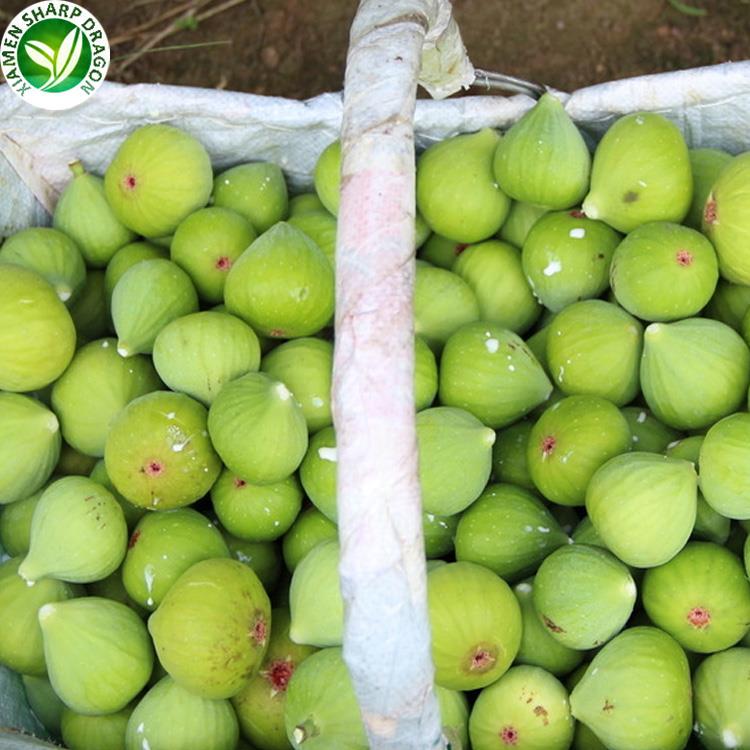
USDA legacy reference data list raw figs per 100 grams with 74 kilocalories, 19.18 grams of carbohydrate, 16.26 grams of total sugars, 2.9 grams of dietary fiber and 232 milligrams of potassium. These are useful screening numbers, not a guaranteed specification for every cultivar, maturity, crop or frozen lot. Finished-copy approval should use an accepted data source or relevant laboratory result and the correct serving basis.
A Serving Calculation Can Close or Reopen a Claim
Composition claims live at serving level, not merely at ingredient level. A formulation may include figs and still deliver too little of a nutrient to support the planned wording. That is why the worksheet needs both the percentage in the recipe and the declared mass of the serving.
Worked example: a snack bar weighs 60 g and contains 18% dried fig pieces. Fig mass per bar is 60 × 0.18 = 10.8 g.
USDA legacy data list dried figs at 9.8 g fiber per 100 g. The fig portion therefore contributes an estimated 10.8 × 9.8 ÷ 100 = 1.06 g fiber.
Against the FDA Daily Value of 28 g, that contribution is about 3.8% DV. Fiber from other ingredients must be added separately and verified. The presence of dried fig alone does not make the whole bar a "good source."
This calculation is a screening exercise, not label sign-off. Reference amounts, analytical tolerance, rounding, recipe variation and the rules applicable to the finished category still matter. If the brand changes the bar from 60 g to 45 g, substitutes a lower fig inclusion or changes the moisture specification, the claim file must be reopened. A copy approval is attached to a defined version, not permanently attached to the word "fig."
The same principle applies to frozen fruit. Thaw loss affects the mass used in a preparation, while an added-sugar glaze changes the identity of the product presented to the consumer. Buyers considering frozen fig formats should lock the specification and intended serving before the marketing team finalizes nutrient-led language.

Form Equivalence Is a Question, Not an Assumption
Fresh, dried and frozen figs can all be legitimate foods, yet they are not numerically interchangeable. Drying removes water and concentrates sugars, energy and fiber per 100 grams. Freezing normally retains a food-like matrix, but cultivar, maturity, trimming, glaze, thawing and drain conditions still affect the tested sample. Puree changes physical structure. Extracts and leaves are separate evidence objects.
| Evidence names | Commercial copy names | Reviewer action |
|---|---|---|
| Raw whole fig | IQF halves | Check cultivar, processing and product-specific composition before transfer. |
| Dried fruit | Fresh serving | Reject direct per-100-g substitution because moisture differs. |
| Fig paste trial | Fig-flavored cereal | Compare dose, recipe, duration, population and outcome; do not inherit the result. |
| Leaf or solvent extract | Whole fig fruit | Treat as a different material and remove the unsupported bridge. |
This discipline is especially important when a search result uses the botanical name Ficus carica. A species name can cover multiple tissues and preparations. Read the method, not just the title. Record which plant part, extraction method and exposure were actually studied.
Buyers sourcing across a broader dried-fruit range should also compare claims on an equal serving basis. A concentration per 100 g may look impressive but can mislead when normal serving sizes differ substantially.
Representative Scenario 1: A Retail Claim Approval Gate
Representative scenario: this is not a named customer case. Practical example: a private-label team is preparing a 150 g frozen fig pouch for a U.S. retailer. The first mock-up says, "Antioxidant-rich figs support immunity and digestive health." The commercial goal is differentiation at shelf; the decision function is regulatory and evidence approval before artwork release.
The reviewer opens three separate tickets. "Antioxidant-rich" needs a defined basis and applicable claim route, not an unspecific laboratory-capacity result. "Support immunity" needs a clear nutrient or other substantiation path plus compliant wording. "Digestive health" is ambiguous: the team must state whether it means fiber content, normal function or treatment of a condition.
The team can keep accurate product description-unsweetened frozen fig halves, serving size, origin and verified nutrition facts-while stronger phrases remain on hold. If analytical results and local review later support a specific nutrient-content statement, that narrowly drafted statement can enter artwork control. If not, the front panel does not need a health halo to communicate fruit identity and convenience.
This is also where private-label packing coordination intersects with claim governance. Recipe, net weight, serving declaration, destination language and artwork version must refer to the same item. Approving copy against an outdated specification creates avoidable rework.

Human Studies Must Be Read at Protocol Level
A randomized double-blind trial reported on fig paste in adults with functional constipation over eight weeks. That paper is relevant to its tested preparation, group, duration and endpoints. It does not establish that any amount of any fig product will produce the same response in every person.
A systematic review of fruit interventions for constipation is useful because it places individual trials beside other fruits, designs and outcome measures. Even so, a review is not a pre-approved marketing sentence. A claim owner still has to establish similarity between the sold food and the evidence, then check the legal category of the proposed wording.
Use a study-extraction sheet with at least these fields: preparation, daily amount, control, sample size, participant characteristics, trial length, primary endpoint, result, limitations and funding. If the commercial item differs on preparation or dose, write the mismatch in plain language. The correct action may be to commission further work, reduce the wording to composition, or remove the claim.
Cell experiments, chemical antioxidant assays and animal studies can help researchers develop hypotheses. They are poor substitutes for a human outcome claim on a conventional food. Phrases such as "scientifically proven" are especially risky when the evidence chain contains these jumps.
XMSD Experience 1: We Start with the Claim Packet
In our XMSD work, the fastest claim discussions begin with documents, not adjectives. We ask the buyer to identify the item code, form, cut, ingredient statement, intended serving, destination and exact proposed sentence. Then we can align the available product specification, sample, nutrition information and packing details with the same commercial version.
This intake step often exposes a simple mismatch early. The evidence may describe dried figs while the quotation is for frozen halves; the serving in a calculation may differ from the package; or the buyer may be considering an extract paper for whole-fruit copy. We flag the mismatch rather than smoothing it over with softer wording.
Our role is to coordinate product evidence and commercial details that belong to the supplied item. The brand owner and its qualified regulatory reviewer remain responsible for final market claims. This division is practical: it keeps sourcing facts traceable and prevents a supplier conversation from being mistaken for jurisdiction-specific legal approval.
Where incoming condition matters, a buyer can build checks around the same sample and specification using an incoming inspection sampling plan. Claim substantiation and lot acceptance answer different questions, but both benefit from named records and version control.

Representative Scenario 2: A Foodservice Application Decision
Representative scenario: this is not a named customer case. Example: a bakery developer is comparing frozen fig dice and dried fig pieces for a breakfast pastry. The team is not approving a health sentence; its decision function is ingredient performance during mixing, proofing, baking and holding.
The frozen option may give a fresher fruit impression but introduces thawed water and softer tissue. Dried pieces carry less free water and more concentrated sweetness, yet they may pull moisture from the crumb or become firm after baking. Neither format is "healthier" in the abstract. The relevant choice depends on the finished portion, target sweetness, bake profile, cost-in-use and visible piece requirement.
The developer runs matched pilots. Each batch records ingredient weight, thaw method where applicable, dough hydration, bake loss, piece visibility after cutting and texture after the planned holding period. Sensory notes are taken against the intended use, not against a broad benefit story. If nutrition copy is later proposed, the final recipe and serving go through a separate calculation and review.
This keeps purchasing from selecting a format on the basis of a search snippet. For a buyer working across restaurants, central kitchens or bakery supply, the foodservice application context should drive trial conditions and pack choices.
XMSD Experience 2: Product Function Is Proven in the Trial
In a second, separate part of our XMSD experience, we see that buyers often get more value from a controlled application trial than from another generic benefit paragraph. We confirm the intended use and review cut size, maturity, piece condition, pack format and likely handling route before the sample is evaluated.
For frozen figs, useful observations may include thaw loss, tissue softness, seed perception, color after processing and how evenly pieces distribute. For dried material, the team may track moisture uptake, chew, sweetness concentration and piece survival. The sample result belongs to those trial conditions; a different cut, supplier lot or thermal process can require another check.
We do not convert an application success into a medical claim. Instead, the trial supports precise commercial language such as "visible fig pieces in the tested pastry formula" or a buyer-approved handling instruction. That language is useful because it is tied to an observable result and a reproducible method.
If a buyer changes from foodservice bulk pack to retail recipe inclusion, we revisit the inputs. Pack size, thaw practice, line speed and declared serving can all change, so the evidence file must follow the new decision rather than simply following the product name.

Build a Substantiation File That Survives Revision
A defensible file should allow a new reviewer to reconstruct why a sentence was accepted. Save the exact approved claim, artwork location, product code, recipe or specification version, serving, nutrition source, study-extraction sheets, laboratory records, market opinion and approval date. Link every record to a responsible owner.
Add reopening triggers. Examples include a supplier change, different cultivar, revised moisture range, new recipe percentage, altered serving, destination expansion, updated regulation or new safety information. Without triggers, an old claim can drift onto a materially different product.
Also record rejected wording. A short note-"not used because the cited paper tested leaf extract, not fruit"-prevents the same unsupported phrase from returning during the next design cycle. Rejection history is part of control, not wasted work.
Minimum release questions
1. Does the evidence identify the same edible form and a comparable quantity?
2. Does the proposed verb match what was actually measured?
3. Is the sold serving, not just the ingredient, the calculation basis?
4. Has the destination-market reviewer approved the complete context?
5. Are the artwork and product specification under the same revision?
Consumer Limits Still Belong in the Review
Even ordinary foods do not create identical responses for everyone. Dried figs deliver more carbohydrate and sugar per equal weight than raw figs because much of the water has been removed. Larger portions can add substantial energy, and a rapid increase in fiber may cause gastrointestinal discomfort in some people. Personal needs, total diet and serving size matter.
A fruit product should not be presented as a replacement for medical care. Persistent bowel symptoms, severe abdominal pain, bleeding or an abrupt unexplained change call for professional assessment. People managing a condition or medication should use individualized clinical advice rather than a marketing claim.
Safety review should be proportionate and sourced. Do not paste a dramatic universal warning into every fig page, but do not hide known formulation facts either. Declare ingredients and allergens as required, control contamination and foreign-material risks, and ensure storage and preparation directions match the product.

The Final Decision Is Usually Narrower and Better
Figs do not need exaggerated promises to be commercially useful. A measured composition statement can be valuable when the serving qualifies. An application statement can help a developer choose the right format. A carefully bounded human-outcome statement may be possible only where relevant evidence and local rules support it.
The decision sequence is straightforward: identify the sold food, calculate the actual serving, classify the proposed verb, compare the evidence object with the product, obtain destination review, and control the approved version. If the chain breaks, step back to a statement that the available evidence can carry.
For procurement, request the specification, ingredient declaration, available nutrition basis, sample identity, packing details and handling conditions before asking the copy team to write benefits. That order reduces rework because the words are built on the item being bought.
Send XMSD the intended fig format, application, serving concept, destination and pack requirement. We will review the supply-side records and sample questions that should be aligned before your own claim approval.
References
- U.S. Department of Agriculture, Agricultural Research Service. National Nutrient Database, fruits and fruit juices report, release 28. Reference composition for raw and dried figs.
- U.S. Food and Drug Administration. Daily Value on the Nutrition and Supplement Facts labels. Current FDA consumer explanation of Daily Values.
- U.S. Food and Drug Administration. Questions and answers on health claims in food labeling. Regulatory background for U.S. health-claim categories.
- U.S. Food and Drug Administration. Evidence-based review system for scientific evaluation of health claims. Framework for evaluating claim evidence.
- Baek H I, et al. A randomized, double-blind, placebo-controlled trial of fig paste for functional constipation. Asia Pacific Journal of Clinical Nutrition. 2016.
- Katsirma Z, et al. Effectiveness of fruit interventions for functional constipation: a systematic review and meta-analysis. Nutrition Reviews. 2023.
- Mawa S, et al. Ficus carica: a review of ethnobotany, phytochemistry and biological activities. Used to distinguish plant parts and experimental preparations from whole-fruit evidence.