


What Are the Benefits of Eating Figs? An Evidence-Led Guide
Sep 09, 2019

Figs can be a useful fruit choice because they provide carbohydrate, dietary fiber, potassium, calcium, and other plant compounds in a compact, naturally sweet food. The benefit is practical rather than miraculous: a measured portion can contribute to fruit intake, replace a more energy-dense dessert, add texture to a meal, or provide a predictable fruit component in a commercial recipe. Fresh, unsweetened frozen, dried, canned, and sweetened fig products are not nutritionally interchangeable.
The evidence does not support promises that figs whiten skin, prevent aging, cure constipation, treat diabetes, or "boost immunity" as a guaranteed outcome. Composition studies show useful nutrients and phytochemicals, while laboratory and animal findings suggest research possibilities. Human clinical evidence for many advertised disease claims remains limited. A sound answer connects the food's measured composition to a realistic dietary role and then states the boundary.
The short answer: Figs can add fruit, fiber, potassium, calcium, sweetness, and culinary variety. They are most useful when the portion and product form fit the meal. Their nutrients support normal body functions, but eating figs does not guarantee a therapeutic, cosmetic, or weight outcome.

Start with What a Fig Actually Provides
USDA FoodData Central reports that 100 g of raw figs contains about 74 kcal, 19.18 g carbohydrate, 16.26 g total sugars, 2.9 g fiber, 232 mg potassium, 35 mg calcium, and 79.11 g water. Those numbers describe a food, not a prescription. The actual serving may be smaller or larger, and variety, maturity, growing conditions, storage, and laboratory method introduce normal variation.
Water and intact fruit structure make fresh figs less concentrated than dried figs by weight. USDA reports about 249 kcal, 63.87 g carbohydrate, 47.92 g total sugars, 9.8 g fiber, 680 mg potassium, and 162 mg calcium per 100 g of dried, uncooked figs. Drying has not "added" all of those nutrients; much of the difference arises because water was removed. A person can therefore eat the carbohydrate and energy of several fresh figs in a much smaller-looking dried portion.
The comparison also explains why broad labels such as high sugar or high fiber can mislead without a serving. Fresh figs contain naturally occurring sugar alongside water and fiber. Dried figs supply more fiber per 100 g, but also much more carbohydrate and energy in that same weight. A fig jam or fig filling may contain added sugar, syrup, or other ingredients, so its label and formulation-not a picture of fruit-determine the useful comparison.
Worked example: At USDA reference values, 150 g of raw figs supplies about 111 kcal and 4.35 g fiber: 74 × 1.5 = 111 and 2.9 × 1.5 = 4.35. A 42 g dried portion supplies about 105 kcal and 4.12 g fiber: 249 × 0.42 = 104.6 and 9.8 × 0.42 = 4.12. The portions can be similar in energy and fiber even though one weighs more than three times as much. This is a planning illustration, not a claim that every fruit or pack matches the database exactly.

Benefit 1: Fiber Can Support a Healthy Eating Pattern
Dietary fiber contributes to normal bowel function, and fiber-containing foods can help make meals more satisfying. Figs are one possible source, not a standalone treatment. A portion of raw fruit supplies a modest amount; dried fruit concentrates it. The rest of the day's vegetables, legumes, whole grains, nuts, seeds, fluids, activity, medications, and individual tolerance still shape the result.
Increasing fiber too quickly can cause gas, bloating, cramping, or loose stool in some people. That makes "more is always better" poor advice. A measured starting portion, adequate fluid, and gradual change are more useful than a fixed number of figs presented as universal. Persistent constipation, blood in stool, vomiting, severe pain, unexplained weight loss, fever, or a sudden major change in bowel habit needs medical assessment.
Human research on fig products and constipation exists, but the evidence base is not strong enough to promise a cure from ordinary fruit. Studies differ in product, dose, population, duration, and outcome. A branded fig paste or concentrated preparation cannot be treated automatically as equivalent to two fresh figs or an unsweetened frozen ingredient. The accurate claim is that figs contribute fiber and may fit a bowel-friendly diet, not that they guarantee a bowel movement.
A formulation also changes how the fiber reaches the consumer. A strained beverage may remove much of the fruit structure, while a whole-fruit purée may retain it. Ask whether the recipe uses the entire thawed fruit, only expressed juice, or a filtered concentrate before assigning the nutrition of whole figs to the finished serving.
Practical example: A buyer develops a breakfast cup with yogurt, oats, and 70 g of thawed fig. The fruit adds flavor, visible pieces, moisture, and some fiber. If a trial instead uses 70 g dried fig, the product becomes much denser in carbohydrate and more chewy, and the formula may need extra liquid. The ingredient name stayed "fig," but the nutritional and processing decisions changed.
Benefit 2: Potassium and Calcium Contribute to Normal Functions
Potassium is involved in normal cellular, nerve, and muscle function, while calcium has established roles in bones, teeth, nerve signaling, and muscle function. Figs contribute both. It is still important to distinguish "contains a nutrient" from "corrects a deficiency" or "prevents a disease." The entire diet and the person's health status decide whether the contribution is meaningful.
Raw figs provide 232 mg potassium and 35 mg calcium per 100 g in the cited USDA record. Dried figs provide higher values by weight because they are concentrated, but the serving is usually smaller. Neither food should be marketed as a substitute for a clinically required potassium or calcium plan. People with kidney disease or a prescribed potassium restriction need individualized advice rather than a generic "heart-healthy fruit" message.
For product development, the benefit of the mineral profile can be stated through verified nutrition labeling where the destination rules allow it. It should not be translated into an unsupported blood-pressure, bone-strength, fertility, or disease-treatment promise. Confirm the recipe, serving size, database or laboratory basis, rounding rules, and claim thresholds for the target market before using nutrient claims on a pack.

Benefit 3: Figs Add Flavor, Texture, and Fruit Variety
A food can be valuable without behaving like medicine. Figs bring honeyed sweetness, soft flesh, edible skin, tiny seeds, and a distinctive appearance. Those attributes can help a cook or developer reduce reliance on a sweeter sauce, add fruit pieces to bakery or breakfast applications, create contrast with savory cheese or grain dishes, or diversify a fruit mix. Whether the final recipe is nutritionally improved depends on what the figs replace and what else is added.
Substitution and addition lead to different outcomes. Replacing 40 g of candy garnish with an appropriate portion of unsweetened fig changes the recipe one way; keeping the candy and adding fig increases the total food and energy. Replacing part of a sugar syrup with unsweetened fig purée may reduce added sugar, but the purée still contains naturally occurring sugars and can alter water activity, texture, color, acidity, and shelf life. It needs a formulation trial, not a health halo.
Our guide to how to eat and prepare figs focuses on washing, trimming, skin, portioning, and application methods. For the benefits question, the key is simpler: choose a form that delivers the desired fruit contribution without hiding additions or overstating an outcome.

Fresh, Frozen, Dried, and Sweetened Figs Serve Different Jobs
| Form | What it offers | What to verify |
|---|---|---|
| Fresh | High water content, delicate texture, direct eating | Ripeness, damage, hygiene, short usable life |
| Unsweetened frozen | Year-round access, portion control, consistent industrial format | Ingredients, intended use, thaw behavior, defects, pack size |
| Dried | Compact storage, chewy texture, concentrated fruit solids | Serving, added ingredients, moisture, infestation, sulfites if used |
| Canned or syrup-packed | Stable pack and standardized preparation | Packing medium, drained weight, added sugar, can integrity |
| Jam, paste, or filling | Spreadability and formulation convenience | Fruit percentage, added sugar, additives, serving and process |
Unsweetened freezing retains the fruit ingredients without requiring added sugar, although freezing and thawing soften tissue and release juice. That makes frozen figs practical in purées, sauces, fillings, smoothies, cooked fruit bases, and applications where a fresh-firm bite is not essential. The XMSD frozen fig range shows commercial forms, while an individual specification must define whether the item is whole, halved, cut, calibrated, or intended for further processing.
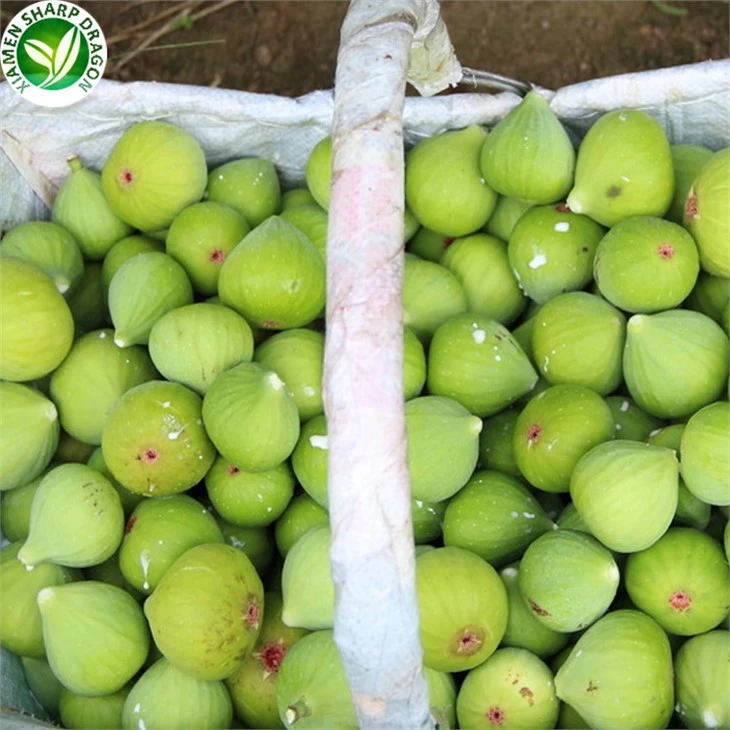
A page describing IQF green Ficus carica fruit can help identify the offered product, but the words IQF and green do not settle sweetness, cultivar, size, microbiological criteria, or ready-to-eat status. Ask for the current specification, ingredient declaration, processing description, sample, and destination-relevant documents.
A listed 1 kg frozen fig format illustrates a smaller pack option. Pack size influences opening frequency, thaw control, labor, and waste; it does not change the fruit's intrinsic nutrition. Commercial comparisons should use net weight, usable yield, fruit specification, and landed cost rather than product-page wording alone.
What Research Can and Cannot Prove
Reviews of Ficus carica describe phenolic compounds, carotenoids, organic acids, minerals, fiber, and other constituents. Laboratory assays may show antioxidant activity, and animal or cell studies may explore metabolic, inflammatory, or antimicrobial mechanisms. These findings can justify further research. They do not demonstrate that a retail portion prevents cancer, reverses diabetes, clears skin, or slows human aging.
"Antioxidant" is especially easy to misuse. A chemical assay measures behavior under its test conditions; it is not a direct measurement of a person's future health. The human body also regulates absorption, metabolism, distribution, and excretion. Variety, peel color, ripeness, extraction solvent, processing, and analytical method can change study values, so one laboratory result cannot be copied onto every fresh or frozen fig lot.
Human trials deserve closer attention to sample size, comparator, randomization, blinding, duration, participant characteristics, intervention form, and clinically meaningful outcomes. A small short trial of fig paste in people with a specific condition cannot support a broad promise for healthy adults eating whole frozen figs. An observational association cannot prove that figs caused the outcome because overall diet, income, activity, smoking, healthcare, and many other variables may differ.
This evidence boundary does not make figs nutritionally worthless. It places them where food belongs: within a varied pattern. Figs can contribute nutrients and replace less suitable ingredients; they need not carry a drug-like claim to be useful. In a purchasing review, reject both extremes-the claim that figs cure disease and the claim that natural sugar makes every fig product unhealthy.

Turn the Benefit Claim into a Product Decision
Start with your application. For a bakery filling, you may need controlled particle size and low free liquid. In a smoothie, soft thawed fruit and all released juice may be desirable. A hotel breakfast line may work better with small inner packs that limit repeated opening, while a fruit mix may depend on color contrast and calibrated pieces. The "best" fig meets your sensory, processing, safety, labeling, and cost requirements; it is not the item with the longest benefit list.
Define the unit that reaches the consumer. If your serving contains 60 g fruit, calculate nutrition and cost from 60 g, not from a 100 g database panel. If a frozen lot releases 8% free liquid and your line drains it, usable yield is lower than invoice weight. If the recipe retains the liquid, those soluble fruit solids remain in the food. Record the thaw and drainage method in the trial so the kitchen, laboratory, and costing sheet use the same basis.
Worked example: A meal producer needs 1,000 cups with 80 g fig input each. The base requirement is 1,000 × 80 g = 80,000 g, or 80 kg. If the validated line trial shows 5% handling loss, required incoming fruit is 80 ÷ 0.95 = 84.21 kg. Ordering 80 kg would leave the line about 4.21 kg short. The 5% must come from the buyer's trial; it is not a universal frozen-fig loss factor.
When we review a sample with you, the useful record covers frozen piece separation, size distribution, color, defects, aroma, thawed texture, juice release, seed perception, and performance after cooking or blending. We then connect those observations to the ingredient and allergen declarations, intended-use microbiological criteria, traceability, packaging integrity, storage, shelf life, and route. The XMSD frozen packaging overview organizes liner, carton, label, and cold-chain questions; your signed purchase specification should hold the accepted values and methods.
Safety and Tolerance Still Matter
Most people who tolerate figs can eat ripe fruit as food, but allergy is possible. Published reports describe fig allergy and cross-reactivity in some people sensitized to latex or related allergens. Hives, mouth or throat swelling, chest tightness, breathing difficulty, faintness, or rapidly progressing symptoms require urgent care and the person's established allergy plan. A nutrition benefit does not override an individual's allergic response.
Fig sap is a different exposure from the ripe flesh. Dermatology sources describe irritating latex and furocoumarins that can contribute to phototoxic skin reactions when sap contact is followed by sunlight. People harvesting, trimming, or processing unripe figs or branches may need work controls and protective equipment. A consumer eating a washed ripe fruit is not experiencing the same exposure as a worker handling sap-covered plant material.
Wash fresh figs under clean running water and do not use soap or detergent on produce. Follow the frozen pack's handling and intended-use instructions; freezing is not automatically a pathogen-kill step. People managing blood glucose should count the carbohydrate in the actual portion and distinguish fresh, dried, syrup-packed, and sweetened forms. Anyone with kidney disease, a prescribed dietary restriction, persistent gastrointestinal symptoms, or a suspected allergy should seek individualized professional advice.

Frequently Asked Questions
Are fresh figs healthier than dried figs?
Neither is universally healthier. Fresh figs provide much more water and fewer calories per 100 g; dried figs concentrate carbohydrate, fiber, potassium, and calcium into a smaller weight. Choose by portion, application, additions, storage, and the rest of the meal. Compare equivalent servings rather than equal-looking pieces.
Do figs boost immunity or prevent disease?
Figs contribute nutrients and plant compounds, but that does not prove a guaranteed immune effect or disease prevention. Laboratory antioxidant findings and nutrient composition should not be converted into treatment claims. Use figs as one fruit within a varied diet and follow medical guidance for prevention or treatment.
Are frozen figs still beneficial?
Unsweetened frozen figs remain fruit and can provide a convenient year-round ingredient. Texture softens after thawing and juice release affects usable yield. Check ingredients, serving, intended use, specification, handling directions, and the complete recipe rather than assuming frozen means either nutritionally inferior or sterile.
XMSD sourcing note: For a frozen fig project, share your product form, intended use, piece size, serving, pack size, destination, annual volume, and thaw-process expectations. We can review a sample and specification against those commercial requirements without turning a fruit ingredient into a medical promise.
Final Thoughts from XMSD
Figs offer a useful combination of fruit, fiber, potassium, calcium, natural sweetness, and culinary character. Their benefit depends on form and context: raw and unsweetened frozen fruit are water-rich, dried fruit is concentrated, and jams or fillings may include significant additions. Use measured portions and verified labels, make substitution claims only after comparing the full recipe, and keep disease promises outside a food specification. For B2B projects, define the application and test thawed yield, texture, pack format, and lot evidence before deciding what the fruit can deliver.
References
- USDA FoodData Central: Figs, Raw
- USDA FoodData Central: Figs, Dried, Uncooked
- Nutrients Review: Nutritional Composition and Health Effects of Ficus carica
- Systematic Review of Fig Products and Constipation Outcomes
- DermNet: Fig Plant, Sap, Allergy, and Phototoxicity
- U.S. FDA: Selecting and Serving Produce Safely
- XMSD operational experience in frozen-fig specification, sampling, IQF handling, packaging, cold-chain review, yield testing, and B2B application planning.