


Papaya Benefits: Nutrition, Safety and Frozen Buyer Guide | XMSD
Apr 04, 2019

Papaya is a nutrient-dense tropical fruit, not a medicine. One cup of raw papaya pieces in the USDA reference weighs 145 g and supplies 88.3 mg of vitamin C. That is useful nutrition evidence, but it does not prove that papaya prevents cancer, cures inflammation, eliminates parasites or treats gastritis. If you are choosing papaya for a menu, label or commercial product, judge the fruit by its measured composition, format, maturity, safety controls and application performance.
The practical answer depends on what you need. Whole ripe papaya gives a soft texture and fresh aroma. IQF papaya gives portion control, year-round availability and less peeling and deseeding work, but it will not keep the same firm bite after thawing. Papaya puree fits beverages, sauces and fillings, while cubes or chunks fit products where visible fruit matters. We recommend defining the finished use first and then building the nutrition, cut, ripeness, texture, pack and cold-chain requirements around it.

Ripe papaya can contribute vitamin C and fruit variety, but product claims still need evidence and market-specific review.
What are the real benefits of papaya?
The defensible benefit is straightforward: papaya contributes fruit, water, carbohydrate, fiber and micronutrients to a varied diet. Its vitamin C value is especially notable. The USDA reference lists 88.3 mg of vitamin C in 145 g, or one cup of 1-inch raw papaya pieces. Vitamin C supports normal collagen formation, antioxidant protection and immune function, but a normal physiological role is not the same as a promise to prevent or cure a disease.
Papaya also contains carotenoid pigments and folate, while its energy density is relatively low compared with many sweet snacks. Those features can make plain papaya useful in breakfast cups, fruit mixes, smoothies and desserts. The result still depends on the full formulation. A plain fruit cube is not nutritionally identical to papaya in syrup, a sweetened puree, a nectar drink or a dessert with added sugar and fat.
Do not turn an association into a treatment claim. Eating a varied pattern rich in fruits and vegetables can support overall dietary quality, but no single papaya serving guarantees lower cancer incidence, destroys viruses or removes parasites. The NIH notes that evidence for vitamin C supplements and cancer prevention is inconsistent and that randomized trials have generally not shown a reduction in cancer risk. That is a strong reason to replace unsupported medical promises with measured food information.
Worked example: vitamin C per serving
Use the USDA value of 88.3 mg vitamin C in 145 g raw papaya and the U.S. Daily Value of 90 mg. The calculation is 88.3 mg / 90 mg x 100 = 98.1% DV for that reference cup. A 100 g serving would be about 60.9 mg only if you scale the same data proportionally: 88.3 / 145 x 100. For a commercial label, test or calculate the exact product and follow the destination market's rounding and claim rules instead of copying this example.

IQF papaya is useful when portion control and year-round frozen supply matter more than fresh-fruit firmness.
Does papain make papaya a digestive treatment?
Papain is a protein-cleaving enzyme obtained from papaya latex, especially from unripe fruit. That biochemical fact is often stretched into claims that ordinary papaya cures indigestion, gastritis, inflammation or parasite infection. The amount and activity in a finished food can vary with cultivar, maturity, processing, heat, storage and formulation. A named enzyme does not establish a clinical dose or a treatment outcome.
If you sell papaya as food, keep the claim within the food category. Describe the fruit, serving, ingredients, sensory profile and verified nutrients. Do not imply that frozen cubes or a smoothie will replace medical diagnosis or treatment. If a formulation uses isolated papain as a food enzyme, that is a separate ingredient-control question involving enzyme specification, intended technological function, dosage, allergen assessment and destination-market authorization.
The FDA's action on unapproved topical papain drugs also shows why context matters. It concerned topical drug products, not normal portions of ripe papaya fruit, and cited serious hypersensitivity reports. We should not transfer a drug-product warning directly to every food serving, but we should use it to avoid casual therapeutic language and to take allergy signals seriously.
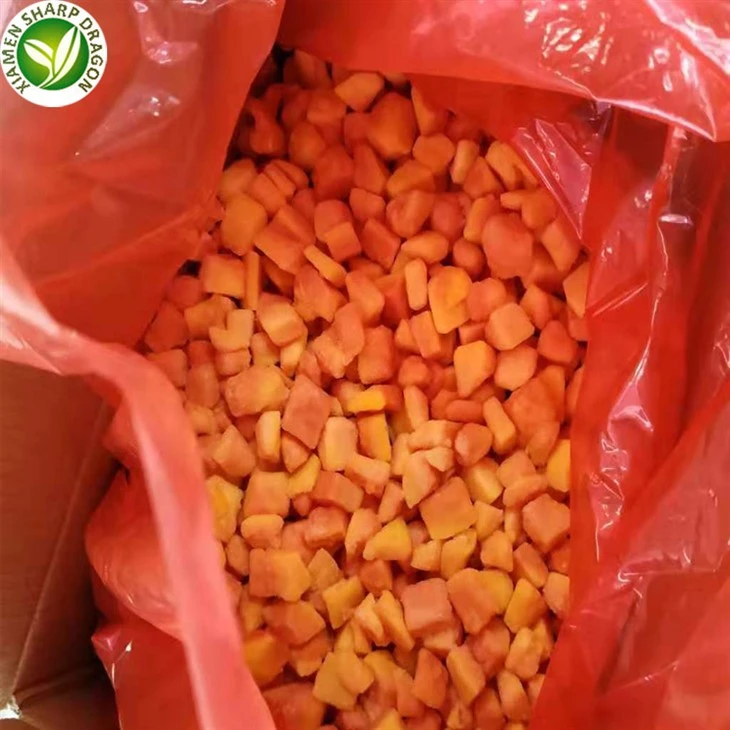
For a frozen product, process controls and the finished specification matter more than broad enzyme marketing.
Who needs extra caution with papaya?
A person with a known papaya allergy should avoid the fruit and follow medical advice. Symptoms such as hives, swelling, wheezing, throat tightness, dizziness or breathing difficulty need urgent medical attention. Do not solve a suspected allergy by changing the cut size, freezing the fruit or choosing a sweeter lot; freezing is not an allergen-removal process.
People with latex allergy may also react to papaya. The FDA notes medical reports suggesting this cross-reactivity. That does not mean every latex-allergic person will react, but it is a meaningful screening point for a consumer, caterer, hospital menu or product-development team. If the food will be served to a sensitive population, obtain qualified medical and regulatory advice and keep ingredient communication unambiguous.
Unripe papaya, papaya latex and concentrated papain products should not be treated as interchangeable with ripe fruit. The exposure and intended use differ. Pregnancy, medication and medical-condition questions also deserve individual advice instead of a blanket internet rule. A food article cannot determine whether a specific person should consume a supplement, enzyme preparation, unripe preparation or therapeutic dose.
Normal spoilage is another boundary. Sour or fermented odor, visible mold, leaking packs, slimy surfaces, abnormal gas, severe thaw-refreeze damage or an unknown temperature history should trigger hold-and-evaluate procedures. A sweet aroma and orange color do not prove microbiological safety. For a ready-to-eat smoothie or fruit cup, raw-material controls, hygiene, water quality, environmental control, traceability and cold-chain records matter because there may be no later kill step.
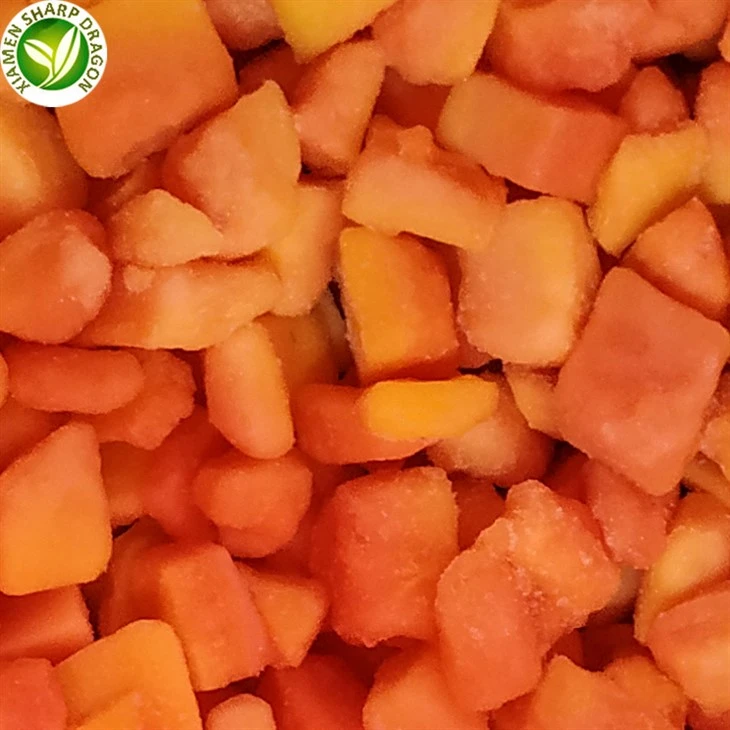
Allergy communication, hygiene, traceability and cold-chain evidence belong in the product review.
Fresh papaya or IQF papaya: which format fits?
Fresh papaya is the better fit when the customer expects a just-cut presentation, intact fresh texture and control over the final ripeness stage. It also creates work: ripening, sorting, washing, peeling, deseeding, cutting, trim loss and rapid use after preparation. You must manage fruit that can arrive too green, ripen unevenly, bruise or decay before it reaches the plate.
UC Davis separates fresh storage conditions by maturity. It lists 13°C for mature-green to one-quarter-yellow papayas, 10°C for partially ripe fruit and 7°C for fruit that is more than half yellow, with 90-95% relative humidity. Those are useful reference conditions, not a substitute for cultivar, route, treatment and destination-market validation. Temperatures that are too low for the fruit's maturity can cause pitting, uneven ripening, water-soaked tissue and higher decay susceptibility.
IQF frozen papaya is usually the better fit for smoothies, beverages, puree, sauce, bakery filling, ice cream, yogurt preparation and foodservice production where ready-to-use portions reduce labor. The trade-off is texture. Ice formation damages cells, so thawed papaya is normally softer and releases more liquid than fresh-cut fruit. For visible toppings, test the exact cut and thawing method before approval.
| Format | Best fit | Main control | Main limitation |
|---|---|---|---|
| Fresh whole | Fresh-cut service and retail | Maturity, firmness and route temperature | Ripening and trim loss |
| IQF cubes or chunks | Smoothies, desserts and processing | Cut, ripeness, free flow and -18°C chain | Softer texture after thawing |
| Puree or pulp | Beverages, sauces and fillings | Brix, pH, sieve, ingredients and pack | No visible fruit identity |
| Sweetened preparation | Ready formulations | Fruit percentage, sugar and additives | Not equivalent to plain papaya |
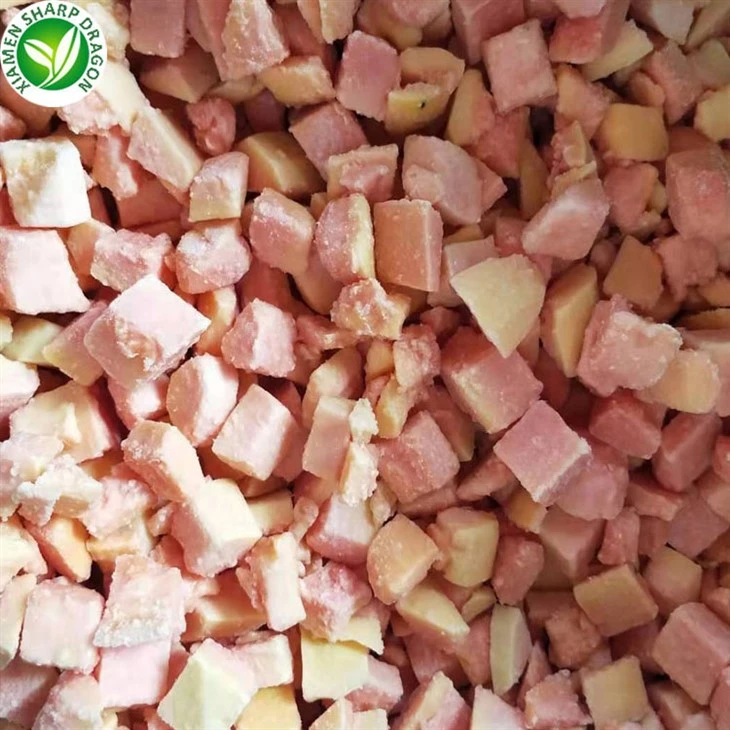
Approve the actual cut, ripeness, color and thawed performance rather than relying on the product name alone.
What should a frozen papaya specification include?
Start with identity and intended use. State papaya variety or agreed color type where relevant, country of origin, IQF or block-frozen format, plain or sweetened status, and whether the product will be eaten without a later heat treatment. Then define the cut with dimensions and tolerances. Words such as "chunks" and "dice" are too broad when a filler nozzle, retail image or topping weight depends on size.
Set maturity and sensory expectations. Describe orange or red-orange color, typical ripe aroma, sweetness and acceptable natural variation. If Brix or pH changes the recipe, give the method, sample temperature, lot sampling plan and tolerance. A single laboratory result cannot describe every piece, so combine measurements with an approved production sample and a written sensory method.
Define defect categories separately: peel, seeds, dark tissue, pale or unripe pieces, bruising, excessive fibers, undersize and oversize pieces, broken pieces, clumps, foreign material and decay. Give each category a count, mass or percentage method. One broad "defects" limit hides which problem actually affects the finished product.
For performance, state free-flow requirement, package net weight, frozen temperature, thawed texture, drip loss and intended preparation. A smoothie plant may accept soft pieces but reject hard clumps that disrupt dosing. A retail pack may accept small natural color differences but reject high broken rate because consumers see every piece. A bakery filling may care more about puree solids and flavor consistency than cube integrity.
Food-safety and market-access requirements must match the actual origin, factory, product and destination. Confirm applicable HACCP-based controls, microbiological limits, pesticide-residue plan, allergen statement, traceability, packaging compliance, label language, lot coding, certificate scope and required shipment documents. Use the broader frozen produce safety guide as a screening aid, then write order-specific requirements into the contract.
Connect the process description to the risk you are controlling. A typical IQF line may receive, sort, wash, peel, deseed, cut, inspect, freeze, screen, metal-detect and pack papaya, but the exact sequence and control points vary by facility and product. Ask for the current flow diagram and hazard analysis for the proposed site. Then check whether water controls, foreign-material prevention, time before freezing, frozen-room practice and rework rules address your intended ready-to-eat or further-processing use.
Build nutrient verification the same way. Decide whether you need a database estimate, formulation calculation or laboratory result, and whether the value is expressed per 100 g, per serving or per pack. Name the product state: frozen, thawed, drained or prepared. If vitamin C supports a front-of-pack statement, define sampling frequency and the acceptable result after expected storage, because raw-fruit data alone does not establish the value in every frozen lot.

A usable specification connects cut, maturity, defects, pack, safety evidence and the final application.
How do you calculate usable cost and approve a lot?
Compare suppliers on usable output, not only delivered kilograms. Sample cartons from different pallet positions and evaluate the fruit at a fixed frozen and thawed condition. Record net weight, clumps, broken pieces, nonconforming color, seeds or peel, drip loss and the yield that reaches your recipe. Repeat the test because a single top carton can miss pallet or lot variation.
Practical example: usable frozen-papaya cost
A 1,000 kg delivery costs 1.70 currency units per kg, or 1,700 units. Your controlled trial finds 2% nonconforming pieces and 3% additional drip or process loss, leaving 950 kg usable. Usable fruit cost is 1,700 / 950 = 1.79 units per usable kg before labor and disposal. If another lot costs 1.74 per delivered kg but yields 985 kg, its usable cost is 1,740 / 985 = 1.77. The higher delivered price gives the lower usable cost in this example.
Approve a pre-shipment sample only when it represents the intended production, and state which characteristics it controls. Color and cut can be compared visually; microbiological compliance, pesticide residues and traceability need documents and test evidence. Keep retained samples where practical, record methods, and define what happens if a result falls inside an agreed marginal zone rather than writing only "pass" or "fail."
On receipt, check seal, container and product temperature evidence, carton condition, lot codes, quantity and signs of thaw-refreeze damage. Heavy clumping, large ice crystals, collapsed pieces and excessive drip can signal temperature movement or weak process control, although each finding still needs investigation. Our guide to frozen fruit shelf life explains why safety, labeled life and application quality are related but not identical decisions.
When results disagree, protect the lot and repeat the named method before negotiating a conclusion. For example, a warm sample can show more drip than a consistently thawed sample, while cartons near a door can differ from cartons deep in the load. Record carton position, sample mass, thawing time, temperature, equipment and operator. That evidence tells you whether the issue is isolated, method-related or representative of the shipment and supports a proportionate release, rework, downgrade or rejection decision.

Arrival evidence should connect the lot, temperature history, packaging and application test.
How should you compare suppliers and labels?
Ask each supplier to quote against the same requirement sheet. Include cut, maturity or color, Brix or pH when relevant, defect limits, pack, quantity, destination, shipment window, microbiological and residue requirements, documents, label responsibility and sample plan. Without a common specification, one price may cover premium visible cubes while another covers softer irregular pieces for puree.
Review the actual production site and certificate scope. A certificate logo in a presentation does not show whether the named legal entity, site, product category and validity period cover your order. Ask for current controlled copies when needed and verify details against destination and customer rules. The frozen fruit supplier guide provides a wider qualification framework.
For labels, distinguish nutrient content from medical meaning. A verified vitamin C value may support a nutrient declaration or claim if it meets the target market's rules. It does not authorize "prevents cancer," "kills bacteria," "removes parasites" or "treats gastritis." Confirm serving basis, product state, laboratory or database basis, rounding, added ingredients, allergen language, storage direction and preparation instruction.
Use category pages for range discovery, not as final specifications. The XMSD frozen fruit range can help you compare formats, but the order should name the selected product and acceptance method. Product photos show possibilities; they do not replace a signed specification, approved sample, COA and shipment evidence.
Frequently Asked Questions About Papaya
Is papaya proven to prevent cancer?
No food serving has been shown to guarantee cancer prevention. Papaya contributes nutrients, including vitamin C, but the NIH describes cancer evidence for vitamin C as inconsistent. Present papaya as food, not treatment.
Does frozen papaya contain vitamin C?
It can, but the amount depends on raw material, processing, storage and the exact product. Do not copy the raw-papaya value onto an IQF label without a valid calculation or test and market-specific review.
Can you use thawed IQF papaya as a visible topping?
Possibly, but test it. Thawed papaya is softer and may release liquid. Approve cut integrity, color, drip, serving time and temperature in the actual yogurt, dessert or fruit-cup system.
Is papaya safe for someone with latex allergy?
Cross-reactivity is possible, and the FDA notes reports linking latex allergy with papaya allergy. A specific person's risk needs qualified medical advice; freezing does not remove an allergen.
What information should an RFQ include?
State application, IQF or puree format, cut, color or maturity, Brix or pH needs, defect limits, pack, quantity, destination, delivery window, required tests, documents, label responsibility and sample plan.
XMSD sourcing note: Tell us your papaya application, cut, ripeness or color, Brix or pH target, pack, quantity, destination and document list. We can review a suitable IQF papaya specification and sample plan for the current project.
Discuss Your Papaya RequirementReferences
- USDA National Nutrient Database: Vitamin C Content of Foods
- NIH Office of Dietary Supplements: Vitamin C Fact Sheet for Health Professionals
- UC Davis Postharvest Research and Extension Center: Papaya
- U.S. FDA: Questions and Answers About Topical Drug Products Containing Papain
- FAO: Papaya Post-harvest Operations