


Should I Peel Peaches? A Texture and Yield Guide
Aug 07, 2019

You do not need to peel every peach. Keep the skin when its fuzz, color and bite suit the finished food; peel when you need a uniformly smooth texture, clean color, controlled residual-peel limit or a delicate piece that will not carry a tough skin after freezing or cooking. The right choice depends less on a general rule and more on the cultivar, maturity, flesh type, cut size and application.
For eating out of hand, a rustic cobbler, chutney or blended product that accepts colored flecks, leaving sound skin can save preparation time and usable fruit. For a silky puree, smooth sauce, premium bakery filling, peeled IQF slice or canned half, removal is often the more dependable specification. A brief boiling-water treatment can loosen ripe peach skin, but 30–60 seconds is a trial starting range, not a setting for every lot. Firmer fruit may need a peeler or knife; very ripe fruit can soften or lose shape if held too long.
Decide with a paired test. Run skin-on and peeled samples from the same lot, then compare texture, color, piece integrity, residual peel, labor and usable yield in the actual recipe or line. That evidence is more useful than assuming "peaches should always be peeled" or "the skin should always be kept."
The short answer: Keep peach skin when the target texture and appearance accept it. Peel for a smoother, more uniform result or when the agreed frozen or canned specification restricts peel. Choose the method and exposure time by lot trial, then compare usable output rather than raw weight alone.

Peeling Is a Product Decision, Not a Universal Rule
A peach skin can be part of the food, but edibility does not settle whether it belongs in your product. Judge the skin in the state people will actually eat it: after preparation, cooking, freezing or thawing, does it blend into the fruit or interrupt the intended texture? A pleasant skin on one ripe fresh cultivar can seem papery on another lot or become visually conspicuous on a pale puree. The answer can even differ between two applications using the same fruit.
Keep the roles separate. The decision about whether peach skin itself is edible belongs to fresh-consumption guidance. For a processing decision, retained skin has to meet a defined texture, appearance and production target. Removing skin is not proof of a better or safer product, and retaining it is not proof of superior quality. Both are legitimate specifications when connected to a real use.
Start at the finished food. In a hand-held snack, grilled half or rustic galette, visible skin can help a piece retain identity and color. In a fine sieve puree, baby-food-style texture, clear sauce or premium canned half, even small peel patches may be objectionable. In a bakery filling, the answer depends on whether the fruit remains as visible slices, breaks down into a soft matrix, or passes through a pump or depositor. "Bakery" alone is not a complete use description.
Standards show why the destination matters. Codex CXS 75-1981 says quick-frozen peaches should be reasonably free from peel and gives peel a scored defect treatment. USDA frozen and canned peach standards also set peel-related defect allowances. Those standards do not mean every peach dish must be peeled. They show that once a product is sold as a defined commercial style or grade, residual peel can become an inspection characteristic rather than a matter of personal preference.
Four Variables Change the Peel-or-Keep Answer
1. Fuzz and skin texture
Peach skin carries fine hairs, and perceived roughness varies with cultivar and fruit condition. Some people barely notice it; others reject it in a fresh slice or cold dessert. Cooking may soften a tender skin, yet a tougher skin can separate from the flesh and create chewy strips. Do not translate the word "fuzzy" into an automatic defect. Rub, cut and taste the actual lot in the intended state.
Cut size magnifies the effect. A thin skin edge on a large half may be unobtrusive, while many small dice create more skin edges per spoonful. Conversely, a fully blended sauce may disperse small skin fragments if the mill or finisher is suitable. Define what the consumer will feel: intact peel, small colored flecks, fibrous strips, or no detectable peel. That description is more useful than the vague requirement "good texture."
2. Cultivar and flesh type
Cultivar affects skin, flesh firmness, softening behavior, color and processing performance. UGA Cooperative Extension distinguishes melting-flesh peaches, which soften rapidly, from nonmelting types commonly used for canning because they retain structure better. That difference can matter during blanching, peeling, cutting and heating. A line setting approved on a firm nonmelting cultivar should not be carried into a soft melting-flesh lot without a new check.
Do not confuse freestone and clingstone with peelability. Those terms describe whether the flesh releases from the pit, not whether the skin slips from the flesh. Pit removal and skin removal are separate operations. Freestone fruit may simplify hand pitting, while a particular lot can still resist peeling; clingstone fruit may require a different pitting method even when its skin loosens readily.
3. Maturity and firmness
Ripeness changes both peel release and damage risk. Firm, immature fruit can be difficult to slip-peel and may lose too much flesh under a knife. Fully ripe fruit may release skin easily, but its softened flesh can bruise, compress or break during hot-water treatment and handling. Overripe fruit may be acceptable for a puree yet unsuitable for a defined slice or half regardless of how cleanly it peels.
Treat maturity as a measured lot attribute, not a calendar assumption. Review ground color, firmness, decay, bruising and sensory quality with the cultivar and receiving specification. If a mixed lot contains materially different firmness groups, sorting before peeling may reduce under-treated skin on firm fruit and flesh loss on soft fruit.
4. The finished application
The target application resolves the remaining trade-off. Skin-on pieces may be welcome in a rustic preserve, salsa or visibly fruit-forward bake. Smooth puree, dairy preparation, beverage base or fine sauce may need peeling, finishing or both. Frozen retail pieces need a decision about appearance and bite after thawing, not only while frozen. Canned halves usually place greater value on a clean surface and uniform presentation. Record the chosen form-peeled or unpeeled-on the specification instead of leaving it to operator judgment.
| Application | Useful starting choice | What can reverse it |
|---|---|---|
| Fresh, grilled or rustic bake | Keep skin if the bite is pleasant | Heavy fuzz, tough strips or customer texture brief |
| Puree, sauce or beverage base | Trial skin-in against peeled or finished | Fleck limit, aroma, color, screen load or mouthfeel |
| Bakery filling | Match visible piece and bake texture | Leathery skin, depositor restriction or premium appearance |
| IQF pieces or canned styles | Usually define peeled status and residual-peel limit | A deliberately skin-on product with its own approved specification |

How to Peel Peaches Without Losing More Flesh Than Necessary
Peeling method should follow firmness and volume. A sharp paring knife can remove patches or work around defects, but it can also take a variable layer of flesh. A vegetable peeler suits some firm fruit and gives the operator direct control, though soft curves and bruised areas are awkward. Hand slip-peeling after a brief hot-water treatment can remove skin with less deliberate cutting when ripe fruit releases cleanly.
Utah State University Extension gives a practical home-preservation starting method: submerge peaches in boiling water for approximately 30–60 seconds, place them in cold water for 20 seconds, then slip off the skins. That range is useful for a small batch, but the endpoint is loosened skin, not completion of a timer. Fruit size, load, water recovery, cultivar and maturity change the exposure needed. Work in manageable batches so the water returns to the intended condition and fruit does not wait while continuing to soften.
For a commercial line, do not scale a kitchen instruction by simply using a larger tank. Define raw fruit temperature and maturity, water or steam condition, residence-time range, cooling, drainage and maximum tissue damage. Verify skin release, flesh temperature, piece integrity, color and yield at the line rate. If a chemical or mechanical peeling system is considered, it needs its own controlled process, residue/rinse assessment, worker protections and destination compliance; it is not an interchangeable version of a hot-water dip.
Peeling does not replace washing and sound handling. Clean fruit before cutting so knives, peelers and hands do not move soil or contamination from the surface into the flesh. Define the wash method and hygiene controls separately; the dedicated peach washing and handling guidance covers that task. A clean-looking peeled surface alone does not verify the handling controls.
Practical example: choose a blanching window by release and damage. You have 15 kg of one ripe yellow-peach lot for a sliced filling trial. Divide it into three 5 kg baskets and test 30, 45 and 60 seconds under the same water, cooling and handling conditions. For each basket, record the percentage that hand-peels cleanly, minutes of labor, trimmed flesh, broken slices and cooked texture. If 45 seconds gives acceptable release without the breakage seen at 60 seconds, use 45 seconds as the trial setting for that lot-not as a permanent rule for every harvest.

Match Skin Status to Puree, Bakery, Frozen and Canned Use
Puree and sauce: A skin-in puree can recover more fruit mass and retain a stronger skin-associated color or aroma, but that is useful only if the sensory target accepts it. A peer-reviewed peach puree experiment found that retaining periderm increased processing yield by 7.6% without significantly changing most tested sensory attributes under those study conditions, although skin aroma was more perceptible. Treat 7.6% as evidence that the trade-off can be material, not as a yield guarantee for a different cultivar, mill, screen or recipe.
Run the puree through the intended comminution and finishing equipment. Evaluate visible flecks, particle size, mouthfeel, aroma, color, screen loading and recoverable output. A fine product may still use skin-on raw material if the finisher removes objectionable particles, but the rejected stream then belongs in the yield calculation. A coarse smoothie base may accept more skin, while a light-colored dairy preparation can show flecks that disappear in a dark sauce.
Bakery: Pie, cobbler and galette are not one texture. A rustic cobbler may accept skin-on slices, especially when a trial shows the skin softens with the fruit. A premium laminated pastry filling, visible tart topping or fine depositor-fed preparation may need peeled fruit for uniformity or equipment fit. The broader frozen-fruit bakery filling framework covers thaw route, free liquid, piece survival and line validation; peach skin status should be one signed input to that trial.
Frozen pieces: Freezing and thawing change peach tissue, so inspect both states. A clean frozen slice can reveal residual peel and trimming; the thawed sample reveals whether the skin separates, curls or feels tough relative to softened flesh. The decision also depends on whether the fruit is blended, cooked or eaten after thawing. The practical review of frozen peach quality and application provides that wider context.
Canned styles: Whole, half, quarter, slice and dice presentations create different visible surface areas and defect opportunities. If the product is sold to a defined grade or customer standard, agree how peel is measured, what sample basis applies and how a borderline unit is classified. A shelf-stable recipe must follow a tested process for the exact fruit type and pack; changing peel status does not authorize changes to preservation conditions or establish a thermal process.

Measure the Yield Cost of Peeling
Raw fruit weight is not usable yield. The comparison should end at the same accepted product state: pitted, trimmed, peeled or unpeeled as specified, cut, drained if relevant, and free of rejected defects. Otherwise one option can appear efficient only because more unapproved skin, damaged flesh or liquid remains in the number.
Use two simple calculations. Usable yield (%) = accepted output weight ÷ raw input weight × 100. Yield gap (percentage points) = skin-on usable yield − peeled usable yield. Record pit, peel, trim, decay rejection, cutting loss, juice or drip and off-spec pieces separately when practical. That loss map shows whether the problem is unavoidable peel mass, overly deep trimming, weak fruit, poor pit removal or a line setting.
Worked example: compare equal lots on the same accepted basis. A processor divides a uniform 100 kg peach lot into two 50 kg trials for a cooked filling. The skin-on route produces 44.0 kg of pitted, trimmed, application-approved fruit: 44.0 ÷ 50 × 100 = 88.0% usable yield. The peeled route produces 40.5 kg at the same approval point: 40.5 ÷ 50 × 100 = 81.0%. The observed gap is 7.0 percentage points, or 3.5 kg per 50 kg trial.
If that controlled gap repeated over 10,000 kg of the same comparable raw material, the output difference would be 10,000 × 0.07 = 700 kg. This is an illustrative scale-up, not a forecast. Before choosing skin-on, the team must still approve the baked texture, color and visible-peel result. If the skin-on filling fails those criteria, its extra mass is not saleable yield. If both routes pass, the measured 7-point difference becomes a real procurement and costing input.
Labor, energy, water, throughput and waste handling belong beside mass yield. A brief blanch may reduce hand-peeling time but consume heat and cooling capacity. Knife peeling can increase trim loss or variation between operators. Mechanical or chemical systems may offer throughput but add capital, control and effluent considerations. Compare the complete route per accepted kilogram, using actual plant data and the destination's regulatory requirements rather than an isolated raw-yield percentage.

Write a Specification That Makes the Choice Inspectable
"Peeled peach" is a start, not a complete frozen ingredient specification. State the peach type or approved cultivar direction, flesh color, maturity or firmness basis, processing form, blanching status if relevant, cut and size tolerance. Then define residual peel, excess trim, mechanical damage, broken pieces, discoloration, pit fragments, whole pits and foreign material with a sample method and acceptance rule.
The residual-peel rule needs a unit. Depending on the contract, you might assess total peel area in a stated drained sample, affected-unit count, or an agreed photo standard. Do not combine a visual limit and a zero-tolerance statement unless the inspection method can support both. Codex provides a useful public benchmark for quick-frozen peaches, while the buyer, supplier and destination requirements determine the signed commercial limit.
For skin-on peach, make that choice equally explicit. Define allowable fuzz condition, color variation, skin integrity and the sensory endpoint after the intended thaw or cook. A specification that merely omits "peeled" can create disagreement: one party may assume natural skin is intended, while another may treat residual skin as a defect. Include a representative approved sample and images, but keep measurable text as the controlling reference.
Check approval at three points. Inspect the frozen or fresh input for identity, maturity, skin status, cut, defects and temperature. Run the real preparation or production route and record yield, residence time, handling and downtime. Then judge the finished food after the relevant bake, blend, thaw, fill, storage or service interval. Approve the material only when all three results meet their limits; a clean incoming appearance cannot prove downstream texture.
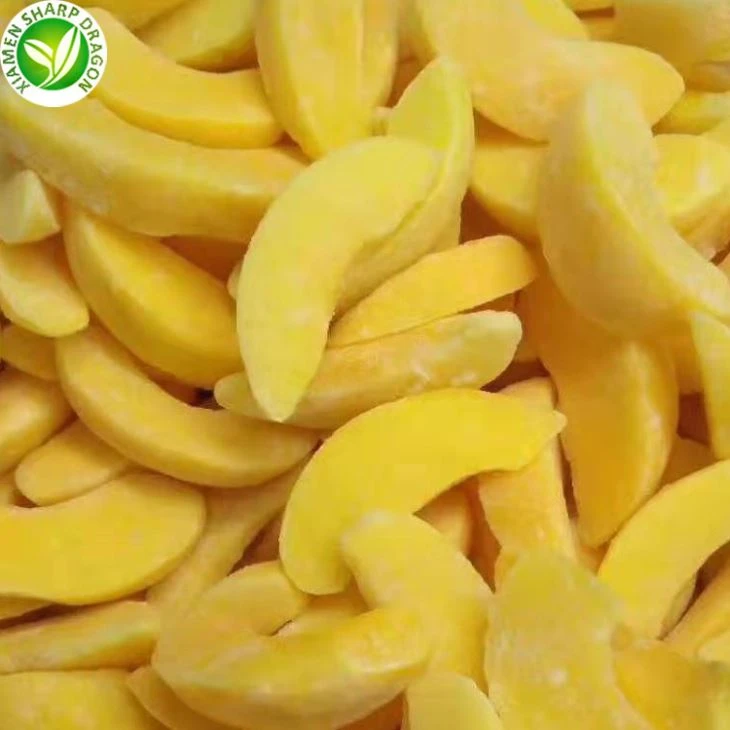
For commercial frozen formats, the XMSD frozen yellow peach range shows halves, slices and dice and notes peeled/blanched or unpeeled/unblanched options by requirement. Use the page to identify a form for sampling, then put the actual peel status, cut, defect method, pack and application test into the order specification.

Build the sample around the finished use. Share your peach form, peeled or skin-on requirement, cut, residual-peel limit, application, trial quantity, pack and destination through the XMSD inquiry page. We can review the frozen option and sample brief against those inputs.
Final Answer
Peel peaches when a smooth mouthfeel, pale or uniform appearance, residual-peel limit, canned presentation or delicate frozen piece requires it. Keep the skin when your fresh, rustic, coarse-blended or baked application accepts the texture and color and the extra usable yield has value. Neither choice is automatically better.
Let the lot and application choose the method. Firmer fruit may need careful knife or peeler work; ripe fruit may slip-peel after a short boiling-water treatment and cooling. Use 30–60 seconds only as an evidence-based small-batch starting range, then adjust by clean release and flesh damage. Keep washing, pitting and preservation controls separate from the peeling decision.
For procurement, approve both the sensory result and the numbers. Test skin-on and peeled material from the same lot, calculate accepted output at the same endpoint, and record labor, trim, damaged pieces and residual peel. A signed specification and finished-product trial turn "Should I peel peaches?" into a repeatable quality and cost decision.
References
- National Center for Home Food Preservation. Freezing Peaches or Nectarines.
- Utah State University Extension. How to Preserve Peaches.
- University of Georgia Cooperative Extension. Peaches: Appropriate Harvest and Postharvest Handling.
- Codex Alimentarius. CXS 75-1981: Standard for Quick-Frozen Peaches.
- USDA Agricultural Marketing Service. Canned Freestone Peaches Grades and Standards.
- Talcott, S. T., Howard, L. R., and Brenes, C. H. Contribution of Periderm Material and Blanching Time to the Quality of Pasteurized Peach Puree.
- Food and Agriculture Organization of the United Nations. Principles and Practices of Small- and Medium-Scale Fruit Juice Processing: Peach.