


Pears: Choosing Ripeness and Cooking for the Texture You Want
Aug 31, 2020

A hard pear is not necessarily unripe. Asian pears are commonly eaten crisp, whereas European varieties such as Bartlett and Anjou develop a softer eating texture after harvest. Identify the variety before deciding whether the fruit needs more time on the counter. For a European pear, gentle pressure near the stem is more useful than squeezing its middle; skin color alone can be misleading.
Cooking adds another choice. A pear that is pleasant to eat raw may soften too much for a neatly sliced tart, while a firmer variety can hold its shape during poaching or baking. Choose the finished texture first: distinct slices, tender halves, a chunky filling or a smooth sauce. Then consider variety, starting ripeness, cut size and cooking conditions together.
For prepared fruit, the same distinction matters. Frozen dice and canned halves are different ingredients from a crisp fresh pear, even when they come from the same fruit family. Use them for the texture they can deliver in the finished dish. A small recipe comparison reveals how each form behaves after heating and whether it suits the intended dish.
Why two firm pears can need different treatment
The broad Asian and European groups offer a useful starting point, but they are not complete descriptions of every cultivar. Asian pears often have a crisp, juicy flesh when ready to eat. European pears are generally harvested mature and firm, then allowed to ripen. Treating both groups as fruit that must become soft can leave good crisp fruit waiting for a change that was never the goal.
For European pears, inspect the neck close to the stem rather than repeatedly pressing the widest part. A slight give can indicate readiness. Press gently: testing should not create a bruise. Bartlett pears commonly become more yellow as they ripen, but Anjou can remain green. A green skin therefore does not settle the question. Variety identification and the feel near the stem are more informative together.
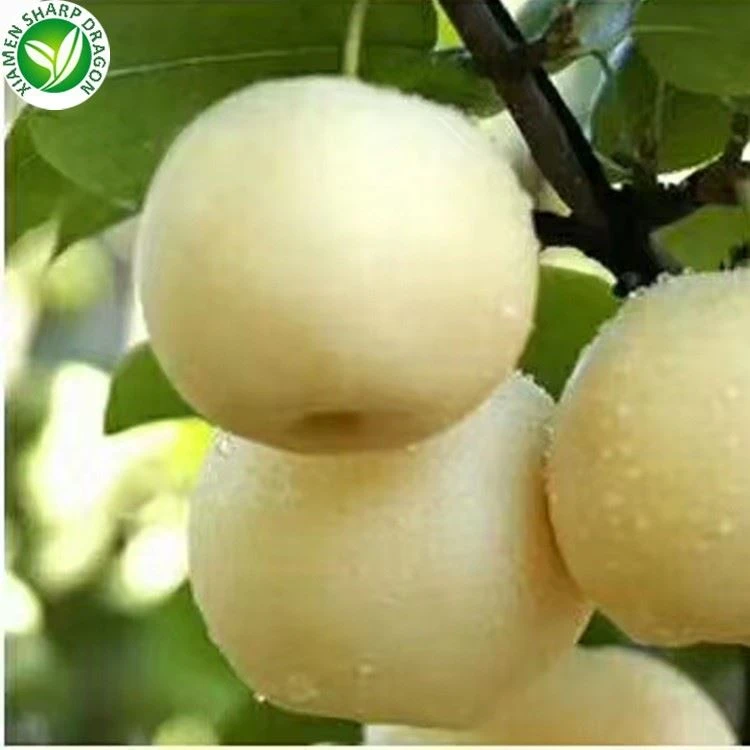
Asian pear skin also varies. A round shape or brown surface is not enough to identify a cultivar or decide that the fruit is old. UC Davis describes cultivar differences in skin color and notes susceptibility to impact and compression damage. Handle fruit carefully and inspect its condition; do not apply the color expectation for one named variety to an unidentified batch.
There is a biological reason to avoid one ripening rule. A study of La France, Yali and Nijisseiki pears found different softening and cell-wall changes among those cultivars. The practical distinction is that different cultivars can reach quite different eating textures during ripening.
Example: one delivery, two uses
Consider a hypothetical catering kitchen receiving two clearly labeled batches: Asian pears and Bartlett pears. Both feel firm on arrival. The kitchen needs crisp fruit for a salad today and softer fruit for a dessert later in the week. Rejecting both batches as unripe would confuse texture with readiness.
The cook checks a representative Asian pear for sound condition and the intended crisp, juicy eating quality. For the Bartlett batch, the cook checks the neck and follows ripening guidance if it remains hard. The decision is to use suitable crisp fruit for the immediate dish and reassess the Bartlett batch daily for the later dessert. The outcome is an allocation based on variety and condition, rather than a promised number of days. If either batch is damaged or deteriorating, that condition takes priority over the planned menu.
Ripen for the dish, without waiting for every fruit to soften
At home, a sound European pear that is not ready can ripen at room temperature. Commercially handled fruit may already have received the conditioning needed for its variety. Oregon State University distinguishes winter varieties that need chilling from fruit supplied through commercial packing channels. That is why advice for pears freshly picked from an orchard cannot always be transferred directly to a supermarket purchase.
Check progress regularly rather than assigning every bag the same date. Fruit in one purchase may not reach the desired texture together. Moving ripe fruit into refrigeration slows further change. Keep the purpose in view. A pear for eating in slices and a pear intended for sauce can be useful at different stages of softness.
Do not wait for strong fragrance, yellow skin and a soft body to occur together in every variety. Some varieties retain their color, and excessive squeezing can damage flesh. If the variety is unknown, use the supplier label or product description where available. For a large kitchen, preserving the original identification until the batch has been used prevents an avoidable guessing exercise.
Sound soft fruit can suit sauce, but softness is not a reason to ignore mold, decay or an abnormal condition. FDA guidance advises washing produce before preparation and cutting away damaged or bruised areas; rotten produce should be discarded. Wash pears under running water before cutting, including fruit that will be peeled. Soap and household detergents are not produce washes.

Match the pear to the texture on the plate
For distinct poached halves or baked slices, start with a variety and ripeness that can retain the intended shape. USA Pears identifies Bosc, Anjou and Concorde as useful firmer choices for heating, while ripe Bartlett and Comice soften more readily. Choose among those starting points according to the finished texture and the ripeness available.
A dessert can fail even with an appropriate variety if the starting fruit is much riper than the recipe expects. Conversely, a firm slice may remain too resistant while the surrounding pastry finishes. Assess fruit and recipe together. The relevant question is whether the pear reaches the required tenderness within the preparation, rather than whether a variety has a general reputation for cooking well.
For sauce, complete shape retention is unnecessary. Sound, softer flesh can be an advantage because the desired outcome is a cohesive spoonable texture.
For a tart, visible edges and a consistent slice thickness matter more. A fruit salad asks for a different result again: pieces that are pleasant to bite, with a texture suited to the other ingredients and the intended serving period.
We start a pear cooking comparison by identifying the variety and starting texture before setting the cooking clock. That avoids adjusting a recipe to compensate for fruit that changes from firm to very ripe between trials. Record the preparation endpoint in plain terms, such as "tender enough to cut with a spoon, with the half still intact." A time without an endpoint is difficult to interpret when the next batch starts differently.
| Desired result | Useful starting question | What to assess |
|---|---|---|
| Crisp fresh pieces | Is this a crisp-eating variety? | Sound condition and eating texture |
| Tender intact halves | Is the fruit firm enough for heating? | Tenderness with shape retention |
| Distinct baked slices | Are ripeness and thickness consistent? | Texture when the surrounding dish is ready |
| Smooth sauce | Is the softer fruit still sound? | Finished consistency |
| Prepared frozen pieces | What preparation does the product require? | Texture and liquid in the actual recipe |
Cut size changes the comparison
An even cut helps pieces reach a similar texture. Large pieces and small fragments in the same preparation do not necessarily soften at the same rate. Cutting a pear into smaller pieces also creates more exposed surface relative to the amount of fruit. That changes the contact with liquid and heat, although the finished behavior still reflects the fruit and the cooking method.
Shape matters alongside size. A thin slice, a cube and a half can have similar weights but different distances from the surface to the center. A recipe written for halves cannot be converted to small dice simply by keeping the same cooking duration. Likewise, the quantity of liquid, pan loading and whether the vessel is covered can make two apparently similar preparations behave differently.
Example: what smaller cubes actually change
Imagine a recipe developer comparing a 20 mm cube with eight 10 mm cubes cut from the same amount of fruit. This is an illustrative geometry calculation, not a measured pear-cooking result. The larger cube has a volume of 8 cubic centimeters and an exposed surface area of 24 square centimeters. The eight smaller cubes have the same total volume, but their combined surface area is 48 square centimeters: twice as much.
The developer therefore compares the cuts in the same recipe and checks tenderness during cooking, instead of assuming that equal fruit weight means identical performance. The result of the calculation is a reason to investigate the cut, not permission to halve the cooking time. Real pieces are irregular, and a mathematical surface-area ratio is not a validated heat-treatment schedule.
A serving spoon can make the intended endpoint easier to describe. If a half is meant to remain intact as it is lifted from the cooking liquid, assess that handling step as well as the bite. If a filling is portioned with a scoop, look at how the pieces distribute through it. These observations connect the comparison to ordinary service rather than to an isolated tasting.
For a practical comparison, change one main feature at a time. Use the same variety and similar starting ripeness when investigating cut size. If both the cut and the fruit condition change, a softer result cannot confidently be assigned to either one. Write down what the cook would actually repeat: the fruit condition, cut, recipe, cooking endpoint and observations after the normal serving hold.

Browning is a preparation issue, not a ripeness test
Cut pear surfaces can brown after exposure to air. The appearance can be unwelcome in a pale dessert even when the fruit was suitable at cutting. Plan preparation around the dish: wash before cutting, limit unnecessary waiting, and use an appropriate tested treatment when the recipe or preservation method calls for one. Do not use browning alone to decide how ripe a whole pear was.
Acidic ingredients may affect both color and flavor. A treatment that suits a fruit salad may not suit a delicately flavored poached dessert. Commercial anti-browning products also need their own directions. Oregon State University describes ascorbic-acid preparations for preserving pears and advises following product directions. An improvised amount can change taste without establishing a reliable result.
For a kitchen preparing ahead, plan appearance and safe handling together. Decide when the pears will be cut, where the prepared dish will be held and which instructions govern that holding period. Keep those arrangements in place even when an anti-browning treatment has preserved a pale surface. Color is an appearance observation, while safe handling needs its own controls.
Frozen dice and canned halves answer different recipe needs
Frozen pear pieces are useful to consider when a recipe needs prepared fruit rather than the crisp bite of a whole fresh pear. Freezing and subsequent handling can change texture. Judge the ingredient after the preparation it will actually receive, and follow its cooking and storage instructions. An attractive frozen piece is only one part of the comparison.
The frozen pear product information provides a relevant starting point for the supplied form. For a recipe discussion, specify whether the fruit will go into a cooked filling, a blended preparation or another application. Do not assume that all frozen fruit is ready to eat; use the label and the instructions supplied for the particular product.
Home-freezing guidance is a separate matter from a commercial frozen-fruit specification. The National Center for Home Food Preservation gives a pear-slice procedure involving preparation, brief heating and syrup packing. Oregon State University is cautious about freezing fresh pears for quality and discusses processed preparations. These sources address home preservation. For commercial IQF fruit, use the supplied product and preparation information; for fruit frozen at home, follow the relevant home method and its quality expectations.
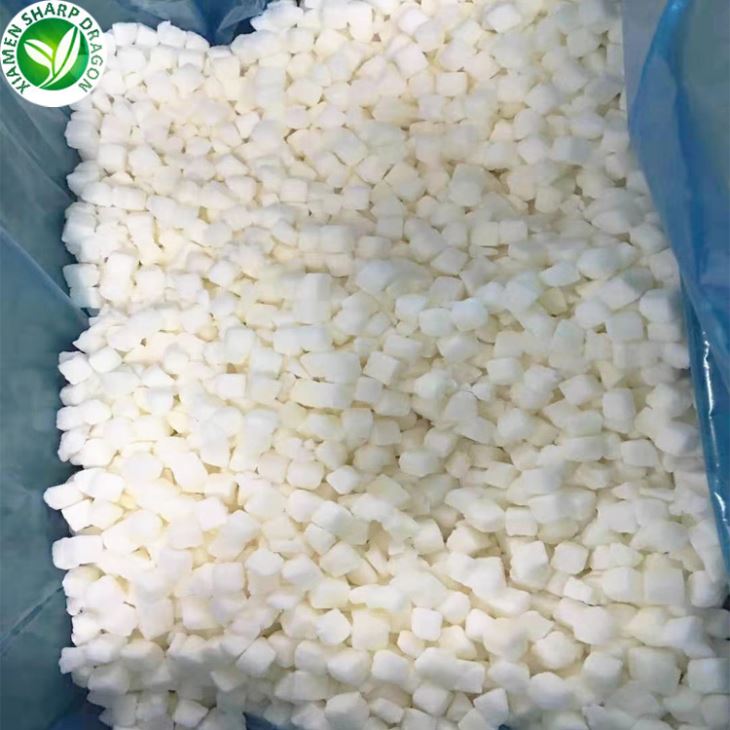
By contrast, canned pear halves arrive in a preserved format with a packing liquid. Their texture and the liquid entering a recipe differ from those of frozen dice. Decide whether the liquid is used or drained according to the recipe, then compare fruit on a consistent basis. Counting a can's total contents as drained fruit can distort the formulation.
A canned half may suit a plated dessert because its shape is already appropriate. Small frozen pieces may suit a filling where a half would need cutting. The useful comparison includes the desired presentation, preparation steps, flavor of the packing medium where present, and behavior during the actual cooking or serving process.

Evaluate a prepared pear ingredient in its intended recipe
We judge frozen pear performance in the finished preparation, with attention to cut distribution, remaining firmness and released liquid. Fresh-fruit crispness is a poor acceptance target for a recipe designed around heated frozen dice. A more useful target describes what matters on the plate: recognizable pieces, an acceptable bite and a filling that reaches its intended consistency.
Keep the evaluation fair.
Compare samples using the same recipe and the same stage of assessment. A hot filling and one that has cooled may present differently. If normal service includes holding, assess that stage too. Otherwise, an ingredient may look satisfactory immediately after preparation while the actual serving result remains unknown.
Separate visual observations from explanations. "More small fragments" is an observation; "poor freezing caused the fragments" is a diagnosis that requires further evidence. Similarly, a photograph of pale dice cannot establish the variety, freezing history or complete cut-size distribution. Retain the product and lot details so a meaningful question can be investigated rather than inferred from appearance alone.

For foodservice preparation, translate the recipe need into information that can be checked: cut form, intended use, preparation method and the texture required at service. A vague request for "good pears" leaves too much open. A clear application lets the ingredient be assessed against the dish instead of against an undefined idea of quality.
Packing also affects the working routine. The quantity opened for one preparation, closure between uses and storage instructions should fit the kitchen's handling plan. Review the relevant frozen-food packaging information alongside the proposed product. Use the actual product documentation for contents and pack weight; the carton shown here illustrates an outer packing format.

Cooking pears does not make them a medical treatment
A warm pear dish can be enjoyable and easier to eat for someone who prefers soft food. That sensory benefit is different from evidence that pears treat coughs, improve lung function or correct a supposed hot or cold constitution. There is no basis here for adding medicinal ingredients or prescribing a pear preparation for an illness. Symptoms requiring care should be assessed as symptoms, not managed through a fruit recipe.
The pear nutrition and benefits discussion addresses the broader food question. For cooking, keep the goal concrete: choose a sound fruit, prepare it safely and aim for a texture you enjoy. Peeling, heating and adding other ingredients produce a different dish; they do not confer a medicinal status on the pear.
Finally, tenderness is not a test for safe home canning. Asian pears require acidification in the National Center for Home Food Preservation's boiling-water canning instructions. Anyone preserving them should follow the complete current procedure, including its processing conditions, rather than borrowing a dessert recipe or a single acid quantity. A pleasing texture and a validated preservation process answer different questions.
For a pear ingredient discussion, contact XMSD with the intended dish, preferred cut and preparation method. We can review those requirements against the product information available for the proposed supply.
References
- Purdue FoodLink: Pear selection and preparation
- Iowa State University: Harvesting, ripening and storing pears
- Oregon State University: Preserving pears
- USA Pears: Variety, ripening and cooking questions
- UC Davis: Asian pear produce facts
- Hiwasa et al. (2004): Pear cultivar softening and cell-wall changes
- National Center for Home Food Preservation: Freezing pears
- National Center for Home Food Preservation: Canning Asian pears
- FDA: Selecting and serving produce safely