


Is Pumpkin Healthy? Judge the Form, Recipe and Serving
May 16, 2019

Yes-plain pumpkin can be a useful vegetable in a healthy eating pattern. It supplies provitamin A carotenoids, some fiber and other nutrients while contributing relatively little fat or added sugar on its own. That answer changes when "pumpkin" means sweetened pie filling, a cream-based soup, a fried side, a bakery product or a flavored drink. The finished food, not the ingredient name, determines the calories, added sugar, sodium, saturated fat and serving contribution that people actually consume.
For a food manufacturer, distributor or foodservice operator, the practical question is therefore not whether pumpkin has a healthy reputation. It is whether the selected pumpkin form, formula percentage, process yield and declared serving produce a defensible nutrition profile. You need a matching data basis and a complete recipe calculation before making a label claim. Ordinary pumpkin does not justify disease-treatment, cure or detoxification claims, and adding it to a product does not make medical promises acceptable.
Quick answer: Treat plain pumpkin as a nutrient-contributing vegetable ingredient. Then judge the finished serving by pumpkin percentage, added sugar, saturated fat, sodium, fiber, total energy and the intended eating pattern. A plain frozen dice and a sweetened pumpkin dessert require different conclusions even when both show pumpkin on the label.

Start With the Exact Pumpkin Form
"Pumpkin" can describe raw flesh, cooked cubes, frozen dice, drained pieces, puree, canned plain pumpkin, concentrated solids, seasoned filling or a minor flavor component. These forms are not interchangeable in a nutrition calculation. Water uptake, drainage, peeling, cooking and concentration change the amount of vegetable solids per 100 g. Sugar, salt, cream, oil or a coating changes the finished food again.
The USDA SNAP-Ed pumpkin page gives a useful reference point for 1 cup of cubed pumpkin weighing 116 g: 30 calories, 8 g carbohydrate, 1 g dietary fiber, 3 g total sugars, 0 g added sugars, 1 g protein, 55 mcg RAE vitamin A and 12 mg vitamin C. That is not a guaranteed specification for every cultivar or frozen lot. It is evidence that plain pumpkin can be a low-fat vegetable ingredient, while also showing why the data basis must identify form and weight.
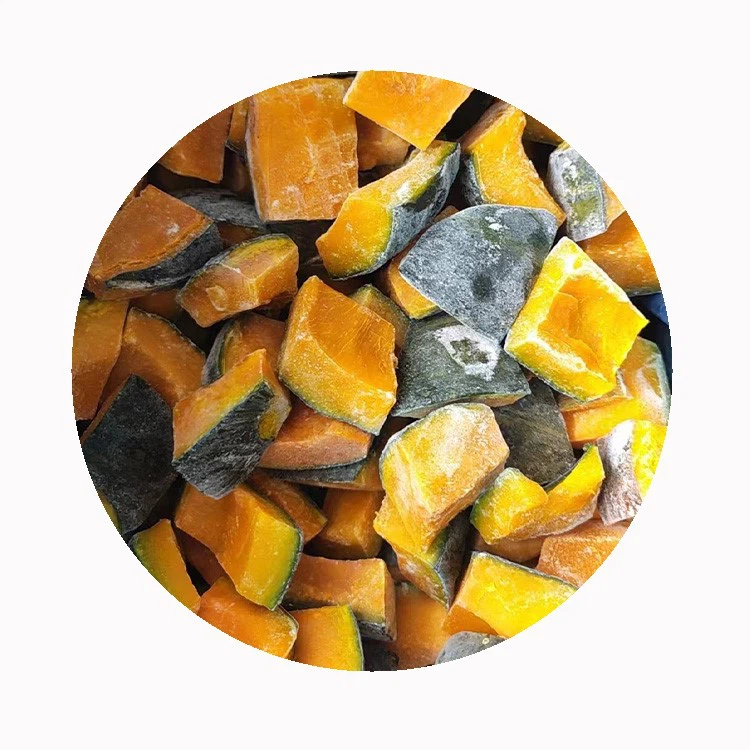
If you buy frozen dice, record whether the lot is peeled or skin-on, raw or blanched, individually quick frozen or block frozen, and measured as sold, thawed, drained or cooked. A value per 100 g as sold cannot be transferred silently to 100 g of drained puree. Use the separate XMSD frozen pumpkin range to distinguish common cuts and applications before selecting the analytical basis.

What Makes Plain Pumpkin Nutritionally Useful?
Orange pumpkin flesh contains provitamin A carotenoids. NIH explains that the body can convert carotenoids such as beta-carotene into vitamin A, although conversion varies. Vitamin A supports normal vision, immune function, growth, cell communication and differentiation. This is a normal nutrient role. It does not mean that a serving of pumpkin acts like a drug or guarantees an improvement in immunity or eyesight.
Pumpkin also contributes water, carbohydrate, some dietary fiber and minerals. Its mild flavor and orange color can help a developer add vegetable content and body to soups, sauces, mixed meals and fillings. Those are meaningful food functions. The exact fiber and nutrient contribution depends on the variety, maturity, edible portion, processing method, storage and recipe percentage, so a general database entry is a starting point rather than a permanent lot certificate.
The previous pumpkin carotenoid, fiber and product-form guide examines those nutrient roles and evidence limits in detail. This article applies that foundation to a different decision: whether a real finished recipe and serving deserve to be described as healthy.
Evidence boundary: Nutrient composition can support a factual nutrition explanation. It cannot support disease-treatment, cure or detoxification promises, and food guidance does not replace medical care. For individual dietary restrictions or medical conditions, personal advice belongs with a qualified health professional.

A Healthy Ingredient Does Not Set the Finished Profile
A pumpkin cube, pumpkin soup, pumpkin pie and pumpkin-flavored beverage can have completely different nutrition profiles. The difference is not semantic. Sugar increases added sugars and energy. Cream, butter, coconut fat or cheese can increase saturated fat. Broth, seasoning blends and processed cheese can increase sodium. Frying or an oil-rich coating changes energy density. A small decorative amount of puree may add color without contributing much vegetable content.
| Product form | What pumpkin contributes | What can change the health judgment |
|---|---|---|
| Plain frozen dice | Vegetable solids, color, mild sweetness and nutrients | Portion, cooking loss, seasoning and accompanying foods |
| Plain puree | Pumpkin solids and body in a uniform texture | Concentration, water addition, drainage and recipe percentage |
| Seasoned soup or meal | Vegetable component and sensory character | Sodium, saturated fat, energy, protein and serving size |
| Sweetened filling or dessert | Color, flavor, moisture and some nutrients | Added sugar, fat, refined flour, portion and topping |
FDA label guidance gives a useful comparison method. In the United States, 5% Daily Value or less per serving is generally considered low and 20% or more is high. The current Daily Values include 50 g for added sugars, 28 g for dietary fiber, 2,300 mg for sodium and 20 g for saturated fat. These are general label references, not personal prescriptions, but they let you compare finished foods on the same scale.
Worked example: suppose a 400 kg soup or filling batch contains 120 kg of plain frozen pumpkin and 24 kg of added sugar. Pumpkin is 120 ÷ 400 = 30% of the batch. A uniform 250 g serving contains 75 g of pumpkin. The added sugar contribution is 24 ÷ 400 × 250 = 15 g per serving, before any other sweetening ingredient is considered. Fifteen grams is 30% of the 50 g Added Sugars Daily Value, so the serving is already high in added sugars under the FDA 20% guide. The pumpkin remains a real ingredient, but it cannot erase the recipe-level result.

Judge the Serving, Not Only 100 Grams
Nutrition data are often presented per 100 g, while people consume a bowl, slice, cup, pouch or tray. FDA explains that serving size reflects the amount people typically consume rather than a recommended amount. That distinction matters. A soup may look moderate per 100 g but deliver three times that amount in a large bowl. A concentrated filling may be eaten in a smaller portion but combined with pastry and toppings.
Build the calculation from the finished yield. Record each ingredient weight, process gain or loss, finished batch weight, number of portions and serving mass. If a 500 kg kettle yields 460 kg after evaporation, divide nutrients by 460 kg, not the starting 500 kg. If the product is sold as a concentrate with water added by foodservice staff, decide whether the label basis is the concentrate, prepared food or both under the destination rule.
A large pumpkin percentage can support a stronger vegetable story, but percentage alone is not enough. Check whether the finished serving also supplies useful fiber or other nutrients and whether added sugars, sodium and saturated fat remain proportionate. Consider the whole eating context: a pumpkin side served with protein and grains plays a different role from a sugary beverage that uses pumpkin mainly as flavor and color.
Practical example: two restaurants use the same frozen pumpkin dice. One roasts 150 g with herbs and a measured amount of oil; the other blends 75 g into a 350 g soup with cream, salty stock and cheese. The ingredient is identical, but the serving composition and operational controls differ. Calculate each recipe, measure the real ladle or plate portion and review the nutrition result separately. Do not transfer the first dish's health message to the second.

Frozen Pumpkin Can Be Healthy Without Being Identical to Fresh
Freezing is a preservation method, not a reason to classify pumpkin as unhealthy. A plain frozen product can retain useful vegetable solids and nutrients while reducing peeling, seeding and cutting work. Freezing may soften the texture after thawing because ice crystals damage plant cells. That physical change can be helpful in puree and soup but less suitable when the finished dish needs firm visible cubes.
The nutritional comparison depends on a fair basis. Fresh pumpkin left in storage, frozen pumpkin processed near harvest, canned puree and a home-cooked piece have different time, temperature, water and preparation histories. Compare the edible form that enters the recipe and the serving that leaves it. "Fresh is always healthier" and "frozen preserves everything" are both too broad to guide a specification.
For an industrial or foodservice recipe, frozen format can improve portion control and usable yield. It can also introduce thaw drip, size variation or softness that changes the amount reaching each serving. Test the chosen diced frozen pumpkin format through the real cook step. Weigh the frozen input, drained or cooked output and rejected pieces, then use the usable amount in your formula.
When puree suits the application better, the separate pumpkin puree freezing and storage guide explains why cooked puree, cut raw pumpkin and whole pumpkin behave differently. That process choice affects texture and workflow; it does not remove the need to calculate the complete recipe.

Translate the Recipe Into a Defensible Label
Begin with product identity. Keep the supplier specification, ingredient statement, processing state, lot, sampling record and analytical basis together. If the database value describes cooked boiled pumpkin but the product is frozen raw dice, document why the value is suitable or obtain a better basis. If the recipe uses drained pieces, record the drainage procedure and yield instead of calculating from purchase weight alone.
Next calculate every ingredient and the actual finished mass. Separate naturally occurring total sugars from sugars added during processing. Review sodium from stock, salt, cheese, sauces and seasoning blends. Review saturated fat from dairy, coconut ingredients, butter or frying oil. Do not let a desirable pumpkin percentage hide another ingredient that drives the per-serving result.
Then classify the proposed communication. A statement that pumpkin adds orange color or mild sweetness is a sensory description. A declared amount of fiber or vitamin A is nutrition information that needs the correct method, basis, rounding and serving. "Healthy" on a U.S. food label is a regulated nutrient-content claim with food-group and nutrient-to-limit criteria; a product cannot qualify merely because it contains pumpkin. Other markets apply different definitions and permitted wording.
Review the full presentation: product name, front-panel words, imagery, ingredient list, nutrition panel, serving and nearby advertising. A technically accurate ingredient sentence can still leave a misleading overall impression if a small amount of pumpkin is surrounded by cure language or if a high-sugar dessert is presented as equivalent to plain vegetables. Keep the message proportional to the verified serving.
Finally, define change control. A change in cultivar, cut, supplier site, blanching process, puree concentration, recipe percentage, sweetener, serving or cook yield can change the label calculation. Name the changes that trigger recalculation, sample testing, artwork review or claim reapproval. This makes "healthy" a controlled conclusion rather than a permanent adjective attached to the word pumpkin.
Use Procurement Controls That Protect the Health Story
A reliable nutrition story starts with a repeatable ingredient. Define flesh color, sensory profile, peeled or skin-on state, cut dimensions, broken pieces, defects, processing state and pack format. For puree, define solids or consistency on an agreed method. For dice, define size distribution and the usable yield after the intended heat treatment. These controls help keep the recipe percentage and serving experience stable.
Test a representative sample in the actual product. For soup, measure puree yield, viscosity, water release, color and flavor after the full kettle cycle. For a tray meal, measure piece retention, softening and portion distribution after heating. For bakery filling, record moisture balance, concentration and finished serving. Our food-processing application page provides context for aligning ingredient form with downstream production rather than treating all pumpkin formats as substitutes.
Link the approved sample to the purchase specification, formula revision and label calculation. If usable yield falls from 90% to 80%, the amount of pumpkin solids per serving may fall even when purchase weight remains unchanged. If a darker cultivar increases color intensity, do not assume that the vitamin A value rises by the same proportion; visual approval and nutrient evidence answer different questions.
Review the cold chain and intended preparation separately from nutrition. Freezing does not sterilize food. Packaging integrity, temperature history, hygienic handling and cooking instructions still matter. A food can have a reasonable nutrient profile and still fail safety or quality requirements. Health language never replaces a hazard-control plan, lot release or complaint investigation.
Set a release trigger for nutrition-sensitive differences. If a lot arrives with unusually high surface ice, low dry matter, darker flesh, more broken pieces or greater thaw drip, identify the consequence before accepting it. Extra water can dilute pumpkin solids per serving; low usable yield can change the declared vegetable percentage; a color shift can fail sensory approval without proving a nutrient change. Compare the lot against the agreed measurement method, run the real recipe, update the mass balance and hold the artwork basis when the result crosses the approved tolerance.
Practical example: a processor approves 100 kg of frozen dice at 90% usable yield, expecting 90 kg in the cooked formula. A later lot yields only 82 kg after drainage and sorting. Using the original 90 kg assumption overstates pumpkin contribution by 8 kg per input batch. Investigate the ice, defects, cut breakage and drainage method, then either reject the lot, adjust the controlled formula within its legal and sensory limits, or recalculate the label before release. The word "pumpkin" did not change, but the evidence supporting the finished product did.
XMSD sourcing note: We can review the target application, cut or puree form, processing state, pack format and sample-test plan for a frozen pumpkin project. Share the finished recipe, serving, destination market and acceptance standard so the ingredient discussion starts from the real product decision.
The Decision: When Is a Pumpkin Product Healthy?
Plain pumpkin is a useful vegetable ingredient, and plain frozen pumpkin can retain that role. A defensible positive judgment begins with meaningful pumpkin content and a serving that fits the intended eating pattern. It becomes weaker when the product contains only a token amount of pumpkin or when added sugar, sodium, saturated fat and energy dominate the serving.
For consumers, the practical method is simple: identify the form, read the serving, compare added sugar, sodium, saturated fat and fiber, and consider what accompanies the pumpkin. For product developers, perform the same judgment before artwork approval, using the actual formula and finished yield. For procurement, keep the ingredient specification stable enough that the approved calculation still describes future lots.
Do not reduce the decision to "pumpkin equals healthy" or "processed equals unhealthy." Plain frozen dice may be nutritionally straightforward and operationally efficient. A carefully formulated soup may also fit a balanced eating pattern. A sweetened dessert can still be enjoyed, but its vegetable ingredient does not turn it into plain pumpkin. Accurate category, serving and recipe language is more useful than a universal label.
The strongest commercial conclusion is reproducible: exact pumpkin form, verified input amount, measured process yield, declared serving, complete nutrient calculation, lawful destination wording and controlled changes. When those records agree, pumpkin can support an honest vegetable and nutrition story without carrying claims the ingredient cannot prove.
References
- USDA SNAP-Ed: Pumpkin Nutrition, Selection, Storage and Recipes
- NIH Office of Dietary Supplements: Vitamin A and Carotenoids
- U.S. FDA: How to Understand and Use the Nutrition Facts Label
- U.S. FDA: Added Sugars on the Nutrition Facts Label
- U.S. FDA: Use of the Healthy Claim on Food Labeling
- U.S. FDA: Serving Size on the Nutrition Facts Label