


Is Eating an Apple Every Day Healthy? Build a Useful Habit
Jan 19, 2020

Yes. For most people who enjoy and tolerate apples, eating one each day can be a useful way to include fruit. Its value comes from being an ordinary food within a varied diet: something you actually eat, in a portion that suits the meal, without expecting it to cancel out everything else.
There is no need to turn the habit into an obligation. An apple is not a treatment for high blood pressure or cancer, and missing a day is not a nutritional failure. If you prefer another fruit, need a different texture, or have an allergy, a daily apple is the wrong rule to force.
The better question is what the habit makes easier. Does it provide fruit with lunch, replace a routine sweet snack, or give breakfast some variety? Start there. Then choose fresh fruit or prepared apple that does that job well.

Make room for the apple, not just another eating rule
A daily habit is easiest to judge in the context of the meal it joins. Adding apple pieces to breakfast is different from eating an apple after an already satisfying breakfast because a checklist says so. The first choice can improve a meal you wanted to change; the second may simply add food you did not want.
CDC recommends whole fruit over juice and recognizes unsweetened frozen and canned fruit as useful options. Substituting fruit for some calorie-dense foods can also improve the overall eating pattern.
Keep the rest of the meal visible. Fruit alone is not the same as a breakfast containing a useful protein source and other foods. If an apple is the only thing available before a long morning, consider what could accompany it rather than trying to make the fruit serve every nutritional purpose.
At home, the improvement might be as modest as putting an apple into the lunch bag while assembling lunch. No specialist ingredient is required. If you consistently return with it uneaten, look at the obstacle: an inconvenient size, a variety you dislike, too much food, or no comfortable moment to eat it.
What the daily-apple research actually tells us
The familiar doctor proverb has been tested, but not as a prescription. A 2015 JAMA Internal Medicine investigation examined 8,399 US adults, including 753 classified as apple eaters. It used dietary recall and self-reported health-care use, rather than assigning people to eat apples in a controlled intervention.
After adjustment for demographic and health-related differences, apple eating was not significantly associated with avoiding more than one physician visit in the preceding year. Apple eaters differed from other participants in characteristics such as education and smoking. The study therefore offers no basis for skipping appointments or changing medication.
An apple can be a sensible purchase without changing the number of medical appointments someone needs. Enjoying food and measuring health-care use are different questions.
Be equally careful with dramatic claims about individual apple compounds. A reference to polyphenols is not a promise that the apple in your lunch prevents a named disease. Keep health treatment with the relevant professional and judge the food habit through the overall eating pattern.

One apple is a description, not an exact portion
Apples vary in size. A small lunchbox apple and a large fruit selected for a display bowl can both be sold by the piece, yet they need not provide the same edible amount. Core removal, peeling and trimming change the amount further.
For ordinary eating, there is no reason to weigh every apple. Choose a size that leaves you comfortably satisfied alongside the rest of the meal. If large apples are repeatedly left half eaten, buy a smaller size or plan how the remaining prepared fruit will be safely stored and used.
A recipe or nutrition calculation needs a clearer basis. State whether its apple weight is whole purchased fruit, cored edible pieces, or cooked apple. Keep juice or cooking liquid in the calculation when it remains in the serving. The word apple on its own leaves those differences unresolved.
For packaged fruit, use the serving size and ingredients on its own label. Similar pictures can conceal different recipes: plain frozen pieces in one bag, a sweetened apple preparation in another.
Keep a favorite without letting it crowd out variety
Eating an apple each day need not mean eating only apples. A favorite fruit can be one dependable part of a broader selection. Seasonal citrus, berries, pears or other fruit can appear at other meals, according to preference, availability and any individual dietary restrictions.
Variety is easier when it has a place in the shopping plan. Buying several unfamiliar fruits at once may leave a kitchen with more perishable food than it can use. Try one alternative in a meal you already prepare, then decide whether it deserves a regular place.
Several apple varieties are still apples. Red and green fruit may taste different, but a wider diet also has room for vegetables, grains, legumes and other foods. The fruit bowl is only one part of that selection.
Illustrative example: a weekly plan with a dependable favorite
Imagine an adult who likes an apple with lunch on all five workdays. The person also plans two weekend breakfasts with another fruit, such as berries or a pear. The initial plan therefore has seven occasions for fruit, five involving apple. These are invented planning numbers, not a recommended daily fruit intake or a complete menu.
On reviewing the shopping list, the person notices that buying a large bag of pears would exceed the two breakfasts planned. The choice is a smaller purchase or a suitable frozen fruit pack that can be used gradually according to its instructions. The action is to match the purchase to those meals, while keeping the five enjoyable apple lunches.
The result sought is less unused fruit and a little more variety, not a seven-day health score. Other fruit and vegetables can still be eaten whenever they fit. The plan is a reminder of actual meals, not a ceiling on food or a requirement to compensate if Saturday's breakfast changes.
If the apple lunches become monotonous, replace one with a different fruit. There is no need to preserve the apple streak at the expense of enjoyment. A routine should reduce effort, not create a reason to feel guilty about a sensible alternative.

Choose the form for the way you want to eat
A whole fresh apple travels well and needs little preparation beyond safe washing. Its crispness is part of its appeal. Cut apple is easier to share or combine with other food, but it also needs clean preparation and suitable chilled storage. Decide which convenience matters for your day.
Cooked apple can join porridge or unsweetened yogurt, or sit beside a meal. Heating the fruit need not mean adding syrup. Taste it plain before deciding what else the dish needs.
Juice is a different eating experience. It is consumed as a drink, often without the structure and fiber of the whole fruit. That makes a bottle a poor automatic substitute for a piece of fruit whenever convenience is the only concern. Drinking water and eating fruit can remain separate choices.
Dried apple also deserves its own portion rather than being treated as an equal-sized fresh serving. A dried ring, a coated chip and a plain piece of apple are visibly different foods. Use the actual ingredients and serving information, especially when sugar or oil has been added.
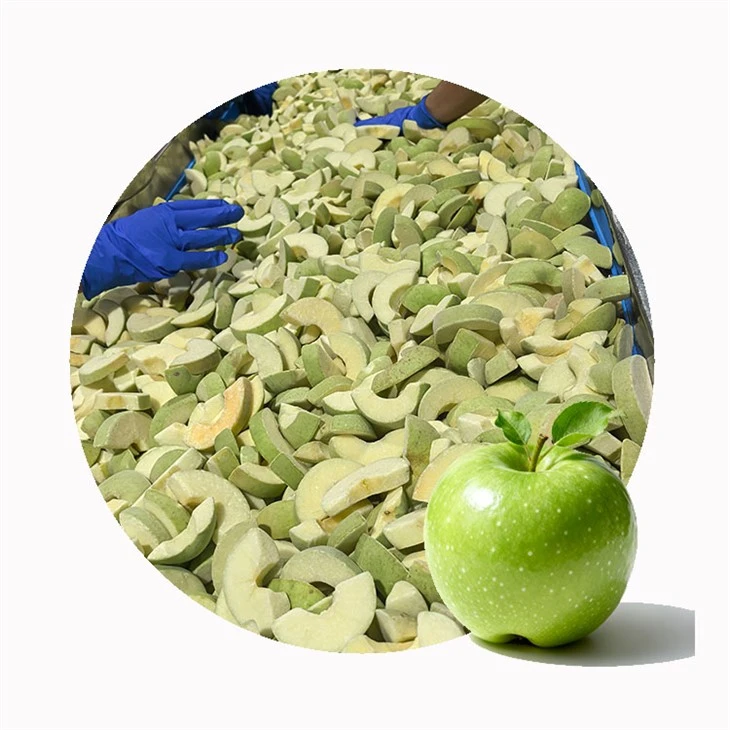
For cooked dishes, frozen green apple slices offer a different starting format from a fresh whole fruit. Match the slice to the dish rather than expecting thawed fruit to reproduce every feature of a freshly bitten apple. Acidity, skin, thickness and the result after heating all affect whether the substitution is enjoyable.
With frozen apple, test the finished spoonful
Frozen pieces can make apple easier to include when peeling and cutting would otherwise prevent the dish being made. They can also be useful when demand varies. The advantage is practical availability, not a special health effect created by freezing.
I would separate two sample questions at the outset: should the apple remain as visible pieces, or should it soften into the surrounding food? A cut that works well for the second task can disappoint in the first. Looking only at a neat frozen sample leaves the important question unanswered.
The frozen apple cube specifications provide a starting point for discussing a diced ingredient. Ask for the actual variety, peel treatment, cut and complete ingredients for the proposed sample. If an anti-browning treatment is used, include that information in the formulation review instead of relying on a broad description such as natural.
Prepare a sample using the intended recipe. Note how much liquid is released, whether the pieces remain distinct, and whether the flavor is pleasantly balanced without extra sweetening. Taste it at the intended serving temperature. For a chilled breakfast component, compare the texture with the yogurt or porridge it accompanies: a piece that tastes agreeable on its own may feel too firm beside a soft base.
Keep food safety separate from appearance. Follow the product's storage and preparation directions, including any requirement for cooking. A clean-looking frozen piece is not proof that it is ready to eat after thawing, and a pleasant taste cannot verify microbiological safety.

Do not let the recipe quietly become a sweetened dessert
The apple itself can be a modest part of a meal while its accompaniments change the result substantially. Sugar, syrup, sweetened yogurt, pastry and rich toppings all belong to the complete dish. This is not an argument against dessert; it is a reason to describe the food you are actually serving.
For a routine breakfast component, taste the plain cooked fruit before reaching for sugar. A tart batch may suit one application and need a different variety for another. Adjusting the fruit choice can be more useful than repeatedly sweetening every batch to hide an unsuitable flavor.
Spices can change the impression of a dish without turning it into the same thing as a sweetened sauce. Try a small amount in a sample portion before changing the whole pan. If a topping is optional, serve it separately so the fruit component remains identifiable.
Worked example: see the added sugar in each bowl
Consider a hypothetical café preparing 40 breakfast bowls. Each bowl receives 60 g plain cooked apple, so the apple component totals 2.4 kg. In the first trial, the cook adds 300 g table sugar to the complete apple batch. Dividing 300 g by 40 gives 7.5 g added sugar per bowl from that step alone.
The café wants a less sweet everyday component, so it tests a different apple sample and a version without the added table sugar. Both trials use the same 60 g fruit portion and the same unsweetened base. The cook compares flavor and acceptance before choosing the version to serve.
Choosing the unsweetened version removes that 7.5 g addition, not the fruit's own sugars. Other ingredients still count. These quantities illustrate recipe accounting; they are not a sugar limit or an actual XMSD trial.
The useful action is to retain the chosen recipe and the sample identity. Otherwise, a later change in apple acidity may lead a different cook to add sugar by instinct, gradually undoing the intended choice. A brief tasting note describing the preferred balance is more useful than calling every batch healthy.
Make availability dependable without overbuying
A daily habit can fail for a simple reason: the fruit is not there when needed. At home, buy an amount that fits the household's real use and storage space. In a café, connect the fruit order to the menu and the number of servings usually selected, rather than the theoretical maximum capacity of the kitchen.
Separate stock for different uses. Whole apples reserved for eating fresh should not disappear into a large cooking batch without leaving enough for the planned lunches. Likewise, frozen dice bought for a cooked breakfast need not be the best choice for a display where intact slices are important.
A mixed fresh-and-frozen approach can be practical. Fresh whole apples cover the uses where crunch and portability matter. Frozen prepared pieces cover recipes for which cutting time, size and portion access are more important. Neither format has to win every job.
For repeat purchasing, I would keep the agreed eating result beside the commercial specification. A lower-priced bag loses its advantage if unexpectedly sharp flavor requires a recipe change, or pieces soften so much that the dish is rejected.
Check proposed substitutions before accepting them for the same menu item. A different variety, peel status or cut can change flavor and preparation time. The question is whether the dish still works, not whether both cartons use the word apple.

Choose a pack that fits the amount you use
A large bag can be economical for a busy kitchen but awkward for a small household. Consider how easily the intended quantity separates from the frozen contents and how the remainder will stay protected. Opening a bag should not require the unused fruit to be warmed just to release one portion.
The frozen-food packaging options include inner pouches, closures and carton formats. For an apple recipe used regularly, the important practical details are portion access, a sound closure, clear identity and instructions that remain with the ingredient. Attractive printing alone cannot solve a mismatch between bag size and use rate.
Keep batch details with any transferred ingredient. Mixing unidentified apple remnants can obscure differences in treatments or added ingredients, leaving the next cook unable to identify what is in the container.
For a trial, handle the pack as it will actually be used. Check the opening, the way pieces pour, and the space needed to return the remainder to frozen storage. A format that seems convenient while full may behave differently near the bottom, where small pieces and frost can collect.
Clean preparation belongs in the routine
FDA advises rinsing fresh produce under plain running water before peeling or cutting, starting with clean hands and utensils, and keeping pre-cut produce refrigerated. Soap or produce wash is unnecessary. Washing before cutting helps avoid carrying contamination from the surface inward with the knife.
Make those steps convenient rather than treating them as an occasional deep-cleaning project. Have a clean surface ready, remove core material during preparation, and put cut fruit into its intended storage promptly. If fruit is already cut when purchased, check the storage directions and keep it chilled as required.
Plan cooked apple through to its use, including any cooling and storage required by the recipe and local food-safety guidance. A pan prepared for several breakfasts needs a suitable handling plan; leaving it out for convenience is not part of a healthy daily habit.
Discard spoiled or unsuitable fruit. A commitment to finish the week's apples is never a reason to eat something questionable. Adjust the next purchase instead.

A healthy habit has room for individual needs
Some people experience mouth itching after raw apple because of pollen-food allergy syndrome. AAAAI describes the cross-reaction between certain pollen and fruit proteins and advises avoiding the raw foods that cause symptoms. Worsening reactions, significant throat symptoms or reactions to cooked foods warrant medical advice.
Do not keep testing an apple merely to complete a daily routine. Breathing difficulty or a severe reaction needs urgent help. The possibility that cooking changes some allergy-related proteins is not permission to assume every cooked apple product is safe for every person with an apple allergy.
A prescribed diet or recurring digestive symptoms may call for an alternative fruit or a different serving. Use the advice for the actual condition rather than forcing the habit.
If apples suit you, keep the routine flexible: an enjoyable portion, a sensible place in the meal, safe preparation and other foods across the week. The best daily apple is not the most expensive or the one attached to the largest health claim. It is the apple that earns a useful place in the food you actually eat.
For recurring cooked-apple menus, XMSD can review the cut, variety, preparation and pack requirements. Our foodservice and catering supply options support ingredient planning for those applications. Send the intended dish and sample requirements through the XMSD inquiry form.